


Puppy Teething Toys, Sorted by Chewer Type, Not by Price
The right teething toy depends less on the brand than on what kind of chewer your puppy is. Here are nine picks sorted by gentle, persistent, and puzzle-driven chewers, plus the freezer trick vets actually recommend.

Affiliate disclosure. This article contains affiliate links. We may earn a small commission if you buy through a link, at no extra cost to you. How we handle recommendations.
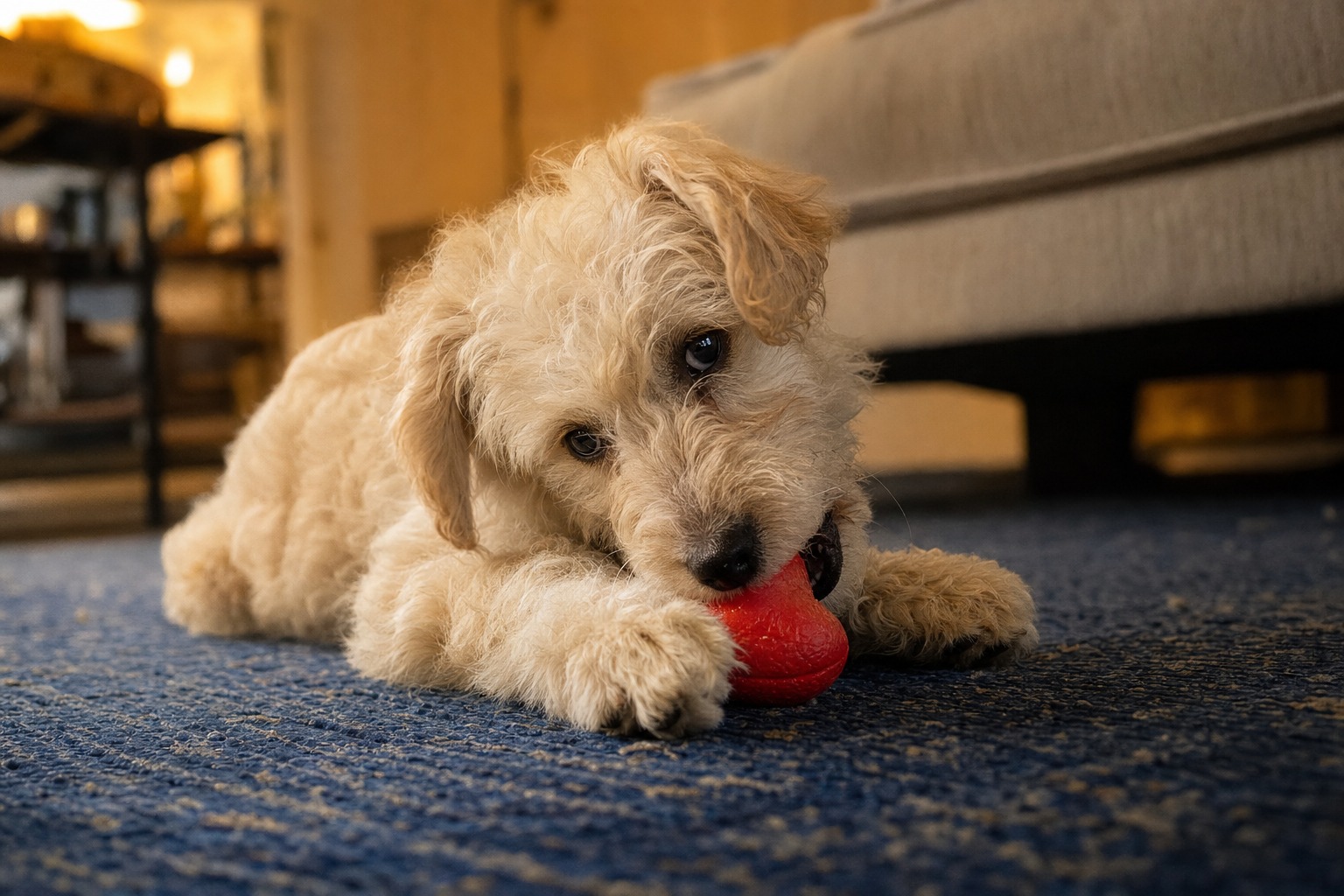
Every teething-toy list ranks by category: best rope, best rubber, best treat. That sorting tells you what a toy is made of, but not whether it is right for the puppy sitting in front of you. And teething toys are one of the few puppy purchases where the wrong match is not just wasted money, it is a safety issue. A toy that is too hard cracks a developing tooth. A toy that is too soft gets shredded and swallowed. The thing that actually decides which toy works is your puppy’s chewing style.
So we sorted this guide by chewer type instead. Figure out which of the three your puppy is, jump to that section, and you will skip the trial-and-error that ends with a drawer full of rejected toys. Before the picks, two things worth knowing that most lists bury or skip entirely.
First, the chilling trick, done right
The single most useful teething tip is not a product, it is a temperature. Cold numbs inflamed gums the same way it eases a bruise, which is why veterinarians routinely suggest chilled chews for a teething puppy. But “frozen” is where people go wrong. A rubber toy frozen rock-solid is as hard as a stone and can chip the very teeth it is meant to soothe.
“Chilled, not frozen, is the rule I give every new puppy parent,” says Dr. Mara Chen, a veterinarian who consults for The Pet Times. “Put a rubber toy in the freezer just until it is cool and still gives a little under your thumb. If it is hard enough to knock on a table, it is hard enough to crack a baby tooth. The same goes for ice cubes, which I wish people would stop handing out.”
The cheapest version of this trick costs nothing: twist a wet washcloth, freeze it, and offer it for a short, supervised chew. It works, and it is gentle.
Second, how to know a chew is too hard
There is a simple field test dental vets repeat: press your thumbnail into the chew. If it does not give at all, it is too hard for a teething puppy and risks fracturing a tooth. That single rule rules out a lot of popular chews that get marketed to puppies anyway, including antlers, hooves, and the densest nylon bones. Every pick below passes the thumbnail test or is meant to be chilled, not gnawed at full hardness.
Now, the picks, grouped by the kind of chewer you are living with.
For the gentle chewer
These are puppies who mouth and nibble rather than power-grind. They need soothing texture and a little give, not maximum durability.
Kong Puppy Toy (Natural Teething Rubber)
If you have had dogs before, you know the Kong, and the puppy version is made from a softer natural rubber tuned for puppy teeth. It is bouncier than the classic, so it doubles as a fetch toy, and you can stuff it with dog-safe peanut butter or treats.
- Why it earns a spot: it is the best on-ramp to the chill trick. Stuff it, chill it until cool, and a gentle chewer gets relief plus a reward for the work.
- What to watch: some reviewers say it runs small, so size up for anything bigger than a toy breed.
Teeth n’ Tug Toy
An extra-soft rubber chew with a long, wavy shape that pulls double duty as a gentle tug toy, which is a nice way to teach a calm puppy the rules of tug early. It rinses clean in the sink.
- Why it earns a spot: genuinely soft, which is rare. Most “puppy” chews are still built for power chewers.
- What to watch: it suits a narrow window, petite puppies up to about 15 pounds, so a fast-growing pup outgrows it quickly.
Frozen wet washcloth
Not a product, but it belongs on any honest list. Twist, dampen, freeze, and offer it for a few supervised minutes. The cold soothes; the fabric texture feels good on emerging teeth.
- Why it earns a spot: zero cost, and a useful backup when every toy in the house is in the dishwasher.
- What to watch: supervise closely and retire it the moment a puppy starts pulling threads loose.
For the persistent power chewer
These puppies grind, and they grind for a long time. They need durable material that still passes the thumbnail test, plus dental texture to manage the plaque that builds up during the chewing months.
Nylabone Puppy Power Rings
Three interlinking nylon rings in different textures, so a busy chewer gets variety in one toy. It tastes like bacon, which keeps a determined puppy committed.
- Why it earns a spot: the textured surfaces help knock down early plaque and tartar while a power chewer works.
- What to watch: a few reviewers find it too firm; if your puppy walks away, it is likely a gentle chewer in disguise, so move to the section above.
- Right for teething puppies and small dogs under 25 pounds.
Benebone Puppy Dental Chew (2-pack)
Nylon infused with real bacon (a chicken version exists too), shaped with rounded, paw-grippable edges so a puppy can actually hold it down to chew. Benebone says most chewers get about a month out of one.
- Why it earns a spot: it is built for gnawers but designed around dental and gum health, not just destruction-proofing.
- What to watch: some reviewers feel it runs too hard or too big for the youngest pups, so start with the tiny size (under 15 pounds) and size up.
Hartz Chew ‘n Clean Tuff Bone
Nylon and polyurethane with a bacon scent and two textures in one bone: smooth edges for soft chewing and raised nubs in the middle for harder gnawing.
- Why it earns a spot: the nub texture massages gums and scrubs teeth, and shoppers say it survives stubborn chewers.
- What to watch: the scent fades over time, so a scent-driven puppy may lose interest before the bone wears out.
- Right for tiny puppies under 10 pounds.
For the puzzle-and-treat chewer
Some puppies chew because they are bored, not just because they are teething. For them, the relief has to come bundled with a job to do, otherwise they go find your shoes.
Pupsicle
Unscrews into halves so you can load a premade or DIY frozen treat inside, with outer grips and drool slots, and it is dishwasher-safe. The frozen filling delivers the gum-numbing cold without the toy itself being frozen solid.
- Why it earns a spot: it is the cleanest way to combine the chill trick with a puzzle, and three sizes grow with the dog.
- What to watch: it is higher-maintenance, since you either buy refills or make your own.
Playology Peanut Butter Scented Rope Toy
A rope chew built to be stuffed and frozen, with a scent baked into the fibers so it stays interesting longer than a plain rope.
- Why it earns a spot: rope texture flosses between emerging teeth, and the freeze-and-stuff design fits a puzzle chewer who wants to work for the treat.
- What to watch: it is rated for puppies up to about 35 pounds, and frayed rope should be retired before a puppy swallows strands.
Outward Hound Bionic Chew Stick 2-Pack
One soft rubber stick for sore gums and one tougher option for stick-loving chewers who need something they can really sink into, with a wear guide so you know when to toss it.
- Why it earns a spot: two firmness levels in one box, which is genuinely useful for a puppy whose chewing intensity is still settling.
- What to watch: skip the real-wood chews some lists recommend; wood splinters. Stick to the rubber options here.
What we left off, on purpose
Older versions of this list ran ten or eleven items by padding it with near-duplicates. We trimmed to nine because every entry here passes the thumbnail test or is built to be chilled, and a shorter list you can trust beats a longer one you have to second-guess. The cuts were toys that were essentially repeats of better picks, plus anything wood-based, since splintering is a real choking and mouth-injury risk during the exact months a puppy is most desperate to chew.
The two rules that outlast any toy
No toy supervises itself. Two habits matter more than any brand on this list. First, watch your puppy while they chew, and pull the toy the moment it is worn down to where pieces could break off; a puppy should never be swallowing rubber, nylon, or rope fibers. Second, size up carefully, because a toy meant for a smaller pup can become a choking hazard for a bigger one, and a toy too big can bruise a little mouth. Get those two right, match the toy to the chewer, and the teething months pass without a casualty, including your shoes.
References
Common questions
At what age do puppies need teething toys?
Most puppies can start on teething toys around 12 weeks, but the chewing urge shows up earlier. Baby teeth begin erupting around three weeks, and the heavy teething phase, when adult teeth push through, peaks between 12 and 16 weeks. Match the toy's stated size and chewer rating to your puppy, not just their age.
Is it safe to freeze a teething toy?
Yes, and chilled is the key word. Cold numbs sore gums and soothes inflammation, which is why so many vets suggest it. But freeze a rubber toy only until it is cool and pliable, never rock-hard, and never freeze hard nylon or wood. A frozen-solid toy is as hard as a rock and can chip a developing tooth.
What can I give a teething puppy that is not a toy?
A frozen wet washcloth (twisted and dampened, then frozen) is a cheap, vet-friendly option for short, supervised sessions. Some pet parents also use vet-approved frozen treats. Avoid ice cubes, antlers, hooves, and any chew hard enough that it does not give under a thumbnail, since those crack baby and adult teeth.
How long does the puppy teething stage last?
It runs from roughly three weeks to six months. The most intense stretch, when puppies need the most relief, is usually 12 to 16 weeks, as the adult teeth come in and the baby teeth fall out.
Nina Vasquez writes about life at home with pets and the relationships at the heart of it. Her work covers day-to-day living, people-and-pet stories, and the products that fit into a real household, with a warm, grounded take on everyday pet ownership.
Meet our experts ↗Keep reading
 Product PicksThis Montana Factory Grinds Up Your Dog's Old Toy and Makes You a New OneSara Lim · 8 min
 Product PicksHalf of a Dog's Birthday Haul Is for Your Camera Roll. Here Are the 12 Your Dog Actually Cares About.Nina Vasquez · 7 min
 TrainingYour Dog Isn't 'Bad With Toys.' Nobody Taught Them the Game.Dr. Lena Park · 7 min
 TrainingYour Dog Is Bored, Not Heartbroken. Build These 7 Activity Stations.Dr. Nina Kohl · 7 min
 Product PicksThe Ball Launcher That Started With a Kid Dodging HomeworkMarcus Webb · 5 min
 Product PicksI Bought My Dachshund a Hot Dog Toy. He Was Personally Offended.Nina Vasquez · 3 min