


Stop Shopping Dog Shampoo by Scent. Match It to the Skin Barrier Instead
The scent on the bottle is the least important thing about a dog shampoo. Here's how to choose by your dog's actual skin and coat need, with vet-backed picks for sensitive skin, itch, odor, and more.

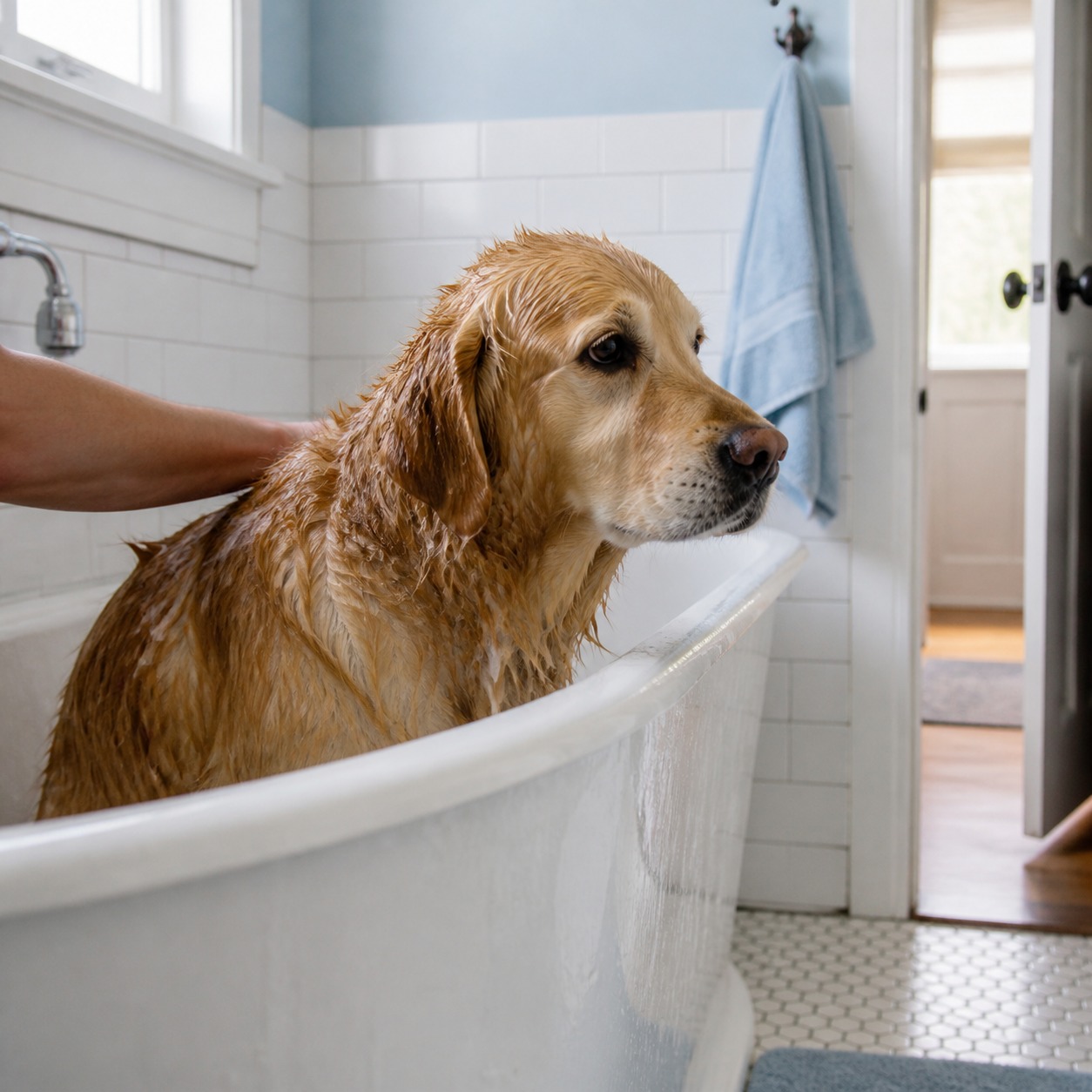
Walk down the dog-shampoo aisle and you will be sold a scent: lavender, vanilla, “fresh.” Scent is the one thing about a shampoo that does nothing for your dog’s skin. The variable that actually matters is whether the formula respects your dog’s skin barrier and addresses their specific problem. Get that right and the bottle can smell like whatever you like.
Here is the science that should drive the choice. A dog’s skin sits at a near-neutral pH of about 6.2 to 7.4, while human skin is more acidic at around 5.5. A dog’s skin barrier is also only three to five cell layers thick, where yours is ten to fifteen. That thin, near-neutral skin is protected by a fragile acid mantle, and the wrong product, including any human shampoo, strips it and leaves the skin open to dryness, irritation, and infection. So before you pick a scent, pick a formula matched to your dog’s coat and skin need, and when you are not sure what is behind a skin issue, ask your vet or groomer first.
Below, organized by the problem you are actually solving.
Owners come to me convinced their dog is allergic to a shampoo, when the real issue is they used a human product or bathed far too often and wrecked the skin barrier. Match the formula to the dog, bathe no more than your dog actually needs, and most of the so-called sensitivity disappears.
Sensitive skin: protect the barrier
Like people, dogs with reactive skin struggle to find products that clean without stripping. Look for low or no sulfates, soothing botanicals, and a dog-appropriate pH.
For calming sensitive coats, John Paul Pet’s oatmeal-based shampoo pairs a gentle formula with a light fragrance and, conveniently, is tested on humans rather than animals. Clean Coats’ fragrance-free oatmeal, aloe, and licorice-root formula soothes while still genuinely cleaning, in a bottle pretty enough to leave on the shelf. And Skout’s Honor combined shampoo and conditioner uses a probiotic formula designed to support the skin’s natural balance, a smart pick for dogs whose skin tips easily out of equilibrium.
Itch and dryness: soothe, then find the cause
Itch is a symptom, not a diagnosis, and the lasting fix is identifying whether allergies, yeast, or dryness is behind it. While you sort that out, the right shampoo brings real relief.
A colloidal-oatmeal, soap-free formula using coconut-derived surfactants and aloe heals rough, dry patches while leaving the coat soft. For an add-on, Camamu’s light vinegar-based post-bath rinse, born when an itchy Schnauzer inspired its founders, rebalances skin pH and discourages itch-causing microbes, and the faint vinegar smell fully evaporates as your dog dries. Floof’s Nourishing Shampoo layers colloidal oatmeal, manuka honey, and aloe for itch driven by seasonal allergies. One caution the original guidance understated: if itch is severe, spreading, or comes with hair loss, hot spots, or odor, that is a veterinary appointment, not a shampoo swap.
Odor: neutralize, do not just mask
Some dogs simply stink, whether from lifestyle or natural musk, and the goal is to break down odor compounds rather than perfume over them. Burt’s Bees offers a no-fragrance shampoo and conditioner suitable for puppies and adults that cleanses while supporting the skin barrier, the right call for a dog whose skin cannot tolerate added scent. If you do want your dog to smell genuinely good, Dedcool’s shampoo carries its spicy-vanilla “Taunt” scent, and AuraPet’s rose formula softens wiry coats at a friendly price. A note worth keeping: a dog who suddenly smells bad despite regular bathing may have a skin or ear infection, so a persistent new odor is worth a vet’s nose, not just a stronger shampoo.
Specialty needs: fur type, calm, and pests
Modern dog shampoos do more than clean. Pride and Groom formulates separately for dogs with fur versus hair, and its fur shampoo moisturizes to minimize dander and shed. Gerrard Larriett, founded by a former beauty-industry executive in 2012, was an early adopter of aromatherapy to ease anxious dogs through grooming, with a lovely lavender scent. And kin+kind’s tick-repellent shampoo uses dog-safe essential oils that fleas and ticks dislike; treat it as a helpful supplement, never a replacement for a vet-recommended oral or topical preventative.
Spa-day splurges that still perform
Luxury does not have to mean all scent and no substance. Aesop’s pet shampoo, with lemon rind and tea-tree leaf, clarifies the coat in elegant packaging (and doubles as a hand wash for you). Ouai, from celebrity hairstylist Jen Atkin, brings its signature orange-peony-jasmine-musk scent in a paraben- and sulfate-free formula. And Isle of Dogs uses Royal Jelly protein in its volumizing “coature” shampoo to strengthen fur and reduce shedding.
Our shortlist, if you want to skip the deliberation
For most dogs, you cannot go wrong with the John Paul Pet Sensitive Skin Formula or Earthbath Oatmeal and Aloe Shampoo, both gentle, near-neutral pH, and likely already on your vet’s list. For the best-smelling option that still clarifies, Aesop Animal Shampoo is the splurge; for stubborn odor without added fragrance, reach for Burt’s Bees. Whatever you choose, the rule holds: match the formula to the skin, not the scent to your nose.
References
- American Kennel Club. “Can You Use Human Shampoo on Dogs? Why Dog Shampoo Is Better.” https://www.akc.org/expert-advice/health/human-shampoo-on-dogs/
- PetMD. “Can You Use Human Shampoo on Dogs? Maintaining Your Dog’s Skin pH.” https://www.petmd.com/dog/grooming/evr_dg_shampoo_for_dogs
- VCA Animal Hospitals. “Personal Care Products and Your Pet.” https://vcahospitals.com/know-your-pet/personal-care-products-and-your-pet
- Merck Veterinary Manual. “Bathing and Grooming of Dogs.” https://www.merckvetmanual.com/dog-owners/routine-care-and-breeding-of-dogs/grooming-and-routine-care-of-dogs
Common questions
Why can't I just use my own shampoo on my dog?
Dog skin sits at a near-neutral pH of roughly 6.2 to 7.4, while human skin is more acidic at around 5.5, and a dog's skin barrier is only a few cell layers thick versus your ten-plus. Human shampoo is formulated for your acidity and strips a dog's protective acid mantle, which can leave the skin dry, itchy, and more prone to infection. Always use a shampoo made for dogs.
What is the best shampoo for itchy skin?
Start by identifying the cause, since allergies, yeast, and simple dryness need different fixes. For general itch relief, a colloidal-oatmeal formula soothes and moisturizes, and a vinegar-based post-bath rinse can rebalance pH and curb itch-causing microbes. Persistent or worsening itch is a vet visit, not a shampoo problem.
What is the best oatmeal shampoo for dogs?
Colloidal oatmeal is the workhorse soothing ingredient. John Paul Pet's oatmeal shampoo and Earthbath's Oatmeal and Aloe are both reliable, gentle picks that many vets already recommend.
How often should I bathe my dog?
For most dogs, once every four to six weeks is plenty; over-bathing strips the coat's natural oils and can cause the very dryness and itch you are trying to fix. Dogs with a medicated or therapeutic shampoo should follow their vet's schedule, which is often more frequent for a set treatment period.
Dr. Nair is a veterinarian focused on diet and feeding. She covers everyday nutrition, treats, and the many "can they eat this?" questions owners ask, grounding each answer in what is actually safe and sensible for dogs and cats.
Meet our experts ↗Keep reading
 Product PicksDon't Clean Healthy Ears: When Your Dog Actually Needs a Cleaner (8 Worth Buying)Dr. Lena Park · 7 min
 Product PicksMost 'Eco' Dog Grooming Is Marketing. These 9 Actually DeliverSasha Ford · 7 min
 Product PicksA Fashion Founder's Dog Shelf, Audited: 2 Are Real Buys, 1 Is a PropSara Lim · 7 min
 Product PicksThis $59 Board Lets Your Dog File Their Own NailsLeila Torres · 5 min
 Product PicksA Grooming Vacuum Only Works If Your Dog Lets It. How to Win Them OverSara Lim · 9 min
 Product PicksStop Buying Brushes by the Star Rating. Buy Them by Your Dog's CoatSasha Ford · 14 min