


Stop Buying Brushes by the Star Rating. Buy Them by Your Dog's Coat
The best dog brush is not the highest-rated one. It is the one built for your dog's coat type. Here is a coat-by-coat guide, plus 11 tested brushes matched to each.

Affiliate disclosure. This article contains affiliate links. We may earn a small commission if you buy through a link, at no extra cost to you. How we handle recommendations.
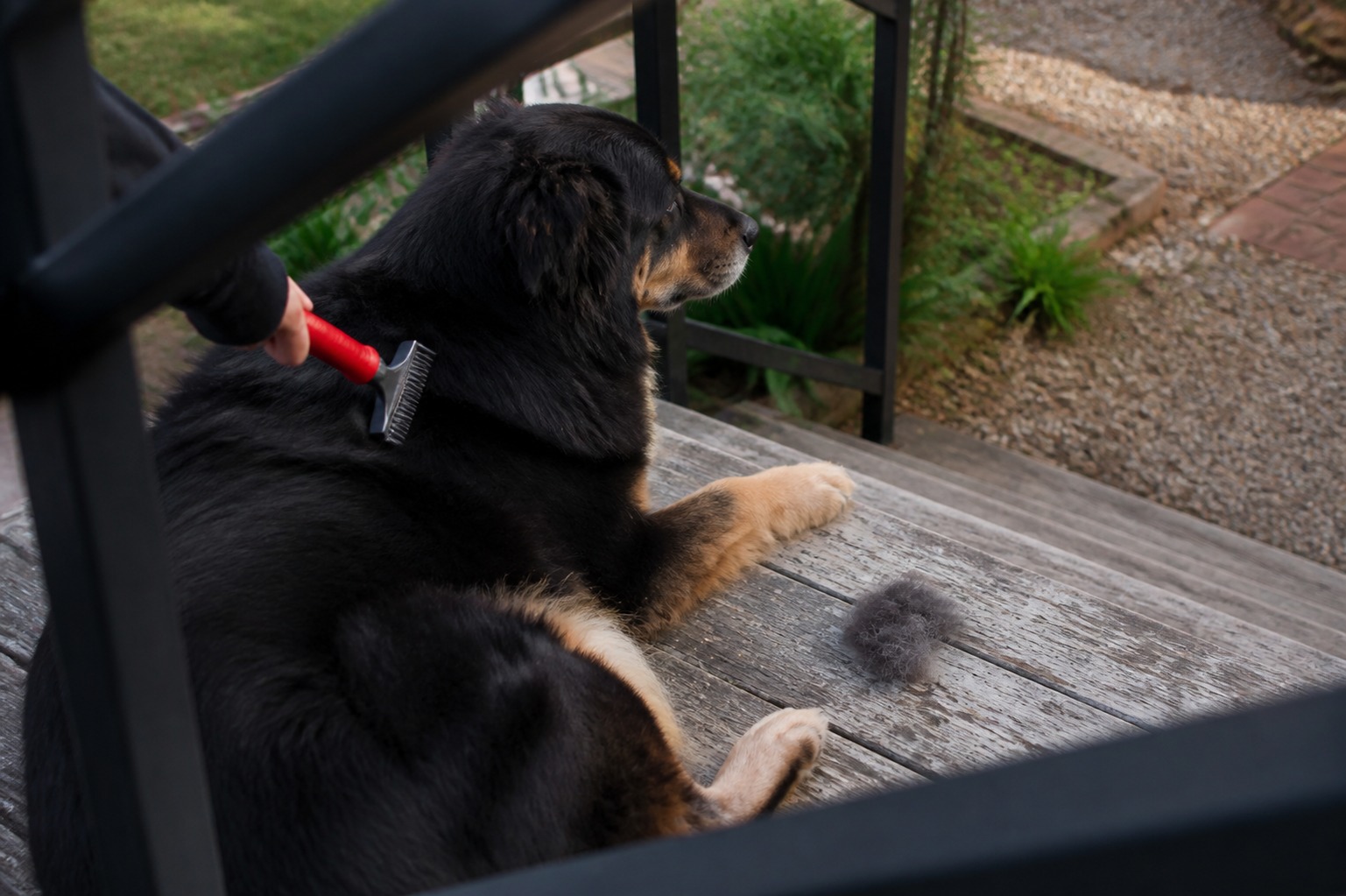
Here is the mistake almost everyone makes in the pet aisle: they buy the brush with the most five-star reviews. The problem is that a brush is not a universal tool. The deshedding rake that earns 40,000 glowing reviews from Labrador owners can tear a Poodle’s curls into a worse mat than it started with, and the same rake dragged across a smooth-coated Beagle can scratch the skin. A brush is a coat-specific instrument. The single most useful thing you can do before spending a dollar is figure out which of five coats your dog has, then buy for that.
So this guide is organized the way you should actually shop: by coat first, tool second. Find your dog below, and the right pick mostly chooses itself.
First, what counts as brushing well
Two things happen during a good brushing, and both matter. You pull loose, dead undercoat out before it sheds onto your floors or, worse, traps moisture against the skin and causes hot spots and itching. And you work tangles apart before they tighten into mats, which pull painfully at the skin and can hide irritation underneath. Done right and often, brushing is preventive skin care, not just floor maintenance. Done with the wrong tool, it is either useless or it hurts.
The hard part is that “the wrong tool” depends entirely on the dog.
Find your dog’s coat type
Double coat (Labs, Golden Retrievers, Huskies, German Shepherds, Corgis). A soft, dense undercoat beneath a coarser topcoat. These dogs “blow coat” seasonally and shed year-round. They need an undercoat rake or deshedding tool to reach and remove that undercoat. One important warning: do not shave a double coat to reduce shedding. The undercoat insulates against both heat and cold, and shaving it can lead to patchy, damaged regrowth. Deshed it instead.
Curly or wool coat (Poodles, Doodles, Bichons). Hair that grows continuously and curls instead of shedding, which means it traps every loose strand into the curl, where it knots. These coats are mat factories and need a firm slicker brush plus regular line-brushing, working in sections down to the skin. A deshedding rake is the wrong tool here entirely; there is no undercoat to rake, and the blade will shred the curl.
Long silky coat (Yorkies, Shih Tzus, Maltese, setters). Fine, flowing hair that tangles easily, especially behind the ears and under the legs. These dogs want a pin brush or a gentle detangling brush that glides without snapping the hair shaft.
Short or smooth coat (Beagles, Boxers, Dachshunds, Pit-type dogs). Sleek, close-lying fur. The risk here is the opposite of matting: aggressive tools scratch the skin. A rubber curry, a bristle brush, or a grooming glove distributes oils, lifts the modest shed, and feels like a massage.
Wiry coat (terriers, Schnauzers, many terrier mixes). Coarse, bristly guard hairs over a soft undercoat. A slicker for the undercoat plus a regular comb keeps the texture without dulling it.
Most mixed-breed dogs land cleanly in one of these. If you are unsure, the texture in your hand tells you more than the breed on the paperwork.
The picks, matched to coat
We tested and researched these and grouped them by the coat each one is actually built for, with first-party notes where we have them. Ratings shown are current Amazon averages; prices move.
For double coats
FURminator Undercoat Deshedding Tool — the deserved standard. The ergonomic handle drives a wide stainless rake straight into the undercoat, and a button releases the collected fur. I use this on my Black Lab-Husky-German Shepherd, Archer, and a Jack Russell-Chihuahua, Cash. On Archer’s dense coat it is transformative: regular passes keep the floof in check and, by clearing trapped undercoat off his haunches, have actually cut down the hot spots he used to get there. The one caution that matters: it is a double-coat and short-coat tool. Keep it off curly and silky coats. Sold in three sizes.
Maxpower Planet Grooming Rake — for double coats that have started to mat. The dual head pairs a nine-tooth side for breaking mats with a 17-tooth side for smoothing and pulling loose fur. It is the category best seller for a reason, with 80,000-plus reviews. Not for short coats, and go gently, since the de-matting side can pull. Sold in two sizes. Rating: 4.6/5
“My dog sheds so much I had to vacuum every day, and this brush has cut that down a lot. My dog seems to enjoy it, too.” —Amazon reviewer. Rating: 4.7/5
For curly and wool coats
Chris Christensen Big G Slicker Brush — the pro-grade pick, built specifically for Doodles and Poodles. The long, flexible stainless pins reach through thick curl to the skin, lift loose hair before it knots, and smooth the topcoat. Doodle owners treat it as the gold standard. It is expensive, and because the pins are effective they can be too aggressive if you bear down, so let the brush do the work. Sold in three sizes and four colors. Rating: 4.6/5
Swihauk Self-Cleaning Slicker — the budget way into proper slicker brushing for curly coats, under $15. Dozens of fine pins detangle, lift, and clear dander, and a button drops the haul into the trash. The honest limit is reach: on a very thick coat the short pins may not get all the way to the skin, so it suits lighter curls and regular upkeep rather than a neglected, matted coat. Sold in six colors. Rating: 4.6/5
For long silky coats
Pet Teezer De-Shedding Brush by Tangle Teezer — from the human detangler brand, and the gentlest pick here. A mix of short and long flexible plastic bristles smooths the topcoat, lifts loose hair, and works tangles loose without the snap of metal pins, which is exactly what fine silky hair needs. It is the brush nervous and brush-averse dogs tolerate best. Its gentleness is also its ceiling: it will not deshed a thick double coat. Sold in three sizes. Rating: 4.4/5
“My Corgi cries if you even bring a normal brush near her, but this one she loves. Gentle, easy to clean.” —Amazon reviewer
Hartz Groomer’s Best Combo Brush
Heads up. — a smart dual-sided pick for sleek coats. Faux boar bristles on one side smooth and distribute skin oils for shine; slim metal pins on the other lift the light shed and boost circulation. The pin side does collect buildup over time, so clean it. A genuine all-rounder for smooth and lightly shedding coats. Rating: 4.5/5
NVNAN Pet Grooming Gloves
Heads up. — for the dog who flees the sight of a brush. Bristled silicone gloves let you “pet” the loose fur off, wet or dry, which doubles as a massage and makes bath time more effective. They shine on lightly shedding and short coats; on a very floofy double coat they fill up fast. Used wet or dry, two-pack. Rating: 4.1/5
KONG ZoomGroom Rubber Curry Brush
Heads up. — the addition this category needed, and the one groomers reach for. The soft rubber nubs are the ideal short-coat tool: they lift the modest shed a smooth coat produces, spread natural oils for a glossy finish, and feel like a back scratch, so even brush-averse smooth-coated dogs lean in. Unlike some rubber currys that just push hair onto the floor, the ZoomGroom traps loose fur in its bristles. It works wet to massage in shampoo, too. Gentle enough for daily use; keep it off long or curly coats, where the nubs catch. Rating: 4.7/5
Versatile combos for multi-dog or mixed-coat homes
UGNEL Double-Sided Brush with Bath Mitt — the Hartz combo’s idea plus a silicone bathing scrubber, so you can groom dry and deshed in the tub. A good value for a household with more than one coat type, though owners with very coarse or long-haired dogs find the soft bristles underpowered. Five colors. Rating: 4.6/5
A quick reference
| Coat type | Reach for | Avoid |
|---|---|---|
| Double (Lab, Husky, Corgi) | Undercoat rake / deshedding tool | Shaving; fine pin brushes alone |
| Curly / wool (Poodle, Doodle) | Firm slicker, line-brushing | Deshedding rakes |
| Long silky (Yorkie, Shih Tzu) | Pin or gentle detangling brush | Stiff metal slickers used hard |
| Short / smooth (Beagle, Boxer) | Rubber curry, bristle brush, glove | Sharp rakes, aggressive slickers |
| Wiry (terrier, Schnauzer) | Slicker plus a comb | Tools that strip the guard hairs |
How to brush without hurting your dog
The technique matters as much as the tool. Brush in the direction the hair grows, never against it. On curly and long coats, line-brush: lift a section of hair, brush the layer underneath down to the skin, then move up, so you are not just skimming the surface over hidden mats. Let the weight of a slicker do the work rather than pressing, since pressing is what turns fine pins into scratches. And if you hit a mat, work it apart with your fingers and a comb rather than ripping through it; a stubborn mat close to the skin is a job for a groomer, not a yank.
FAQs
How do I know my dog’s coat type if they are a mix?
Feel it. A soft, dense layer under a coarser top means a double coat. Continuously growing curls that never seem to shed onto the floor mean a wool coat. Fine, flowing hair is silky; sleek and close-lying is smooth; coarse and bristly is wiry. Texture in the hand is more reliable than guessing from the breed mix, and it is what decides the brush.
Is a slicker brush safe for every dog?
No, and this is the most common mistake. Slicker brushes are excellent for curly, wool, and wiry coats and for finishing double coats, but used hard, their fine metal pins can scratch thin or short-coated dogs. Match the tool to the coat, keep your pressure light, and a slicker is safe; use it on the wrong dog or bear down and it is not.
How often should I brush?
Curly and long silky coats need brushing several times a week, often daily, because they mat fast. Double coats benefit from a few times a week and daily during seasonal shedding. Short and smooth coats are happy with a weekly once-over. The more prone the coat is to matting, the more often it needs you.
Does a pricier brush actually work better?
Sometimes, but the bigger lever is fit, not price. A $12 rubber curry is the right tool for a smooth-coated dog and a $60 slicker is the wrong one. Within a coat category, better-built brushes (flexible, well-seated pins; a comfortable handle) do tend to last longer and pull less, so spending up on the correct type of brush is usually worth it. Spending up on the wrong type never is.
References
- American Kennel Club, “How to Groom Dogs With Different Coat Types.” https://www.akc.org/expert-advice/health/grooming-dogs-with-different-coats/
- American Kennel Club, “Should You Shave Your Double-Coated Dog?” https://www.akc.org/expert-advice/health/dont-shave-double-coated-dog/
- ASPCA, “Dog Grooming Tips.” https://www.aspca.org/pet-care/dog-care/dog-grooming-tips
- The Spruce Pets, “Understanding Dog Coat Types and How to Care for Them.” https://www.thesprucepets.com/dog-coat-types-4767391
Sasha Ford is a certified cat behaviour consultant who has worked with shelters, catteries, and private clients across the country. They review all feline behaviour content at The Pet Times, with expertise in multi-cat households, indoor enrichment, and stress-related disorders.
Meet our experts ↗Keep reading
 Product PicksYour Dog Doesn't Want a Signature Scent. Here's When DedCool's Perfume Is Fine Anyway.Sasha Ford · 4 min
 Product PicksA Fashion Founder's Dog Shelf, Audited: 2 Are Real Buys, 1 Is a PropSara Lim · 7 min
 Product PicksMost 'Eco' Dog Grooming Is Marketing. These 9 Actually DeliverSasha Ford · 7 min
 Product PicksStop Shopping for an Itch Shampoo. Start Shopping for the CauseDr. Ravi Mehta · 10 min
 Product PicksCamamu Builds Dog Skincare Like It's Human Skincare. That's the Whole TrickLeila Torres · 6 min
 Product PicksThe $350 Grooming Kit's Best Tool Isn't a ToolNina Vasquez · 5 min