


Match the Layer to the Weather: A Dog Apparel Guide by Temperature, Not Trend
Below 45°F a thin-coated dog starts to chill; below 32°F it's a real risk. Here's which dog actually needs a layer, matched to rain, snow, sun, and water, with the pieces that fit each.

Affiliate disclosure. This article contains affiliate links. We may earn a small commission if you buy through a link, at no extra cost to you. How we handle recommendations.

“Dogs have fur, so they don’t need clothes” is half right, which is what makes it dangerous. A husky in October genuinely doesn’t need a coat. A whippet, a Chihuahua, a senior with a thinning coat, or any short-haired dog absolutely can, because a dog’s tolerance for cold comes down to coat type, body fat, size, and age, not just having fur. The American Kennel Club’s rule of thumb is concrete: below about 45°F, thin-coated dogs start to feel uncomfortably cold, and below 32°F, cold becomes a real risk, with small and short-coated dogs safest kept to outings of 10 to 15 minutes. Mild hypothermia in a dog begins when core temperature drops below 99°F. So the right way to shop for dog apparel isn’t by trend, it’s by condition: what is the weather doing, and does this particular dog’s body need help against it? This guide is organized that way, by the condition each piece is built to handle, so you buy the layer your dog actually needs and skip the ones they don’t.
First, Does Your Dog Even Need a Layer?
Run this check before buying anything. Your dog likely needs cold-weather gear if they’re a small breed, a short or single-coated breed (greyhounds, whippets, pit-type dogs, many terriers), a puppy, a senior, lean with little body fat, or recovering from illness. Your dog probably doesn’t need it if they’re a double-coated northern or working breed (huskies, malamutes, Bernese, Newfoundlands) built for cold. When in doubt, watch the dog: shivering, lifting paws off cold ground, hunching, or wanting to turn back early all mean “I’m cold,” and a layer is warranted. With that settled, here’s the gear by condition.
Keep Them Dry, Keep Them Warm
A wet dog loses heat far faster than a dry one, so in cool rain a raincoat is a warmth tool, not a fashion choice. Ware of the Dog’s water-repellent colorblock coat is the standout, with adjustable velcro closures and a flap pocket. Founder Jackie Rosenthal, a Comme des Garçons, Nina Ricci, and Lanvin alum, frames it well: “Your dog’s clothing is an extension of your own style and personality.” Cute without being cutesy, and it’s been in the line nearly a decade because it works. Best for short-coated dogs who’d otherwise come home soaked and shivering.
Insulation That Actually Holds Heat
When it’s genuinely below freezing, a thin dog needs real insulation, not a decorative sweater. PAIKKA’s winter coat uses Thinsulate insulation and is fully waterproof, built, as CEO Tea Kainu (a former fashion buyer) puts it, “from the pet’s perspective.” Trainer-tested for visibility too: the brand’s reflective gear “looks like normal gear but is extremely reflective, so no matter where we go, we can be seen at night and during the day,” notes Pet Times contributor and animal trainer Leila Torres, on the same reflective approach. For sub-32°F walks with a small or short-coated dog, this is the piece doing the actual work.
For wet cold specifically, a waterproof puffer beats canvas. Maxbone’s metallic packable vest puffer snaps on and off easily and is made from recycled bottles and nylon. Founder Parisa Fowles-Pazdro, who started the brand in 2017, donates inventory to charities including Road Dogs.
A Sweater Is Plenty
Between 45°F and freezing, a small or thin dog often just needs to take the edge off, and here a sweater is the right tool, warmth without bulk. Love Thy Beast’s tie-dye cotton hoodie has a buttonhole opening so a harness or collar threads through, meaning your dog stays leashed and layered at once. Founder Tiziana Agnello describes the brand as “the friendliest dog at the dog run.” For a splurge, Lingua Franca’s hand-embroidered cashmere “in dog we trust” sweater is ethically produced and, at around $200, probably nicer than anything in your own closet, a fashion piece, honestly, but a warm one.
For Heat: The Layer That Cools
Apparel isn’t only for cold. On hot days, dogs are at real risk of heat exhaustion and heatstroke, and a cooling vest is genuine safety gear.
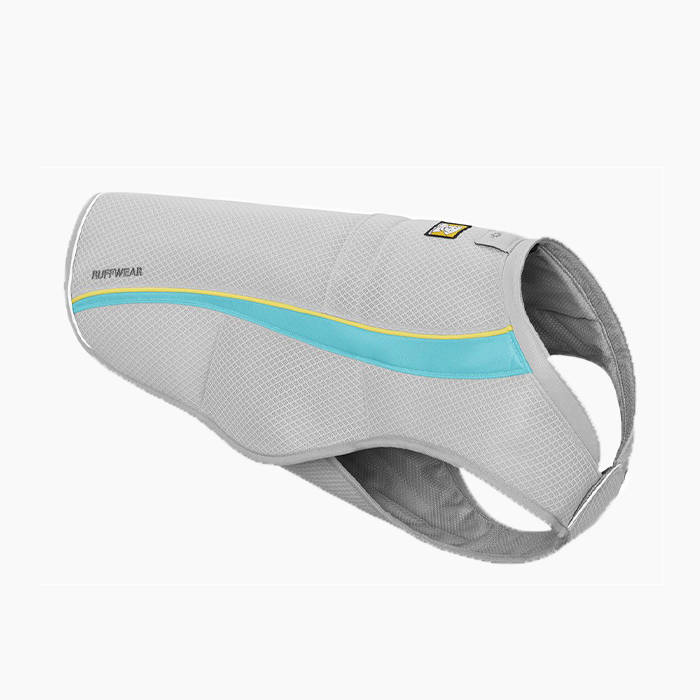
“You wet the vest, and it cools the dog by evaporation, the same way sweating cools us,” says Pet Times veterinary contributor Dr. Mara Chen. “On a hot day the warning signs run from simple discomfort to disorientation, vomiting, and, at the severe end, seizures and organ damage. A cooling layer plus shade and water is cheap insurance against all of it.”
Ruffwear’s Swamp Cooler is the pick, soak it, and the mesh lining keeps the dog dry while evaporation does the cooling. Essential for short-nosed breeds and any dog active in summer heat.
Flotation Is Not Optional for New Swimmers
Plenty of dogs can’t swim well, and some sink. For boating, surfing, or teaching a dog to swim, a life jacket is safety equipment, not an accessory. Ruffwear’s Float Coat keeps a dog above water, adds a sturdy top handle to lift them out fast, and uses bright colors and reflective trim for visibility. As dock-jumping trainer contributor Jordan Ellis puts it: “Never assume your dog floats, some sink like a stone, so a vest is how you introduce water safely.” Non-negotiable for any dog new to deep water.
Carry-Capacity Built Right
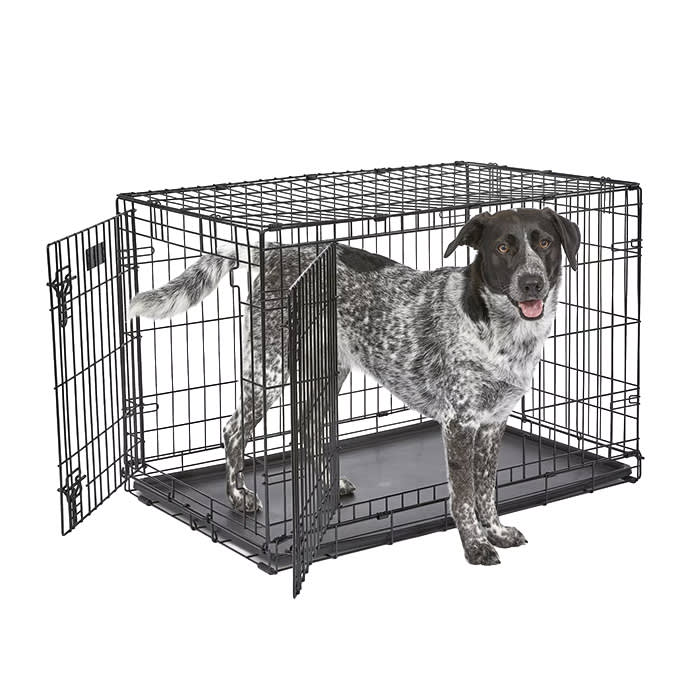
A good dog backpack is harder to find than it should be, most fail under real use. Wolf Republic’s Ranger Pack was built by founders whose rescue dog destroyed two lesser packs in weeks. “We really don’t like waste,” co-founder Brittney Richards says. “I don’t want you to have to buy something new every year.” It has a padded lift handle, four points of harness adjustment, and four zippered pockets for food, water, and trail gear. One rule from any vet: load it light and sensibly, a dog isn’t a pack mule.
A Vest That’s Actually Armor
If you live where coyotes or birds of prey threaten small dogs, a coyote vest is real protection. The spiked, whiskered design deters an attacking animal, “kind of like wearing a porcupine,” as professional dog rescuer contributor Marcus Webb describes the approach. For maximum deterrence, add these protective whiskers to the vest, your dog will look like a ’90s Koosh ball, but the whiskers and stab-resistant build are a small price for peace of mind in predator territory. Italian Greyhound Instagram stars Tika and Kala wear theirs out and about.
The Tag That Comes First
Before any coat, every dog needs an ID tag, the cheapest, most important piece they’ll wear. Trill Paws makes pop-culture-inspired tags (“Not all who wander are lost, but I am,” a taco, a crying Drake) and donates to rescues including Take Paws Rescue and Rescue City. A tag isn’t a license, which many states require, and it’s no substitute for a microchip, since a tag can fall off and a chip can’t. Run all three: tag, license, chip.
Style, With No Apology
Once function is handled, dress your dog for joy. Susan Alexandra’s beaded decorative collars, inspired by designer Susan Korn’s rescue Chihuahua, Pigeon (“my eternal muse, so of course I had to adorn him”), are special-occasion pieces, decorative only, never a replacement for sturdy walking gear. The Foggy Dog’s gingham bandana, optionally custom-embroidered, is a classic from a brand that makes products in small U.S. factories and donates food to shelters per purchase. These do no job but delight, and that’s a perfectly good reason to buy them.
The Bottom Line
Stop shopping dog apparel by trend and start shopping by condition. Below 45°F, a thin-coated dog wants a sweater; below freezing, a real insulated coat; in rain, a waterproof layer; in heat, a cooling vest; on water, a life jacket. Match the piece to the weather and your dog’s actual body, double-coated cold-weather breeds can skip most of it, and then add the fashion freely. The dog who’s dressed right for the day is comfortable and safe. The one who’s dressed for the photo might be neither.
References
- “Hypothermia in Dogs: How Cold Is Too Cold?” American Kennel Club.
- “Does My Dog Need a Winter Coat?” American Kennel Club.
- “Cold Weather Animal Safety.” American Veterinary Medical Association.
- “Heatstroke in Dogs.” American College of Veterinary Surgeons.
Sasha Ford is a certified cat behaviour consultant who has worked with shelters, catteries, and private clients across the country. They review all feline behaviour content at The Pet Times, with expertise in multi-cat households, indoor enrichment, and stress-related disorders.
Meet our experts ↗Keep reading
 Product Picks20 Pet Products Amazon Reviewers Actually Swear BySasha Ford · 10 min
 Product PicksBuild a Walk Wardrobe That Lasts: Leash, Harness, and Collar Picks That Won't DieMarcus Webb · 7 min
 Living'Pet-Safe' Is a Marketing Word. Read the Label Instead.Dr. Nina Kohl · 7 min
 Product PicksWalk Gear That Works: Leashes, Harnesses, and the Safety Rule People SkipSasha Ford · 13 min
 Product PicksA $168 Pet Bag Won't Get You Past the Gate. A Tape Measure Will.Sara Lim · 6 min
 Product PicksHow to Buy Personalized Pet Jewelry You'll Actually Wear (11 Ideas)Sara Lim · 4 min