


Walk Gear That Works: Leashes, Harnesses, and the Safety Rule People Skip
Before the cute colorways, get the attachment point right. Our team's picks for leashes, harnesses, boots, and cleanup gear, organized by the job each does and who each one is right and wrong for.

Affiliate disclosure. This article contains affiliate links. We may earn a small commission if you buy through a link, at no extra cost to you. How we handle recommendations.
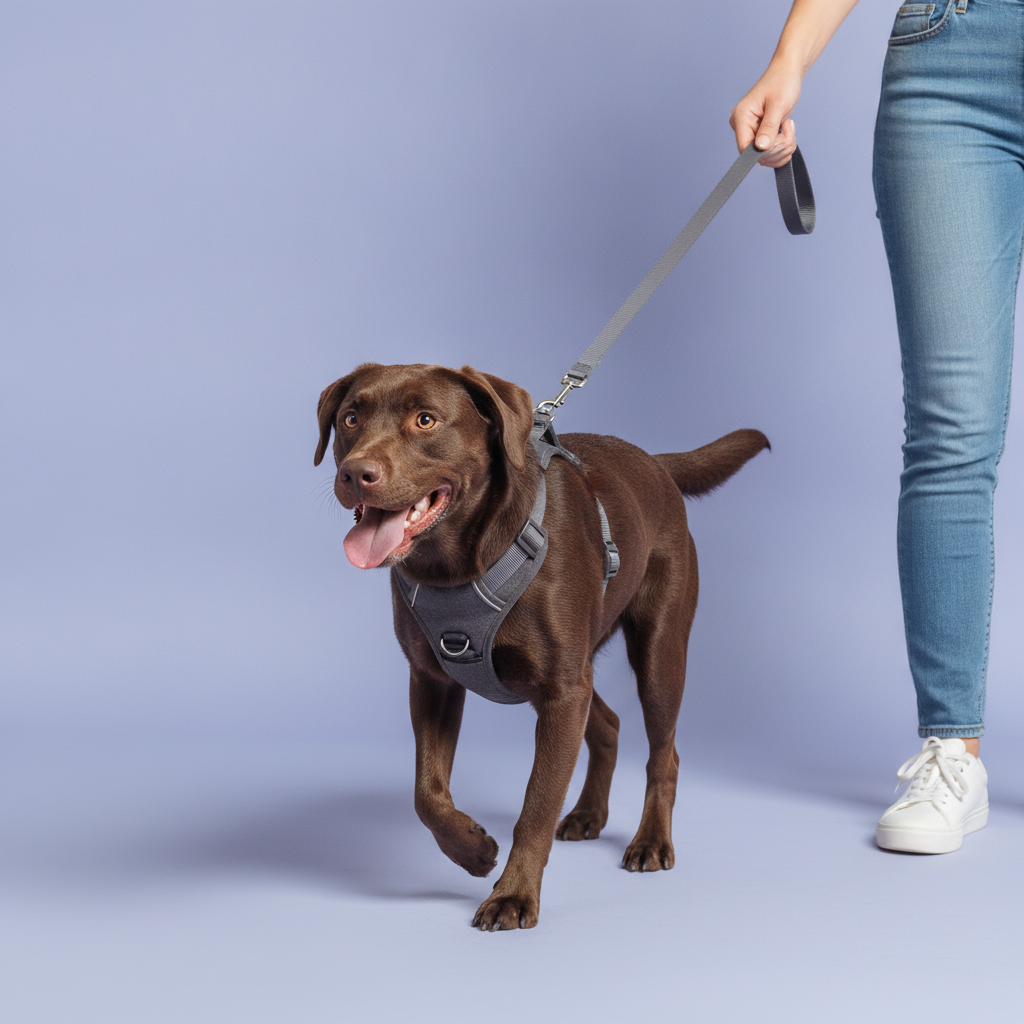
Most walk-gear roundups are really style roundups with a leash attached. This one starts somewhere more useful, because the difference between good and bad walk gear is not the colorway. It is whether the gear puts force where an animal’s body can safely take it. Get that right and the rest is taste. Get it wrong and a beautiful collar becomes a genuine hazard.
So before any picks, the single principle that should govern every purchase below: pulling force belongs on the chest and shoulders, never the front of the throat. That one rule decides which harness is safe, why you should almost never clip a leash to a cat’s neck, and when a front-clip beats a back-clip. Everything here is organized by the job the gear does, with our team’s pick for each and, just as important, who it is wrong for.
First, the decision that matters: where does the leash attach?
Three attachment styles cover almost every dog, and choosing among them is more consequential than any brand decision.
A back-clip harness (leash ring between the shoulder blades) is the everyday default. It keeps tension off the neck, sits out of the way for sniffing, and is ideal for dogs who already walk politely, and for short dogs where a low clip point drags.
A front-clip harness (ring at the center of the chest) is the tool for pullers. When the dog surges, the chest ring turns them gently back toward you instead of letting them lean into the pressure, which is why trainers reach for it during leash training.
A martingale collar (limited-slip, two-loop) is the security layer. It tightens only enough to be escape-resistant without choking, and it makes an excellent backup clip alongside a harness.
Match the tool to the dog in front of you, then pick the nice-looking version. Here are ours.
Wild One walk kit (back-clip)
Wild One earned its cult status among millennial pet parents honestly. The brand launched in 2018 bridging functional gear and fashion, and it walks the walk on rescue, partnering with Badass Animal Rescue to sponsor a pet’s rescue each week and help fund medical bills and adoption events. The kit is soft, stretchy, and adjustable enough to prevent chafing, and it uses a back-clip with a secure under-the-arm style.
Right for: polite everyday walkers, short dogs, sniff-forward strolls. Wrong for: hard pullers, who will lean into a back clip.
“For ordinary strolls and sniff time, a back-clip harness is my preference, particularly on a low-slung dog. A rear attachment makes it far simpler to keep a bit of tension on the leash and hold it off the ground, which a front clip doesn’t manage as well.” — Dr. Ravi Mehta, veterinarian on the Pet Times roster
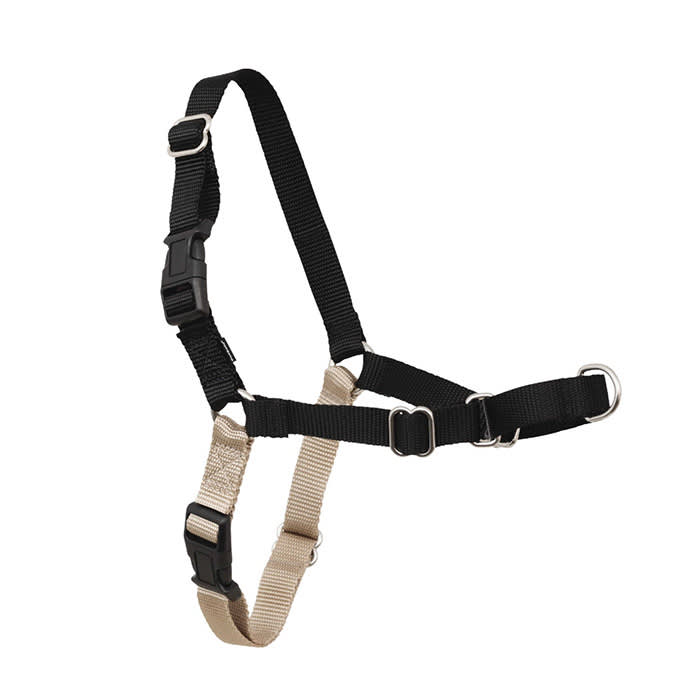
PetSafe Easy Walk (front-clip)
This is the pick the original of this guide was missing, and for a lot of owners it is the most important one. The PetSafe Easy Walk harness was designed by a veterinary behaviorist in 2004 specifically for pulling. Its front chest ring uses a martingale-style loop that applies gentle, gradual pressure across the shoulders and steers a lunging dog back toward you, without loading the throat the way a collar does. It sits lightly across the chest and is breathable, and the padded Comfort version deters even determined pullers.
Right for: dogs in leash training, strong pullers, anyone whose walks feel like waterskiing. Wrong for: dogs who already walk on a loose leash (a back-clip is comfier), and it is a training aid, not a substitute for training.
“A front-clip harness buys you back control on day one, which lowers everyone’s stress enough to actually train the loose-leash behavior. I treat it as a bridge, not a forever crutch.” — Jordan Ellis, Pet Times trainer
Found My Animal hands-free rope leash
If your exercise is dictated by your dog’s need to run, a hands-free leash changes the rhythm: worn around the waist, it frees your hands for water or a mid-run reward. Found My Animal’s rope leash is a trainer and owner favorite, and the brand exists to raise awareness for rescue, having collaborated with Petco on a rescue-benefiting collection and with actor Justin Theroux on the Kuma Ombre leash, whose proceeds went entirely to Austin Pets Alive. To date the company has donated to more than 70 rescue organizations.
Right for: runners and hikers who want open hands. Wrong for: reactive dogs, where being tethered to your waist removes your ability to quickly create distance.
“A hands-free rope leash keeps your hands open for treats and water, and a well-made one takes real tension without fraying. It’s the gear I recommend most to people who run with their dogs.” — Jordan Ellis, Pet Times trainer
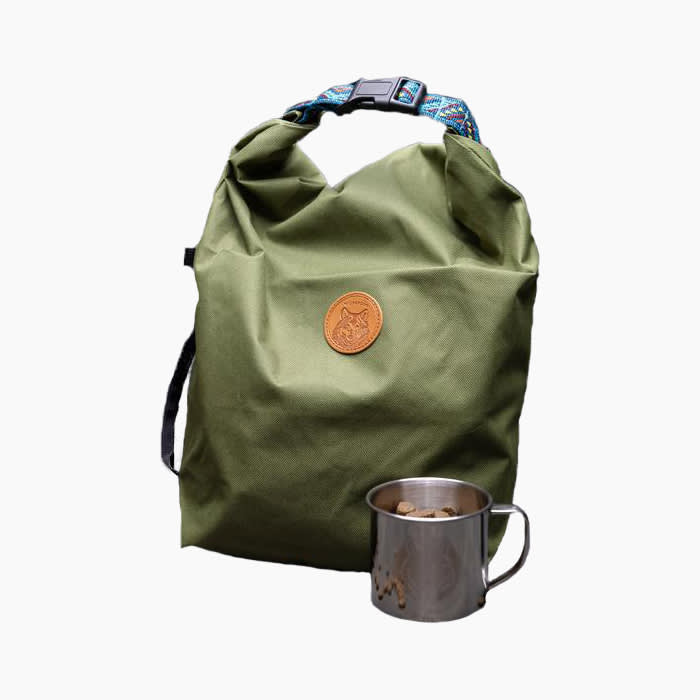
Wilderdog Islander reflective leash
When you sense your dog might be stronger than their leash, the Wilderdog Islander answers it. Made from tightly spun rock-climbing rope and secured with a carabiner lock, it stands up to serious pullers, can be worn hands-free, and ties into knots to vary length. Its standout is reflective tape woven through the mesh, making your dog visible to drivers and pedestrians in the dark.
Right for: powerful dogs, early-morning and after-dark walks, hikes. Wrong for: tiny dogs, for whom the hardware is overkill in weight.
Dog + Bone martingale collar
Dog + Bone built its reputation on the martingale, the two-loop “limited-slip” or “Greyhound” collar. Fitted correctly, it tightens just enough to be virtually escape-proof without choking, which makes it both a smart primary collar for escape artists and an ideal redundant clip point alongside a harness.
Right for: dogs who back out of flat collars, and anyone who wants a fail-safe. Wrong for: leaving on unsupervised (the loop can snag), and it is not a no-pull device.
“I tell dog-walking companies to run a martingale as a backup to whatever device the client uses, in case of an equipment failure. That redundancy is what keeps a dog from getting loose at the worst possible moment.” — Jordan Ellis, Pet Times trainer
Maxbone Easy Fit harness
Leash-training starts with gear that sets a puppy up for success. The Maxbone Easy Fit is highly adjustable, easy to get onto a squirming puppy, and made of soft neoprene that gives breathing room without constricting the airway, which matters even more for brachycephalic breeds prone to breathing trouble like French Bulldogs, Pugs, and Boston Terriers. A back handle helps you grab a too-curious pup.
Right for: puppies and flat-faced breeds. Wrong for: full-grown strong pullers, who need a dedicated front-clip.
“Get a puppy used to a new harness indoors with a little training before you ever head outside, then go slow and let them amble at their own pace. Pushing the pace backfires.” — Dr. Nina Kohl, behavior advisor on the Pet Times roster
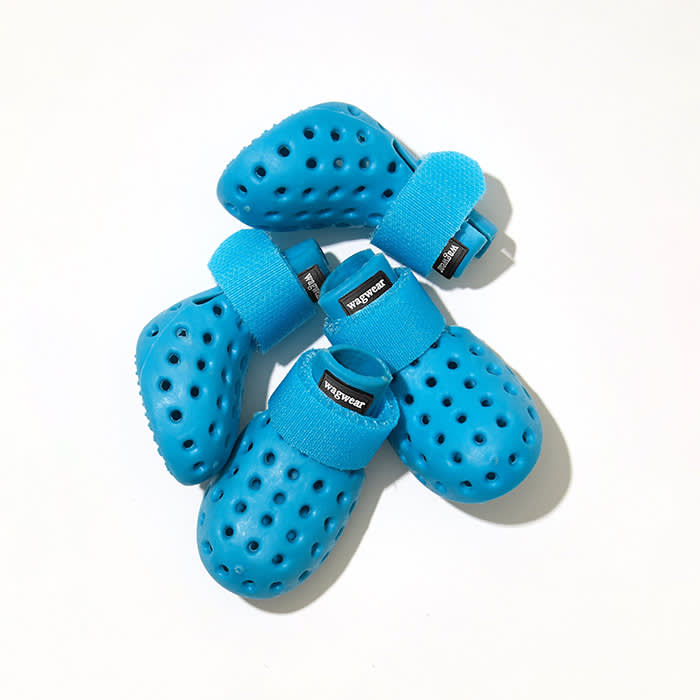
WagWellies Mojave boots
wagwear’s ventilated Mojave boot borrows the perforated look of a certain foam clog so paws breathe, and it works year-round: hot pavement in summer, icy stairs in winter.
Right for: extreme surfaces, and dogs that drag paws due to injury or neurological issues. Wrong for: dogs who have not been acclimated (introduce slowly and reward heavily, or you will get the famous high-step refusal).
“Boots shield the pads against bitter cold, scorching ground, and rough, sharp surfaces, and they head off scrapes in dogs that scuff their paws because of an injury or a neurological issue. Bring them in gradually and be lavish with the rewards.” — Dr. Lena Park, veterinary advisor on the Pet Times roster
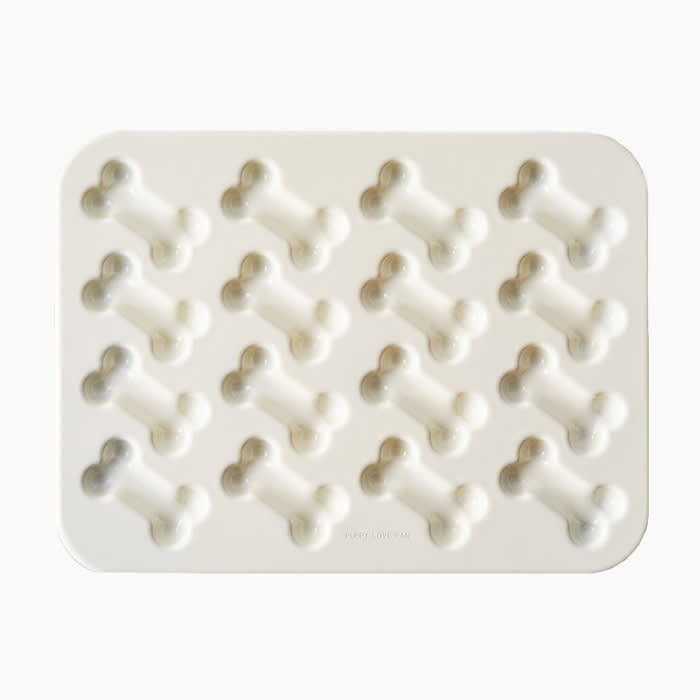
Ware of the Dog
Not every pick is about pulling physics; some walks are just for looking good. Ware of the Dog’s two-tone leather leashes are made in New York from playfully textured leathers sourced in France and Italy, run four feet with stainless hardware, and come in three widths. Founder Jackie Rosenthal launched the brand after a fashion career at houses like Comme des Garçons, Nina Ricci, and Lanvin. “We build our leashes and collars to be playful and eye-catching,” she says. “They’ve stayed in the lineup for a decade now and still outsell everything else.”
Right for: calm walkers and a polished look. Wrong for: pullers (leather offers no give and no reflectivity).
Cats get their own rules
This is where the throat-force principle is non-negotiable, because a cat’s neck is far more fragile than a dog’s.
escape-proof mesh vest
For any cat you plan to walk, a vest-style harness is the only safe choice. This breathable mesh vest is lightweight yet heavy-duty, with a martingale feature that gently cinches if a cat tries to wriggle free.
Right for: adventure cats and leash-trained indoor cats. Wrong for: as a leash anchor via the neck, ever.
“Don’t ever clip a leash onto a cat’s neck collar or a harness that fastens at the neck. That loads the front of the windpipe and risks real harm, up to and including strangulation, plus cats wriggle straight out of them. The only thing I’d put a cat in for a walk is a snug vest-style harness.” — Dr. Nina Kohl, behavior advisor on the Pet Times roster
leather breakaway collar
For indoor identification and a little style, a natural leather collar with a quick-release breakaway clasp is the pick. The breakaway is the whole point: if the collar snags, it releases before it can hurt your cat. A removable brass bell helps you track a stealthy cat.
Right for: indoor ID and charm. Wrong for: attaching a leash (see above), and for outdoor roaming, where it may get snatched.
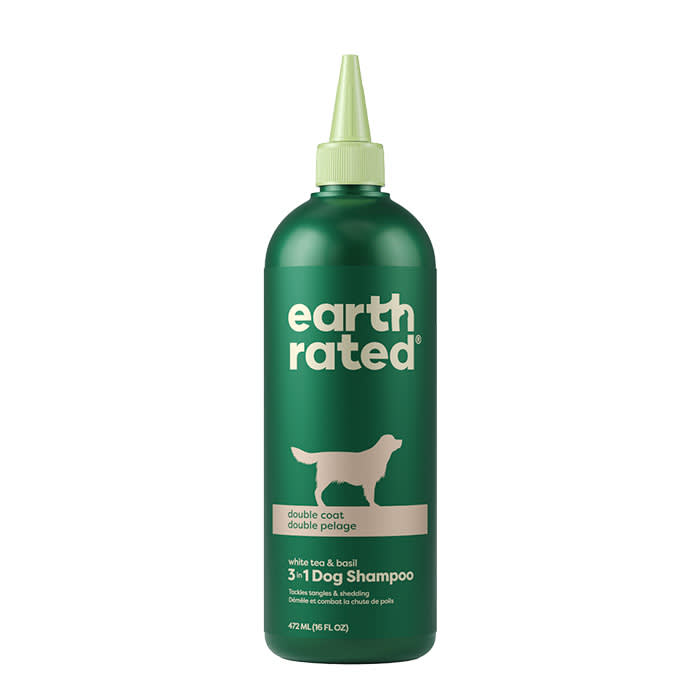
Earth Rated
Durability beats aesthetics here, but you can have both. Earth Rated bags are made from 65 percent post-consumer recycled plastic and are thick and 100 percent leak-proof, which, if you have ever carried multiple gifts on one walk, you will appreciate. A realistic note the marketing skips: recycled-content bags still are not truly compostable, so dispose of them as trash, not in a compost bin.
Wild One carrier
An elastic strap attaches this buttery-soft carrier to any leash, and it loads a roll through a twist-top lid. If your dog already wears the rest of the Wild One kit, it completes the monochrome look.
The bottom line
Buy for the job, not the photo. Decide the attachment point first (back-clip for polite walkers, front-clip for pullers, martingale as backup), never load a cat’s neck, and only then choose the version you like looking at. Do that and every item above earns its place on your hook.
Our editors and their pets picked out these products. They were in stock when we published, but something may sell out. If you buy through our links, we may earn a commission.
References
- “Easy Walk Harness, No Pull Dog Harness.” PetSafe. https://www.petsafe.com/p/easy-walk-harness/EWH-HC-P-BLK/
- “How to Fit a Martingale Collar.” The Humane Society of the United States. https://www.humanesociety.org/resources/collar-and-harness-safety
Sasha Ford is a certified cat behaviour consultant who has worked with shelters, catteries, and private clients across the country. They review all feline behaviour content at The Pet Times, with expertise in multi-cat households, indoor enrichment, and stress-related disorders.
Meet our experts ↗Keep reading
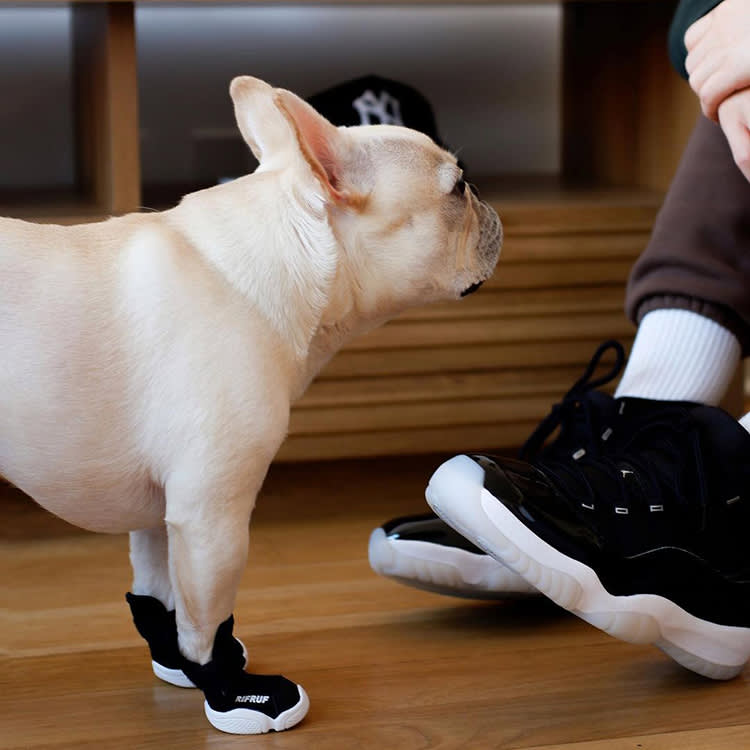 Product PicksDog Shoes Don't Fail Because They're Ugly. They Fail Because They Fall Off.Sasha Ford · 5 min
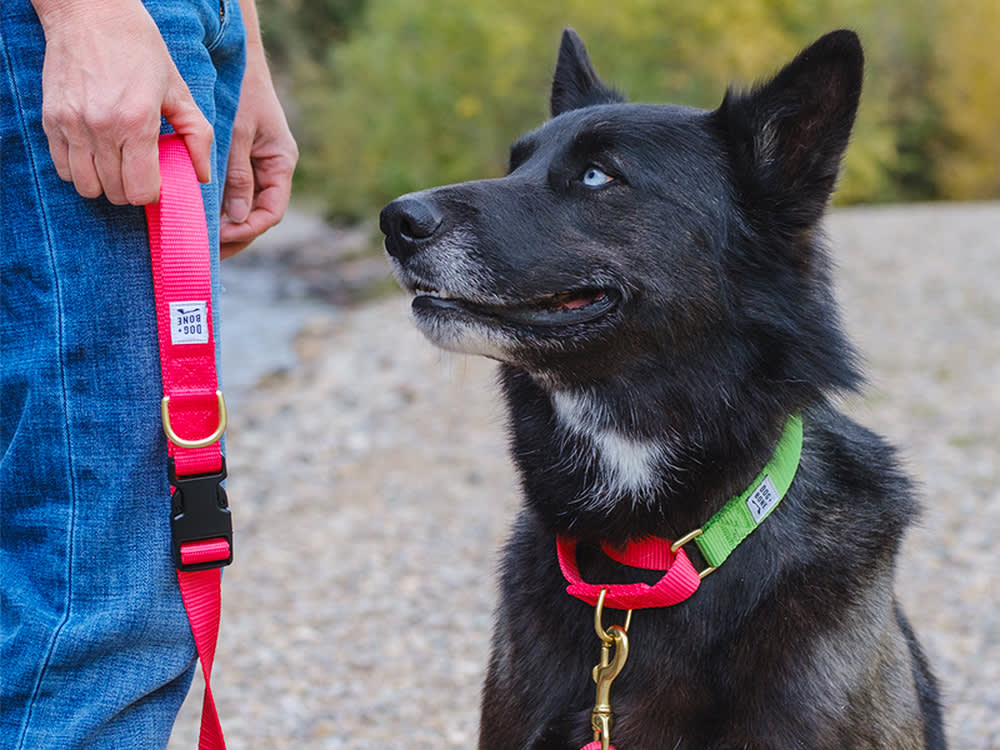 Product PicksThe Escape-Proof Collar Shelters Swear By Comes From a Town of 400Nina Vasquez · 5 min
 Product Picks7 Pieces of Dog Gear That Won't Wreck Your Living RoomSara Lim · 6 min
 Product PicksThe Grooming Kit That Actually Fits Your Pet's ProblemSasha Ford · 9 min
 Product PicksA $168 Pet Bag Won't Get You Past the Gate. A Tape Measure Will.Sara Lim · 6 min
 Product PicksBuild Your Pet's Barbie Look Without Buying 33 Pink ThingsSara Lim · 5 min