


Your First Dog: Match the Lifestyle First, the Breed Second
The best first dog is not a breed, it is a fit. Here is a quick self-assessment, the temperament archetypes that suit beginners, the health costs nobody warns you about, and why an adult rescue is often the easiest start of all.

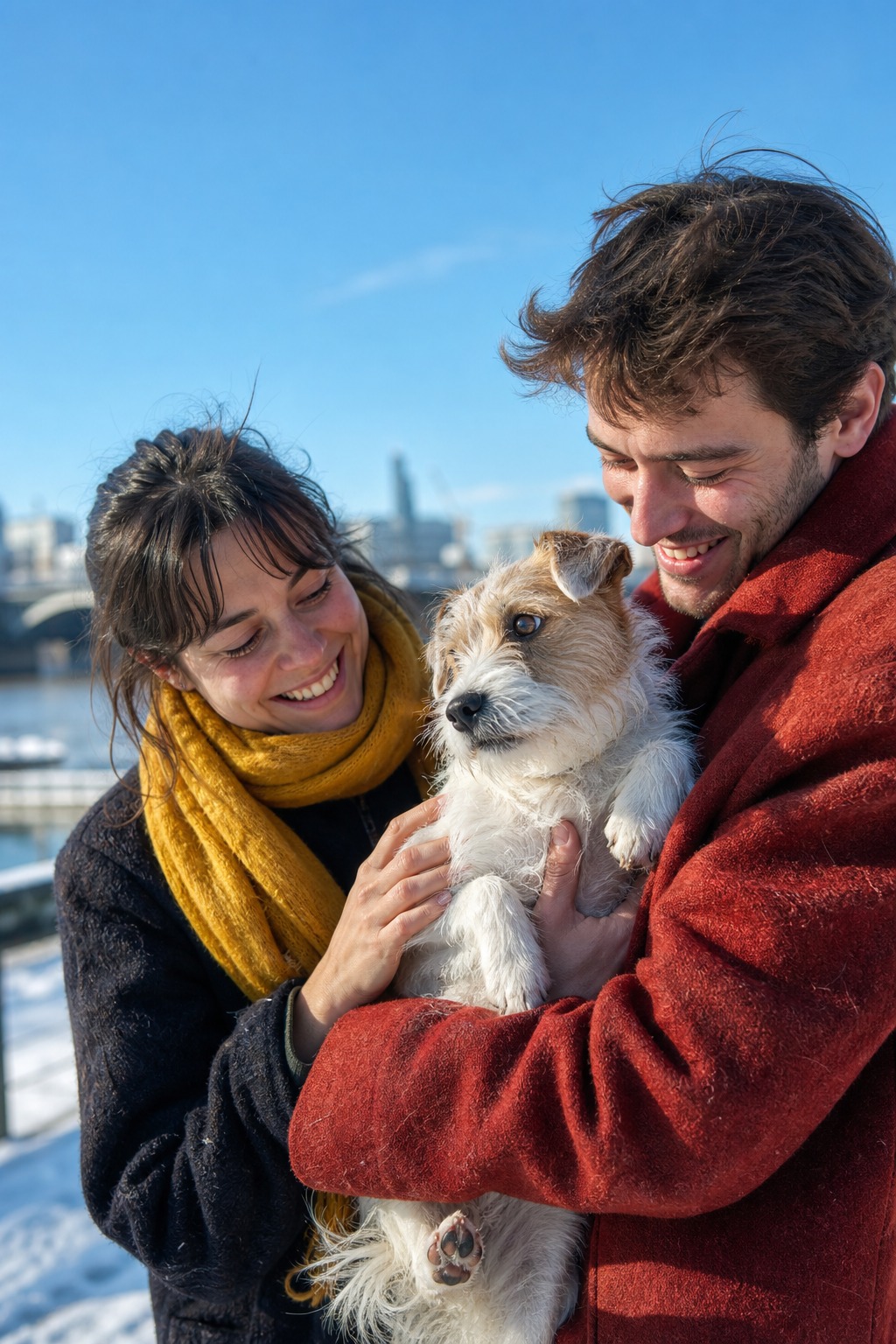
The most useful thing to know about choosing a first dog is that “best breed” lists get the order backwards. The breed is the last decision, not the first. The first decision is an honest look at your own week: how many hours the dog will be alone, how much you will actually walk in February, what you can spend on grooming and vet care, and how much chewed furniture you can forgive. Get that right and a dozen breeds will work. Get it wrong and even the gentlest Golden Retriever becomes a problem you are not equipped to solve.
So before the breed names, start with you.
A five-minute self-assessment
Answer these honestly, not aspirationally.
How many hours will the dog be home alone on a normal workday? Most dogs do best with no more than four to six hours solo; if yours will be alone longer, you need a plan (a walker, daycare, a second adult at home) before you need a breed.
How much exercise will you genuinely provide, rain or shine? Be realistic about the worst week, not the best one. A dog bred to run all day does not get to opt out when you are tired.
What is your grooming budget, in both time and money? A non-shedding curly coat is gorgeous and means a professional groom every four to six weeks, often $70 to $120 a visit, plus brushing in between.
How much chaos can you tolerate while the dog learns the rules? Puppies chew, bark, and have accidents for months. If that sounds intolerable, that is a signal, not a failing.
Your answers point you toward a temperament, and temperament is what these breed “archetypes” really describe.
The beginner-friendly archetypes
Think in types, not in single breeds. Each of these is forgiving of first-timer mistakes, and within each you can find both purebreds and, more affordably, mixes.
The easygoing family dog. The Golden Retriever and Labrador Retriever are the originals here, sunshine on four legs, smart, trainable, and happy whether you want a hiking buddy or a movie-night cushion. The trade-off is real shedding and a need for daily activity, so budget for a good brush and a solid walk. Worth knowing before you fall in love: both breeds carry elevated lifetime cancer rates (notably high in Golden Retrievers), so factor in long-term vet costs and consider pet insurance early.
The adaptable companion. The Cavalier King Charles Spaniel is affectionate, lap-sized, and equally at home in an apartment or a house. The honest caveat the cute photos leave out is health: the breed is strongly predisposed to mitral valve heart disease and to a painful neurological condition called syringomyelia, so ask any breeder about cardiac and MRI screening, and budget for cardiac monitoring as the dog ages.
The surprising couch potato. Greyhounds confuse people. They sprint like rockets for two minutes and then sleep for twenty hours. They are gentle, quiet, low-drama, and shed only moderately, which makes a retired racing Greyhound one of the most beginner-friendly adoptions out there. They do need soft bedding (almost no body fat), a secure yard or leash at all times (the chase instinct is hardwired), and a coat in cold weather.
The bright little dog. The Papillon is elegant, athletic for its size, and a fast learner, while the Bichon Frisé is a cheerful, snuggly cotton ball. Both suit small spaces. Both also carry a grooming bill, the Bichon especially, whose coat mats without regular brushing and professional trims.
Notice that this list spans energy levels and sizes on purpose. There is no single right answer, only a right answer for your week.
The archetypes to skip at first
There is no bad breed, only a bad match. These three groups ask for more than most beginners can give on day one.
The working and herding athletes, including Border Collies, Australian Shepherds, Jack Russell Terriers, and Belgian Malinois. They are brilliant, which is exactly the problem: an under-stimulated herding dog invents its own jobs, usually ones you will not like, such as herding your kids or dismantling the couch. They need hours of physical and mental work every day.
The guardians, including some German Shepherds, Cane Corsos, and Rottweilers. Their protective instincts are a feature for experienced owners and a liability for novices who cannot yet read and channel them. These dogs reward skilled training and can overwhelm someone learning the basics.
The high-maintenance coats, including Afghan Hounds, Standard Poodles, and Shih Tzus. Beautiful, and a standing appointment with a brush and a groomer for the life of the dog. Skip the grooming and the coat mats painfully against the skin.
The reframe nobody puts on these lists: adopt an adult
The single easiest “first dog” is often not a breed at all. It is a settled adult, roughly two to six years old, from a shelter or a breed-specific rescue.
The reason is simple. With a puppy you are betting on who the dog will become; with an adult you can see who the dog already is. A good shelter or foster will tell you whether the dog is calm or bouncy, housetrained, good with kids and cats, and how it does when left alone, the exact variables your self-assessment cares about. You also skip months of chewing and housetraining, and adoption fees run a fraction of a breeder’s price.
The need is real, too. Roughly six million animals enter U.S. shelters each year, and breed-specific rescues exist for nearly every type of dog, so you can usually find the look and temperament you want while opening a kennel for the next animal in line. And if a particular breed matters to you, research is humbling: a large 2022 study in Science found that breed explains only a small fraction of an individual dog’s behavior. The dog in front of you tells you far more than the label does.
How to make the final call
Lay your self-assessment beside the archetypes and let the constraints choose for you. Limited time and a small space point to a calm, low-grooming companion or an adult rescue. A big active household with a yard can take on a sporty family dog. Long work hours mean solving the alone-time problem first, regardless of breed.
Then meet the actual dog. Watch how it greets you, how it settles, how it handles being touched and gently restrained. The right first dog is the one whose real, observable temperament fits the life you actually live, not the one with the best entry on a list.
References
- Morrill, K., et al. “Ancestry-inclusive dog genomics challenges popular breed stereotypes.” Science, 2022.
- ASPCA. “Pet Statistics: Shelter Intake and Surrender.”
- American College of Veterinary Internal Medicine. “Myxomatous Mitral Valve Disease in Dogs.”
- Morris Animal Foundation. “Golden Retriever Lifetime Study.”
- American Kennel Club. “Dog Breeds: Traits and Care Needs.”
Common questions
What is genuinely the easiest first dog to own?
For most beginners it is a settled adult dog from a shelter or breed rescue, roughly two to six years old, whose energy level and temperament you can see in person before you commit. You skip the chewing, the housetraining, and the guesswork about adult personality that comes with a puppy.
Which breeds suit first-time owners in an apartment?
Small-to-medium dogs with moderate energy and quiet temperaments adapt best, including Cavalier King Charles Spaniels, Bichon Frisés, Greyhounds (yes, they are famous couch potatoes), and many small mixed-breeds. Energy level and noise matter far more than size, so a calm large dog can beat a yappy small one.
Which breeds are usually too much for a first-time owner?
Working and herding breeds bred for all-day jobs (Border Collies, Australian Shepherds, Belgian Malinois), strong guardian breeds (some Shepherds, Cane Corsos), and high-maintenance coats (Afghan Hounds, Standard Poodles, Shih Tzus) all ask for more time, training, or grooming than most beginners expect.
Is a purebred or a mixed-breed better for a beginner?
A mix is often the safer bet. Mixed-breeds tend to have fewer of the extreme physical traits that drive up vet bills, and a shelter can usually tell you the adult dog's real temperament. Research shows breed predicts far less about an individual dog's behavior than people assume.
Claire Sutton writes about life with pets, from the first days home to the small daily routines that make a household work. Her reporting spans people-and-pet relationships, training basics, and the practical side of bringing a new animal into the family.
Meet our experts ↗Keep reading
 First DaysYour Puppy Wants a Bully Stick. Their Teeth Aren't Ready.Dr. Mara Chen · 6 min
 Health & WellnessPuppy Breath Doesn't Go Bad. It Goes on Schedule.Dr. Mara Chen · 6 min
 First DaysThe Simple Math That Ends Puppy Potty AccidentsDr. Lena Park · 6 min
 First DaysYour Puppy Isn't Regressing. They're in a Fear PeriodJordan Ellis · 8 min
 First DaysThe Crate Is the Easy Part: How to Size and Choose One So Training WorksClaire Sutton · 8 min
 Health & WellnessThe 8-Week Puppy Bath Rule Has Nothing to Do With GermsDr. Mara Chen · 9 min