


The Crate Is the Easy Part: How to Size and Choose One So Training Works
Most new-puppy owners agonize over which crate to buy when the decision that actually makes or breaks training is sizing it correctly today. Here's the one rule that matters most, the buy-it-once divider strategy, and how to match the crate type to your real life.

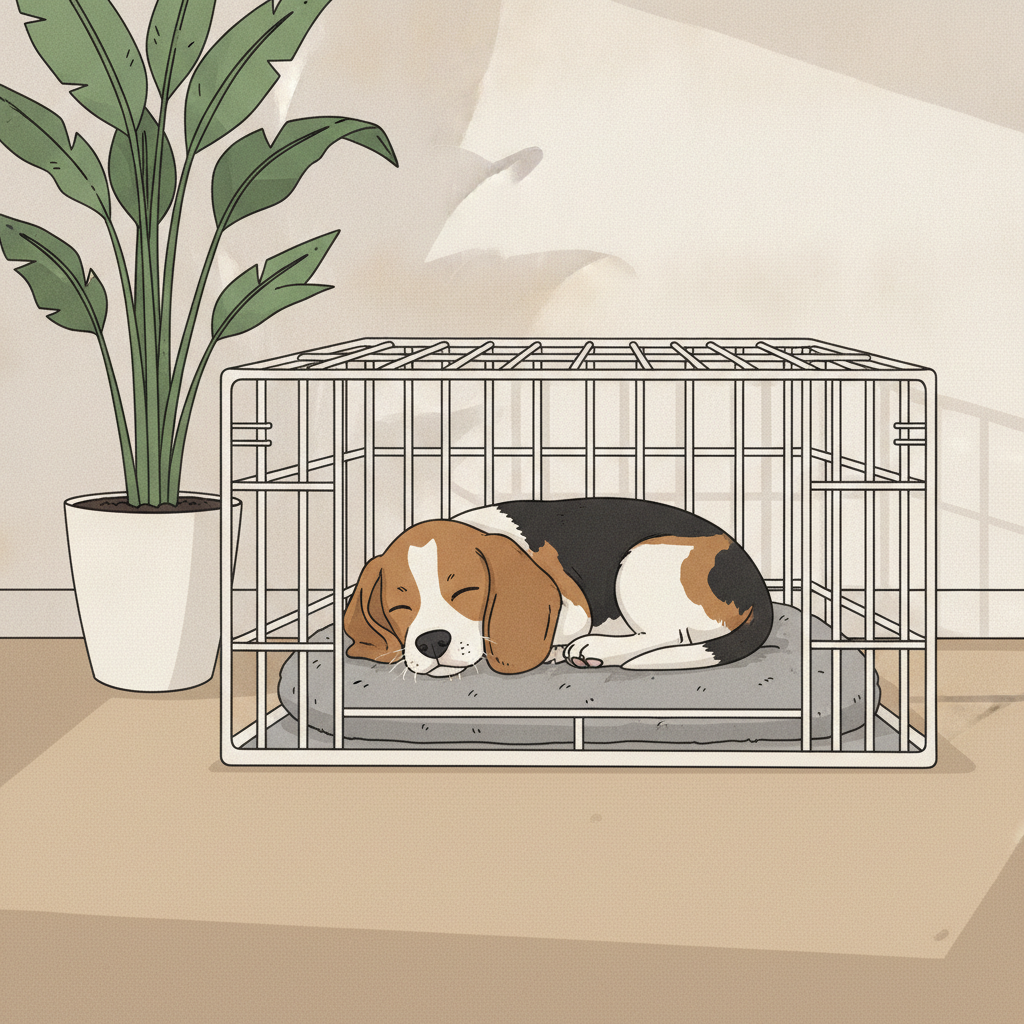
Here is something experienced owners know that first-timers learn the hard way: potty training is mostly a matter of time, but crate-training is a matter of willpower, mostly yours. The good news is that the hardest part is the training, not the shopping. The crate itself is the easy, cheap part of the equation, and yet it is where most new-puppy owners pour all their energy, comparing dozens of models while overlooking the single decision that actually determines whether crate-training succeeds.
That decision is size. Get the size right and a basic crate works beautifully. Get it wrong and the most expensive, beautifully designed crate on the market will sabotage your house-training. So before we talk about which crate to buy, let’s spend real time on the rule that matters most, because almost everything else is secondary.
The one rule that makes or breaks it: size it for now, not for later
Your puppy should be able to stand up, turn around, and lie down comfortably in the crate, and not much more than that. To find the right dimensions, measure your puppy’s length (nose to base of tail) and height (floor to top of head or ears) and add about four inches to each.
The trap nearly everyone falls into is buying a crate sized for the dog’s projected adult body to “save money.” Resist it. A crate that is too big for the current puppy quietly wrecks training in two ways.
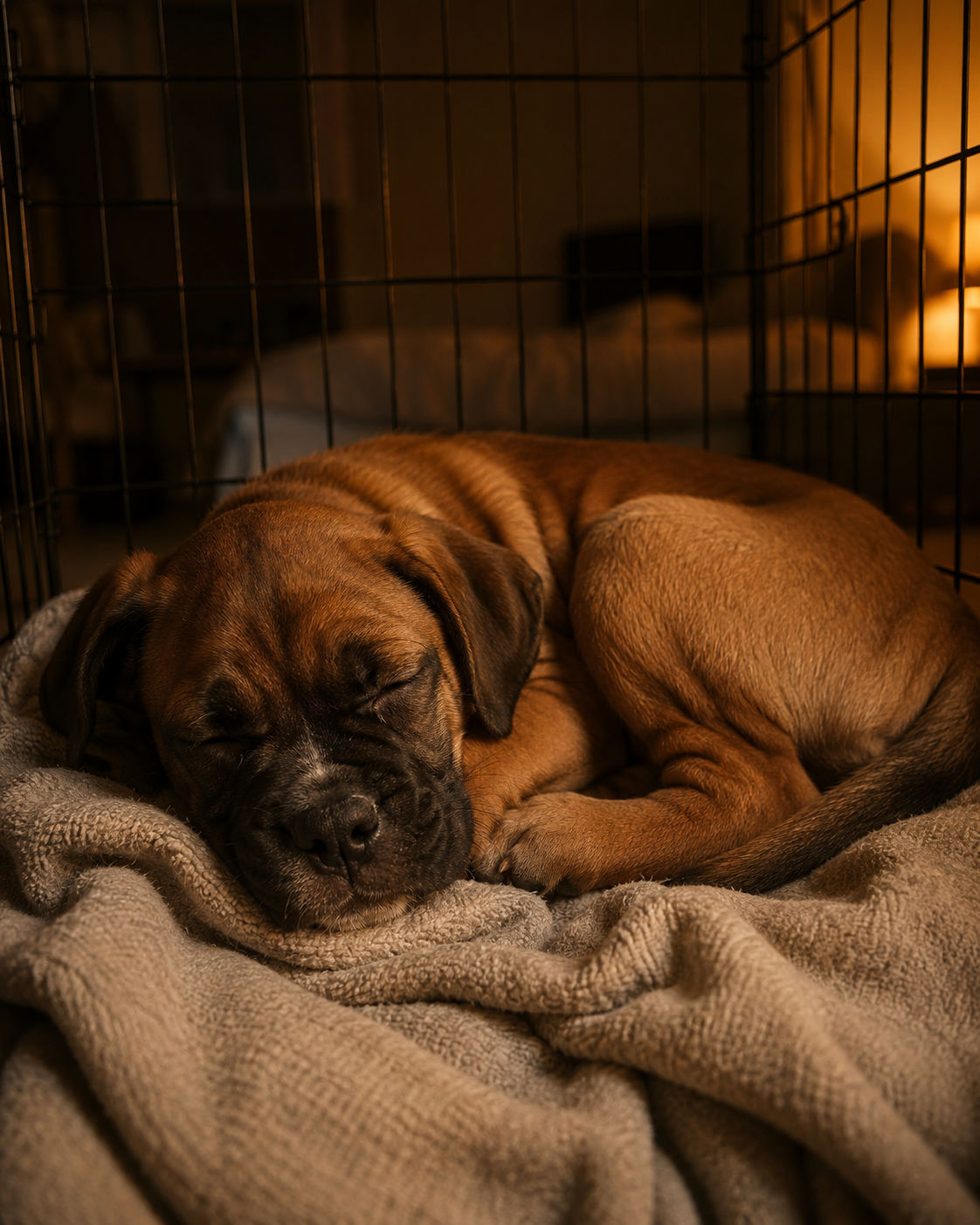
First, it kills the den feeling that makes a crate calming in the first place. A crate works because it taps a dog’s instinct to rest in a snug, enclosed space; a cavernous one feels like a room, not a den, and an anxious puppy does not settle in a room. As one trainer I work with frames it:
“A dog has to feel secure before they can feel calm, and security comes from snugness, not square footage. People think they’re being generous with a giant crate. The puppy just feels exposed.”
Second, and more practically, extra space lets a puppy do their business in one corner and sleep clean in another. Dogs instinctively avoid soiling where they sleep, and a properly sized crate uses that instinct to build bladder control. Give them a spare corner and you have handed them a bathroom, undoing the whole point.
The smart move: buy once, divide as they grow
So how do you avoid buying a new crate every few months as your puppy grows? With a divider panel. Buy a crate sized for your dog’s expected adult dimensions, then use the included or add-on divider to wall off the back so the usable space is correct for the puppy right now. As they grow, you slide the divider back. This is the single most cost-effective crate decision you can make: one crate, correctly sized at every stage, from eight weeks to adulthood.
When you shop, prioritizing a crate that comes with a divider (or accepts one) matters more than almost any premium feature. Many of the better crates include a puppy divider precisely because trainers have been begging for this for years.
Match the crate type to your actual life
Once size and a divider are handled, the choice between crate types comes down to your temperament-and-lifestyle reality: how destructive or anxious your puppy is, and how much you travel, work, and have to spend. Here is how the main types actually differ.
Wire crates: the sensible default. A foldable wire crate is easy to clean, well ventilated, hard for a moderate chewer to destroy, and the most affordable real option. It usually comes in many sizes (and with a divider), folds flat for travel, and suits the majority of puppies. For most people, this is the right first crate, full stop.
Soft-sided crates: only once training is solid. A lightweight soft-sided crate is wonderfully portable and pleasant for a calm, house-trained, non-chewing dog. It is the wrong choice for a teething puppy or an escape artist, who will shred or wriggle out of it. Think of it as a graduation gift, not a starter crate.
Plastic/travel crates: for the car and airline. Hard plastic crates are enclosed (which some anxious dogs prefer), sturdy, and the type airlines require. If your puppy will fly or ride often, a plastic crate, or a genuinely crash-tested travel crate benchmarked to child-restraint safety standards, is worth the spend. Car-crate-training is its own separate skill, so build that before a long drive.
Furniture-style crates: for small spaces and looks. Crate-and-side-table combos are designed to disappear into a room and remove the “dog cage in the living room” eyesore, often accepting a standard 24- or 36-inch wire crate inside. They are a fine choice if floor space and aesthetics are real constraints; just confirm the interior is correctly sized (with a divider) for your puppy, since the same size rule still applies.
Premium modular crates: nice, not necessary. The high-end crates, lightweight, multiple doors, a top that opens into a playpen, pinch-free locking doors that protect paws and fingers, an included divider, are genuinely well made and convenient. They are an upgrade, not a requirement. A correctly sized wire crate plus good training produces the same trained dog.
Accessories that actually help (and the trap to avoid)
The most useful accessory is not a comfort item, it is a reason for the puppy to want to go in. A safe chew or a treat-dispensing toy reserved only for crate time builds a positive association faster than anything else, because the puppy starts seeing the crate as where the good thing happens. A crate-mounted training aid or a spill-proof attachable water bowl can help too.
One genuine caution that the typical roundup glosses over: be careful with soft bedding and loose blankets for a heavy chewer. A puppy who shreds and swallows fabric can develop a dangerous intestinal blockage. For a determined chewer, start with a chew-proof mat or no bedding at all until you know they won’t eat it, and supervise.
Realistic expectations on timing
Two numbers keep owners sane. For daytime crating, a puppy can generally hold it about one hour per month of age, plus one, so a three-month-old tops out around four hours, and no puppy should be crated all day. Most dogs keep sleeping in a crate until they are reliably house-trained and past destructive chewing, frequently into their second year, after which it becomes the dog’s choice. Plenty of dogs keep using an open crate for life simply because it became their den, which is exactly the outcome you were training toward.
The crate is the easy part. Size it right, divide it as they grow, match the type to your life, and put your real effort into the training. That is where a calm, crate-loving dog actually comes from.
References
- “Crate Training Your Dog.” The Humane Society of the United States. https://www.humanesociety.org/resources/crate-training-101
- “How to Crate Train Your Dog.” American Kennel Club. https://www.akc.org/expert-advice/training/crate-training-benefits/
- “Gastrointestinal Foreign Bodies in Dogs.” American College of Veterinary Surgeons. https://www.acvs.org/small-animal/gastrointestinal-foreign-bodies
Common questions
How long can a puppy stay in a crate?
A useful rule of thumb is one hour for every month of age, plus one, so a three-month-old puppy can manage about four hours, with a hard ceiling that no puppy should be crated all day. Puppies have small bladders and need frequent breaks, and overnight is a separate case where they can usually hold longer because they're sleeping.
Until what age should a dog sleep in a crate?
There's no fixed age. Most dogs sleep in a crate at least until they're fully house-trained and past the destructive-chewing stage, often somewhere between one and two years old. After that it's a personal choice. Many dogs keep using the crate voluntarily because it has become their safe den.
How do I stop my puppy from barking in the crate?
Treat barking as information, not a problem to suppress. It usually means frustration (too much energy, not enough time out of the crate) or distress (fear, or early separation anxiety). Address the cause: more exercise and enrichment before crating, slower acclimation, and never letting the puppy out at the peak of barking, which teaches them barking works. Persistent distress-barking warrants a trainer or your vet.
Claire Sutton writes about life with pets, from the first days home to the small daily routines that make a household work. Her reporting spans people-and-pet relationships, training basics, and the practical side of bringing a new animal into the family.
Meet our experts ↗Keep reading
 First DaysYour Puppy Wants a Bully Stick. Their Teeth Aren't Ready.Dr. Mara Chen · 6 min
 First DaysYour Puppy Isn't Regressing. They're in a Fear PeriodJordan Ellis · 8 min
 Health & WellnessStop Watching Your Puppy Breathe. Start Counting.Dr. Lena Park · 8 min
 TrainingYour Puppy Isn't Being Dramatic. Separation Anxiety Is Real, and Fixable.Dr. Lena Park · 7 min
 First DaysCane Corso or Mastiff? The Choice Is About Your Life, Not Their SizeClaire Sutton · 7 min
 First DaysNighttime Crate-Training Usually Fails for One Reason: Bladder MathNina Vasquez · 8 min