


Match the Scratcher to the Cat: A Field Guide to Posts That Get Used
The best scratching post isn't a product, it's a fit. New research shows what drives cats to your couch, and how height, stability, texture, and placement decide whether a post works.

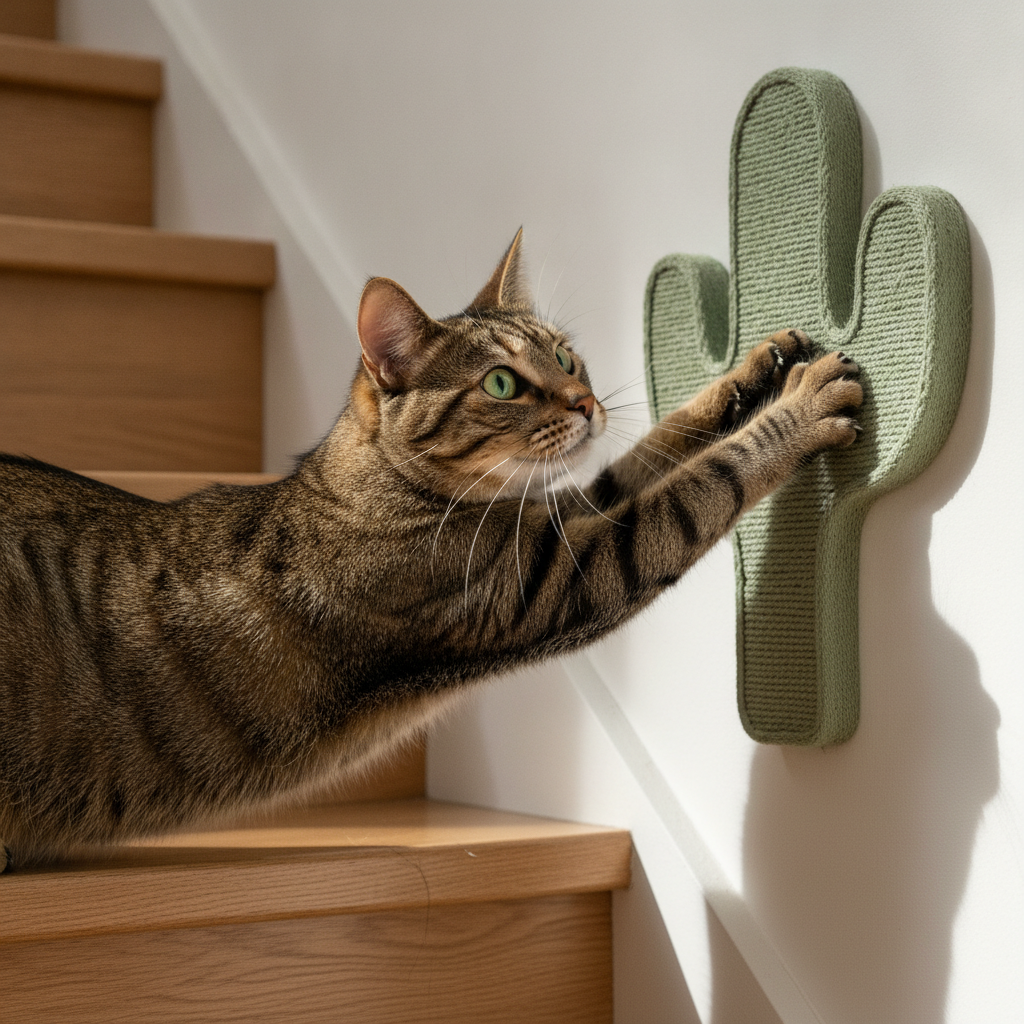
If there is one lesson new cat owners learn fast, it is that their cat has a deep, non-negotiable need to scratch, and that if you do not give that need a good outlet, your couch becomes the outlet. The usual response is to go shopping for “the best scratching post,” as though such a thing exists in the abstract. It does not. The best post is the one your particular cat will actually use, and recent research finally gives us a clear picture of what drives that choice. So this is less a product list than a field guide: figure out your cat, then pick the post.
Let’s get two things out of the way first. Removing scratching surfaces to “discourage” scratching backfires badly; it raises stress and tends to produce more destruction, not less. And declawing is never the answer. It is an amputation, it is painful and harmful, full stop, and it does nothing to address the underlying drive. Scratching is healthy behavior: cats do it to stretch muscles and tendons, to shed the outer sheaths of their claws, and to mark territory by depositing scent from glands in their paws. Your cat is not punishing you for the vacation or the missed treat. They are being a cat. (And trimming nails, while good grooming, will not curb the urge.)
What the research says is really going on
A 2024 study in Frontiers in Veterinary Science surveyed the owners of more than 1,200 cats to untangle why some cats shred the furniture and others do not, and the findings reframe the whole problem. Undesirable scratching tracked closely with a cat’s arousal and activity: high playfulness, long bouts of energetic play, and nocturnal activity all predicted more furniture-directed scratching. The presence of children in the home was associated with more of it too, likely a stress-and-stimulation effect. In other words, a cat tearing up the sofa is often an under-stimulated or over-aroused cat as much as an under-supplied one.
And the single most actionable finding: placement matters enormously. Posts positioned in the areas a cat actually frequents were far more effective at redirecting scratching than posts tucked out of sight. This is the lever most people never pull. They buy a beautiful post, put it in the spare room, and conclude their cat “doesn’t like posts,” when the real problem is geography.
So the playbook the research hands us is: meet your cat’s play and enrichment needs so arousal stays manageable, and put the right scratcher exactly where your cat is already scratching. Everything below is about that second half, getting the right scratcher.
The two specs that decide everything: height and stability
Before texture, before style, two specs separate a post that works from one that gathers dust.
Height. A good scratcher lets a cat extend into a full-body vertical stretch, because that stretch is half the reason they scratch in the first place. As one feline veterinarian on our panel, Dr. Lena Park, puts it: “The closest thing to a perfect scratcher is a tree. It is tall enough for a full stretch, heavy enough that it does not budge when a cat throws their weight into it, and rough enough to strip the old claw sheaths. Recreate those three qualities and you are most of the way there.” A practical corollary, especially for new owners: if you are adopting a kitten, do not buy a kitten-sized post. They will outgrow it in weeks.
Stability. A post that tips or wobbles teaches a cat in one lesson that it cannot be trusted, and they will not come back to it. Buy heavy, buy wide-based, or anchor it. This single factor quietly explains a huge share of “my cat ignores their post” complaints.
Now match the surface to your cat
Here is the part that is genuinely individual. Before you spend real money, run a cheap experiment: note whether your cat scratches vertically (up a chair leg) or horizontally (across the rug), then offer a couple of inexpensive surfaces and watch which one they choose. As cat behaviorist Sasha Ford advises: “Don’t guess your cat’s texture. Buy two or three budget options in different materials, set them out, and let your cat tell you. Trial and error costs less than one ruined armchair.” With that data, here is what each material is best for.
Sisal, the safe default for most cats
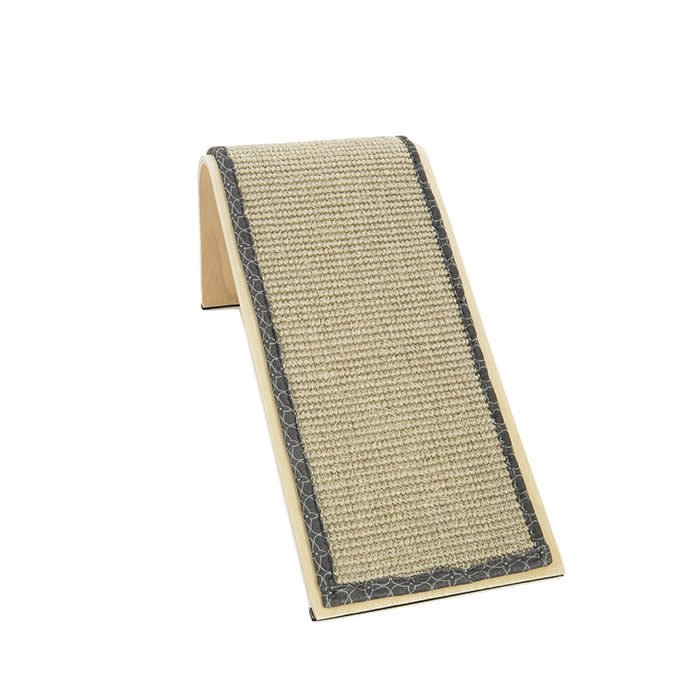
Sisal rope is the workhorse. It is tough enough to take years of scratching without shredding, and its coarse texture is exactly what most cats want for sharpening claws. A premium tightly-wound sisal post runs pricier but lasts; look for real height and a wide, tip-proof base. If that is out of budget, plenty of well-reviewed budget sisal posts assemble fast, sometimes throw in a dangling ball, and come in neutral colors. If you have no information about your cat’s preference yet, start here.
Carpet, for the cat who likes it soft
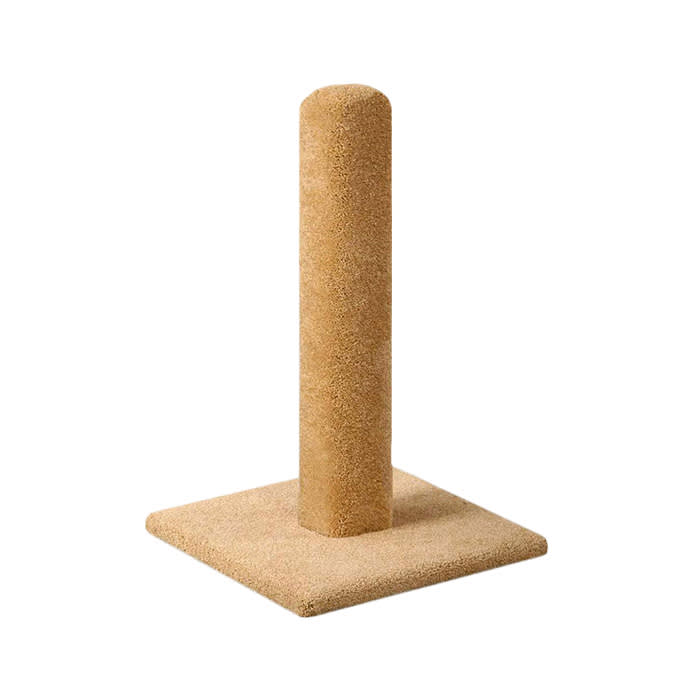
Carpet’s fibrous texture mimics some natural surfaces and doubles as a comfy resting spot, so a carpeted post can pull double duty as scratcher and perch. A sturdy 30-inch carpeted pole gives a couch-shredder something soft and approved to dig into, and compact carpeted posts are a cheap way to test whether your cat is a carpet cat before investing in something bigger. One note: a few cats generalize from a carpeted post to the actual carpet, so watch for that.
Wood, for the cat who wants the real thing
Most indoor cats would happily scratch a real tree, and wood scratchers are the next best thing. As Dr. Park notes, “Bark lets the claws sink in, and the drag-and-pull is what stretches the tendons. It is deeply satisfying for them and it is good for them.” Wood is sturdy and long-lasting. Options range from cedar posts up to about 48 inches with broad bases, to scratchers built from an actual tree branch topped with a basket, a cushion, and a sisal section, with replaceable parts so they last for years.
Cardboard, for the budget and the horizontal scratcher
If your cat scratches horizontally, or if your budget is tight, corrugated cardboard punches far above its price. High-density cardboard with non-toxic glue holds up to serious clawing, and many cats find it irresistible, especially dusted with catnip, which settles into the grooves where it works best. Contoured cardboard loungers double as nap spots; flip them when one side wears out. A simple flat cardboard scratcher often costs less than a case of cat food and frequently comes in fun patterns.
Then layer in form, function, and placement
With material settled, a few situational picks:
Floor-to-ceiling, for climbers and big cats. A tension-mounted post that presses against the ceiling like a curtain rod cannot be knocked over and lets a large cat fully stretch and climb. Low-profile models save floor space.
Combination horizontal-and-vertical scratchers, often corrugated, suit cats who do both; set them flush against a wall so they cannot tip, and pair with catnip.
Cat condos and towers, wrapped in sisal with perches, beds, and dangling toys on a heavy base, are excellent for multi-cat homes, packing scratching, climbing, and napping into one stable footprint.
Stylish pieces exist for a reason: a scratcher that lives in your living room may as well look good, and a cat will not use a post that is exiled to the basement for being ugly. Curvy rattan posts read as sculpture and do not shed like carpet; cactus-shaped woven-rope scratchers with replaceable surfaces have a cult following; oak-veneer towers with removable, washable scratching panels are a beautiful long-term solution if you can stomach the price. The research reminder applies to all of them: gorgeous or plain, it only works in the room your cat actually uses.
DIY, finally, is legitimate. A heavy wood base wrapped in your cat’s proven preferred material is a perfectly good scratcher, and the complexity is up to you. The store-bought route is easier, but a homemade post built around real height, real stability, and the texture your cat already chose will beat an expensive post your cat ignores.
The one-sentence version
Stop shopping for the best post and start shopping for your cat’s post: confirm vertical or horizontal, test a couple of textures cheaply, insist on height and a tip-proof base, and, above all, put the thing where your cat already scratches. That is what the data says works, and it is what keeps the claws on the post and off the sofa.
References
- Zhang, L., et al. “Evaluating Undesired Scratching in Domestic Cats: A Multifactorial Approach to Understand Risk Factors.” Frontiers in Veterinary Science, 2024. https://www.frontiersin.org/journals/veterinary-science/articles/10.3389/fvets.2024.1403068/full
- American Association of Feline Practitioners. “Environmental Needs Guidelines.” https://catvets.com/guidelines/practice-guidelines/environmental-needs-guidelines
- American Veterinary Medical Association. “Welfare Implications of Declawing of Domestic Cats.” https://www.avma.org/resources-tools/literature-reviews/welfare-implications-declawing-domestic-cats
Common questions
What is the most important feature in a scratching post?
Height and stability, in that order. A post tall enough for a full vertical stretch satisfies the muscle-and-tendon reason cats scratch, and a heavy, stable base means it won't tip mid-scratch. A wobbly post sends a cat straight back to the couch, no matter how nice it looks.
Where should I put the scratching post?
Right where your cat already scratches, or near where they sleep. Research on scratching behavior found that post placement in the cat's frequented areas is one of the strongest predictors of whether a post gets used. A perfect post in the wrong room is a perfect waste.
Sisal, carpet, cardboard, or wood?
It depends entirely on your individual cat, and the only reliable way to find out is to offer a couple of cheap options and watch. Many cats prefer coarse sisal or bark-like wood; some like flat cardboard or carpet. Note whether your cat scratches vertically or horizontally first, then match the surface.
Does trimming my cat's nails stop furniture scratching?
No. Trimming is good grooming, but scratching is driven by stretching, territory-marking, and emotion, not nail length. The fix is an appealing scratcher in the right spot, never declawing, which is painful and harmful and should be off the table entirely.
Dr. Chen is a small-animal veterinarian who leads health and safety coverage at The Pet Times. She writes and reviews the bulk of our illness, condition, and safety content, translating clinical guidance into clear, practical advice owners can act on at home.
Meet our experts ↗Keep reading
 Product Picks9 Electronic Cat Toys That Beat Boredom While You're OutDr. Mara Chen · 6 min
 Product PicksScore Your Cat's Toys by the Four-Act Hunt They Let It FinishDr. Mara Chen · 6 min
 Product PicksMost Cat Gifts Are Bought for the Human. These 6 Actually Get Used.Sasha Ford · 7 min
 Product PicksThe Cat Puzzle Toy Plan: Start Easy, Level Up, Actually Change BehaviorNina Vasquez · 5 min
 Product PicksThe Best Cat Toy Is the One You Don't Hide in a BasketSasha Ford · 7 min
 Product PicksYour Cat Wants the Box. These 7 Come With Toys Inside It, Too.Sara Lim · 6 min