


The Safest Barkuterie Board Is the One Built Around Your Own Dog
A dog charcuterie board is only as good as what you leave off it. Here's the toxic-foods list that matters, how to adapt a board for a toothless or diabetic dog, and where to order if you'd rather not.

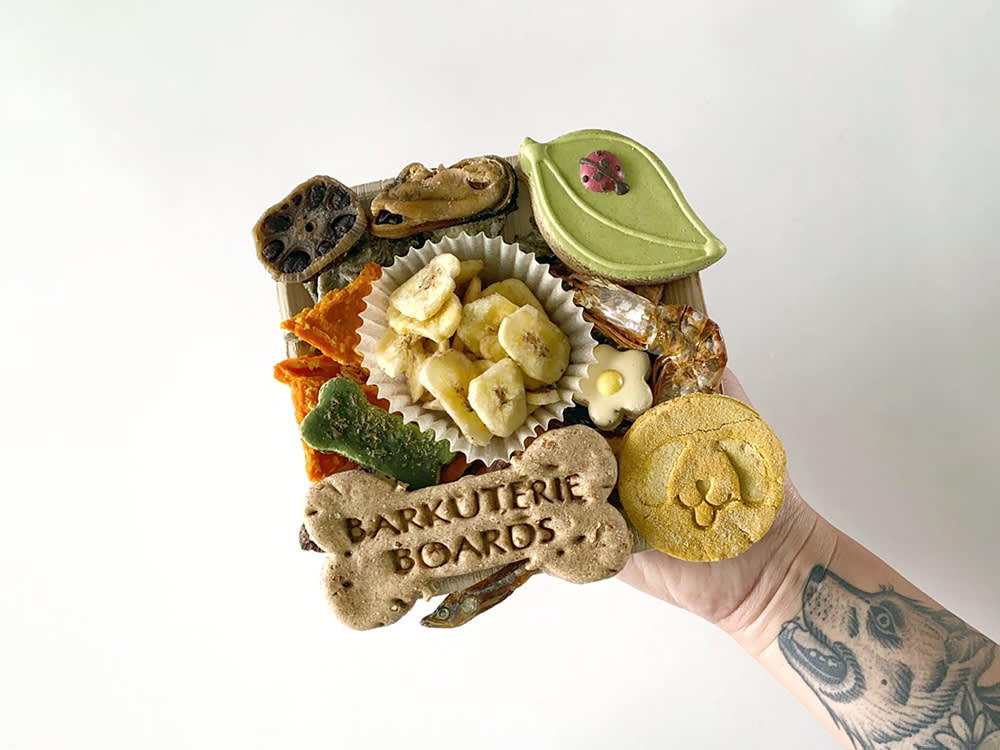
There comes a moment in every devoted pet parent’s life when a plain pup cup simply will not do. An adoption anniversary, a birthday, or a random Tuesday when you have decided your dog deserves the world. The answer trending across the pet internet is the barkuterie board, a charcuterie spread reimagined for dogs: jerky strips, baked biscuits, and dog-safe produce fanned out like cured meats and cheeses for human guests. It is equal parts treat and photo op.
But here is the reframe that should drive the whole project. A barkuterie board is not made good by what you pile on it. It is made safe by what you deliberately leave off, and by how well it fits your specific dog. The most beautiful board in the world is a hazard if it ignores your dog’s missing teeth, their diabetes, or their chicken allergy, and a celebration board built from your own charcuterie ingredients can be genuinely dangerous. So we are going to start with the part most articles bury, the safe build, and treat ordering as the convenient fallback.
First, the foods that turn a celebration into an emergency
The reason you cannot just slide your dog a corner of your own board is that several human-charcuterie staples are toxic to dogs, some at tiny doses.
- Grapes, raisins, and currants. Even small amounts can cause sudden kidney failure. The mechanism was identified in 2021: the culprit is tartaric acid, which dogs cannot clear well because they lack the transporter other species use to excrete it, so it accumulates in the kidneys. There is no known safe amount.
- Onions, garlic, leeks, and chives. These damage red blood cells and can cause anemia, and they hide in a lot of cured and seasoned meats.
- Macadamia nuts. They can trigger weakness, tremors, vomiting, and dangerously high body temperature.
- Stone-fruit pits and seeds (apricot, peach, cherry, plum) and apple seeds. These contain compounds that release cyanide.
- Xylitol, found in some peanut butters and baked goods, which causes a rapid, dangerous blood-sugar crash.
- Heavily salted or cured meats, rich cheeses, and grapes’ dried cousins. High salt and fat invite pancreatitis and salt toxicity.
Memorize that list before you arrange a single tray. It is the entire reason a “just share my board” instinct is the wrong one.
Build it around your specific dog
The guiding principle in all your planning is the same: the board has to be both safe and delicious for your dog in particular. A senior with no teeth needs soft, gummable ingredients, not crunchy biscuits. A diabetic dog should lean on protein rather than sugary fruit and carb-heavy biscuits. A dog with a chicken allergy needs every chicken-based jerky swapped out. Match the board to the dog, not the dog to the trend.
A reliable set of dog-safe building blocks:
- Proteins: plain cooked chicken (or a novel protein if there’s an allergy), low-sodium jerky, small bites of cooked salmon.
- Produce: carrots, cucumber, green beans, blueberries, apple slices with no seeds.
- Extras: a few baked dog biscuits, a smear of xylitol-free dog-safe peanut butter, a small dollop of plain canned pumpkin.
Quick adaptation guide
- No teeth or a senior: skip hard biscuits and raw crunchy veg; use cooked-soft sweet potato, plain pumpkin, shredded cooked chicken, and mashed banana.
- Diabetic: minimize fruit and biscuits; build mostly from low-sodium lean protein and non-starchy veg like green beans and cucumber.
- Allergy-prone: pick one novel protein you know your dog tolerates and keep the whole board to ingredients you have tested before; a party is not the time to introduce something new.
- Weight-watching: remember the board is the day’s treats, so shrink the regular meal accordingly and keep extras to about 10 percent of daily calories.
When in doubt about any single ingredient, skip it or run it past your vet. Nothing dampens a party faster than a trip to the emergency vet.
Prefer to order? Here’s who does it well
If your dog has tricky needs or you simply do not want to do the safety homework yourself, a growing crop of businesses have turned barkuterie into a craft and vetted the ingredients for you. Each has a different angle.
Barkuterie Boards (Atlanta). This small business runs the full range, from shippable boards and boxes to large-scale, dog-friendly grazing tables for events. Its standout extra is Barkaroos, a canine riff on Dunkaroos, for the pup who missed out on ’90s snack time. Best for: events and parties that need a centerpiece.
Woofboard (Bay Area). Upscale grazing boards for the pampered pup, with seasonal and premium-protein options. The spring boards lean into themed treats, and the Surf & Turf board is built to make a dog feel like they’re dining at a steakhouse. Best for: protein-forward boards and a luxe presentation.
Corgcuterie (Chicago). Custom grazing boards blending dog-specific treats with dog-safe people food like cucumbers, peas, and carrots, run by Chief Eating Officer Ellie, Chief Furry Officer Crouton, and their human, Heather Raeder. Custom boards start at $20 with local Chicago setup. Best for: budget-friendly, fully customized local orders.
Barkuterie Miami (Florida). Some of the most Instagrammable boards around, each customizable to your dog’s dietary needs and leaning on plenty of dried fruit, which makes them both wholesome and easy to ship. Best for: shippable boards and dietary customization. (One caution to apply yourself: confirm any dried fruit is dog-safe, since grapes’ dried form, raisins, must never appear.)
The bottom line
A barkuterie board is a wonderful way to spoil a dog, but the craft is in the editing, not the abundance. Learn the toxic-foods list cold, build the board around your individual dog’s teeth, weight, and health, and keep the whole spread within sensible treat limits. Do that and you can hand over the entire tray, snap your photo, and enjoy the best part: watching your dog realize all of it is theirs.
References
- “Grape, Raisin, and Tamarind Toxicosis in Dogs.” MSD Veterinary Manual, 2024, www.msdvetmanual.com/toxicology/food-hazards.
- “Toxic Component in Grapes and Raisins Identified.” ASPCApro, American Society for the Prevention of Cruelty to Animals, 2021, www.aspcapro.org.
- “People Foods to Avoid Feeding Your Pets.” ASPCA Animal Poison Control Center, www.aspca.org/pet-care/animal-poison-control/people-foods-avoid-feeding-your-pets.
- “Treat Your Dog to a Barkuterie Board.” Best Friends Animal Society, bestfriends.org.
Not a substitute for your vet. Our guidance is educational. For urgent symptoms, contact a vet or emergency clinic right away. Editorial standards
Nina Vasquez writes about life at home with pets and the relationships at the heart of it. Her work covers day-to-day living, people-and-pet stories, and the products that fit into a real household, with a warm, grounded take on everyday pet ownership.
Meet our experts ↗Keep reading
 FoodThe Potato Is Fine for Your Dog. Everything You Do to It Isn't.Dr. Mara Chen · 7 min
 Health & WellnessThe Dog Treat Recall Where Nobody Got Sick, and Why That's the Good NewsDr. Priya Nair · 3 min
 FoodCelery Is Basically Crunchy Water. That's Exactly Why It's a Good Dog Treat.Dr. Ravi Mehta · 5 min
 Food7 Foods the Internet Swears Are Bad for Dogs. They Aren't.Dr. Amara Solis · 6 min
 FoodScrambled Eggs Are Great for Dogs. Your Skillet Is the Problem.Dr. Mara Chen · 6 min
 Food6 Ingredients, One Sitcom's Worth of Time: The Dog Cookie Worth Turning the Oven On ForDr. Mara Chen · 5 min