


Baby Shampoo on a Dog: Fine for the Rescue Bath, Wrong for the Routine
The no-tears bottle is a perfectly good emergency backup. What it should never become is your dog's regular shampoo, and the reason is in the skin itself.

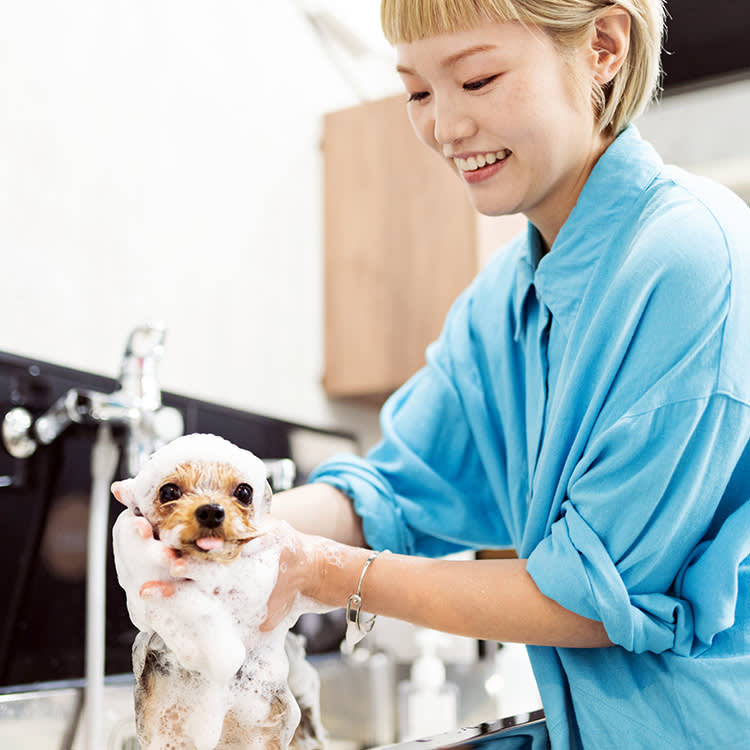
Here is the situation baby shampoo was actually made for, at least where your dog is concerned: your dog has rolled in something foul, you are halfway through the bath, and the dog shampoo bottle sputters out empty. Reach for the baby stuff. That is exactly the right call, and you should not feel one ounce of guilt about it.
The mistake is not the rescue bath. The mistake is letting that bottle quietly become your dog’s regular shampoo because it smells nice and says “gentle” on the front. Baby shampoo is a good backup and a poor routine, and once you understand why, you will never overthink either bath again.
The rescue bath: when to reach for it without hesitating
Save baby shampoo for the one-off, and use it freely when the one-off arrives:
- You have run out of dog shampoo midway through a bath and your dog is standing there dripping.
- Your dog comes home caked from nose to tail and the dog shampoo is gone.
- Your dog has gotten into something genuinely irritating, such as a pesticide, a chemical cleaner, or a petroleum product. This one is not even a close call. Leaving an irritant sitting on the skin is almost always worse than a single wash with the wrong shampoo, so get it off.
In every one of these cases, the common thread is that it happens once. A no-tears formula in a pinch will not harm a healthy dog. What you are avoiding is the habit.
Why baby shampoo is gentle in the first place
It helps to know what you are actually holding, because baby shampoo earns its reputation honestly. It is built to be forgiving on delicate skin in three specific ways:
- It is diluted. Baby formulas carry more water than adult shampoos, so any potentially irritating cleansers are present at lower concentrations.
- Its pH is nudged toward neutral. Adult human skin is fairly acidic, around 4.5 to 5.5, which lets it tolerate harsher, lower-pH cleansers. Infant skin runs higher, so baby shampoo is formulated closer to neutral, usually around 5.5 to 6, to be gentler on it.
- It uses milder surfactants. Most adult shampoos lean on sulfates because they cut grease efficiently, but sulfates also strip natural oils and leave skin dry and irritated. Baby shampoos use gentler cleansers, such as amphoteric surfactants, that clean without stripping as aggressively.
Many baby shampoos also skip dyes and fragrances to cut irritation further. If you do keep a bottle around for canine emergencies, choose one of those stripped-down, no-added-color, no-added-scent versions.
The part the “it’s the same as dog skin” advice gets wrong
You will read a lot of places that a dog’s skin sits around neutral pH, so baby shampoo is a near-perfect match. That is half true and it is the half that gets dogs into trouble.
A dog’s skin does sit higher than human skin, roughly 6.2 to 7.4 on average. But baby shampoo, tuned for an infant, still lands more acidic than that. “Close” is doing a lot of quiet work in that sentence, and the gap matters more on a dog than most people realize, because of something the old advice never mentioned: the canine skin barrier is far thinner than ours.
This is the piece owners almost never hear. A dog’s stratum corneum, the outermost protective layer, is only about three to five cell layers thick, where a human’s is closer to ten to fifteen. That thin barrier is exactly why dogs absorb topical products more readily, and it is why a shampoo that is a little off for their skin does more, and does it faster, than the same mismatch would on us.
That thin barrier sits on top of the acid mantle, the faintly acidic film that keeps the skin’s helpful microbes thriving and the unhelpful ones in check. Wash a dog week after week with a product built for human skin and you slowly chip at that mantle. What starts as a nice-smelling shortcut can end as a dog who is itchy, flaky, and off balance in a way that has nothing to do with fleas or food.
With repeated use, the fallout tends to look like:
- Skin dryness
- Irritation, including redness, swelling, itching, and flaking
- Allergic reactions and rashes
- Residue from incomplete rinsing, which leaves cleansers behind to keep irritating the skin
None of that comes from one emergency bath. It comes from the routine.
If your dog reacts to it
Even gentle products can cause trouble, especially for a dog with sensitive skin. A reaction to baby shampoo can show up as:
- Intense itching
- Redness and swelling
- Flaking and dryness
- Hair loss
- More serious signs such as pronounced swelling, vomiting, or difficulty breathing
If your dog is struggling to breathe, treat it as an emergency and get to a vet immediately. Otherwise, rinse thoroughly to wash away as much shampoo and residue as you can, then call your vet. Depending on severity, they may recommend an antihistamine such as Benadryl, or something stronger like an anti-inflammatory. A soothing oatmeal-based shampoo can calm lingering itch and dryness, and in some cases a vet will suggest a medicated option to bring down inflammation.
After a reaction, go back to dog-specific products for good. For some dogs, baby shampoo simply is not a fit even once. And remember that bathing any dog, especially a puppy, too often will dry the skin on its own, no matter how gentle the product.
How to pick the everyday shampoo instead
Since the whole point is that baby shampoo should not be the routine, here is the routine worth having. For a healthy dog with no skin issues, a plain, pH-appropriate dog shampoo labeled for canine use, with no added fragrance, is all you need, along with a bathing schedule that is not too frequent (for most dogs, once every four to eight weeks is plenty). If your dog has recurring itch, flaking, odor, or hot spots, that is not a shampoo-shopping problem, it is a vet conversation: ask about a medicated or barrier-supporting shampoo matched to the actual issue, rather than cycling through human products at home and hoping.
Marketing terms are no help here. “Tear-free,” “natural,” and “hypoallergenic” are not standardized for pet products, so two bottles making the identical promise can hold very different ingredients. Read the ingredient list, not the front label.
The bottom line
Baby shampoo is milder than adult human shampoo and completely fine for the rare rescue bath. What it is not is an everyday product, because a dog’s thin skin barrier and acidic mantle are built for a dog shampoo, and repeated use of anything else slowly wears that protection down. Keep the no-tears bottle as your backup, reach for it without guilt when your dog rolls in something terrible, and if a reaction ever crops up, rinse well and call your vet.
References
- Proksch, Ehrhardt. “The Skin Acid Mantle: An Update on Skin pH.” Journal of Investigative Dermatology, 2024. https://www.sciencedirect.com/science/article/abs/pii/S0022202X24019717
- Carlotti, Didier-Noel. “The Art of Shampoos in Canine and Feline Dermatology: Treatment and Prevention Strategies.” Journal of the Hellenic Veterinary Medical Society. https://ejournals.epublishing.ekt.gr/index.php/jhvms/article/view/15080
- “Topical Therapies in Veterinary Dermatology.” dvm360. https://www.dvm360.com/view/topical-therapies-in-veterinary-dermatology
Common questions
Why can't I just use baby shampoo all the time?
A dog's outer skin layer is only about three to five cells thick, roughly a third of a human's, so anything left slightly out of balance reaches the living skin faster and matters more with repetition. Regular use of a product tuned for human skin can dry the coat, disrupt the acid mantle, and unsettle the skin's protective microbe balance over time.
What should I do if my dog reacts to baby shampoo?
Rinse thoroughly to remove every trace of residue, then call your vet. They may suggest an antihistamine like Benadryl, an anti-inflammatory, or a soothing oatmeal or medicated shampoo. If your dog struggles to breathe, treat it as an emergency and go straight to a clinic.
Not a substitute for your vet. Our guidance is educational. For urgent symptoms, contact a vet or emergency clinic right away. Editorial standards
Dr. Park is a board-certified emergency and critical care specialist. She reviews our health and safety content for clinical accuracy and contributes guides on recognising urgent conditions. Her focus is helping owners act quickly and correctly when it matters most.
Meet our experts ↗Keep reading
 Health & WellnessSummer Grooming Isn't About the Haircut. It's a Health Check.Tom Hadley · 5 min
 Health & WellnessNobody Licenses Your Dog's Groomer. Ask About the Dryer.Dr. Mara Chen · 7 min
 Health & WellnessStop Shaving Your Dog for Summer. Here's What It Actually Does.Dr. Nina Kohl · 5 min
 Health & Wellness'Natural' Dog Shampoo Isn't a Safety Claim. Nobody Is Checking.Dr. Priya Nair · 7 min
 Health & WellnessRainbow Dogs Are Everywhere. Two Products Separate Art From an ER Visit.Dr. Priya Nair · 7 min
 Health & WellnessMud Won't Hurt Your Dog. What's Living In It Might.Dr. Priya Nair · 6 min