


Your Cat Won't Limp. That's Why Arthritis Hides for Years
Cats almost never show arthritis the way dogs do. With no limp to spot, you become the diagnostic instrument. Here are the six everyday questions that catch it early.

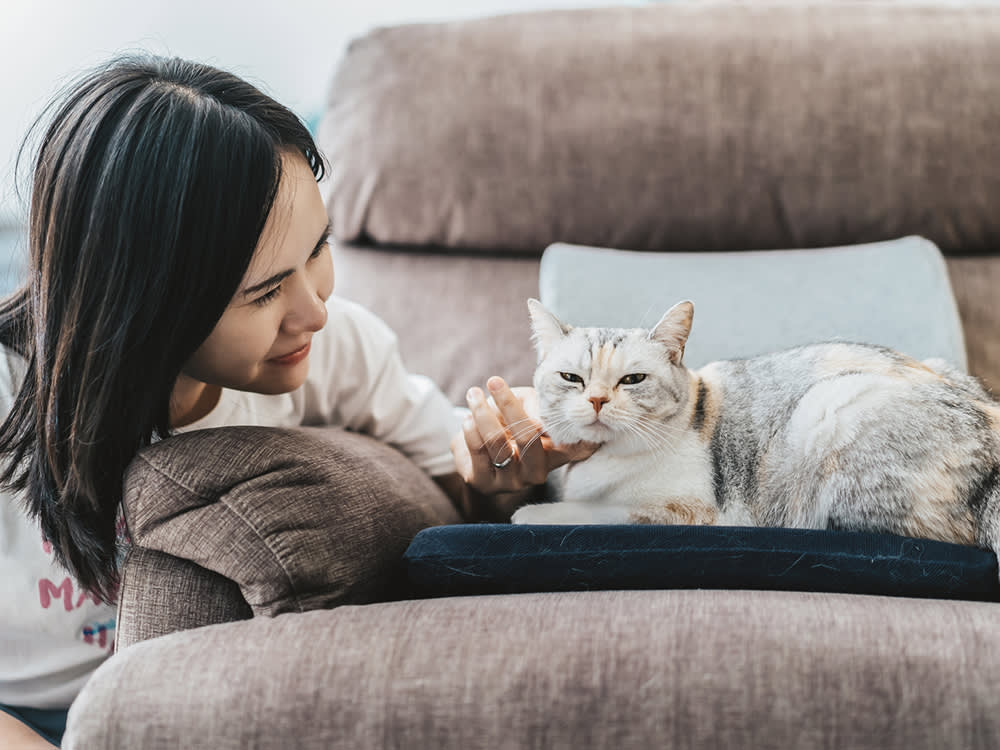
A dog with a sore hip limps, and you book a vet appointment. A cat with the same sore hip simply stops jumping onto the kitchen counter, and you think, “she’s just getting older.” That single difference, the limp you would notice versus the small skipped behaviors you would not, is the entire reason feline arthritis goes unrecognized for years while the same disease in dogs gets caught fast.
Here is the uncomfortable truth that should reframe how you watch your cat: with no limp to tip you off, you are the diagnostic instrument. Your vet sees your cat for a few stressed minutes a year, in a setting where a painful cat freezes rather than moves naturally. The early signs live in your living room, on your stairs, and at your cat’s food bowl, which means catching this disease early depends almost entirely on what you notice at home. This guide is built around making you better at that.
Why this matters more than owners realize
Arthritis was long assumed to be a dog problem. It is not. Veterinary researchers now estimate that roughly 45 percent of all cats, and as many as 90 percent of cats over age 10, have some degree of arthritis. As cats live longer, that number only grows. Yet cats are diagnosed far less often than dogs, not because they suffer less, but because they suffer quietly.
Two things drive the camouflage. First, cats are small and astonishingly agile, so a stiff joint barely changes how they move until the disease is advanced. Second, chronic pain in cats simply does not look like pain. There is no whimper, no obvious limp. Instead there is a slow narrowing of what the cat chooses to do, and that narrowing is easy to write off as ordinary aging.
People expect a cat in pain to cry out or favor a leg, the way a dog might, and cats just don’t. What we actually see is a cat who used to rule the bookshelf and now stays on the couch. Owners read that as ‘slowing down.’ A lot of the time, it’s a joint that hurts.
The six questions that do the work
If there is one tool to take from this article, it is this. Veterinary researchers developed a short mobility screen specifically because the usual signs are unreliable in cats. It works because it asks about specific actions rather than a vague sense that something is off. Ask yourself, honestly, about your own cat:
- Does your cat jump up normally?
- Does your cat jump down normally?
- Does your cat climb up the stairs normally?
- Does your cat climb down the stairs normally?
- Does your cat run normally?
- Does your cat chase moving objects the way they used to?
A “no” or “not quite anymore” to even one of these is worth a conversation with your vet. These are not six random symptoms; they are six places where a stiff joint shows itself first, because each one loads the hips, knees, elbows, or shoulders. Make these part of an annual check-in with yourself, ideally written down, so you are comparing this year’s cat to last year’s, not to a fuzzy memory.
What arthritis actually looks like day to day
Because cats rarely limp, the disease announces itself through changes in routine instead. Beyond the six-question screen, watch for:
- Hesitation at heights. Several attempts to make a jump they used to nail, or choosing the chair as a stepping stone to the bed.
- A scruffier coat. Twisting to groom the lower back, hips, and tail base hurts, so those areas get matted or greasy.
- Litter box trouble. High walls become a hurdle; you may see more accidents just outside the box.
- Less play, more sleep. Reduced interest in toys, the wand, or the window, and longer naps in easy-to-reach spots.
- A shift in temperament. Some arthritic cats get grumpier or avoid being touched along the spine and hips.
- Subtle weight changes, often loss, as moving around becomes less appealing.
The signs that would be obvious, the limp, the visibly reduced range of motion, the grinding joint, are genuinely uncommon in cats. Waiting for them means waiting too long.
Confirming it with your vet
Bring your home observations to the appointment; they are the most valuable data in the room. Your vet will examine your cat’s joints for thickening, reduced range of motion, or discomfort, and may recommend X-rays. Worth knowing: radiographs and pain do not always match in cats. A cat can have significant pain with modest-looking X-rays, or impressive-looking arthritis with little discomfort. That is one more reason your behavioral report carries so much weight in the diagnosis.
Treatment starts at home, and it works
The encouraging part is that you can improve a cat’s comfort immediately, often before any medication. The foundation:
- Keep your cat lean. Excess weight loads every joint; even modest weight loss measurably reduces arthritis pain.
- Lower the litter box. A box with a low entry, or a cut-down side, removes a daily painful climb.
- Raise the bowls. Elevated food and water dishes spare the neck, shoulders, and elbows.
- Build ramps and steps. Give your cat a pain-free route to the windowsill, couch, or bed they love.
- Invest in a genuinely soft, warm bed. Orthopedic or heated bedding eases stiff joints, especially in cold weather.
- Keep gentle play going. Low-impact movement maintains muscle that supports the joints.
Many cats also respond to complementary approaches such as acupuncture, therapeutic massage, and laser therapy, used alongside, not instead of, veterinary care.
The medications, including a genuine breakthrough
Medical options lagged for years precisely because arthritis was under-recognized in cats. NSAIDs such as meloxicam or robenacoxib can be effective but are used cautiously and usually short-term, because cats are sensitive to their effects on the kidneys.
The real change came in 2022, when the FDA approved Solensia (frunevetmab), the first medication specifically for osteoarthritis pain in cats and the first monoclonal antibody drug approved for any animal. It targets nerve growth factor, a key driver of arthritis pain, and is given as a once-monthly injection at your vet’s office. For many cats it has been transformative.
It is worth knowing the broader context: a year later, in May 2023, the FDA approved the canine equivalent, Librela (bedinvetmab), for dogs. The dog version has since drawn closer FDA scrutiny after post-approval reports of neurologic adverse events, which is a useful reminder that even a breakthrough drug deserves a real conversation with your vet about your individual cat, their kidney health, and what monitoring makes sense. These medications are powerful tools, not set-and-forget fixes.
“Owners are often stunned by the before and after,” Dr. Park says. “You relieve the pain and the cat starts jumping again, grooming again, playing again. It tells you how much they were quietly holding back. That’s the whole reason early detection matters; the pain is so treatable once you name it.”
The takeaway: you are the early-warning system
Put the six questions on your calendar once a year, and pay attention to the small subtractions, the skipped jump, the unkempt patch of fur, the new accident by the box. None of those will look like a crisis, which is exactly the point. In cats, arthritis is a disease of quiet omissions, and you are the only one positioned to catch them before they add up.
References
- Lascelles BDX et al., “Development of a questionnaire to assess mobility in cats with osteoarthritis,” Journal of Feline Medicine and Surgery, 2020
- U.S. Food and Drug Administration, “FDA Approves First Monoclonal Antibody for Cats with Osteoarthritis Pain” (Solensia/frunevetmab)
- U.S. Food and Drug Administration, “FDA Approves First Monoclonal Antibody for Dogs with Osteoarthritis Pain” (Librela/bedinvetmab), May 2023
- U.S. Food and Drug Administration, “Osteoarthritis in Cats: More Common Than You Think”
- American Animal Hospital Association, 2022 AAHA Pain Management Guidelines for Dogs and Cats
Not a substitute for your vet. Our guidance is educational. For urgent symptoms, contact a vet or emergency clinic right away. Editorial standards
Dr. Park is a board-certified emergency and critical care specialist. She reviews our health and safety content for clinical accuracy and contributes guides on recognising urgent conditions. Her focus is helping owners act quickly and correctly when it matters most.
Meet our experts ↗Keep reading
 LivingYou Can't Out-Spray Cat Pee. Here's the Only Thing That Actually Works.Dr. Mara Chen · 9 min
 TrainingYour Cat Screams at 3am Because You Never Let It Finish the HuntDr. Mara Chen · 8 min
 Health & WellnessYour Cat Pooping on the Floor Isn't Spite. It's a Symptom.Dr. Lena Park · 8 min
 Health & WellnessThat 'Hairball' Cough Might Be Asthma. Here's How to TellDr. Ravi Mehta · 9 min
 Health & WellnessYour Cat Sounds Stuffy. The Noise Isn't the Emergency, the Effort Is.Dr. Ravi Mehta · 7 min
 Health & WellnessDepo-Medrol Works Fast for Cats. The Catch Is What 'Long-Lasting' Really Means.Dr. Lena Park · 6 min