


Why Adult Dogs Shouldn't Live on Puppy Food Comes Down to One Mineral
An occasional bowl of puppy food is harmless. The long-term problem isn't calories, it's calcium, and AAFCO sets the limits that explain why. Here's the number that matters, plus when a vet might say yes.

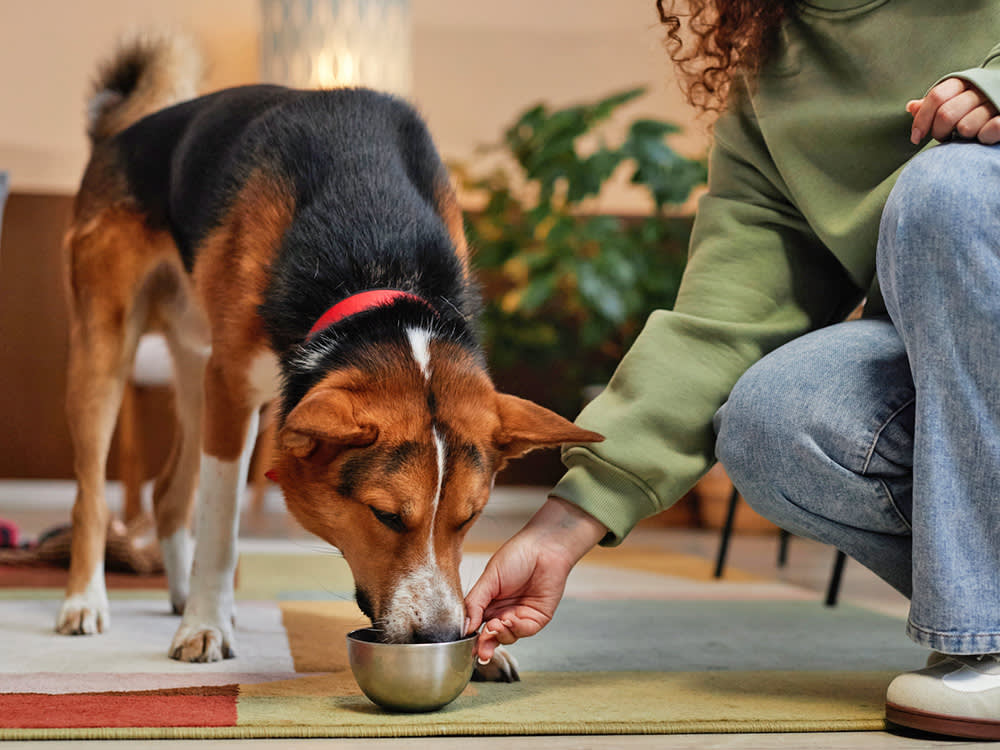
If you run a multi-dog household, you know every dog is convinced the other dog’s bowl holds something better. Add a puppy to the mix and it is tempting to simplify life by feeding everyone the same growth formula. So here is the clear version of the answer: an occasional bite of puppy food won’t hurt a healthy adult dog, but it is a poor everyday diet, and the reason is more specific than “too many calories.” The long-term problem comes down largely to one mineral, calcium, and the safe limits are written down. Once you know the number, the whole question makes sense.
The everyday risk: calories. The real risk: calcium.
Puppy food and adult food are formulated for two different jobs. Growing puppies need elevated amounts of many nutrients to build muscle, bone, and brain tissue, which makes puppy food generally more calorie-dense and richer in amino acids, protein, fat, calcium, phosphorus, and copper. Adult food, by contrast, is built for maintenance: keeping a fully grown dog at a healthy weight with complete, balanced nutrition.
The obvious consequence of all that density is weight gain, and it is real. An adult dog on a calorie-dense growth diet needs smaller portions to avoid taking in too much, and no dog enjoys a less-full bowl, so the extra kibbles tend to creep in and add up to extra pounds.
But the more important, less visible issue is mineral excess, and calcium is the headline. This is where the numbers help. The Association of American Feed Control Officials (AAFCO) sets the nutrient profiles U.S. pet foods follow, and those profiles cap calcium at 2.5 percent of dry matter for adult maintenance, while growth and all-life-stages foods are held to a tighter ceiling because growing animals are more sensitive to excess. Phosphorus is capped at 1.6 percent of dry matter, and the calcium-to-phosphorus ratio is meant to stay between 1:1 and 2:1. A growth diet pushes the high end of these mineral ranges on purpose, to fuel a building skeleton. Feed that to an adult dog day after day and you can drift past what an adult body is built to handle, which can contribute to changes in bone density, calcification of blood vessels, or the formation of urinary crystals.
A third, narrower concern is kidney strain. Puppy food’s higher protein content can be hard on the kidneys of an older dog who has lost some function with age, because failing kidneys struggle to clear the byproducts of protein metabolism. Adult and senior diets are formulated with that in mind.
The overall likelihood of harm is low, which is exactly why a stolen bowl is no crisis. But when there are diets optimized for each life stage and switching is easy, the sensible question is: why run the mineral risk at all? If you think your adult dog genuinely needs puppy food, talk to your vet first so they can check the nutrient content against these limits.
When puppy food is actually the right call
There are real situations where a vet may recommend a growth diet for an adult dog. Always discuss a diet change with your vet before making it, but these are the common scenarios.
Pregnant or nursing dogs. Puppies need enormous nutrition, supplied entirely by mom before birth and through weeks of nursing. Without the extra calories, amino acids, and minerals, a pregnant or lactating dog loses weight and can get sick. Eclampsia, caused by dangerously low blood calcium, is a frequent problem in small nursing dogs and in large dogs with big litters, and here the very calcium that is a liability for a couch-dwelling adult becomes protective.
Underweight or malnourished dogs. Some dogs can’t keep weight on, whether from high activity, a poor appetite, or an underlying illness. A more calorie-dense food can help them fill out, and puppy food is sometimes used, though it isn’t right for every dog.
Performance and working dogs. Dogs doing high-energy work, search and rescue, agility, intensive training, burn through calories and must hold weight and conditioning. Puppy food is nutrient-dense and sometimes considered, but there is usually a better tool now: dedicated performance diets are often even more calorie-dense than puppy food and are balanced specifically for adult dogs.
How to choose the right adult dog food
The sheer number of options can feel paralyzing. For context, dog food is a large, fast-growing business: U.S. expenditures climbed from $17.5 billion in 2010 to $64 billion in 2023, and with that growth came a flood of brands and formulas. Here is how to cut through it.
Read the AAFCO statement
Reputable foods carry one of these AAFCO statements:
- Formulated to meet the AAFCO Dog Food Nutrient Profiles for a given life stage.
- Animal feeding tests using AAFCO procedures substantiate complete and balanced nutrition for a given life stage.
- Complete and balanced for a given life stage and comparable in nutritional adequacy to a product substantiated by AAFCO feeding tests.
These tell you whether a diet was tested in actual feeding trials or simply matches the nutrient profile on paper. Feeding trials are expensive, so most foods carry the first statement. The recognized life stages are gestation, lactation, growth, maintenance, and all life stages. Adult dogs should generally eat a maintenance diet unless your vet says otherwise. “All life stage” foods are acceptable but are balanced for growth, not specifically for adults, which is precisely the mineral mismatch this article is about.
Factor in age, breed, size, and activity
Pick a diet that fits your dog’s current life stage and lifestyle. Adult formulas are typically fed from one to seven years, depending on breed, and the label tells you when to consider a senior diet. Breed-specific diets exist; you don’t need one, but some people find it simplifies the choice. Calorie and nutrient density vary widely between brands, so choose a kibble size and flavor your dog will enjoy and stick with it while they’re thriving.
Talk to your veterinarian
Before your dog’s first birthday, ask your vet about adult diets. They see a huge number of dogs and can help you calculate the right portion using your dog’s lifestyle and history, which is far more precise than the broad ranges printed on the bag.
Listen to your dog
This is not license to hand over cheese every time those eyes plead. It means paying attention. The best food for your adult dog is one that they like eating, you can comfortably afford, is nutritionally balanced, produces normal stool and a healthy coat, and keeps them at a healthy weight. Don’t stress about buying the priciest, most marketed bag, just find something that keeps your dog happy and healthy, then move on to what matters: playing fetch.
Frequently asked questions
What is the difference between puppy food and dog food?
Puppy food supplies the extra nutrition young dogs need for growth, with more calories and higher levels of nutrients like calcium and phosphorus. Adult food simply maintains a fully grown body without that surplus.
Can it hurt an adult dog to eat puppy food?
Aside from possible stomach upset, an occasional snack is unlikely to harm an adult dog. Long term, it can lead to weight gain and mineral imbalances.
How long should a puppy stay on puppy food?
Until they reach about 80 percent of their expected adult weight, around one year for most dogs, and later for giant breeds.
References
- “AAFCO Dog and Cat Food Nutrient Profiles.” Association of American Feed Control Officials, 2024, www.aafco.org.
- Linder, Deborah. “No Observed Adverse Effects on Health Were Detected in Adult Beagle Dogs Fed a High-Calcium Diet.” Animals / NCBI, 2021, www.ncbi.nlm.nih.gov/pmc/articles/PMC8234157/.
- “Nutritional Requirements and Related Diseases of Small Animals.” MSD Veterinary Manual, 2024, www.msdvetmanual.com.
- “Total U.S. Pet Industry Expenditures.” American Pet Products Association, www.americanpetproducts.org.
Not a substitute for your vet. Our guidance is educational. For urgent symptoms, contact a vet or emergency clinic right away. Editorial standards
Dr. Park is a board-certified emergency and critical care specialist. She reviews our health and safety content for clinical accuracy and contributes guides on recognising urgent conditions. Her focus is helping owners act quickly and correctly when it matters most.
Meet our experts ↗Keep reading
 FoodYour Dog Has No Idea When He's Full. That's Not a Flaw, It's the DesignDr. Ravi Mehta · 6 min
 FoodYour Dog Has a Sweet Tooth. That's Exactly the Problem.Dr. Nina Kohl · 7 min
 FoodYour Dog Isn't Spoiled. 6 Fixes That Actually Get a Picky Eater EatingDr. Amara Solis · 6 min
 FoodHome-Cooked Dog Food Can Run $3 a Day. The Real Price Is Your Sundays.Dr. Amara Solis · 9 min
 FoodStop Measuring Your Dog's Food in Cups. Here's the Number That Matters.Dr. Amara Solis · 7 min
 FoodThe Xylitol in Raspberries Sounds Scary. The Math Says Feed Them AnywayDr. Mara Chen · 6 min