


9 Everyday Human Habits That Genuinely Baffle Your Dog
Hugging, staring, vanishing through doors — a surprising number of ordinary human behaviors read as strange or alarming to a dog. Here's what's really going on in their head, and how to make the confusing moments easier.

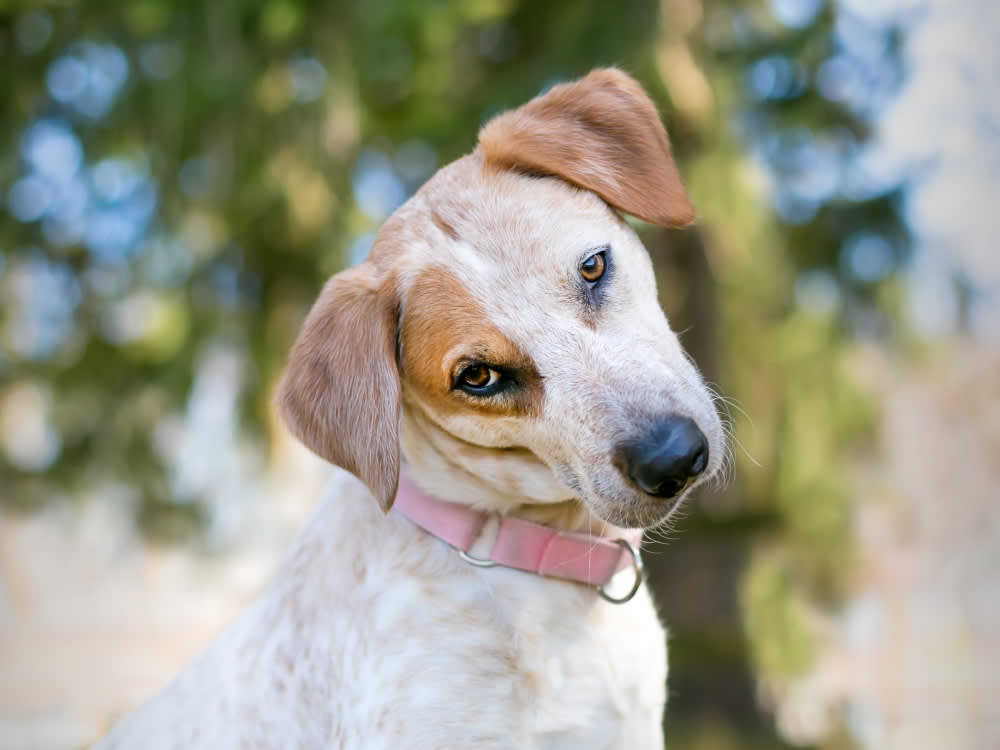
We tend to treat dogs as if they share our instincts, and most of the time they’re flexible enough to let us get away with it. They live in our homes, learn our rules, ride in our cars, and tolerate a daily barrage of human behavior that makes no sense from a dog’s point of view. But “tolerate” is the key word. A lot of perfectly ordinary things we do land somewhere between puzzling and alarming for a dog, and almost all of them come down to a single mismatch: dogs read the world through a different set of senses and instincts than we do.
Once you see that one underlying gap, the individual confusions stop looking like quirks and start looking like predictable translation errors. Here are nine of the most common, what’s actually happening in your dog’s head, and where a little awareness makes their life easier. They’re grouped the way a dog experiences them: first the ways we use our bodies, then how we manage our attention and our homes, and finally the strangest habit of all, how often we change what we are.
1. We hug
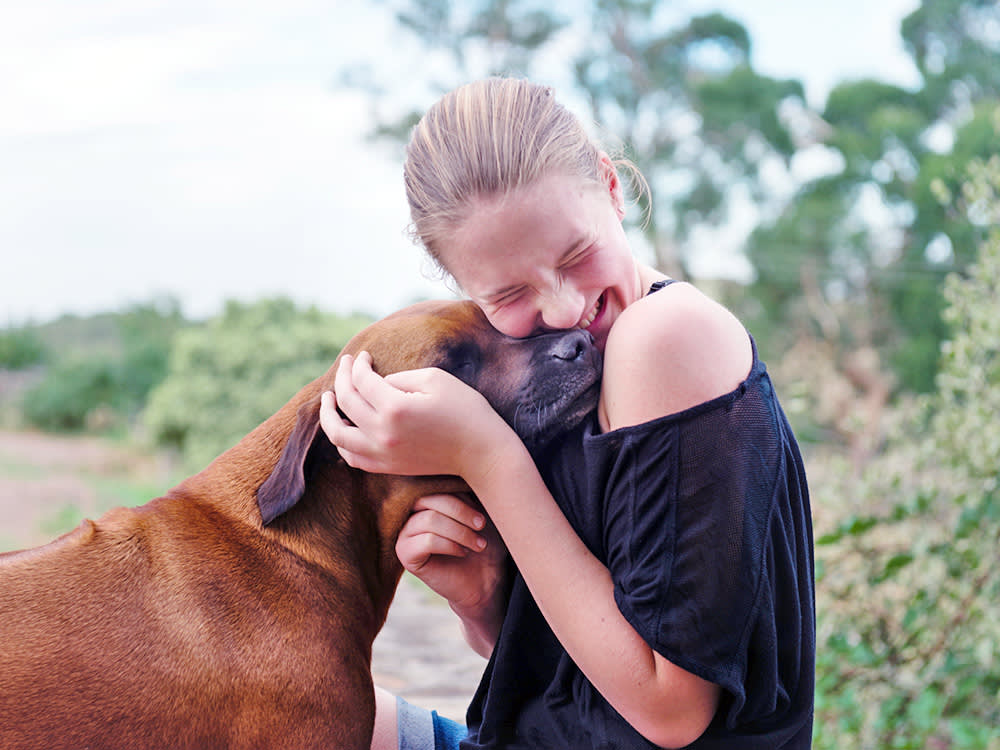
Humans and dogs use their forelimbs completely differently. We use ours to carry things and to embrace one another as affection. Dogs wrap their limbs around another dog mainly during play-wrestling, mating, or fighting — and being pinned by another dog means losing the option of a quick escape. So when a person throws their arms around a dog, the puppy has no obvious way to read it as love rather than restraint. Many dogs learn to enjoy hugs from their own people; far fewer enjoy them from strangers, and that’s worth respecting.
2. We are endlessly handsy
Sometimes our hands deliver food, scratches, massages, and toys. Other times those same hands restrain a dog, trim their nails, push a pill down their throat, or drag a brush through a coat. From the dog’s side, a hand reaching toward them is genuinely ambiguous, which is why some dogs flinch. The fix is cooperative care: rewarding a dog generously for tolerating handling and grooming turns the approaching hand back into a reliably good thing.
3. We don’t enjoy being bitten
Play-fighting is a joy for puppies and a key way they bond, but it depends on constant calibration — learning when those needle-sharp teeth have gone too far. Humans are far more sensitive to puppy jaws than other dogs are, so we react badly to what a dog experiences as ordinary roughhousing. Dogs also explore objects and “talk” with their mouths, using a gentle mouth to say everything from “more, please” to “that’s enough.” Naturally they try it on us, and they must find it baffling how often we take offense.
4. We make direct eye contact
This is the one people most often get backward, because among humans steady eye contact reads as warmth, honesty, and connection. In the dog world, a hard, direct stare is closer to a challenge or a threat. Among dogs, the polite move is often to look away — a deliberate softening that says “no conflict here.” A friendly dog who turns their head when you lock eyes isn’t snubbing you; they’re being courteous in their own language.
There’s a real wrinkle worth knowing: dogs and their own people do develop a benign, affectionate version of mutual gazing. Research has shown that when a bonded dog and owner hold a soft gaze, both get a rise in oxytocin, the same bonding hormone involved in the parent-infant relationship. So eye contact isn’t off-limits — but the loving version is soft and shared between familiar partners, not a stranger leaning in for a hard stare. The practical takeaway: with an unfamiliar dog, blink, soften your face, and angle your body rather than fixing them with a look.
5. We stare at glowing boxes
We live in a largely visual world; dogs live in an olfactory one. A television is a feast for our eyes, but for a dog the real banquet is a park or a sidewalk layered with scent. There’s a second mismatch underneath the first: dogs move while they investigate the world, and we sit perfectly still for hours. The motionless trance we fall into in front of a screen may be one of the least dog-comprehensible things we do.
6. We disappear without warning
Dogs are social to the core. Puppies are endlessly curious about other dogs, about people, about any creature that will interact with them, and left to their own devices they prefer to do everything in company. Yet we routinely leave them — at home, in a kennel, in a strange room at the vet. A young dog has no built-in way of knowing whether we’re coming back. Only with repeated experience do they learn to expect a reunion, and even then their confidence depends heavily on the situation.
At home, we make it stranger still by declaring rooms off-limits. From the dog’s side, a closed door isn’t a boundary, it’s a separation from the social group, which is why so many dogs insist on being let in whenever the family is home.
7. We invite strangers into shared space
We walk through other dogs’ territories and carry their scents home, and we let unfamiliar people and dogs stroll straight into our own dog’s living space. Dogs did not evolve to welcome that kind of intrusion on their safety and resources. So it shouldn’t shock us when a dog eyes a visitor with suspicion — or when our own dog gets a frosty reception in someone else’s home.
8. We don’t raid the trash
Dogs are opportunists, wired to grab food wherever they find it. We, on the other hand, serve their meals in a dedicated bowl and then act scandalized when they help themselves from a counter, a lunchbox, or the kitchen bin. From the dog’s perspective, finding unattended food and eating it isn’t theft — it’s competence. When a dog clears the counter, the surprise is really on us for leaving it reachable.
9. We constantly change how we smell and look
Shoes, coats, bags, and suitcases collect a parade of smells from every shop and workplace we carry them through, and then we bring all of it home. Soaps, deodorants, and cleaning products keep shifting our scent further. Meanwhile, towels, hats, and bags change our outline, and pulling a sweater over our head can briefly distort our shape enough to startle a dog.
Consider the asymmetry: a dog changes its coat maybe once or twice a year, while we change our outer layer every single day. For an animal that uses scent to tell friend from stranger, our ever-shifting smell must be genuinely disorienting.
The thread running through all of it
Notice what every one of these has in common. We’re not confusing our dogs on purpose; we’re simply running our own species’ software, and they’re running theirs. Dogs read scent where we read sight, treat closeness and restraint as related where we treat closeness as comfort, and follow instincts about food, territory, and eye contact that predate living rooms by tens of thousands of years.
The more you can spot where your expectations and your dog’s diverge, the easier it becomes to be patient in the confusing moments — and to meet your dog somewhere in the middle, in a language you both can actually read.
Marcus Webb writes about the gear, gadgets, and everyday choices that make life with a pet easier. His coverage runs from product picks to training and the causes worth paying attention to, always with an eye on what actually earns a place in your home.
Meet our experts ↗Keep reading
 TrainingYour Dog Learned a Toy's Name Once. Two Years Later, They Still Knew It.Dr. Mara Chen · 4 min
 LivingA 'Soul Dog' Isn't Magic. It's Fluency, and You Can Build It.Jordan Ellis · 8 min
 TrainingThat Embarrassing Baby Voice? Your Dog Is Begging You to Keep Doing It.Dr. Amara Solis · 5 min
 TrainingEvery Dog Trainer Says They're 'Humane.' Here's How to Read Past ItDr. Amara Solis · 5 min
 TrainingStop Asking Why Your Dog Scratches the Carpet. Ask Where.Dr. Nina Kohl · 7 min
 TrainingYour Dog Isn't Antisocial. They're an Introvert.Dr. Nina Kohl · 6 min