


Your Dog Isn't Antisocial. They're an Introvert.
A dog who skips the dog park and clings to their people isn't broken or badly socialized. Here are seven signs you're living with a canine introvert, and why you shouldn't try to fix it.

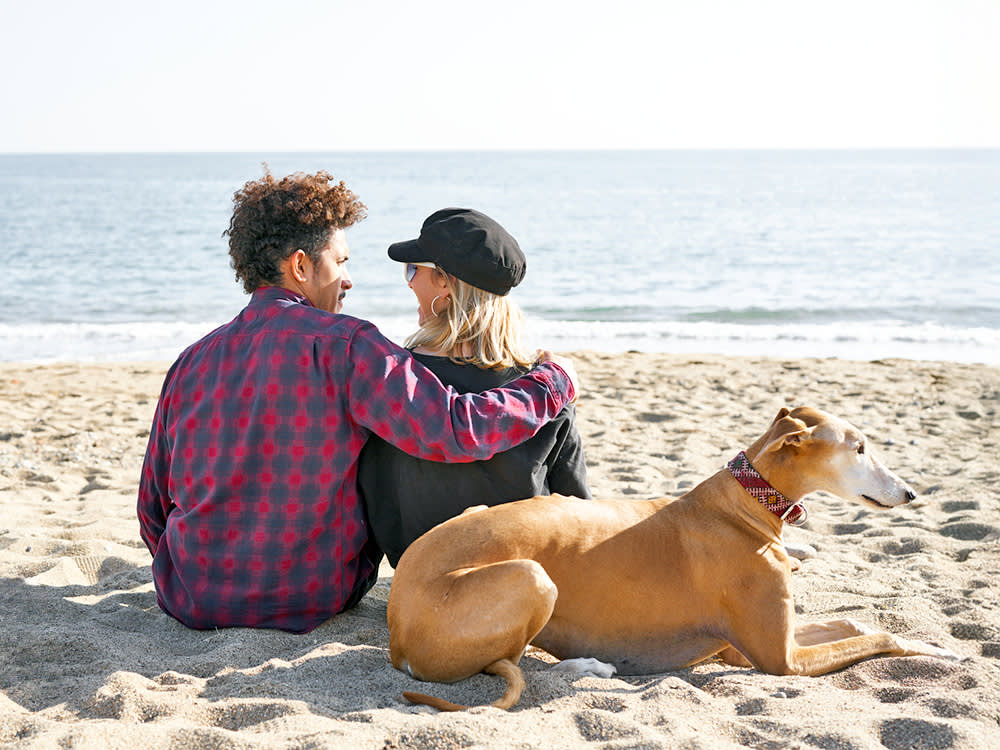
Somewhere along the way, we decided that a “good” dog is a social butterfly: bounding up to every stranger, romping at the dog park, thrilled to be passed around a party like an appetizer. So when a dog does the opposite, hangs back, watches from the doorway, would clearly rather be home, we start to worry that something went wrong. We didn’t socialize them enough. They’re anxious. They’re sad.
Usually, none of that is true. Some dogs are simply introverts, and that is a personality, not a problem.
Here’s the distinction most people miss, and it matters more than any single behavior below. Introversion is not the same as fear, and it is not the same as being undersocialized. A fearful dog is uncomfortable and wants the scary thing to stop. An undersocialized dog missed key early experiences and finds the ordinary world unfamiliar. An introverted dog is neither. They are perfectly comfortable, they simply prefer a smaller, quieter world and recharge best alone. The behaviors can look similar from the outside, which is exactly why they get lumped together and why so many gentle homebody dogs get dragged to socials they hate in the name of “fixing” them.
The mistake I see most often is treating a calm, self-contained dog like a project. An introverted dog isn’t asking to be pushed out of their shell. They’re telling you the shell is where they’re happiest, and forcing the issue is how you actually create the anxiety you were worried about.
Breed won’t tell you who your dog is
It’s tempting to blame or credit the breed. Labs are supposed to be extroverts, we tell ourselves; the aloof breeds are supposed to keep to themselves. The data doesn’t back that up. In a 2022 study in the journal Science, researchers surveyed more than 18,000 dogs and sequenced DNA from over 2,000 of them, and found that breed accounts for only about 9 percent of the variation in a dog’s behavior. Sociability, in particular, was one of the least breed-driven traits of all.
In plain terms: your dog’s temperament is mostly their own. Early experiences, learning, and individual wiring shape whether a dog is outgoing or reserved far more than their pedigree does. A single litter can hold both a party animal and a wallflower. So the question isn’t “is my breed introverted,” it’s “who is this dog, and what do they actually enjoy?”
If the answer is that yours would trade the dog park for the couch every single time, here are seven signs you’re sharing your home with an introvert.
1. They hit a social wall fast
Extroverts seem to run on the crowd. Introverts run down in it. Your dog might greet a few friends happily and then, twenty minutes later, be done, panting, pacing, or trying to find a quiet spot. That’s social fatigue, and it’s normal. Just as a packed weekend of plans leaves some people wrung out and craving a dark room, a busy, stimulating environment drains an introverted dog faster than a mellow one. Watch for the turning point and honor it instead of pushing for “just a little longer.”
2. They freeze instead of fighting or fleeing
Everyone knows fight or flight. The quieter third option, freeze, is easy to miss, especially in a reserved dog. In a loud or crowded setting, an introvert may go still and small, holding themselves tight rather than lunging or bolting. It reads as calm, so we overlook it. But freezing is often a dog managing a situation they’d rather escape. If your dog tends to lock up in busy places, that stillness is information: they’ve hit their limit and need you to lower the volume.
3. Other dogs just don’t do it for them
You know the internet clip of the “introverted” dog meetup, where nobody plays and everyone politely ignores each other? Plenty of dogs live that way, and it’s fine. A reserved dog may have zero interest in making canine friends, and that alone is not a red flag. It only becomes something to address if the disinterest tips into distress, say, real anxiety anytime they leave home, in which case a certified behavior professional can help. Short of that, a dog who’d rather sniff solo than wrestle a stranger is just being themselves.
4. They’re choosy about new people
An introverted dog can be deeply affectionate and still not want to meet everyone. If yours warms up slowly to strangers, or picks a couple of humans and politely opts out of the rest, that’s a dog with boundaries, not a dog with a problem. Read it as healthy self-knowledge. A dog who removes themselves from a person or situation that unsettles them, heading to a crate or a back room to reset, is doing exactly what a well-adjusted dog should do.
5. They love what they already know
One clear marker of a bolder temperament is appetite for novelty, a new trail, a new face, a new toy. Introverts tend to lean the other way, finding real comfort in the familiar. If your dog visibly relaxes into routine and gets uneasy when the schedule scrambles, they’ll likely thrive on structure: predictable walks in quieter spots, meals on time, and a dependable rhythm to the day. Familiarity isn’t a rut for these dogs. It’s a security blanket.
6. They’re a velcro dog, with their inner circle
Introverted dogs are often intensely bonded to their person or small handful of trusted humans. They follow you room to room, settle at your feet, and are perfectly content to skip the crowd as long as you’re nearby. As long as this closeness isn’t paired with panic when you leave (a separation issue is a different conversation), it’s not neediness. It’s a dog telling you that you’re their favorite place. Lean into it rather than dragging them off to socialize.
7. They tell you when they’ve had enough, if you’re watching
The through-line across all of this is that introverts communicate their limits, usually quietly. Crouched posture, excessive panting, lip-licking, yawning that has nothing to do with being tired, these are the polite early signals of “this is a lot for me.” An introvert rarely makes a scene. They ask softly and hope you’ll notice. The kindest thing you can do is learn their particular tells and respond before the whisper becomes a shout.
How to actually help an introvert (hint: less, not more)
The old advice was exposure: keep flooding a shy dog with people and dogs until they “get used to it.” For a genuinely introverted dog, that’s not just unhelpful, it can backfire, teaching them that their humans won’t protect their boundaries.
A better plan works with the temperament instead of against it. Build a predictable daily routine that balances gentle enrichment with real downtime, and schedule decompression on purpose: quieter walking routes, sniff-heavy outings where your dog gets to move at their own pace, and protected alone time before or after anything social. Swap the dog park for a long, boring, wonderful sniff around a low-traffic block. Trade the big group hike for a solo one. And when guests come over, give your dog an easy exit to a room or crate where nobody will bother them, rather than making them the entertainment.
None of this shrinks your dog’s life. It right-sizes it. A content introvert who gets to make a few friends, hang with their people, and sniff the neighborhood in peace is living a full, rich, deeply doggy life, and they’ll be far more relaxed for it.
What newer research adds
The science keeps chipping away at the idea that we can read a dog’s inner life off their breed card. The large 2022 genetics study made the point most bluntly, breed explains only a sliver of behavior, but follow-up work on individual temperament points the same direction: personality traits like boldness and sociability are remarkably stable within a given dog over time, and vary enormously between dogs of the same breed.
The practical takeaway for pet parents is freeing. You are not failing your dog if they’d rather stay in, and you can’t “train” an introvert into an extrovert any more than you could do it to a person. What you can do is watch closely, respect the boundaries your dog is already showing you, and build a life around who they actually are. That’s not lowering the bar. That’s meeting your dog where they live.
References
- Morrill, Kathleen, et al. “Ancestry-Inclusive Dog Genomics Challenges Popular Breed Stereotypes.” Science, vol. 376, no. 6592, 2022. https://doi.org/10.1126/science.abk0639
- MacLean, Evan L., et al. “Highly Heritable and Functionally Relevant Breed Differences in Dog Behaviour.” Proceedings of the Royal Society B, vol. 286, 2019. https://doi.org/10.1098/rspb.2019.0716
- American Veterinary Medical Association. “Socialization of Dogs and Cats.” https://www.avma.org/resources-tools/animal-health-and-welfare/socialization-dogs-and-cats
Dr. Kohl is a board-certified veterinary dentist with a particular interest in preventive oral care. She reviews all dental health content at The Pet Times and contributes practical guides on home dental routines, professional cleaning, and oral disease prevention.
Meet our experts ↗Keep reading
 TrainingYour Chihuahua Isn't Needy. You're Holding a Companion Dog That Fits in a Purse.Dr. Mara Chen · 6 min
 TrainingYour Dog Isn't Shy at Your Party. Six Signs They Want Out.Dr. Lena Park · 8 min
 TrainingStop Handing Your Dog a Boring Kong. Stuff It Like This.Dr. Amara Solis · 7 min
 TrainingThat Hug You Love? Your Dog Is Probably Just Enduring It.Dr. Nina Kohl · 5 min
 TrainingYour Dog Isn't Being Rude to Strangers. They're Scared.Dr. Lena Park · 7 min
 TrainingStop Telling Yourself Your Dog Was AbusedDr. Nina Kohl · 8 min