


Ditch "Smart": 8 Words That Tell You How to Actually Train Your Dog
"Smart" is a compliment, not a strategy. Trainers reach for precise temperament words because each one points to a different way of living with and teaching your dog. Here are eight that change what you do.


Of course your dog is the smartest pup on the planet. Every dog is, to the person who loves them. The trouble is that “smart” is a dead end as a working description. It tells you how you feel about your dog; it tells you nothing about how to train them, what stresses them, or why a method that worked for your friend’s dog flops with yours.
Trainers and behaviorists reach for more specific words for exactly that reason. A precise temperament label is not a vocabulary flex, it is a shortcut to a strategy, because each trait points to a concrete change in how you should approach your dog. Describe your dog as “soft” rather than “smart” and you immediately know to drop any hint of harshness. Describe them as “persistent” and you know to manage their environment, not just their behavior.
When an owner tells me their dog is smart, my honest first thought is, that doesn’t help me yet. But the moment they say the dog is soft, or bombproof, or galoopy, I know how to set the session up. The right word is half the training plan.
Here are eight worth adding to your vocabulary, sorted by what they actually tell you to do.
How your dog learns
Biddable. A biddable dog is agreeable and wants to do what you ask; their default setting is cooperation. What it tells you: you have an easier road than most. Even an owner without much training experience tends to succeed with a biddable dog, so you can be a little less precise and still get there. The flip side worth remembering, biddable is not the same as trained, so do not skip the reps just because your dog is willing.
Trainable. Trainable dogs are highly engaged with people, curious, eager to try new behaviors, and motivated by good reinforcement, usually food. They hold focus well. What it tells you: most of what people mean by “smart” is really trainability, and it rewards structure. Short, frequent sessions and clear payoffs will get you a long way fast. Channel that engagement on purpose or the dog will find their own projects.
Persistent. A persistent dog does not give up easily and is hard to distract or redirect. Many are superb problem-solvers, because they keep working at something until it cracks. What it tells you: persistence is wonderful aimed at the right target (extracting the last smear of peanut butter from a food toy while you finish an email) and maddening aimed at the wrong one (barking, or scratching the food cabinet hours before dinner). With a persistent dog, you manage the environment as much as the dog, because they will not simply tire of a behavior the way a less dogged dog might.
How your dog feels
Soft. A soft dog is highly sensitive, and even the gentlest disapproval lands hard. A mild “oh no” after a trash raid, or your frustration about something completely unrelated, can genuinely upset them. Other dogs barely register those small signals; a soft dog absorbs all of them. What it tells you: go light, always. Soft dogs suffer most under punishment, verbal or physical, and they thrive on encouragement. (For the record, I do not use punishment with any dog, and I strongly advise against it, but with a soft dog the cost of harshness is especially steep.)
Bombproof. About as far from an official term as you can get, but trainers use it constantly for a dog who is utterly unflappable. A bombproof dog takes chaos in stride: a popping balloon, a stack of pots crashing onto tile, a child poking at them, another dog lunging or snapping. What it tells you: you have a rare and valuable temperament. Some professionals even work their own bombproof dog into dog-to-dog aggression cases, because the psychological risk to a truly steady dog stays low. Do not take it for granted, and do keep gently maintaining the confidence rather than assuming it is bulletproof forever.
Resilient. Close cousin to bombproof, but distinct, and worth its own slot. A bombproof dog barely reacts to a scare; a resilient dog does react but bounces back quickly, recovering from a startle, a vet visit, or a bad encounter without it leaving a lasting dent. What it tells you: resilience is the trait you can actually build, through positive, well-paced exposure to new things in puppyhood and beyond. Knowing your dog is resilient (rather than fragile) tells you that the occasional rough moment will not derail them, and that you can keep gently widening their world.
How your dog connects
Galoopy. Pronounced guh-LOOP-ee, this informal word is creeping into the mainstream. A galoopy dog is exuberant, goofy, and carefree, brimming with energy, colliding cheerfully with whoever is nearby, and seemingly grinning their way through life and moving in three directions at once. What it tells you: the joy is the easy part; the impulse control is the work. A galoopy dog usually needs help learning an “off switch,” through calm-rewarding routines and outlets for all that bounce, so the exuberance stays delightful rather than overwhelming.
Affiliative. “Affiliative” essentially means social, but behavioral biologists prefer it, because in biology “social” just means a species that lives in groups rather than alone (meerkats, not leopards). Affiliative dogs bond intensely, seek out physical contact, and want to stay close to their people. They can make even a dog-skeptic feel adored. What it tells you: connection is your strongest training currency. Your attention and proximity are rewards in themselves for an affiliative dog. The watch-out is the other side of that coin, these are the dogs most prone to struggling when left alone, so building independence early is kindness, not coldness.
The point of all this
You do not need to use these words out loud or correct anyone who calls their dog smart. The value is in the noticing. When you can name that your dog is soft and persistent, or galoopy and affiliative, you stop reaching for one-size-fits-all advice and start meeting the dog in front of you. That is the whole game: not a smarter dog, but a clearer read on the one you have, which is what makes everything else easier.
References
- Hekman, J. and the work on canine temperament traits and individual variation
- MacLean, E.L. et al., “Highly heritable and functionally relevant breed differences in dog behaviour,” Proceedings of the Royal Society B (2019)
Tom Hadley writes about training and behavior, helping owners understand what their pets are trying to tell them. His work covers everyday manners, decoding common behaviors, and the small changes at home that make dogs and cats easier to live with.
Meet our experts ↗Keep reading
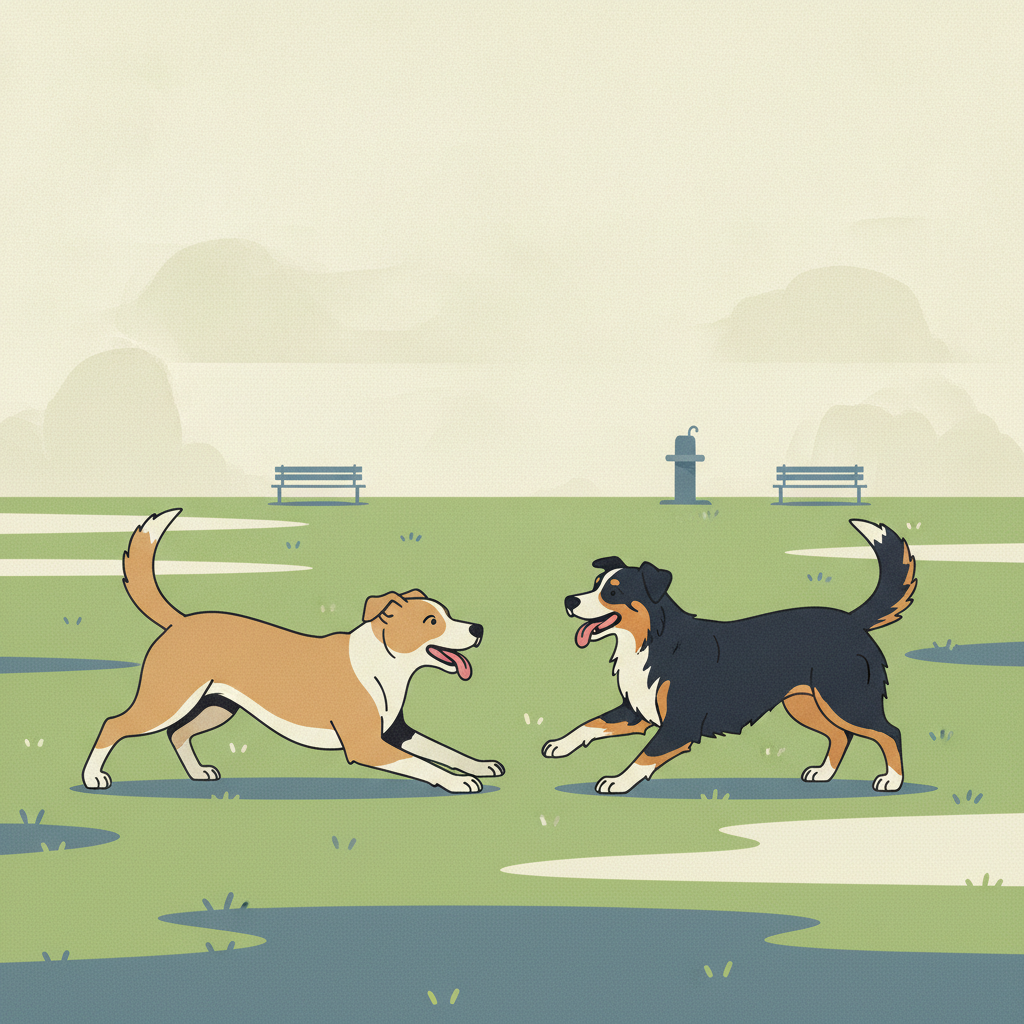 TrainingOne Word, Two Jobs: Why 'Socializing' at the Dog Park Backfires for PuppiesClaire Sutton · 6 min
 TrainingStop Shopping for a Training Collar. Pick the Right Tool for Your Dog's Neck FirstJames Okafor · 8 min
 TrainingYour Second Dog Is Copying Your First. That's the Risk, Not the Perk.Dr. Ravi Mehta · 6 min
 TrainingYour Dog Isn't Done Becoming Themselves. Age Six Is the Turning Point.Dr. Nina Kohl · 5 min
 TrainingYou Don't Have a Bad Dog. You Have a Ceiling, and Here's How to Spot ItDr. Nina Kohl · 5 min
 TrainingThere Are 6 Dog-Parenting Styles. The Research Only Likes One.Dr. Mara Chen · 7 min