


Not All 'Dog-Friendly' Parks Are Equal: 15 of America's Best, Ranked by Freedom
Most national parks ban dogs from their trails entirely. Here are 15 of America's best dog-friendly parks, sorted by how much freedom your dog actually gets, from rare trail-access national parks to true off-leash heavens.

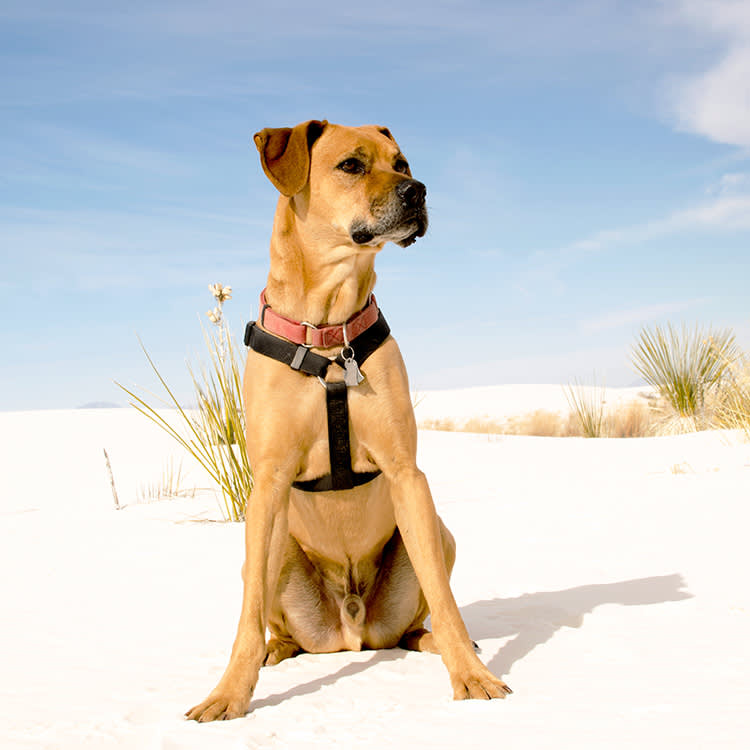
Here is the trap in every “best dog-friendly parks” list: it lumps together places where your dog can sprint across 100 acres off-leash with places where your dog is technically “allowed” but confined to a parking lot and a paved road. Those are not the same trip, and the gap is widest exactly where people assume it is smallest, national parks.
Most national parks are not dog-friendly in any meaningful sense. As a rule, the National Park Service confines dogs to developed areas, campgrounds, paved roads, and parking lots, and bans them from the trails and backcountry that are the whole point of going. That is why the small handful of national parks that actually let dogs hike are genuinely special, and why they belong in a different tier from a 40-acre off-leash field. So we have ranked these fifteen by the single thing that determines your dog’s day: how much freedom they actually get.
First, the rules that apply everywhere
Before any trip, confirm your dog is licensed and up to date on vaccines, since most parks require it. Pack more water than you think you need, pick up every mess, and keep your dog from chasing wildlife. Read each park’s own pet page, because policies change. And read your own dog: if they get anxious or reactive around kids or other dogs, skip the crowded, playground-adjacent parks, and if they are overstimulated, take them home. A great park day is one where your dog has fun without harming the land or anyone else’s visit.
Tier 1: True off-leash freedom
If the goal is to watch your dog run flat-out, these are the destinations. Each requires reliable recall, since freedom comes with responsibility.
Dog Mountain — St. Johnsbury, Vermont
A one-of-a-kind, leash-optional 150-acre retreat with trails, an agility course, Angel Dog Overlook, and the Stephen Huneck Gallery and Dog Chapel, where people worldwide come to honor pets they have lost. Meaningful for a spry pup, a senior, or a goodbye. Off-leash with voice control; dawn to dusk.
Cherry Creek State Park — Arapahoe County, Colorado
More than 100 acres of off-leash territory, so popular it uses a $3 off-leash day pass and caps numbers at peak times to keep things calm, plus 35-plus miles of mostly dog-friendly leashed trails. Off-leash in the designated area; up to three dogs per handler; sight-and-sound control; 5 a.m. to 10 p.m.
Shelby Farms Park — Memphis, Tennessee
The Outback Off-Leash Dog Park spans more than 100 acres of fields, ponds, and trails. Shelby Farms also honors dogs in a moving way, with custom tags on the dog-park sign, Legacy Walk pavers, and memorial tree plantings. Off-leash within the Outback; voice control required; one dog per person; sunrise to sunset.
Marymoor Park — Redmond, Washington
Known to locals as Doggie Disneyland, with a legendary 40-acre off-leash area where dogs roam fields, sniff endless trees, and swim in the Sammamish River, plus six miles of on-leash trails. Off-leash in the designated area, leashed elsewhere; sunrise to sunset; no dogs on playgrounds or sports fields.
Newtown Dream Dog Park — Johns Creek, Georgia
Proof that an acre in the city can be magic: clean turf, sprinklers, bridges, tunnels, and hoops, with separate large- and small-dog areas for safety. Off-leash; 8 a.m. to 9 p.m.; closed Wednesdays 8 to 10 a.m. for maintenance.
Tompkins Square Dog Run — New York, New York
NYC’s largest dog park, home of the famous Halloween Dog Parade, with separate fenced areas for small and large dogs, turf and gravel terrain, and an occasional summer pool. Go in the morning. Off-leash in the run, leashed elsewhere in the park; 6 a.m. to midnight.
Tier 2: National parks that actually let dogs hike
These are the rare exceptions where “dog-friendly national park” means real trail access, not just a campground. They are worth planning a trip around.
Shenandoah National Park — Front Royal, Virginia
Among the most dog-welcoming parks, with 35 pet-friendly trails. White Oak Canyon, with its six waterfalls up to 86 feet and swimming holes, is the memorable one. Mind your footing around snakes on rocks and in water, and consider bear spray, since Shenandoah has a notable black bear population. Leashed (six feet max), open 24/7; Bark Ranger program available.
Cuyahoga Valley National Park — Peninsula, Ohio
More than 100 trails with waterfront views and waterfalls, including 60-foot Brandywine Falls via Brandywine Gorge. Map your route ahead and mind the overlooks so your dog does not get near an edge. Leashed (six feet max), open 24/7.
New River Gorge National Park — Glen Jean, West Virginia
The crown jewel for dog owners: New River Gorge is the only national park that allows dogs on every single trail. Of its 40-plus trails, the Endless Wall and Glade Creek trails are standouts. If you want one national park where your dog is welcome everywhere you are, this is it. Leashed (six feet max), open 24/7; dogs can earn Bark Ranger status.
Acadia National Park — Bar Harbor, Maine
Unusually generous: more than 100 miles of carriage roads and trails are open to leashed dogs, along a stunning stretch of Maine coast, with three dog-friendly campgrounds for a weekend. Leashed (six feet max), open 24/7. Watch for ticks in spring and fall and use a vet-approved preventative; dogs can become Acadia Bark Rangers.
Great Sand Dunes National Park — Mosca, Colorado
Often called Colorado’s Sahara, with North America’s tallest dunes (over 700 feet) against the Sangre de Cristo Mountains. Most outdoor areas are dog-friendly, which is unusual and wonderful. Heat and hydration are the real concerns here, as at any dune park. Leashed (six feet max), open 24/7.
Indiana Dunes National Park — Porter, Indiana
Sand and surf on Lake Michigan, with dogs welcome on the dunes and many of the 50-plus miles of trails, and, rare among national parks, allowed in the lake to swim, as long as they stay leashed. Leashed (six feet max), 6 a.m. to 11 p.m.; Bark Ranger program available.
White Sands National Park — Alamogordo, New Mexico
Otherworldly white gypsum dunes open to leashed dogs for hiking, sand sledding, and stargazing. The catch is the Chihuahuan Desert heat: the sand and air get brutally hot and dry, so go early or late, carry plenty of water, and check that the sand is not too hot for paws. Leashed (six feet max), 7 a.m. to sunset.
Tier 3: Iconic city green spaces (mostly leashed)
For city dwellers and travelers, these legendary parks welcome leashed dogs, with a few off-leash windows.
Boston Public Garden — Boston, Massachusetts
A classic New England picnic spot where leashed dogs can stroll the paths and lounge on the lawn. For off-leash time, the adjacent Boston Common’s Common Canine program lets dogs roam if they respond to recall. Leashed except in designated Common areas; 6:30 a.m. to 11 p.m.
Central Park — New York, New York
The world’s most iconic park is genuinely dog-friendly, with off-leash, voice-control hours early and late (6 to 9 a.m. and 9 p.m. to 1 a.m.) and leashes required 9 a.m. to 9 p.m. A couple of resident coyotes now live in the park, so stay alert and follow posted guidance. Open 6 a.m. to 1 a.m.; some areas are leash-only at all times.
Heat, paws, and wildlife: the safety part lists skip
The dune parks above hide a real hazard: sand and pavement can reach temperatures that burn paw pads in seconds. Use the back-of-your-hand test (if you cannot hold your hand on the surface for seven seconds, it is too hot), go at dawn or dusk in summer, and carry water for both of you. In grassy western parks, watch for foxtails, barbed grass seeds that burrow into paws, ears, and noses. In wilder parks, keep your dog close and leashed around snakes, bears, and coyotes, and never let them chase wildlife. Bring a basic first-aid kit and know where the nearest emergency vet is before you go.
FAQs
Why are most national parks not dog-friendly?
The National Park Service generally restricts dogs to developed areas, roads, campgrounds, and parking lots, and prohibits them on most trails and in the backcountry, to protect wildlife and other visitors and for your dog’s safety. That is why the national parks in Tier 2 above are notable: they are the exceptions that actually permit dogs on trails. Always check a specific park’s pet page before assuming trail access.
What is a Bark Ranger?
It is an official National Park Service program at participating parks where dogs (and their owners) pledge to follow the B.A.R.K. principles: Bag your waste, Always leash, Respect wildlife, and Know where you can go. Several parks on this list, including Acadia, Shenandoah, New River Gorge, and Indiana Dunes, offer it, often with a collectible tag.
How do I keep my dog safe in hot desert and dune parks?
Go at dawn or dusk, since sand gets hot enough to burn paws in seconds, and use the seven-second hand test before letting your dog walk on it. Carry far more water than usual, watch for signs of overheating like heavy panting and stumbling, and consider booties for paw protection. Heat and dehydration are the top risks at White Sands and Great Sand Dunes.
Which park is best if I want my dog fully off-leash?
For sheer space and freedom, Marymoor Park in Washington (40 off-leash acres), Shelby Farms in Memphis (100-plus acres), and Cherry Creek in Colorado are the standouts, all with room to run and water to swim. Each requires solid recall, since off-leash privileges depend on voice control.
References
- National Park Service, “Pets in the Parks.” https://www.nps.gov/subjects/pets/index.htm
- National Park Service, “B.A.R.K. Ranger Program.” https://www.nps.gov/subjects/pets/bark-ranger.htm
- National Park Service, New River Gorge, “Pets.” https://www.nps.gov/neri/planyourvisit/pets.htm
- American Kennel Club, “Hot Pavement and Your Dog’s Paws.” https://www.akc.org/expert-advice/health/hot-pavement-dogs-paws/
- American Veterinary Medical Association, “Hot weather safety for pets.” https://www.avma.org/resources-tools/pet-owners/petcare/hot-weather-safety-pets
Marcus Webb writes about the gear, gadgets, and everyday choices that make life with a pet easier. His coverage runs from product picks to training and the causes worth paying attention to, always with an eye on what actually earns a place in your home.
Meet our experts ↗Keep reading
 LivingBARK Air Started at $6,000 a Seat. How a Dog Airline Got (Almost) AffordableNina Vasquez · 6 min
 LivingYour Dog's Canoe Problem Isn't the Water. It's the Boredom.Marcus Webb · 6 min
 LivingThe Dreamy Part of Working From Anywhere With a Dog Is a Lie. Here's the Real Job.Marcus Webb · 6 min
 LivingThe Kayak Isn't What Hurts Dogs. The Water Is.Dr. Ravi Mehta · 8 min
 LivingLA County Has Exactly One Off-Leash Beach. Plan Around It.Jordan Ellis · 5 min
 LivingThe CDC's Dog-Import Rules Punish the Rescues Doing Rabies Prevention RightMarcus Webb · 11 min