


BARK Air Started at $6,000 a Seat. How a Dog Airline Got (Almost) Affordable
BARK Air launched as a $6,000-a-ticket novelty for the ultra-rich. Two years on, fares have dropped under $1,000 on some routes and the map keeps growing. Here's what changed, what you actually get, and whether it's worth it for your dog.

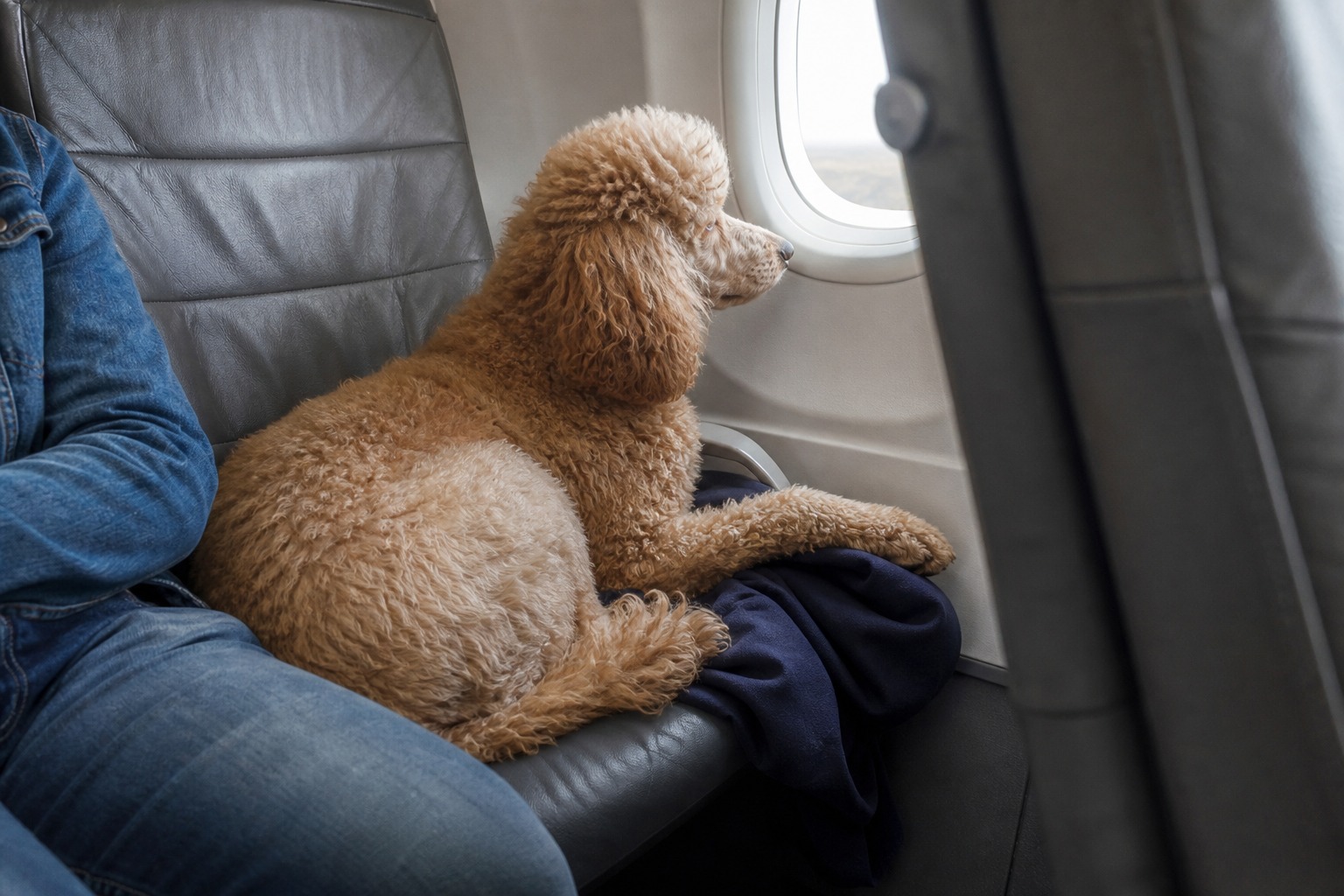
When BARK Air first took off, the headline number was the whole story: six thousand dollars for a one-way seat from New York to Los Angeles, eight thousand to London. It was the kind of figure that made the concept easy to dismiss as a stunt for the very rich, a flying limousine for dogs whose owners would never blink at the fare. One commenter summed up the mood early on: a great idea, sure, but the rest of us were never getting on that plane.
The more interesting story is what happened next. The price did not stay there. That is the part worth paying attention to, because it tells you whether a dog-first airline is a one-off novelty or the beginning of an actual category.
The pitch: no crate, ever
BARK, the company behind the BarkBox subscription, built the airline around a single conviction: no dog should fly in a crate, jammed into a cargo hold or wedged under a seat. To make the point, the company’s CEO climbed into a dog crate on camera and sat there, visibly cramped, for the length of a hypothetical flight. It is hard to watch, which is exactly why it works. Cargo-hold travel is not just uncomfortable for dogs; it carries real risk, and the airline industry’s own incident reports over the years have made plenty of owners afraid to fly their pets at all.
So on BARK Air, dogs ride in the cabin as full passengers. There are no crates at any point in the journey. Check-in runs about 45 minutes with none of the TSA chaos that makes airport travel miserable for an anxious animal.
What your dog actually gets onboard
This is where the spec sheet stops sounding silly and starts sounding thoughtful. Every booking comes with a “puppy concierge” who reaches out before the flight to learn your dog’s personality, quirks, and preferences, then meets you at the gate and stays attentive to your dog for the whole trip.
In the air, dogs are offered calming pheromones and soothing music, noise-canceling headphones sized for canine ears, calming treats, and a calming jacket if they want one. They get a beverage during takeoff and landing, because dogs cannot chew gum to equalize the pressure in their ears the way people do, and the pressure change is a real source of in-flight discomfort. As Dr. Amara Solis, a veterinarian who consults on travel anxiety, puts it:
“Most of what makes flying awful for a dog is sensory: the roar of the engines, the pressure swings, the confinement, the stress radiating off their person. Strip those away and you’ve removed the actual problem, not just dressed it up.”
That framing matters, because it is the difference between a luxury gimmick and a genuinely better way to move a dog through the sky.
The price actually came down
Here is the news the original buzz never got to report. In the time since launch, BARK Air did the thing it promised and brought fares down, in some cases dramatically. The mechanism was capacity: by moving select routes onto CRJ-200 regional jets (operated by Air Wisconsin) that seat roughly 20 dogs and 20 humans instead of the original 10-seat private-style cabins, BARK Air roughly doubled the dogs per flight and pushed some fares under $1,000. The clearest example is a New York to Fort Lauderdale seat that has run as low as about $950, a fraction of the launch price and a number that puts a cabin-class dog flight within reach of a far wider group of owners than the original $6,000 sticker ever did. The premium long-haul international routes still command premium prices, but the floor has dropped enough to change who the airline is for.
The shift is not just marketing. By mid-2025 BARK Air had flown more than 1,000 dogs and used that demand to justify the larger-aircraft model, evidence that the under-$1,000 tier found real customers rather than just generating headlines.
The map grew right alongside the prices. What began as New York to LA and London now reaches a string of cities, with regular service connecting New York to Los Angeles, San Francisco, London, Paris, Lisbon, and Madrid, and further expansion into markets including Seattle, South Florida, Berlin, and Milan. Most international flights still route through New York, so geography still matters, but the network is no longer a two-destination experiment.
BARK also added a charter service for owners who want to name their own takeoff city, destination, and date, with the same in-cabin, concierge-led experience on a private plane. That is the high end getting higher, not lower, but it rounds out a lineup that now spans from a sub-$1,000 scheduled seat to a fully bespoke private flight.
Is it worth it for your dog?
The honest answer depends less on the price than on the dog. A small, mellow dog who tolerates a carrier under the seat on a conventional airline does not need this. The case for BARK Air is strongest for the dogs who have the hardest time flying any other way: large dogs who legally cannot ride in the cabin on most carriers and would otherwise go in cargo, dogs with genuine travel anxiety, brachycephalic (flat-faced) breeds for whom cargo-hold air pressure and temperature swings are an actual health hazard, and senior or medically fragile dogs whose owners simply will not put them below deck.
For those dogs, a few practical notes before you book. Have your veterinarian confirm your dog is fit to fly, especially for flat-faced breeds and seniors. Build in a long pre-flight walk so your dog arrives tired rather than wired. Bring the items that smell like home, a blanket or a worn shirt, because familiar scent does more to settle a dog than any onboard amenity. And confirm the destination’s import rules early; an in-cabin seat does not exempt your dog from a country’s vaccination, microchip, or paperwork requirements.
BARK Air launched looking like a punchline about rich people and their pampered pets. Two years and a price cut later, it looks more like a bet that there is a real, underserved market of people who love their dogs too much to ship them as cargo, and who will pay a fair, if not cheap, premium to fly them properly. That bet appears to be paying off.
References
- “BARK Air Introduces Flights with Lower Fares.” BARK, press release. https://bark.co/blogs/press/bark-air-introduces-flights-with-lower-fares-uniting-more-dogs-and-their-people-in-the-skies
- “BARK Air Celebrates First Anniversary with New Routes and Private Charters.” BARK, press release. https://bark.co/blogs/press/bark-air-celebrates-first-anniversary
- “Book a Dog-Friendly Flight.” BARK Air. https://air.bark.co/collections/bookings
- “BARK Air Introduces Select Flights on Larger Planes with Lower Fares.” Business Wire, December 5, 2024. https://www.businesswire.com/news/home/20241205163917/en/BARK-Air-Introduces-Select-Flights-on-Larger-Planes-with-Lower-Fares-Uniting-More-Dogs-and-Their-People-in-the-Skies
- “Traveling by Air With Your Pet.” American Veterinary Medical Association. https://www.avma.org/resources-tools/pet-owners/petcare/traveling-your-pet-faq
Nina Vasquez writes about life at home with pets and the relationships at the heart of it. Her work covers day-to-day living, people-and-pet stories, and the products that fit into a real household, with a warm, grounded take on everyday pet ownership.
Meet our experts ↗Keep reading
 LivingHouston Might Be America's Most Underrated Dog City. Here's the Map.Nina Vasquez · 9 min
 LivingA Woman Left Her Dog at the Airport. The Breed Ban That Set It Up Is the Real Story.Jordan Ellis · 4 min
 LivingBARK Wants to Sell You a $150 Dog Concierge. When It's Actually Worth ItMarcus Webb · 4 min
 LivingThe Famous Dog Beaches Are a Zoo. These 10 Hidden Ones Aren't.Sara Lim · 7 min
 LivingStrangers Get Exactly Two Questions About Your Service Dog. Here's Your Script.Leila Torres · 6 min
 LivingYour Dog Is Not Lying by the Door Missing YouJordan Ellis · 7 min