


"Non-Toxic" Doesn't Mean "Snack": 11 Dog-Safe Houseplants Done Right
A non-toxic houseplant can still send your dog to the vet. Here are 11 genuinely dog-safe plants, why non-toxic isn't the whole story, and how to plant-proof your home.

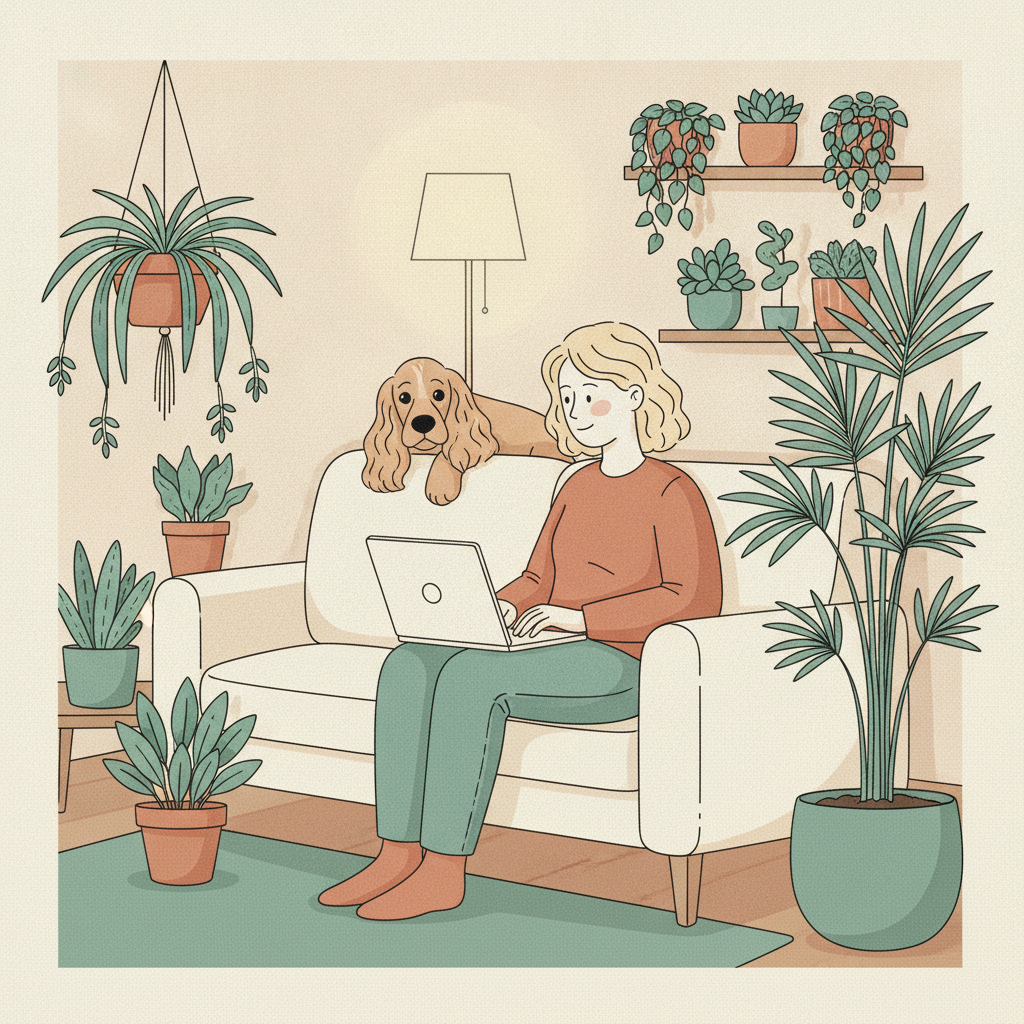
Here is the thing most “pet-safe plant” lists never tell you: non-toxic does not mean safe to eat. It means the plant will not poison your dog. It says nothing about the wad of leaves causing a stomach blockage, the fertilizer pellets in the soil, the pesticide residue on a nursery plant, or the gastritis a dog gets from grazing on greenery all afternoon. The ASPCA Animal Poison Control Center fielded more than 451,000 cases in 2024, a nearly 4 percent jump over the year before, and plants are a perennial driver of those calls. So yes, choose non-toxic plants, that part matters, but treat this as two jobs: pick plants that will not poison your dog, then keep your dog from treating any of them as a salad bar. Both halves are below, starting with eleven plants that pass the non-toxic test.
The eleven safest picks for a dog home
1. Ponytail palm
Beaucarnea recurvata, despite the name, belongs to the agave family, not the palms, and is non-toxic to dogs. Its swollen base stores water, so the cardinal rule is do not overwater. Indoors it tops out around four feet, making a safe, sculptural floor plant.
2. Rosemary
Salvia rosmarinus is a non-toxic evergreen herb, ASPCA-confirmed, that doubles as kitchen seasoning. It is the diva of this list indoors, demanding six to eight hours of sun and resenting overwatering, but it poses no danger to a dog who nibbles.
3. Prayer plant
Maranta leuconeura folds its leaves upward at night like hands in prayer, an easy-care, non-toxic pick that does well in hanging baskets, again keeping it up and out of reach.
4. Calathea
A close cousin of the prayer plant and equally non-toxic, calatheas bring dramatic patterned foliage to low- and medium-light corners. They are pickier about humidity and filtered water, but for a statement plant that will not poison your dog, they are hard to beat. (This is our swap for the harder-to-source “blue bird” succulent some lists name; calathea is widely available and unambiguously safe.)
5. Pet grass (wheatgrass)
Wheatgrass, sold as pet grass, is the one plant on this list your dog is supposed to eat. It is genuinely nutrient-dense, with chlorophyll, fiber, and several vitamins and minerals, and it can soothe a mild stomach upset. Growing a dedicated pot also gives a determined grazer a legal target, which can spare your other plants. It needs trimming like a tiny lawn.
6. Maidenhair fern
Adiantum species are soft, fan-shaped, and non-toxic, with one quirk: they are thirsty to the point that you practically cannot overwater them. Give them bright, indirect light and constant moisture and they reward you, all without posing a poisoning risk.
7. Staghorn fern
With its antler-shaped fronds, the staghorn is usually mounted on a wall or hung in a basket, the ideal arrangement for a dog home because the plant simply is not at dog level. Non-toxic to dogs and cats, it asks only for the right light and humidity.
8. Boston fern
Nephrolepis exaltata is a feathery, non-toxic classic that shines as a hanging plant, which conveniently keeps the fronds off the floor and away from a curious nose. It wants indirect light and consistently moist soil.
9. Tillandsia (air plants)
Air plants need no soil, which quietly removes one of the biggest hidden risks, fertilized potting mix a dog can dig into. Non-toxic and decorative, they perch on shelves, driftwood, or inside glass globes, ideally out of reach. Low-maintenance is not no-maintenance; they still need a regular soak.
10. Spider plant
Chlorophytum comosum is the gateway houseplant: nearly impossible to kill, thriving on neglect, and confirmed non-toxic by the ASPCA. If you want one starter plant that survives a beginner and a dog, start here. The dangling “spiderettes” do tempt some dogs to bat and chew, so hang it if your dog is a grazer.
11. Parlor palm
A true palm and a true safe pick, Chamaedorea elegans tolerates low light and adds height without risk, the kind of large, leafy plant people often reach for and accidentally choose a toxic version of (sago “palm” is the deadly imposter). The parlor palm is the genuinely dog-safe way to get that tropical look.
Why “non-toxic” is only half the safety story
A plant earning the non-toxic label has cleared one hurdle, not all of them. Watch for three things even with safe plants. First, the soil and its additives, fertilizer spikes, slow-release pellets, and compost can upset a stomach or worse, so a dog digging in the pot may be the real hazard. Second, pesticides and leaf shine, nursery plants often arrive treated, so rinse a new plant’s leaves and let it acclimate before it joins a dog household. Third, sheer volume, a dog who eats a lot of any plant material can vomit, develop diarrhea, or, with stringy or fibrous leaves, risk an intestinal blockage. Non-toxic buys you a safety margin; it does not buy you a free-for-all.
How to keep your dog out of your plants
The most reliable fix is making the plants boring and the alternatives interesting.
- Elevate them. Bookshelves, wall mounts, and hanging baskets put greenery out of reach, which is why so many picks above thrive hung up.
- Bust the boredom. A lot of plant-eating is a bored dog inventing a job. More walks, puzzle feeders, and play reduce the appeal of the ficus.
- Use a deterrent. A dog-safe bitter spray on and around pots teaches most dogs the plant is not worth it.
- Give a legal target. A pot of pet grass redirects a committed grazer away from everything else.
- Train the boundary. “Leave it” plus consistent rewards for ignoring the plants does what no list of safe species can.
Toxic plants to keep out of reach
Choosing safe plants only works if you also know the offenders. This is not exhaustive, but keep these away from dogs: sago palm (often fatal), aloe vera, jade plant, English ivy, dumb cane (Dieffenbachia), snake plant, bird of paradise, dragon tree (Dracaena), monstera, and any true lily. Bulbs deserve special caution, since tulips and irises are toxic and the bulb is the most concentrated part. Outdoors, watch for sago palm, mushrooms, water hemlock, and azaleas, none of which you can control by shopping carefully.
What to do if your dog eats a toxic plant
Move fast. Call your veterinarian or the ASPCA Animal Poison Control Center, and be ready to say what the plant was, how much and which part your dog ate (leaf, stem, flower, root, or bulb), and what symptoms you are seeing. Bring a piece of the plant or a clear photo if you can. With the most dangerous plants, minutes matter, so do not wait to see whether your dog seems fine.
References
- ASPCA. “Toxic and Non-Toxic Plant List, Dogs.” aspca.org/pet-care/animal-poison-control/dogs-plant-list.
- ASPCA. “ASPCA Sees Increase in Number of Calls to Poison Control Center in 2024.” aspca.org.
- Pet Poison Helpline. “Poisonous Plants for Dogs.” petpoisonhelpline.com.
- North Carolina Extension Gardener Plant Toolbox. plants.ces.ncsu.edu.
Common questions
Is grass safe for dogs to eat?
Eating grass is normal and usually harmless in moderation. The risk is chemical, grass treated with pesticides or fertilizers, not the grass itself.
Why does my dog eat houseplants?
Usually curiosity, boredom, or an upset stomach. Because even safe plants can cause GI upset and the dressing on them can harm, it's worth redirecting the behavior, not just swapping in safe plants.
What if my dog eats a flower bulb?
Many bulbs, including tulips and irises, are toxic, and the bulb is often the most concentrated part. Call your vet or animal poison control right away, even if you're not sure the plant was toxic.
Not a substitute for your vet. Our guidance is educational. For urgent symptoms, contact a vet or emergency clinic right away. Editorial standards
Dr. Park is a board-certified emergency and critical care specialist. She reviews our health and safety content for clinical accuracy and contributes guides on recognising urgent conditions. Her focus is helping owners act quickly and correctly when it matters most.
Meet our experts ↗Keep reading
 LivingYour Dog Doesn't Hate Fall. It Hates Your Calendar.Dr. Mara Chen · 8 min
 LivingThe Trail Doesn't Care How Good Your Dog Is Off-LeashDr. Ravi Mehta · 7 min
 Health & WellnessThe 'Beards Are Dirtier Than Dogs' Study Says No Such ThingDr. Priya Nair · 6 min
 Living529 Days Alone on an Island. A T-Shirt Is What Finally Caught Her.Nina Vasquez · 5 min
 Health & WellnessThe Leaf Pile Looks Like Pure Joy. It's Also a Hiding Spot.Dr. Ravi Mehta · 6 min
 Health & WellnessDon't Skip Your Dog's Summer Workout. Move It. Here Are 7 Ways.Dr. Lena Park · 7 min