


The 'Beards Are Dirtier Than Dogs' Study Says No Such Thing
The famous finding compared 18 bearded men to 30 dogs, never sampled a single clean-shaven face, and was really about MRI machines. Its actual result is more interesting than the headline.

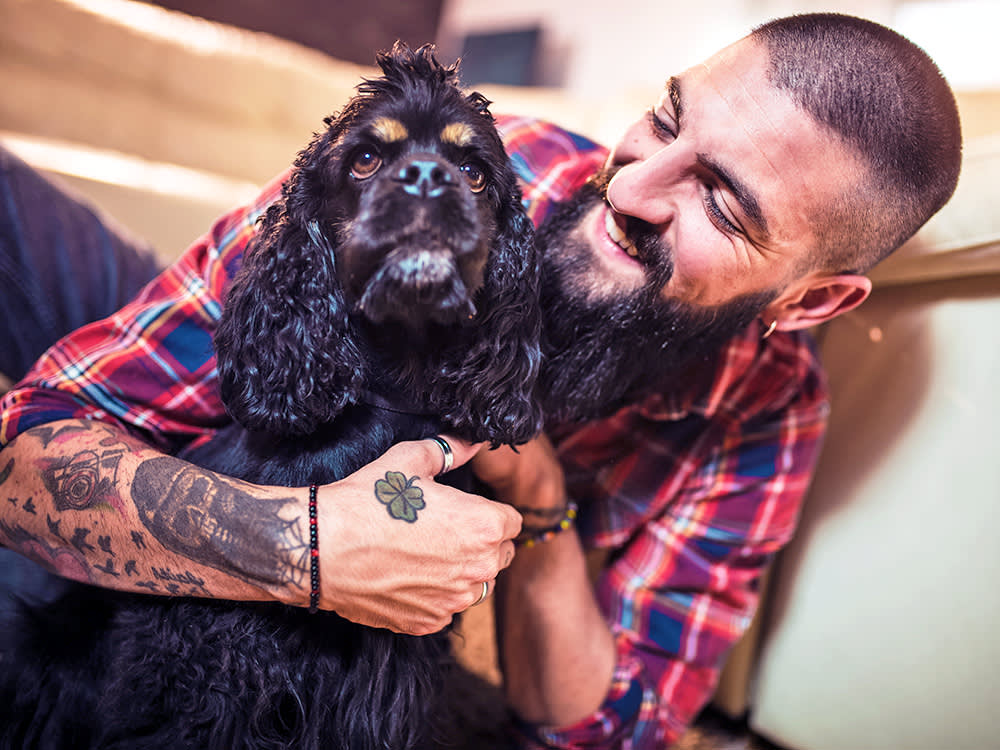
Some claims get repeated so often they stop needing evidence. Swallowed gum sits in your stomach for seven years. You catch a cold from cold weather. Men’s beards are dirtier than dogs.
That last one has a real study behind it, which is why it has legs. It is also almost entirely misdescribed, and the misdescription hides a genuinely funny finding that nobody reports: the researchers were not investigating men at all. They were trying to figure out whether it was safe to put a dog in a hospital MRI machine.
What the researchers actually did
In 2019, the journal European Radiology published a study by Gutzeit and colleagues with a title that gives the whole game away: “Would it be safe to have a dog in the MRI scanner before your own examination?”
Veterinary clinics rarely own MRI machines. They are enormously expensive and would sit idle most of the year. Meanwhile dogs are living longer, which means more of them need advanced imaging as they age. The obvious solution is to scan dogs in human MRI machines during off hours, and the obvious objection is: is that hygienic?
To answer it, the team needed a human comparison group. They picked bearded men.
They swabbed 18 men, aged 18 to 76, taking samples from the beard on both the face and the neck, plus saliva. They swabbed 30 dogs of various breeds, including Dachshunds, Border Collies, and German Shepherds, taking saliva and fur from between the shoulder blades, an area the authors themselves describe as particularly unhygienic. And then they swabbed the MRI scanners.
What they found
The bacterial results are real, and they are what everyone quotes:
- All 18 men had high microbial counts.
- Only 23 of the 30 dogs did. The other seven landed in the moderate range.
- Human-pathogenic microorganisms, meaning bacteria known to harm people, turned up more often in beards (7 of 18) than in dog fur (4 of 30).
The species involved are unglamorous rather than terrifying. Enterococcus faecalis is a common gut bacterium that can cause things like urinary tract infections. Staphylococcus aureus lives on the skin of roughly half of all humans at any given time and only becomes a problem if it gets somewhere it should not, like the bloodstream.
Lead author Andreas Gutzeit did allow, in print, that with results like these you could fairly call a dog the cleaner of the two parties. That single line is the entire internet legacy of this paper.
Four reasons that headline does not survive contact with the paper
1. There was no clean-shaven control group. This is the fatal one. The study never sampled a single bare face. It cannot tell you that beards are dirtier than no beards, because it never looked at no beards. It compared bearded men to dogs, which is a comparison nobody needed and which answers no question you have.
2. The authors said so themselves. They noted, flatly, that there is no reason to believe women carry a lower bacterial load than bearded men. Translation: we are not claiming the beard is the variable. We are claiming humans are humans.
3. Eighteen men. That is not a sample from which to draw conclusions about half the species. The authors did not pretend otherwise.
4. The point was hospital hygiene, not facial hair. The study’s own conclusion is that the central question is not whether dogs should be imaged in our hospitals, but whether we understand hospital hygiene well enough to know what actually endangers patients.
The finding they buried
Here is the result that should have been the headline, and it is one the “beards are gross” coverage skipped every time.
After the dogs were scanned, routine disinfection of the scanner left significantly lower bacterial counts than were found in the scanners used only by humans.
Read that again. The MRI machine that had a Border Collie in it, then got cleaned, ended up cleaner than the MRI machine that only ever had people in it. The dogs were not the contamination risk in the room. The existing hospital cleaning practices were.
That is the actual public health story in this paper, and it got traded for a joke about your boyfriend’s beard.
“The paper found that dogs pose no meaningful risk to people sharing an MRI unit, and that our own hygiene routines do,” says Dr. Nina Kohl. “It is a study about hospitals. Everything about it that went viral is the part the authors treated as a footnote.”
While we’re here: dogs’ mouths are not cleaner than yours
The companion myth, and it deserves the same treatment.
Colin Harvey, a professor at the University of Pennsylvania’s School of Veterinary Medicine and executive secretary of the American Veterinary Dental College, has compared the question to weighing apples against oranges. Dog mouths and human mouths are not running the same ecosystem, so “cleaner” is not a coherent question.
The genetics make that concrete. Floyd Dewhirst, the bacterial geneticist who helped map the human oral microbiome, has pointed out that comparing humans and dogs turns up only about 15 percent overlap in bacterial species. They are not two versions of the same mouth. They are two different mouths, with mostly different residents.
So “cleaner” is the wrong axis. The useful question is what is actually transmissible, and the answer is short.
What genuinely passes between you and your dog
Not much, but not nothing, and it goes both ways.
Dogs can put people at risk for certain bacterial infections, salmonella among them. Humans can pass some things to dogs, including certain strains of influenza. Neither of these is a reason to stop living with a dog. They are a reason to wash your hands, which is the recommendation at the end of essentially every study in this area.
And on beards specifically, the evidence points the other way from the folklore. When researchers sampled hospital staff in a 2014 study, several bacterial species turned up more often on the clean-shaven workers than on the bearded ones, possibly because shaving leaves micro-abrasions in the skin for bacteria to colonize.
Beards are not self-cleaning. Nobody is claiming they are. But the claim that a bearded face carries more filth than a bare one has never actually been demonstrated.
What’s new since this was written
Nothing has overturned the 2019 paper, and nothing needs to. What has changed is how widely its actual conclusion is quoted: the finding that scanners used by dogs came out cleaner after routine disinfection than human-only scanners has become a small, pointed argument in hospital infection-control conversations, which is precisely where the authors aimed it.
The practical guidance for pet owners has not moved either. Wash your hands after handling your dog, particularly before eating. Do not let a dog lick an open wound. Keep the dog off the kitchen counters, not because his fur is filthy, but because that is where you prepare food.
Everything else is a party fact that got out of hand.
References
- Would it be safe to have a dog in the MRI scanner before your own examination? A multicenter study to establish hygiene facts related to dogs and men — Gutzeit et al., European Radiology, 2019
- Would it be safe to have a dog in the MRI scanner before your own examination? — PubMed record
- A Dog’s Fur Contains Fewer Harmful Germs than a Man’s Beard — Stanley Coren, Psychology Today
Not a substitute for your vet. Our guidance is educational. For urgent symptoms, contact a vet or emergency clinic right away. Editorial standards
Dr. Nair is a veterinarian focused on diet and feeding. She covers everyday nutrition, treats, and the many "can they eat this?" questions owners ask, grounding each answer in what is actually safe and sensible for dogs and cats.
Meet our experts ↗Keep reading
 LivingConan's Cohost Let Her Husband Cut the Dog's Hair. Once.Leila Torres · 8 min
 LivingA Disabled Girl's Service Dog Got Her Family Kicked Off a Flight. The Culprit Was One Checkbox.James Okafor · 4 min
 LivingShe Came Home to a Box of Ashes. Her Sitter Had 118 Five-Star Reviews.Nina Vasquez · 6 min
 Health & WellnessDog Saliva Doesn't Heal Wounds. It Delivers Bacteria.Dr. Priya Nair · 8 min
 LivingA Stranger Found Him Tied to a Bench in the Rain. A TikTok With 100 Followers Got Him Home.Nina Vasquez · 6 min
 LivingYour Pet Dreads Thanksgiving More Than You Do. Here Are the 8 Relatives to Blame.Jordan Ellis · 7 min