


Adopting My Deaf Dog Didn't Take Patience. It Taught Me a New Language
People hesitate to adopt dogs with disabilities, then surrender them within months. After years with my deaf dog Charlie, I've learned that what scares people off is exactly what makes the bond so deep.
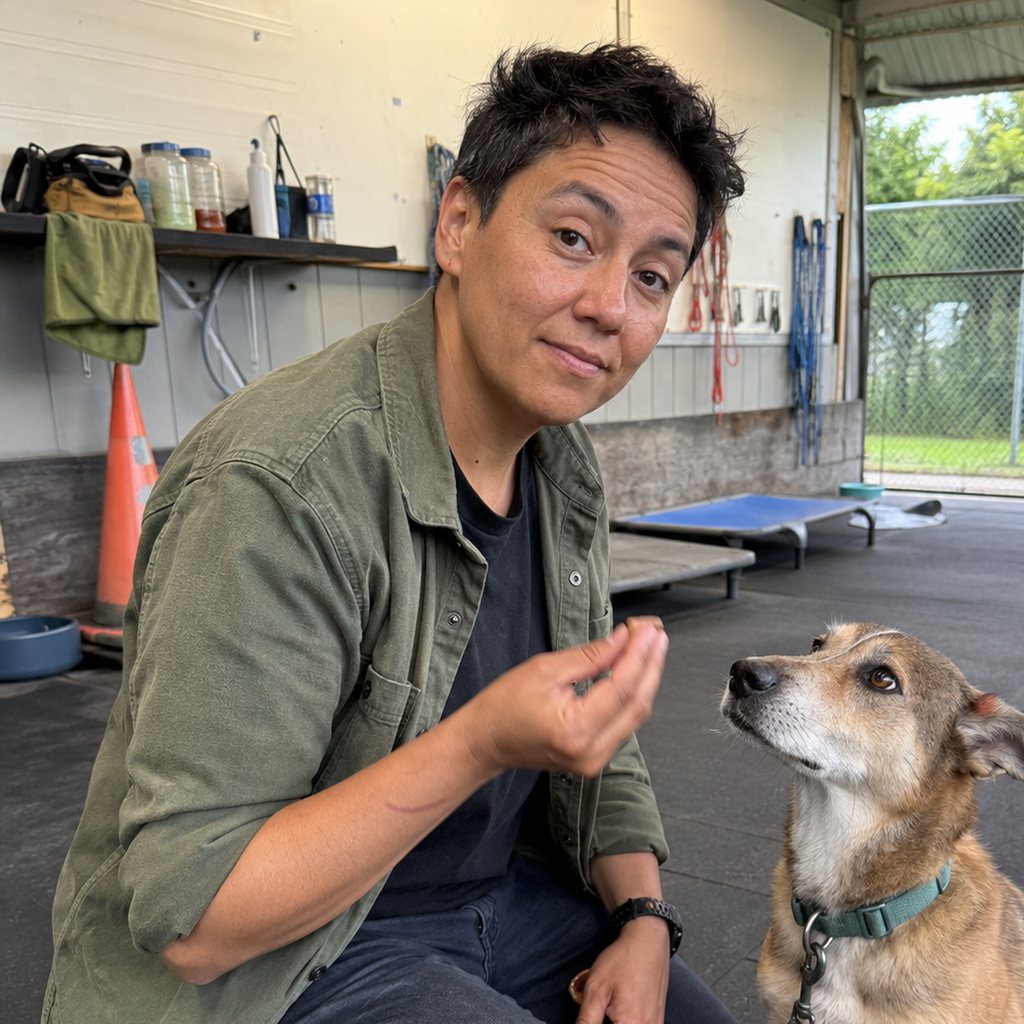
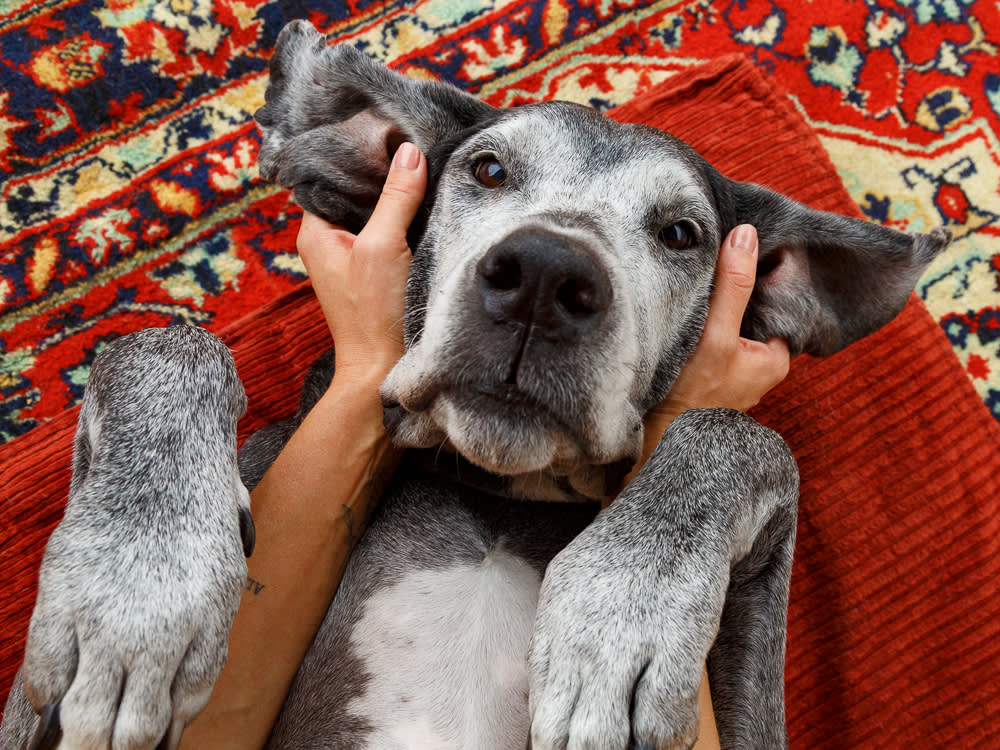
The thing people imagine when they hear “deaf dog” is a list of problems: the extra training, the safety worries, the sadness of a dog who can’t hear you call their name. I imagined some of it too, before Charlie. What I didn’t expect is that nearly every fear on that list turned out to be the front door to the best relationship I’ve ever had with an animal. His deafness didn’t ask me for patience so much as it asked me to learn a different language, and once I did, the whole idea that he was “missing” something stopped making sense.
I want to make the case for these dogs, because they need it. To mark Deaf Dog Awareness Week, here’s what I wish everyone understood, and why so many of these dogs end up surrendered when they shouldn’t.
How Charlie found us
When I got my dog Georgie, I had just turned 26. My partner and I had been together for only 10 months, had very little money to spare, and exactly zero business adopting a pet at that point in our lives. But there she was: Golden Retriever ears too big for her face, Red Heeler markings (one shaped exactly like a heart), and the perpetually concerned eyes of a Cocker Spaniel. We were a family of three for five years. She was our girl, the OG (original Georgie), our one and only baby. That was, until we met Charlie.
Originally named Duke when we adopted him, he was a spindly seven-month-old whose mother had been abandoned and rescued while pregnant. The first thing we noticed at the park was that he shadowed the other dogs everywhere they went, never wandering off on his own, tracking the pack’s every move. That, we learned, is because Charlie is deaf.
Charlie (also known around our house as Prince Charles, Chuck, Charles Entertainment Cheese, or simply The Boy) is what’s called a “double merle.” That happens when two dogs carrying the spotted “merle” coat pattern, like Australian Shepherds, are bred together. As Deaf Dogs Rock explains it, “If two merle dogs are bred together, each puppy in the litter has a 25 percent chance of being born a double merle. A double merle inherits the merle gene twice.” That double copy produces a lightening effect: a white coat and a lack of pigment around the eyes and nose (a whole high-school-biology Punnett square situation). It also makes the puppy likely to be deaf or blind, or both.
We didn’t set out to get a deaf dog. But once we saw Georgie and Charlie interact, we knew. Because of his deafness, he benefits from a hearing sister who looks out for him, and as a Cattle Dog mix, she loves having a job. She’s his ears when he needs her to be.
Deafness is a different language, not a disability
This is the reframe that changed everything for me, and it’s the one Lee leads with at DDR. “We don’t consider deaf dogs or deaf/blind dogs disabled,” she told me. “We think of them as differently abled. They are just as easy to train and live with their human families as a hearing dog, and the training is very similar.”
She’s right, and the proof is in how ordinary our routine looks. We train Charlie almost exactly the way we train Georgie, with one swap. For her, we use a clicker so she hears the “click” when she nails a task, and then she gets a treat. For Charlie, once he sits, comes, or waits, we flash a thumbs-up, a kind of visual clicker, and then he gets his treat. He knows several ASL signs, and teaching him has taught us a lot of ASL ourselves. “The sky is the limit,” Lee says, if pet parents commit to positive reinforcement, and she points to all the accomplished therapy and agility dogs on DDR’s site as evidence.
If anything, Charlie is sharper for it. Georgie is our little honors student, the “actually” kid always correcting everyone’s wrong answers, but Charlie is just as smart and more emotionally tuned-in. He can tell when I’m having a hard mental-health day and checks on me instantly, gluing himself to my side for what I can only describe as Velcro snuggle therapy. Lee says her own deaf dogs have “super powers” from being so attuned to their surroundings: “My deaf dogs can feel the vibration of the UPS truck a quarter of a mile down the road way before my hearing dogs alert us. They can recognize good people but also pick up on negative energy from bad people.”
The safety worries are real, and entirely manageable
I won’t pretend there’s nothing to plan for. A deaf dog can’t hear a car, a bike, or you shouting “wait,” so a few habits become non-negotiable, and none of them are hard:
- A long leash or a securely fenced yard for anything off-leash, every time. Charlie doesn’t free-roam near roads, full stop.
- A flat vibration collar (not a shock collar) as a “look at me” tap, so I can get his attention across a room or a yard without startling him.
- A gentle wake-up routine so he’s never jolted awake. We touch the same spot on his shoulder, or let him feel our footsteps, so waking is predictable and calm.
- An ID tag and microchip note that he’s deaf, so anyone who finds him knows not to expect him to respond to a voice.
That’s the entire “extra” workload people dread. It’s a handful of small adjustments, and they become second nature within weeks.
The Velcro thing is a feature
Charlie is a classic Velcro dog, as deaf dogs tend to be. He wants to be as physically close to me as possible, because the feeling of someone beside him is reassuring. He can’t rely on his ears to catch a startling sound, so he relies on feel: if I stand up suddenly, he snaps awake to see what I’m reacting to. He sleeps like a person, head on my pillow, and because he can’t hear me, he keeps me in his sights at all times. Yes, that means he occasionally pokes his head into the shower to confirm I haven’t vanished into Narnia.
Would I sometimes like to shower alone? Sure. But I also feel flattered by the devotion. As Lee puts it, “You do have to be okay with never having any personal space again, but it is so worth the sacrifice.”
He communicates differently, and that’s on me to translate
Because he can’t hear himself to regulate his volume, Charlie is a loud barker, and some people read that loudness as aggression. In reality he’s just playing and inviting his pals in; he’s simply loud about it. “It really is about educating people when it comes to your deaf dogs playing with new dogs,” Lee says. She suggests a simple heads-up to other owners: “My dog is completely deaf and he sounds ferocious because he can’t hear himself, but rest assured it is just his way of playing.”
As much as I wish everyone would just accept Charlie for who he is, being his advocate is my job. It’s the least I can do for my favorite person (he’s a human being; please don’t refute that). Lee says the same advocacy starts even before adoption at DDR, where the team leads with each dog’s breed and personality, not their deafness. “It is more important to advertise for a committed, loving forever home with someone who is really serious about daily positive reinforcement training and being the deaf dog’s advocate in every situation,” she says.
Why this matters right now
Here’s the part that should bother you, because it bothers me. DDR is currently seeing hundreds of deaf dogs surrendered to shelters, most of them between eight months and a year and a half old, right at the age when an untrained adolescent dog gets inconvenient. “Many times, it is because someone adopted a deaf dog and then did zero training or socialization,” Lee says, “and the deaf dogs end up being put outside on a chain or stuck in the backyard until the owners do an owner surrender.” The dogs aren’t failing. The plan was.
That gap, between how easy these dogs actually are and how unprepared some adopters arrive, is exactly what fosters and educated adopters can close. Lee says there’s a huge need for fosters of deaf and deaf-and-blind dogs right now, on top of permanent homes.
The light-bulb moment
As settled as we were with Georgie, Charlie completed our family. Lee says the best part of having deaf dogs is watching the “light bulb” go on when they learn a new sign. For me, it’s knowing Charlie feels safe enough in our home to sleep soundly, certain I’m here. And I draw real comfort from a companion who reminds me that silence has its own value, especially when my own head is full of anxious chatter.
“We say that deaf dogs are like potato chips; you can’t just have one,” Lee says, and it makes perfect sense to me. Charlie is my first deaf rescue, but he won’t be my last. All it takes is opening yourself up to a different way of training and of seeing the world. If I’ve done anything to convince you that a deaf dog would only make your family better (and I hope I have), look into Deaf Dogs Rock’s adoptable dogs and educational resources.
References
Jordan Ellis is a certified professional dog trainer with a decade of experience working with rescue organisations and private clients. They specialise in anxiety, reactivity, and positive reinforcement methods, and review all training and behaviour content at The Pet Times.
Meet our experts ↗Keep reading
 LivingFostering a Dog? The First 3 Days Matter More Than the Next 3 Months.Marcus Webb · 10 min
 LivingShe Was Terrified of Pit Bulls. Then She Put Flower Crowns on Them.Leila Torres · 7 min
 LivingNobody Designed Your Mutt. That's Their Superpower.Nina Vasquez · 7 min
 LivingShelters Didn't Refill Because Adopters Vanished. Three Faucets Were Left RunningLeila Torres · 6 min
 Living529 Days Alone on an Island. A T-Shirt Is What Finally Caught Her.Nina Vasquez · 5 min
 LivingA Lab From Brazil Went Back-to-Back. The Better Story Was in Third.Nina Vasquez · 5 min