


Your Dog Isn't Getting Lazy in Winter. Their Body Chemistry Shifted.
The extra winter snoozing usually isn't laziness or old age. Shorter days nudge the same sleep hormones in dogs that they do in us, and knowing the difference tells you when it's normal and when to call the vet.

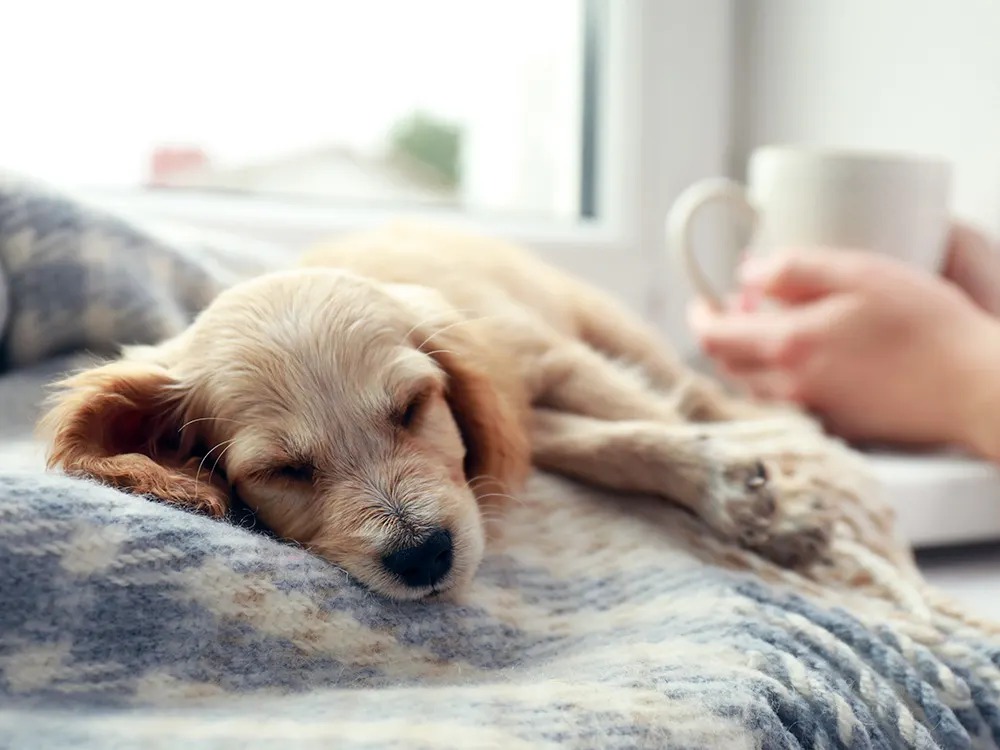
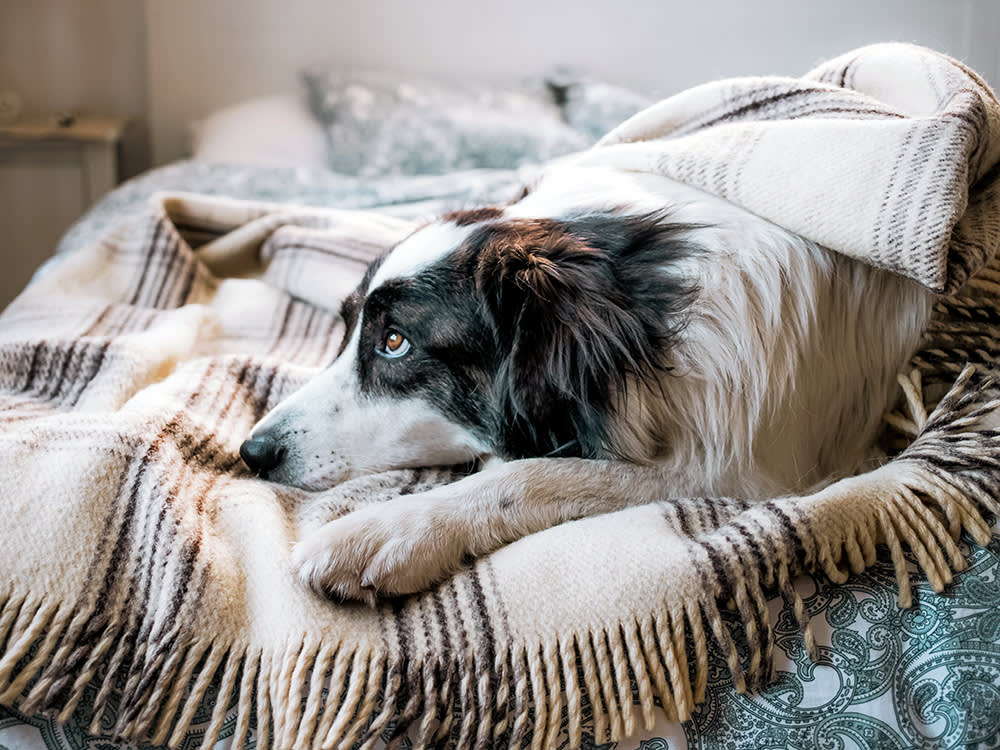
The days get short, your fingers get cold, and you find yourself wanting to go to bed at 8 p.m. Look down, and your dog is way ahead of you, buried in a blanket and lodging a formal complaint about the morning walk. It is tempting to call it laziness, or to worry that your dog is suddenly getting old. Usually it is neither. It is chemistry.
The interesting part is that the mechanism behind your dog’s winter sluggishness is close to the one behind yours. That shared biology is what makes the seasonal version normal, and it is also what makes the exceptions worth taking seriously.
The hormones behind the hibernation act
Sleepiness runs on two main signals, and both respond to light. Serotonin, tied to daytime alertness and mood, tends to dip when there is less daylight. Melatonin, which rises in darkness and cues the body toward sleep, climbs when the days are short. Fewer daylight hours means less serotonin and more melatonin, which adds up to feeling drowsier and a little flatter. This is why humans get the winter slumps, and dogs are not exempt from the same wiring.
There is an evolutionary logic layered on top. Keeping warm in cold weather costs energy, and one of the oldest ways for a body to conserve energy is to power down and rest more. In winter, a dog’s body has to work harder just to hold its temperature, so tiring faster and sleeping more is a reasonable strategy, not a character flaw.
People come in worried their dog has aged five years over one winter, and most of the time what I’m seeing is a normal seasonal shift. The reassurance I give is simple: if your dog is sleeping more but still eating well, still happy to see you, and still willing to go out, the season is doing exactly what the season does.
It really does depend on the dog
Not every dog reads the same weather report the same way. Body type does a lot of the talking.
Small, lean, thin-coated dogs lose heat fast. If your Chihuahua or Yorkie looks personally betrayed by a cold morning and refuses to leave the blankets, they are not being dramatic for effect. They are genuinely not built for freezing temperatures, and a Greyhound is in the same boat despite the size difference. These dogs feel the cold, get tired faster in it, and often need a coat to be comfortable outdoors.
Age and health stack on top of body type. Puppies cannot regulate their temperature efficiently yet, so they chill and tire quickly. Senior dogs, and dogs with conditions like arthritis, can slow down in winter because cold weather aggravates stiff, sore joints, which cuts their desire to move and pushes up their rest.
Then there is the opposite camp. Thick-coated, cold-adapted breeds such as Huskies and Malamutes can come alive when the temperature drops. And plenty of ordinary dogs get bursts of extra zip in the cold, because moving generates heat, so a quick sprint is just a dog warming itself up. Because most house dogs live indoors in stable temperatures, they are somewhat buffered from the wild swings their ancestors dealt with, which softens the whole effect.
The line between “winter blahs” and a warning sign
Here is the rule worth memorizing, because it is the whole reason to understand any of this. Seasonal sleepiness is gradual, mild, and leaves the rest of your dog intact. A concerning change is abrupt, steep, or comes with company.
If the extra sleeping crept in as the days shortened and your dog is otherwise themselves, still eager for meals, still greeting you at the door, still willing to head outside, that is very likely the season talking. If the energy drop happened suddenly, or if your dog is flat-out refusing walks, losing interest in food, seeming withdrawn, or avoiding contact, that is a different signal. So is sleepiness paired with nausea, a change in appetite, or changes in bathroom habits.
A sudden shift in energy can be an early flag for illness, and it does not politely wait for spring. When in doubt, a vet visit is the move. Winter also tends to worsen joint problems and low mood, so a dog who is persistently lethargic rather than seasonally cozy deserves a look rather than a wait-and-see.
The practical throughline is knowing your dog’s baseline. When you have a clear sense of what normal looks like across a regular day, the abnormal stands out immediately, and you catch the things that matter faster.
What newer research adds
Here is a nuance worth being honest about. It is common to hear that dogs get “seasonal affective disorder” just like people, but the science does not fully back that yet. Veterinary experts note there is no study that has directly confirmed clinical seasonal depression in dogs, so the human diagnosis should not be pinned onto them wholesale.
What is real is the underlying machinery. Dogs have a pineal gland and produce melatonin, and at least one study of sled dogs found their melatonin ran higher in winter than in summer. So the raw ingredients for a seasonal slowdown are genuinely there, even though the tidy “dogs get the winter blues” headline has outrun the evidence. The grounded takeaway: expect some dogs to be measurably drowsier and lower-energy in the dark months, support them with warmth, appropriate layers for the cold-sensitive ones, and steady light and activity, and treat any sharp or symptom-laden change as medical until a vet says otherwise.
References
- American Kennel Club. “Can Dogs Get Seasonal Affective Disorder?” akc.org.
- PetMD. “Can Dogs Get Seasonal Depression?” petmd.com.
- Ashley, N. T., et al. “Photoperiodic regulation of melatonin in sled dogs.” Comparative endocrinology literature, pubmed.ncbi.nlm.nih.gov.
Common questions
How can I tell winter sleepiness from something serious?
Watch the baseline. Gradual, mild extra napping that still leaves your dog eating, greeting you, and happy to go out is likely seasonal. A sudden drop in energy, refusing walks, loss of appetite, nausea, or changes in bathroom habits point to something medical and deserve a vet visit.
Which dogs handle cold worst?
Small, thin, and short-coated dogs like Chihuahuas, Yorkies, and Greyhounds lose heat fastest and often act the most cold-averse. Puppies can't regulate temperature well yet, and senior dogs or those with conditions like arthritis may slow down as cold aggravates stiff joints. Thick-coated northern breeds often perk up in the cold instead.
Not a substitute for your vet. Our guidance is educational. For urgent symptoms, contact a vet or emergency clinic right away. Editorial standards
Dr. Park is a board-certified emergency and critical care specialist. She reviews our health and safety content for clinical accuracy and contributes guides on recognising urgent conditions. Her focus is helping owners act quickly and correctly when it matters most.
Meet our experts ↗Keep reading
 Health & WellnessYes, Dogs Get STDs. No, They Don't Have to Mate to Catch Them.Dr. Mara Chen · 8 min
 Health & WellnessThe Spay Timing Question That Splits Rottweiler Owners (and Vets)Dr. Mara Chen · 5 min
 Health & WellnessThe Scary Part of Roundworms Isn't in Your Dog. It's in Your Yard.Dr. Mara Chen · 6 min
 Health & WellnessYour Dog's Poop Is a Daily Health Report. Here's How to Read ItDr. Lena Park · 8 min
 Health & WellnessLeptospirosis Used to Be a Country-Dog Problem. Now It's Hunting City Dogs.Dr. Ravi Mehta · 8 min
 Health & WellnessYour Dog's Scooting Isn't Funny. It's a Message From the Other End.Dr. Mara Chen · 7 min