


The Scary Part of Roundworms Isn't in Your Dog. It's in Your Yard.
The spaghetti-like worm in the stool is the least of it. Roundworm eggs can survive in soil for years and, in rare cases, blind a child. Here's how the infection works, how it's treated, and why prevention is really about the ground.

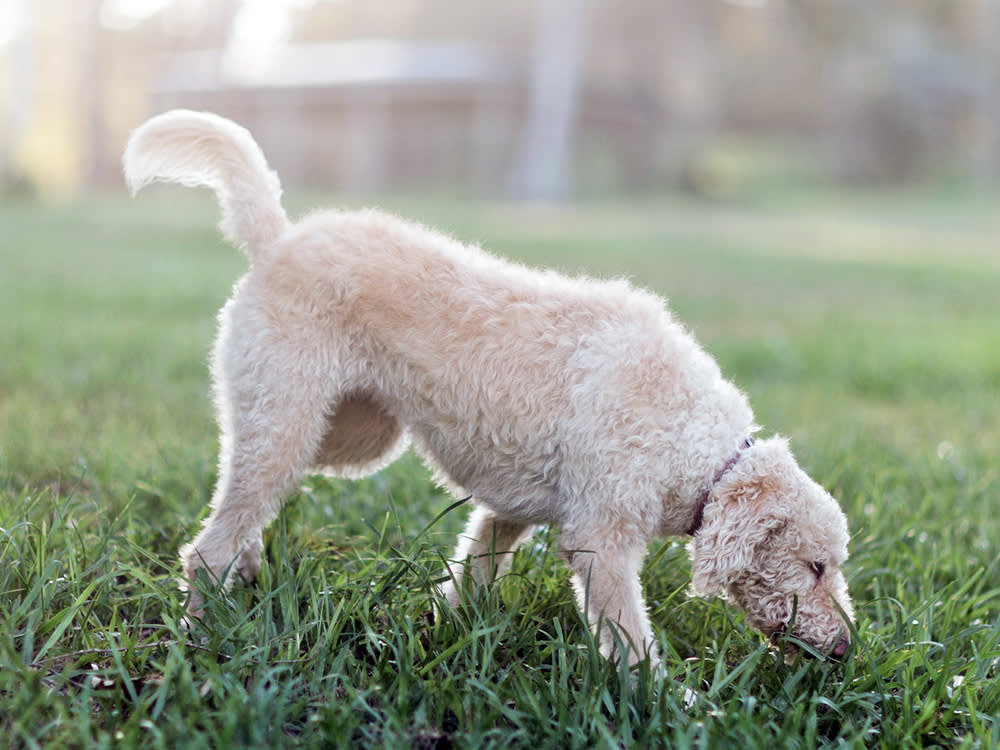
When people picture roundworms, they picture the gross part: a long, pale, spaghetti-like worm turning up in a puppy’s stool or vomit. It is unpleasant, and it does deserve attention. But the worm you can see is not the real danger. The real danger is the part you cannot: microscopic eggs that a single infected dog can shed by the thousands, that survive in soil for years, and that in rare but devastating cases can migrate through a child’s body and reach the eye.
Reframe roundworms that way and the whole approach changes. This stops being a story about one worm in one dog and becomes a story about the ground your dog, and your kids, walk on. That is where prevention actually lives.
What roundworms are
Roundworms are intestinal parasites that set up shop in a dog’s gut and cause digestive trouble. Two species matter: Toxocara canis, the main roundworm of dogs, and Toxascaris leonina, which turns up more often in cats. They are long and pale, they live in the intestines, and they steal nutrients, which can leave a dog malnourished and generally unwell even as the worm thrives.
Puppies get the worst of it, and often start life already infected, because the parasite can pass from a mother dog to her litter before birth and again through nursing. Adult dogs can be infected too, but a mature immune system usually keeps the parasite load in check.
The symptoms worth knowing
Some dogs show nothing. Others show signs that are easy to miss until they add up:
- A pot-bellied look, classic in puppies
- Diarrhea or persistently loose stool
- Vomiting, occasionally with a worm visible in it
- Weight loss despite a healthy appetite
- A dull, poor-looking coat
- Coughing, if larvae migrate through the lungs
In heavy infections, a dog can carry so many worms that they physically obstruct the intestine, which is a life-threatening emergency. That is the far end of the spectrum, but it is why a “just worms” attitude is a mistake.
How dogs pick them up, and why the yard matters
Roundworms reach dogs through several doors, and most of them lead back to the environment:
- From mother to puppy, before birth or through nursing.
- By swallowing eggs. An infected dog passes eggs in its stool; another dog sniffing, licking, or scavenging that ground swallows them and becomes infected.
- By eating infected prey. Rodents can carry roundworm larvae, so a dog who hunts or scavenges can pick them up that way.
- From contaminated soil. This is the one that changes everything. Roundworm eggs can survive in soil for years, which means a yard, a park, or a patch of dirt can stay infectious long after the dog who contaminated it is gone.
That durability is why you cannot simply treat a dog once and forget it. Reinfection from the environment is always possible, which is why steady prevention beats one-time cures.
How it’s diagnosed
The reliable tool is a fecal exam: your vet examines a stool sample under a microscope and looks for eggs, which are usually visible even when the worms are not. Sometimes you will spot adult worms in vomit or stool yourself, which is a clear sign, but since the eggs themselves are too small to see, a lab fecal test remains the most dependable way to confirm an infection, and to catch one before it produces obvious symptoms.
How it’s treated
The good news is that treatment is straightforward. Your vet will prescribe a dewormer, and several safe, effective options exist, including:
- Pyrantel pamoate
- Fenbendazole
- Milbemycin oxime
- Moxidectin
- Selamectin
Puppies need a series, not a single dose, because new larvae keep maturing. The standard schedule deworms them at two, four, six, and eight weeks of age, followed by a fecal recheck to confirm the parasites are cleared, and then a preventive going forward. Expect the process to take weeks rather than days: medication often kills adult worms within about a day, but fully clearing an infection means catching the larvae that mature later, which usually requires more than one round and a follow-up test.
Prevention is a ground game
Because the eggs live in the environment, prevention is less about heroics and more about consistency:
- Stay on a year-round preventive. Nearly every dog should be on a monthly heartworm preventive, and many of those medications also cover roundworms. Some cover a whole slate of parasites at once, from heartworms and roundworms to fleas, ticks, and mites, which makes broad protection genuinely easy.
- Clean up promptly. A major route of infection is a dog swallowing eggs from contaminated ground, so picking up feces quickly, every time, breaks the cycle.
- Limit scavenging. Discourage eating feces, hunting, and digging in areas that may be contaminated.
- Feed well. A balanced, high-quality diet supports the immune system that helps an adult dog keep parasites in check.
- Keep up routine vet visits. Regular fecal exams catch infections early, before they spread or worsen.
Why the human risk deserves its own paragraph
Roundworms are zoonotic, meaning they can infect people, and this is the reason the eggs-in-the-soil problem is not just about your dog. If a person, most often a young child, swallows roundworm eggs from contaminated dirt or hands, the larvae can travel through the body and damage tissue, a condition called visceral larva migrans. In some cases larvae reach the eye and cause vision loss. It is uncommon, but it is exactly the kind of rare-and-serious risk that justifies unglamorous prevention.
The defenses are simple and worth drilling into a household: wash hands after handling pets or gardening, keep kids’ sandboxes and play areas covered and clean, pick up dog waste immediately, and keep your dog on regular deworming. Those habits protect the whole family, not just the dog.
The reason vets are so insistent about picking up poop isn’t tidiness, it’s that every pile left in a yard can seed the soil with eggs for years. You’re not just protecting your own dog. You’re protecting the next kid who plays in that dirt.
What newer guidance emphasizes
Veterinary parasite experts have moved firmly toward year-round, not seasonal, prevention. The Companion Animal Parasite Council recommends starting puppies on deworming early, ideally at two, four, six, and eight weeks, then continuing a monthly preventive with roundworm and hookworm activity, often through a monthly heartworm product, well into adulthood. The rationale is squarely about the human angle: aggressive, consistent deworming lowers the number of eggs shed into the environment, which is the single most effective way to reduce the risk of these parasites passing to children. It dovetails with longstanding public-health guidance from the CDC aimed at exactly that goal.
The takeaway is the same one we started with. Roundworms are common and very preventable, but you win the fight in the yard and at the sink, not just at the vet’s office. Recognize the signs, treat promptly under veterinary care, and keep the prevention boring and constant. Your dog, and the kids who play where your dog plays, are the ones who benefit.
References
- Companion Animal Parasite Council. Ascarid (Roundworm) Guidelines. https://capcvet.org/guidelines/ascarid/
- Traversa, D. (2012). Pet Roundworms and Hookworms: A Continuing Need for Global Worming. Parasites & Vectors, 5(1). https://doi.org/10.1186/1756-3305-5-91
- Domachowske, J. B., & Suryadevara, M. (2020). Roundworms. In Clinical Infectious Diseases (Springer). https://doi.org/10.1007/978-3-030-50873-9_56
- Bowman, D. D. (2024). Principles and Practices of Canine and Feline Clinical Parasitic Diseases. Wiley. https://onlinelibrary.wiley.com/doi/book/10.1002/9781394158256
Common questions
How long does it take to get rid of roundworms in a dog?
Deworming medication usually starts killing adult worms within a day, but clearing an infection fully takes weeks and more than one dose, because larvae maturing inside the body need to be caught too. Vets typically recheck a stool sample after treatment to confirm the worms are gone.
Do I need to clean my house if my dog has roundworms?
Yes. Roundworm eggs are tough and long-lived. Wash bedding, toys, and bowls in hot water, vacuum floors and carpets thoroughly, pick up feces immediately, and disinfect hard, non-porous surfaces. Because ordinary cleaners don't reliably kill the eggs, steam cleaning or diluted bleach on suitable surfaces works better.
Not a substitute for your vet. Our guidance is educational. For urgent symptoms, contact a vet or emergency clinic right away. Editorial standards
Dr. Chen is a small-animal veterinarian who leads health and safety coverage at The Pet Times. She writes and reviews the bulk of our illness, condition, and safety content, translating clinical guidance into clear, practical advice owners can act on at home.
Meet our experts ↗Keep reading
 Health & WellnessMud Won't Hurt Your Dog. What's Living In It Might.Dr. Priya Nair · 6 min
 Health & WellnessThe First Drug Aimed at Old Age Itself Is Being Tested on Big DogsDr. Ravi Mehta · 5 min
 Health & WellnessMost Lumps on Your Dog's Back Are Fat. You Cannot Tell Which by Touching.Dr. Amara Solis · 7 min
 Health & WellnessThat Crusty Nose Isn't the Problem. It's the ReceiptDr. Amara Solis · 8 min
 Health & WellnessBig Dogs Die Younger, Everyone Knows. The Surprise Is What Small Dogs Are HidingDr. Ravi Mehta · 5 min
 Health & WellnessYour Dog Can't Have Down Syndrome. What You're Seeing Is Still Real.Dr. Amara Solis · 8 min