


Why Kids Read Better to a Dog Than to You
It's not just adorable. When a struggling young reader curls up with a calm dog and a book, something measurable happens, and researchers are still untangling whether it's about calm or something more surprising.

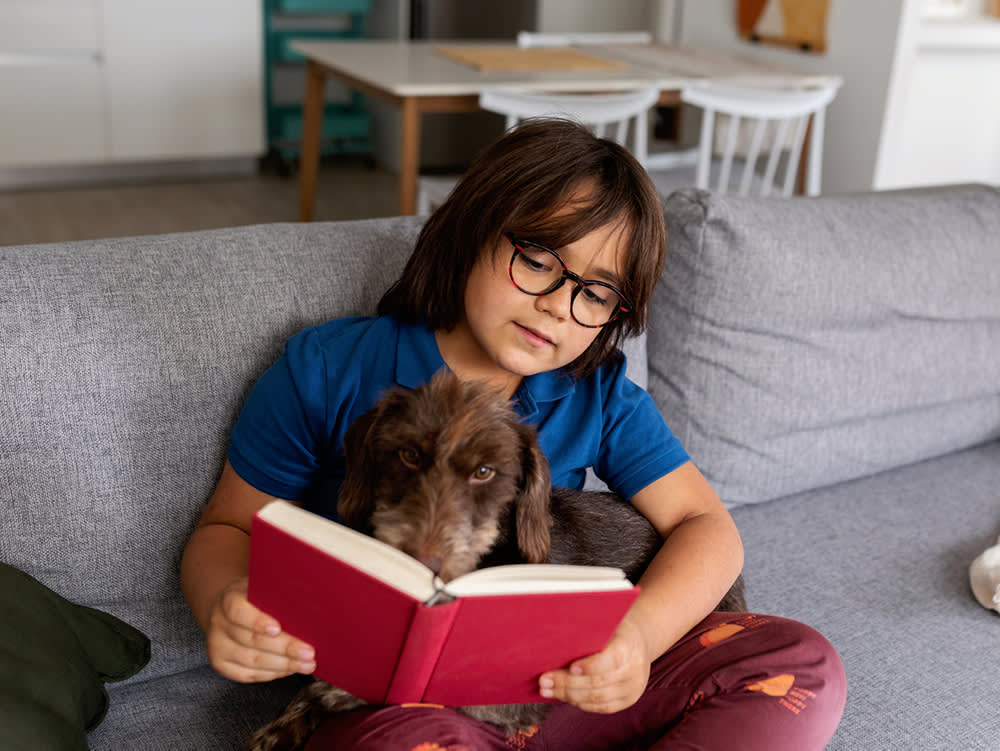
Kids, dogs, and books. Good luck finding a more disarming combination. But beyond the obvious charm, there’s a real and growing case that handing a child a book and a patient dog to read it to actually helps them learn, and for years the strange part was that almost no one could say exactly how. The cuteness was never in question. The mechanism was.
What the research set out to find
A study with the delightfully understated title “Minor Immediate Effects of a Dog on Children’s Reading Performance and Physiology” went looking for the how. The short version: dogs do seem to help, and much of the benefit appears to be psychological rather than academic.
The participants were Austrian children, nine and ten years old, who read below their grade level. Every child did two filmed reading sessions, one accompanied by a dog and one alone. Every dog involved was already a certified school-visitation dog, comfortable and experienced around children in a classroom.
The researchers weren’t just watching for reading scores. They tracked heart rate and heart-rate variability as stand-ins for stress and excitement, and measured cortisol, a stress hormone, in the children’s saliva several times per session. They also combed the video for the small tells of nervousness, coughing, clearing the throat, jiggling a leg, fiddling with objects, and clocked how much time each child spent talking or self-soothing with movements like scratching.
The surprising part
On straightforward comprehension, the dog made little difference; kids scored about the same either way. But on a specific “repeated reading” task, the dog mattered. In that test, children read a passage as quickly and accurately as they could, got a chance to review the words that tripped them up, and then read it again. Children who had a dog present during their first session did better on that repeated read. There was no such boost without a dog, or when the dog appeared only in the second session.
That timing detail is the interesting bit. The benefit showed up in the new, mildly stressful situation of an experimental reading test, exactly where a nervous kid needs a little help. And the likely reason cuts against the usual assumption. Most theories hold that dogs help by calming children down and lowering anxiety. This study points somewhere else: the dog may have raised the children’s arousal and motivation in a good way, giving them a small lift in drive that nudged their performance up. Worth noting, too, that these were struggling readers, while most similar research has studied average readers, so that difference alone could shape the findings. As the authors point out, following children across many sessions would tell us more about lasting reading gains.
“The picture that keeps emerging is a dog as a listener who never judges,” says Dr. Mara Chen. “A child who’s embarrassed to stumble in front of an adult will happily sound out a hard word to a dog, because the dog doesn’t correct, sigh, or grade them. Take away the fear of being wrong, and a nervous reader is finally free to practice.”
What newer research adds
The field has grown more careful since. Reviews published in 2023 and 2024 took a hard look at the evidence on reading to dogs and landed on what one described as cautious optimism: the approach shows real promise for children’s reading confidence and enjoyment, but the studies vary a lot in quality, and researchers are calling for tighter methods, control groups, and clearer measures before making big claims. Where the recent work agrees is on the emotional side. The gains that show up most reliably are around wellbeing and attitude, less reading anxiety, more confidence, better mood, and a warmer feeling toward books, more than raw skill jumps. The proposed reason is that “unconditional positive regard,” the dog’s non-critical, uncomplicated attention, is what lets a child relax enough to engage.
One more thread runs through the newer literature that’s easy to overlook: the dog’s welfare. A good reading-dog program isn’t only good for the kid. It’s built around a calm, willing, well-supported animal who genuinely enjoys the work, with breaks and choice built in, because a stressed dog helps no one and deserves better besides.
Where the idea came from, and where to find it
Structured reading-to-dogs traces back to the Reading Education Assistance Dogs (R.E.A.D.) program, launched in 1999 by Intermountain Therapy Animals, which remains one of the most established efforts to pair certified dogs with young readers. Several organizations run programs in the same spirit:
- Intermountain Therapy Animals R.E.A.D., one of the first to put “reading dogs” in classrooms and libraries.
- The Good Dog Foundation, which added a R.E.A.D. reading-dog offering to help at-risk children build reading skills.
- Helping Paws BARKS, which brings canine reading assistance to schools, libraries, and adults relearning to read and speak.
- Sit Stay Read!, which pairs a literacy curriculum with certified dogs and dedicated volunteers to advance children’s reading.
If you and a mellow, people-loving dog want in, most programs run on volunteers and certification, and it’s often one of the most rewarding ways a dog can work.
The bottom line
The science is still filling in the details, and the honest summary is cautious optimism rather than a slam dunk. But the throughline is consistent and lovely: a dog gives a struggling reader a listener with no expectations, and that safety, whether it calms a kid or quietly fires them up, seems to be exactly what a nervous reader needs to keep going.
References
- Minor Immediate Effects of a Dog on Children’s Reading Performance and Physiology — Frontiers in Veterinary Science
- Reading to Dogs as a Form of Animal-Assisted Education: Are Positive Outcomes Supported by Quality Research? — Steel et al., Literacy
- Reading Education Assistance Dogs (R.E.A.D.) — Intermountain Therapy Animals
- The Impact of a Canine-Assisted Reading Program on Readers Needing Extra Practice — Coffman, The Reading Teacher
Claire Sutton writes about life with pets, from the first days home to the small daily routines that make a household work. Her reporting spans people-and-pet relationships, training basics, and the practical side of bringing a new animal into the family.
Meet our experts ↗Keep reading
 LivingThe Vick Jersey Wasn't Really About Kyler MurraySasha Ford · 5 min
 LivingBreed Bans Don't Reduce Bites. They Just Break Up FamiliesLeila Torres · 6 min
 LivingShe Couldn't Eat for Two Years. Now She Bakes for Dogs Across the CountryLeila Torres · 5 min
 LivingSix Dogs Went to the Paralympics. Not One of Them Is a Mascot.Jordan Ellis · 6 min
 LivingHe's Fostered Almost 40 Pit Bulls. The Stigma Is the Only Thing He Can't Rehome.Leila Torres · 8 min
 LivingThe Dogs of the NYC Dyke March Were Making a Statement TooLeila Torres · 6 min