


Breed Bans Don't Reduce Bites. They Just Break Up Families
A former shelter worker on why breed-specific legislation fails on its own terms: it doesn't lower dog-bite rates, it can't reliably identify the breeds it targets, and 21 states have now moved to block it.

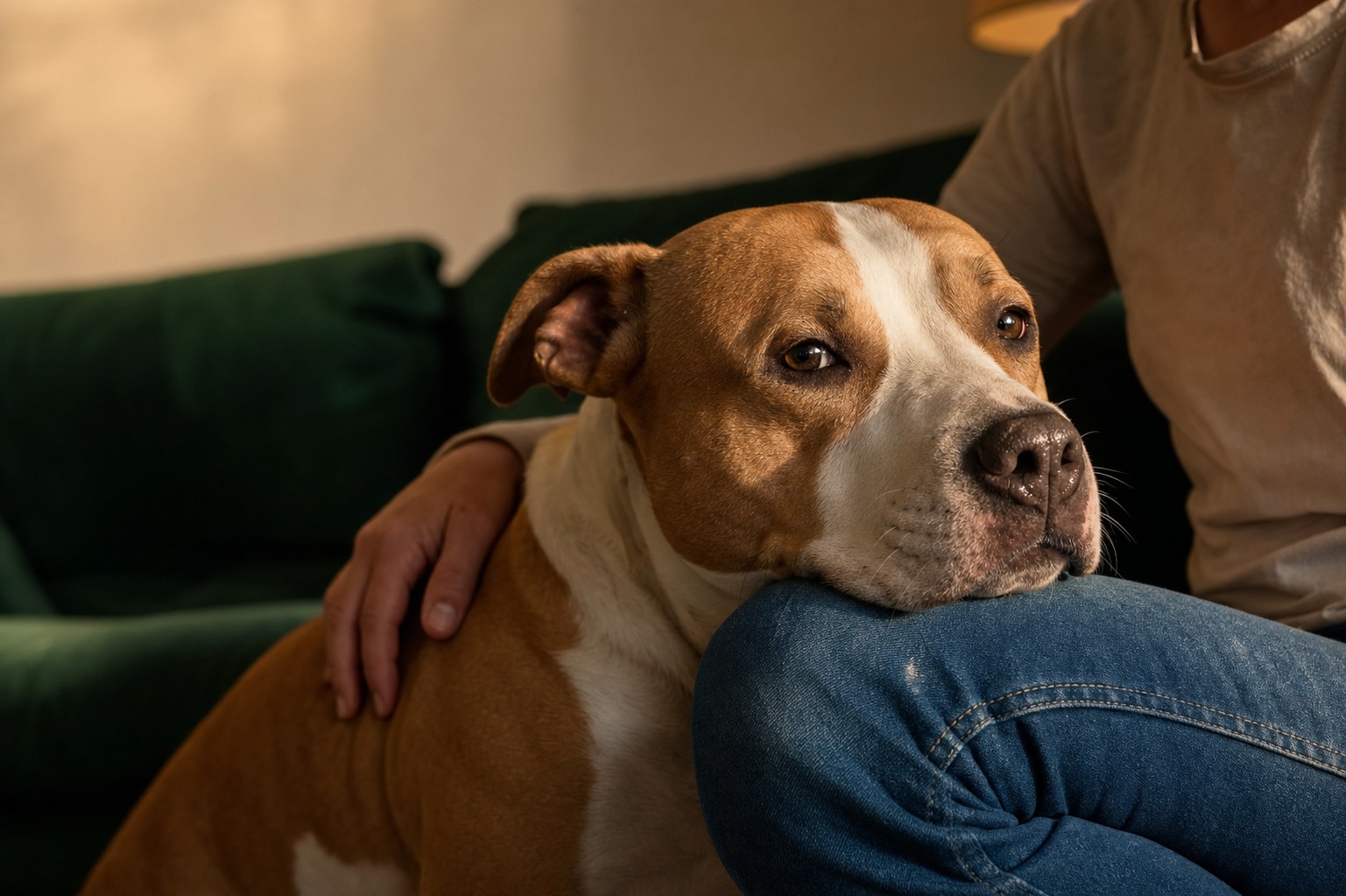
Early in my animal-sheltering career, I worked in a city with breed-specific legislation. Dogs deemed “Pit Bulls” were banned outright, which forced families to either hide their dogs from public view or move. Inevitably, lost Pit Bull-type dogs landed in our shelter, and part of my job was telling owners they could not have their dog back if they lived inside city limits. Worse, a beloved family dog could face euthanasia if we could not arrange transport to a shelter in another town. I was splitting up families for no reason beyond the large, square head on their dog.
For years I framed that as a tragedy of trade-offs, a cruel cost we paid for public safety. Then I actually looked at whether the trade was real. It is not. The hardest thing to accept about breed-specific legislation, or BSL, is not that it is harsh. It is that it is harsh and it does not work, and we have known it does not work for a long time. The bans break up families and put healthy dogs at risk, and in exchange they buy a community essentially nothing.
What BSL actually is
Breed-specific legislation is any law that bans or heavily restricts a breed or breeds. “Pit Bull” is not a single breed but a catch-all, usually covering American Pit Bull Terriers, American Staffordshire Terriers, Staffordshire Bull Terriers, American Bulldogs, and American Bullies. Those dogs have absorbed most of the past two decades of bans, but BSL is older and broader than that. Over the years it has also been pointed at German Shepherds, Rottweilers, Doberman Pinschers, and Chow Chows, the “dangerous breed” of the moment, whichever moment it is.
Some of these laws ban a breed outright. Others stack on requirements: mandatory muzzling in public, special liability insurance, breed clauses in leases and homeowner policies. The common thread is that every version judges a dog by its silhouette rather than its behavior. And the moment you test that premise against evidence, it collapses.
Failure one: it doesn’t lower bite rates
This is the claim BSL lives or dies on, and it dies. When researchers analyzed 43 prior studies on dog bites and bite-related injuries, they concluded that breed-specific legislation fails to reduce either the rate or the severity of dog bites. It is not a close call buried in noise; it is the consistent finding across the literature.
The real-world experiments point the same way. A Canada-wide study published in 2013 found no difference in dog-bite numbers between municipalities that had breed bans and those that did not. And in 2008, the Dutch government repealed a 15-year national ban on Pit Bull-type dogs after its own review concluded the law had not made anyone safer. A country tried BSL for a decade and a half, measured the result, and quietly took it off the books.
The veterinary and welfare establishment has read the same data and reached the same verdict. The American Veterinary Medical Association calls breed bans an ineffective way to reduce bites, one that offers “a false sense of security” while leaving the actual causes untouched. The ASPCA opposes BSL outright. By one survey, 96 percent of veterinarians oppose breed-specific legislation. That is not a field that is split.
Failure two: it can’t reliably identify the breed
Even if a ban could work in theory, enforcing it runs straight into a problem nobody wants to talk about: people are bad at identifying breeds by sight, including the professionals.
Visual breed identification, the basis of every BSL enforcement decision, is notoriously unreliable. A short-coated, blocky-headed mix gets labeled “Pit Bull” by an animal-control officer, a witness, or a landlord, and that guess, not a DNA test, determines whether the dog is legal to own. The AVMA has flagged exactly this, noting that after a severe attack, witnesses are predisposed to assume the dog was a Pit Bull, which then corrupts the very bite statistics used to justify the next ban. A law that cannot consistently identify its target is a law that punishes dogs for resembling a stereotype.
Failure three: it aims at the wrong variable
Step back and the deepest flaw is conceptual. Bite risk is driven by things BSL does not touch: whether a dog is socialized, supervised, neutered, trained, and kept by a responsible owner. Breed sits far down that list. A law organized around appearance spends its enforcement energy on the one factor that predicts the least, while the factors that predict the most, an unsocialized dog on a chain, an owner who ignores warning signs, go unaddressed.
That is why breed-neutral approaches outperform bans. Veterinarians overwhelmingly endorse the unglamorous toolkit instead: public education on dog-bite prevention, enforced leash laws, “dangerous dog” laws that target individual dogs with a documented bite history regardless of breed, and support for spay/neuter and responsible ownership. None of it makes a punchy headline. All of it actually moves the number BSL claims to care about.
The human cost the statistics flatten
Behind every breed clause is a family like the ones who came through my shelter. BSL splits up households that have done nothing wrong, strips a working person of housing because their dog has the wrong head shape, and condemns healthy, friendly dogs to death sentences for a crime they will never commit. The dogs do not understand why they are suddenly contraband. The owners do not get a hearing on their individual dog’s behavior. And the shelter and animal-welfare workers in the middle, the people who got into this to help animals, spend their days enforcing a policy the evidence says is pointless.
That is the toll I watched up close, and it is the toll BSL imposes everywhere it exists, in exchange for a safety benefit that the data says simply is not there.
Where the law is finally heading
The encouraging part is that the policy is moving in the right direction. As the research has piled up, around 22 states have passed laws that prohibit or restrict local governments from enacting or enforcing breed-specific legislation, with roughly 17 barring municipal breed bans outright and others limiting them within “dangerous dog” laws. Recent additions like New York, where a 2024 animal-welfare package barred insurers from denying or surcharging coverage based on a dog’s breed, show the trend is still gaining states, not losing them.
The progress is real but uneven. Some cities cling to old bans through “home rule” carve-outs even after their state has spoken; Denver kept its decades-old pit bull ban on those grounds long after Colorado moved against BSL. The direction of travel, though, is clear: roughly half the country has decided that letting cities ban dogs by appearance is bad policy, and has acted to stop it.
The case against BSL is no longer really a debate among the people who study it. It is a settled position held by the AVMA, the ASPCA, the overwhelming majority of veterinarians, and a growing number of state legislatures, backed by decades of data and at least one full national repeal. Breed bans punish dogs for their shape. They do not make us safer. They need to go, and increasingly, they are.
References
- American Veterinary Medical Association. “Why Breed-Specific Legislation Is Not the Answer.” https://www.avma.org/resources-tools/pet-owners/dog-bite-prevention/why-breed-specific-legislation-not-answer. Accessed June 2026.
- ASPCA. “Position Statement on Breed-Specific Legislation.” https://www.aspca.org/about-us/aspca-policy-and-position-statements/position-statement-breed-specific-legislation. Accessed June 2026.
- American Animal Hospital Association. “Breed Bans and the Human-Animal Bond: Not Taking a Bite Out of Crime.” https://www.aaha.org/newstat/publications/breed-bans-and-the-human-animal-bond-not-taking-a-bite-out-of-crime/. Accessed June 2026.
- Michigan State University Animal Legal & Historical Center. “Overview of States That Prohibit BSL.” https://www.animallaw.info/article/overview-states-prohibit-bsl. Accessed June 2026.
- New York State. “Governor Hochul Signs Animal Welfare Legislative Package.” https://www.governor.ny.gov/news/governor-hochul-signs-animal-welfare-legislative-package. Accessed June 2026.
- Patronek, Gary J., et al. “Co-occurrence of Potentially Preventable Factors in 256 Dog Bite-Related Fatalities in the United States (2000–2009).” Journal of the American Veterinary Medical Association, vol. 243, no. 12, 2013. https://avmajournals.avma.org/view/journals/javma/243/12/javma.243.12.1726.xml. Accessed June 2026.
Leila Torres leads our Living coverage, from home life and travel to the products and rescue stories that come with sharing a life with animals. She edits and writes across the section, with a soft spot for pieces about the bond between people and their pets.
Meet our experts ↗Keep reading
 LivingWhy Kids Read Better to a Dog Than to YouClaire Sutton · 5 min
 LivingOne Volunteer's Dead Lab Started the Beach Memorial San Diego Almost ErasedLeila Torres · 4 min
 LivingA Service Dog Doesn't 'Cure' PTSD. What It Actually Does Is Now Backed by Real Data.Dr. Amara Solis · 6 min
 LivingThe Rescue That Saved His Life Nearly Went Under Without HimJames Okafor · 9 min
 LivingSome States Once Banned Black Families From Owning Dogs. A Yale Scholar on Why That Still Echoes.Leila Torres · 6 min
 LivingYou Raise the Puppy for a Year, Then Hand It Back. On Purpose.Jordan Ellis · 7 min