


A Panting Cat Is Not Like a Panting Dog. It's Often a Red Flag
Cats don't pant to cool off the way dogs do. Unless your cat is catching their breath after the zoomies, a vet explains why panting often signals trouble.

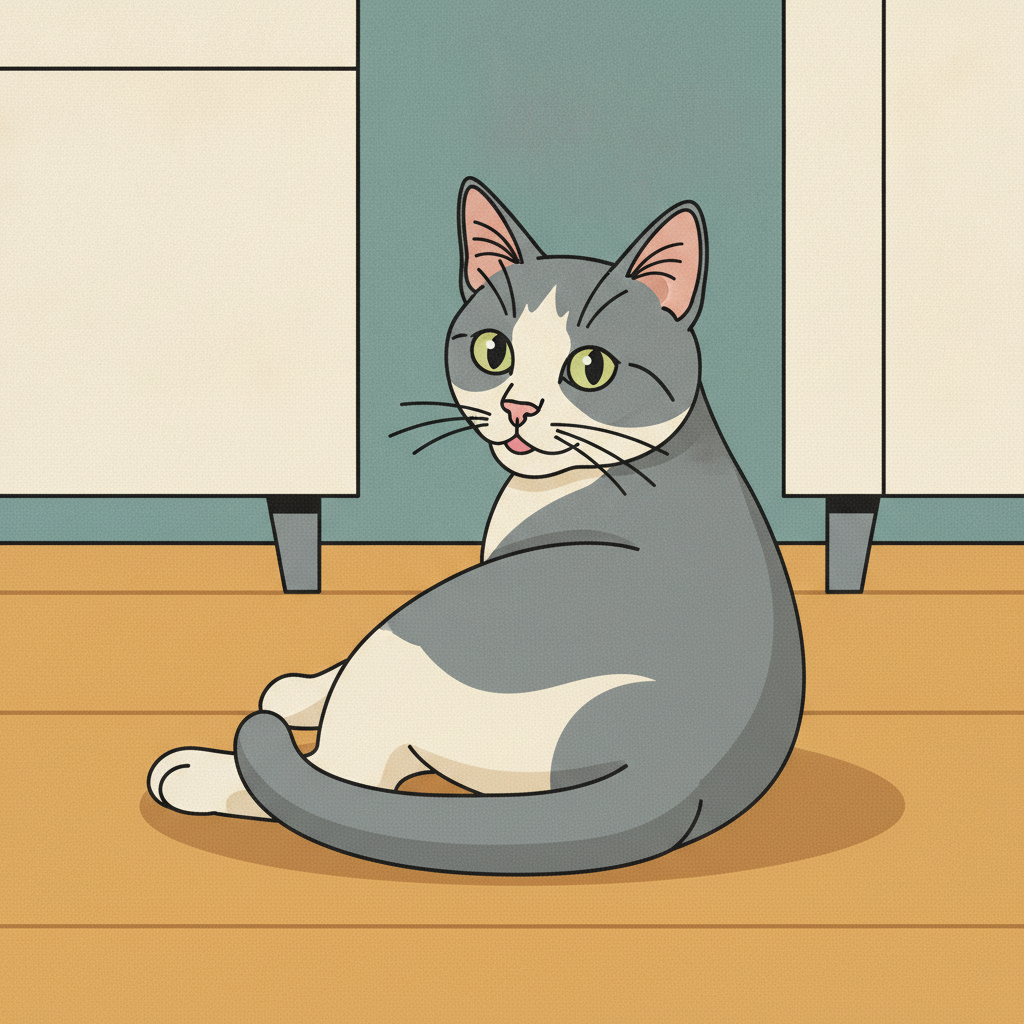
Here is the single most useful thing to know about a panting cat, and it is the opposite of how it works in dogs: for a cat, an open mouth and quick, shallow, audible breaths are not a normal way to cool down. Dogs pant constantly and harmlessly. A cat doing it is either recovering from something brief and obvious, or signaling a real problem, and there is not much middle ground. So the question that matters is not “why do cats pant,” it is “which kind of panting is this,” because the answer decides whether you wait five minutes or call the vet right now.
This piece is built around sorting your cat’s panting into those two buckets, and it ends with a simple at-home measurement that tells you, more reliably than watching the panting itself, whether your cat’s breathing has crossed into dangerous territory.
Cats don’t actively pant to shed heat the way dogs do. So when I see a cat with an open mouth, my first job is to figure out whether there’s an obvious, short-lived trigger, or whether this is the body struggling. Those two look similar for a few seconds and could not be more different in what they mean.
The kind you can usually wait out
There is a short list of harmless reasons a healthy cat pants, and they share a signature: a clear trigger, and it stops within a few minutes once the trigger is gone.
Exertion is the most common. It is unusual for a cat to run themselves breathless, but an especially wild play session or a serious case of the zoomies can do it, most often in young cats, and it resolves quickly with rest. Heat is the second: a genuinely hot environment can push a cat to pant, and the fix is to move them somewhere cool, near a fan or air conditioning, with fresh water. Stress and fear are the third, and though it is uncommon, some cats pant during a frightening event like a car ride to the vet. Remove the stressor and calm, normal breathing should return.
The through-line: if you can point to the cause, and the panting fades within minutes of that cause ending, you are almost certainly in the benign bucket. Keep watching, but you can breathe too.
The kind that is a red flag
The panting to take seriously is the kind with no obvious trigger, or the kind that does not stop.
“Spontaneous panting, especially panting that lasts, usually traces back to an underlying disease,” Dr. Mehta explains. “The heart, the lungs, and the airways are the usual suspects, and none of them can wait.”
The medical causes behind persistent panting are a serious list: congestive heart disease, feline asthma, upper respiratory infections, heartworm disease, tumors, diabetes, and pain. You cannot tell which from watching, and you are not meant to. What you need to recognize is the pattern that means stop and call now. Treat panting as an emergency if it happens with no clear trigger, keeps going for more than a few minutes, or comes with any of these:
- Loud, wheezing, or raspy breathing
- Very fast or heaving breaths, or breathing with the belly working hard
- Gums or tongue that look pale, gray, or bluish
- Reluctance to move, hiding, or a hunched posture with the neck stretched out
Any of those means an emergency vet, immediately.
“With a cat in respiratory distress, we may take lifesaving steps before anything else, oxygen therapy first, then an exam and tests like a blood panel or imaging,” Dr. Mehta says. “Breathing problems escalate fast in cats, and the margin is thin. Acting early is genuinely the difference-maker.”
Depending on the diagnosis, treatment might mean oxygen, fluids, antibiotics, an asthma inhaler, heartworm medication, heart medication, or surgery.
The home measurement that beats guessing
Panting is dramatic and easy to notice, but the more reliable warning sign is subtler: a rising resting breathing rate. Veterinary cardiologists have cat owners track this at home precisely because it catches trouble, especially early heart failure, before a cat is visibly panting or distressed. It costs nothing and takes 30 seconds.
Here is how. Wait until your cat is asleep or resting quietly, and importantly, not purring, since purring throws off the count. Watch the chest or belly rise and fall; each full rise-and-fall is one breath. Count for 15 seconds and multiply by four.
A healthy resting or sleeping cat breathes under about 30 breaths per minute. Consistently over 30, and certainly over 35, while your cat is calm and at rest is a red flag that warrants a call to your vet, even if your cat otherwise seems fine. If your cat has any diagnosed heart or lung condition, ask your vet what number should trigger a call, and log the resting rate every few days so you can catch an upward trend early. That trend line, more than any single episode of open-mouth breathing, is what tells you something is changing.
The bottom line
Panting in a cat is not the everyday, harmless thing it is in a dog. Sort it fast: a clear trigger that resolves in minutes is usually fine, while unexplained or persistent panting, especially with wheezing, rapid or labored breathing, or pale gums, is an emergency. And do not wait for a full-blown panting episode to act. Learn your cat’s resting breathing rate, keep a loose eye on it, and let a number over 30 at rest send you to the phone. It is always better to err on the side of caution, because with feline breathing, early is safe and late is dangerous.
References
- “Home Breathing Rate Evaluation.” VCA Animal Hospitals. https://vcahospitals.com/know-your-pet/home-breathing-rate-evaluation
- “Feline Asthma.” Cornell University College of Veterinary Medicine, Cornell Feline Health Center. https://www.vet.cornell.edu/departments-centers-and-institutes/cornell-feline-health-center/health-information/feline-health-topics/feline-asthma
- “Heat Stroke and Hot Weather Pet Safety.” American Veterinary Medical Association. https://www.avma.org/resources-tools/pet-owners/petcare/heat-stroke-and-hot-weather-pet-safety
Not a substitute for your vet. Our guidance is educational. For urgent symptoms, contact a vet or emergency clinic right away. Editorial standards
Dr. Mehta is a board-certified veterinary nutritionist who evaluates pet food formulations, ingredient quality, and the science behind dietary trends. He writes and reviews all nutrition content at The Pet Times, including our food rankings and feeding guides.
Meet our experts ↗Keep reading
 Health & WellnessFading Kitten Syndrome Is a Race Against the Clock. Here's How to Win It.Dr. Mara Chen · 8 min
 Health & WellnessGarlic and Cats: The Toxin That Hides in Plain Sight on Your PlateDr. Amara Solis · 6 min
 Health & WellnessCats Are America's Most Rabid Pet. The Indoor Ones Aren't Exempt.Dr. Ravi Mehta · 8 min
 Health & WellnessYour Cat Doesn't Have to Eat the Lily. The Vase Water Will Do.Dr. Amara Solis · 9 min
 Health & WellnessThe Toy Brick Your Cat Swallowed Won't Show Up on an X-RayDr. Mara Chen · 7 min
 Health & WellnessYour Cat Hides Pain by Design. These Signs Mean Go NowDr. Ravi Mehta · 7 min