


The Number That Matters Isn't How Much Your Cat Drinks. It's How Much It Changed
A single cup a day can be normal or a red flag depending on your cat's diet and baseline. Here is how to actually measure feline water intake, the threshold that counts as too much, and the diseases hiding behind sudden thirst.

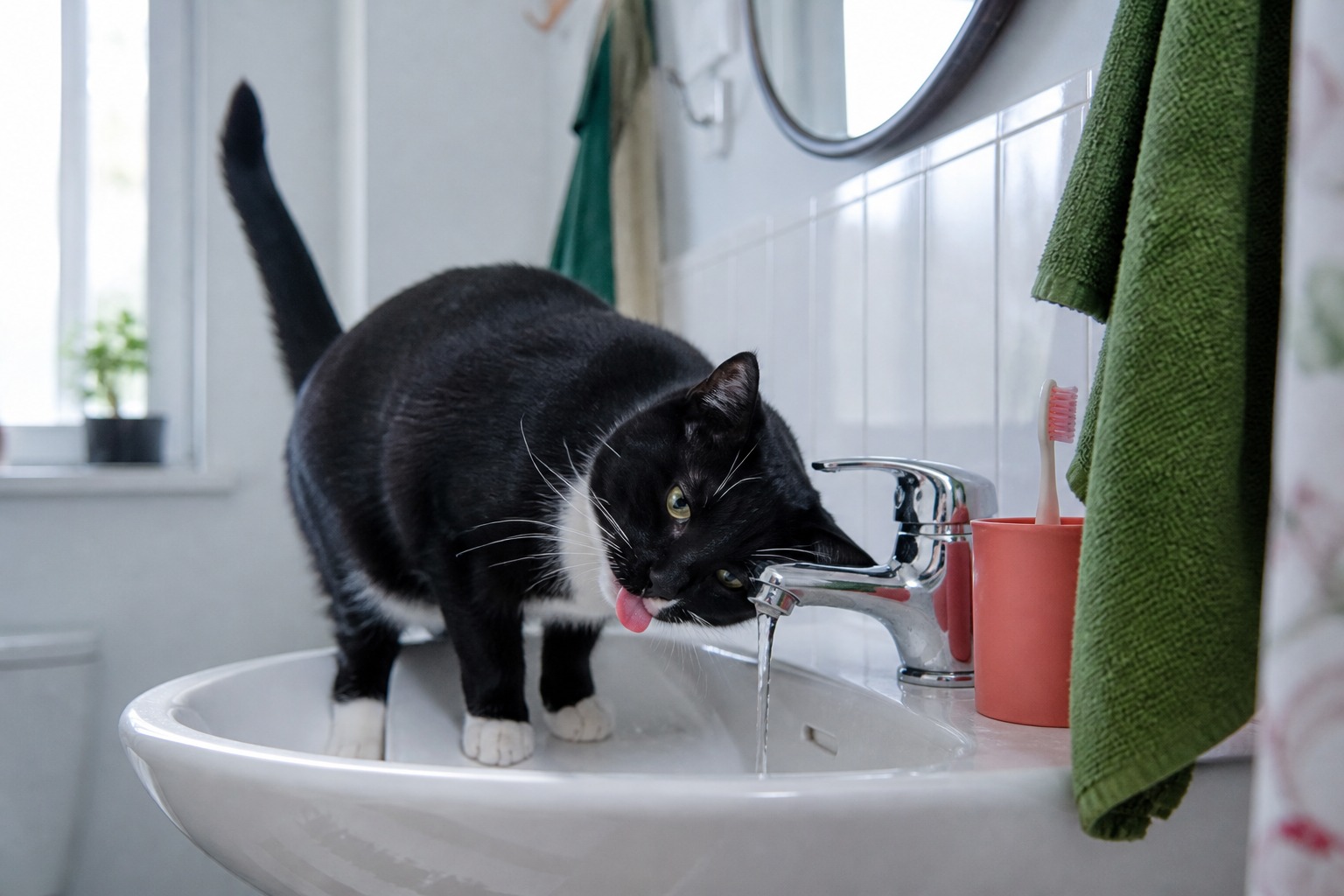
Owners usually ask “how much water is too much for a cat?” and want a single number back. The honest answer is that the number in isolation tells you very little. A cat on dry kibble that drinks a full cup a day can be perfectly healthy; a cat on canned food that suddenly starts drinking that much may be sick. What actually flags a problem is the change from your cat’s own normal, paired with more trips to the litter box. So the most useful thing this article can give you is not a threshold to memorize but a way to measure, plus the short list of diseases a real increase points to.
First, know your cat’s baseline (and how to measure it)
As a working baseline, a healthy adult cat needs about 45 milliliters of water per kilogram of body weight per day. Run that on an average 10-pound cat (roughly 4.5 kilograms) and you land near 205 milliliters a day, a little under a cup.
But that figure assumes a specific diet, and this is the caveat that trips people up: water does not only come from the bowl. Canned food is about 75 percent water, so a cat eating mostly wet food will drink far less from the dish than a cat on dry kibble, and both can be normal. If your cat just switched from cans to crunchies, expect more bowl-drinking and do not panic.
Because “normal” varies this much between cats, the single most useful move is to learn your own cat’s baseline while they are healthy, and here is a simple way to do it:
- Fill the bowl with a measured amount of water (a kitchen measuring cup is fine) and note it.
- Block off other water sources for the measuring window, such as the toilet, dripping faucets, and other pets’ bowls.
- After 24 hours, measure what is left and subtract. Repeat for two or three days and average, since intake swings day to day.
- Set an identical bowl of water nearby that the cat cannot reach as an evaporation control, and subtract that loss so hot, dry days do not fool you.
Now you have a personal baseline. A later jump above it is far more meaningful than any textbook average.
When it is officially too much
The clinical line for excessive drinking, called polydipsia, is intake above 60 milliliters per kilogram per day, which works out to more than about 270 milliliters (nine ounces) for an average resting adult cat.
The catch is that excessive thirst rarely travels alone. Its constant companion is increased urination, called polyuria. More water in means more urine out, and the two are so tightly linked that vets discuss them as a single unit, PU/PD.
You won’t need a measuring cup to spot PU/PD, the behavior gives it away. Watch for a cat that lingers at the dish, drains it noticeably quicker than before, goes hunting for water in odd spots like a dripping faucet or the shower floor, and makes far more trips to the box, leaving larger, heavier clumps behind. When one starts urinating outside the box altogether, read that as the cat flagging that something is off.
The diseases behind true polydipsia
Some causes are harmless and short-lived: hot weather, or a recent bout of vomiting or diarrhea, can bump thirst up temporarily and should settle within a day or so. A diet change can also raise intake for a while. The combination to worry about is more drinking alongside more urination, lethargy, vomiting, poor appetite, or weight loss. The most common underlying culprits:
Kidney disease
The kidneys filter waste and balance the body’s water. As they fail, they lose the ability to concentrate urine and produce large volumes of dilute urine even when the cat is dehydrated. The cat drinks more to keep up. Chronic kidney disease is one of the most common serious conditions in older cats, which is why a creeping rise in water intake in a senior cat deserves attention.
Diabetes mellitus
A diabetic cat has high blood sugar from an insulin shortage or insulin resistance. Normally the kidneys keep glucose out of the urine, but when blood sugar runs too high the excess spills over, dragging water with it and driving up both urination and thirst.
Hyperthyroidism
Thyroid hormones regulate metabolism and water balance. When a cat overproduces them, water loss through the kidneys rises, and more drinking usually follows. It is common in middle-aged and older cats.
Less common causes
- Urinary tract infection
- Liver disease
- Increased salt intake
- Hypercalcemia (high blood calcium)
- Adrenal gland disease
- Pyometra (a uterine infection in unspayed females)
- Certain medications, such as some heart-failure drugs and steroids
What to do about it
If your measured intake has climbed and your cat is peeing more, book a vet visit. Most common culprits are sorted out with two basic tests: blood work reports on blood sugar, organ function, and thyroid levels, and a urinalysis checks how well the urine is being concentrated (the urine specific gravity) and screens for glucose or bacteria. Depending on results, your vet may add a fructosamine test (for suspected but unconfirmed diabetes), a urine culture, or imaging. Treatment tracks the diagnosis, from a short antibiotic course to lifelong prescription food and medication.
Once one of these conditions takes hold, there is little you can fix at home without veterinary guidance, but you can lower the odds of problems developing or worsening:
- Always keep fresh water available and never restrict it, especially if your cat seems extra thirsty.
- Feed an appropriate diet and encourage activity to hold a healthy weight, since obesity raises diabetes risk.
- Keep the litter box clean to reduce urinary tract infection risk.
- Stay on top of regular checkups so problems are caught early.
One modern assist worth knowing about: smart water fountains and connected bowls that log daily intake are now widely available, and for senior cats or cats with early kidney changes they can flag a slow upward creep weeks before other symptoms appear. The underlying medicine has not changed, but they make maintaining that all-important baseline much easier than eyeballing the dish.
References
Common questions
How do I measure how much water my cat drinks?
Fill the bowl with a measured amount, keep other water sources off-limits, and measure what is left after 24 hours. Do it over two or three days for a fair average, and account for evaporation with a same-size control bowl in the same room. The change from your cat's own baseline is what matters most.
When is a cat drinking too much water?
The clinical threshold for excessive thirst (polydipsia) is more than 60 milliliters per kilogram per day, about 270 milliliters (nine ounces) for an average resting adult. But a sudden, sustained jump from your cat's normal intake is worth a vet visit even below that line, especially with more urination.
Not a substitute for your vet. Our guidance is educational. For urgent symptoms, contact a vet or emergency clinic right away. Editorial standards
Dr. Chen is a small-animal veterinarian who leads health and safety coverage at The Pet Times. She writes and reviews the bulk of our illness, condition, and safety content, translating clinical guidance into clear, practical advice owners can act on at home.
Meet our experts ↗Keep reading
 Health & WellnessYour Cat's Nipples Won't Tell You She's Pregnant. They Might Tell You Something Worse.Dr. Lena Park · 9 min
 Health & Wellness"Keep Cats Indoors" Is Only Half the Bird Flu Advice. The Other Half Is the BowlDr. Nina Kohl · 4 min
 Health & WellnessYour Cat Sounds Stuffy. The Noise Isn't the Emergency, the Effort Is.Dr. Ravi Mehta · 7 min
 Health & WellnessThe Word 'Kennel Cough' Is Why Cat Owners Miss ItDr. Lena Park · 6 min
 TrainingThat Belly Is Not an Invitation. It's a Sentence.Dr. Nina Kohl · 6 min
 Health & WellnessTwo Myths Are Getting Cats Killed by Heartworm. Here's the TruthDr. Priya Nair · 9 min