


We May Have Taught Dogs to Wag, Because Humans Can't Resist a Beat
Wolves barely do it. Dogs do it more than almost any animal on Earth. A sweeping 2024 review lands on a strange, charming theory for why: we bred it in because our brains love rhythm.

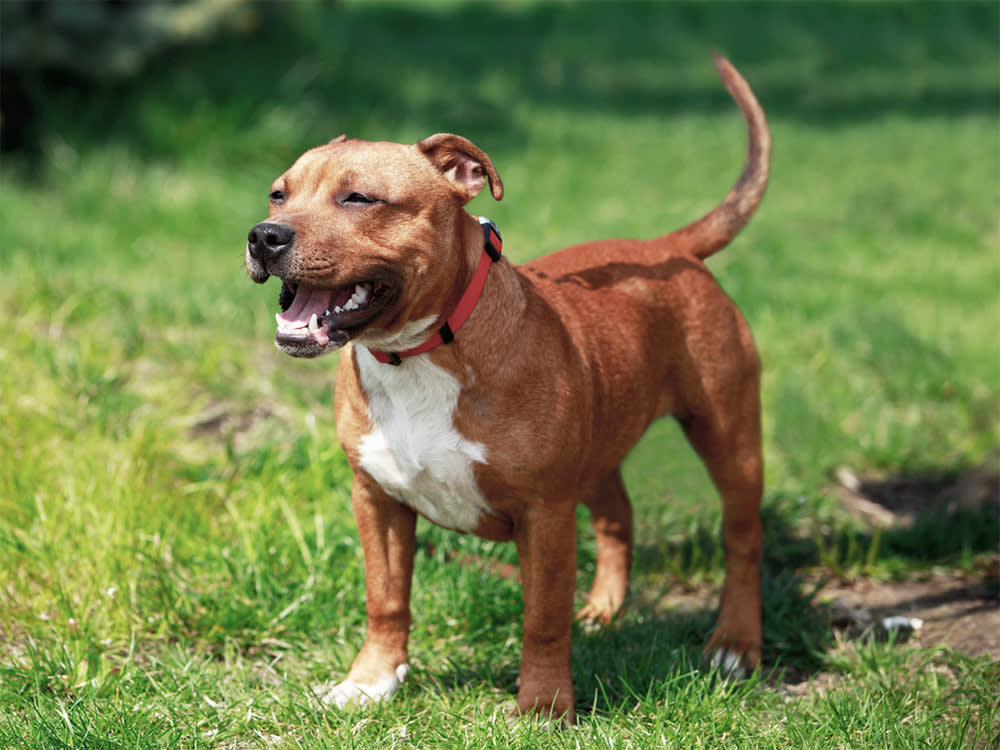
A wagging tail feels like the most readable thing a dog does. The full-body helicopter of “you’re home!” The slow, stiff sweep that means “give me space.” We treat the tail as a mood ring we have fully decoded. And yet, for all our confidence, science has struggled to answer a more basic question: why do dogs wag at all?
In January 2024, a team of researchers took the biggest swing yet at that question, and the answer they proposed is oddly flattering to us. Dogs may wag so much, they suggest, in part because humans are wired to love rhythm, and somewhere along the way we selected for the dogs who gave us more of it.
First, a wag is not one thing
Before the why, a reminder about the what, because this is where most people get it wrong. Not every wag is a happy wag. A tail is a communication tool, and its message depends on the details: how high it is carried, how fast it moves, how tense it is, which direction it sweeps. The same tail can say “I’m thrilled” or “I’m about to bite,” and the difference lives in the specifics, not in the mere fact of motion.
That ambiguity is exactly why the behavior is so interesting, and so under-studied. We attribute enormous meaning to the wag, but its precise mechanics and its evolutionary backstory have rarely been pinned down.
“The single most useful thing I can tell an owner is that a wag is a sentence, not a smile,” says Dr. Nina Kohl. “Read the whole dog, the height of the tail, the stiffness, the eyes, before you decide what it means. A loose, sweeping wag is friendly. A high, rigid, fast one is a warning, and misreading that is how people and dogs get hurt.”
What the researchers actually did
The study, titled “Why do dogs wag their tails?” and published in the Royal Society journal Biology Letters, was not a single experiment. It was a large review, pulling together more than 100 previous studies on canine tail behavior to summarize what is known about how wagging works, how it develops, what it does, and where it came from.
One striking data point the team highlighted: among more than 40 species tracked over a four-year span in earlier work, the domestic dog was the one that wagged its tail most. Dogs are, quite literally, unusual in the animal kingdom for how much they talk with their tails, and their wolf ancestors did not rely on the behavior the way dogs do. Something changed during domestication.
Two theories for how wagging took over
The researchers laid out two main possibilities, and they are not necessarily mutually exclusive.
The first is the “domestication syndrome” idea. As humans bred early dogs for tameness and friendliness, a whole cluster of traits shifted along with temperament, everything from smaller teeth to changed ear shapes to reduced aggression. Under this view, extra tail-wagging tagged along as a by-product, an accidental passenger on the ride toward a gentler animal, rather than something anyone selected for on purpose.
The second is the one that has captured everyone’s imagination: the “domesticated rhythmic wagging hypothesis.” Domestication began during the Upper Paleolithic, tens of thousands of years ago, and reshaped not just dogs’ bodies but their social cognition. The researchers propose that humans may have specifically, if unconsciously, favored dogs who wagged more, and more rhythmically. The reason is us. Human brains are drawn to rhythmic stimuli, which light up the reward system and simply feel good. A dog whose tail kept a pleasing beat may have been a dog people wanted to keep close.
Why it is still an open question
The honest conclusion of the review is that we do not yet know which story is right, and current research does not make it easy to tell them apart. Most existing studies measured when, how long, or how fast dogs wag, without the kind of data that could distinguish “accidental by-product” from “actively selected trait.”
The researchers pointed to neuroscience as the next frontier, hoping future work with brain imaging could reveal which parts of a dog’s brain drive the tail, and whether wagging is more like breathing, something a dog can partly control, or more like a blush, something that just happens. Do rhythm-processing regions fire? Do communication or abstract-thinking areas light up? Those answers are still to come.
For now, the takeaway is a small, delightful reframe. The tail we thought we had fully decoded may carry a hidden signature of our own tastes, a rhythm we loved so much we may have helped write it into the dog. And the practical lesson underneath it all is the same one good trainers have preached for years: read the whole wag, because it is telling you far more than “happy.”
References
- Leonetti, Silvia, Giulia Cimarelli, Taylor A. Hersh, and Andrea Ravignani. “Why Do Dogs Wag Their Tails?” Biology Letters, vol. 20, no. 1, 2024. royalsocietypublishing.org
- “Meta-analysis Seeks to Explain Why Dogs Wag Their Tails.” Phys.org, 2024. phys.org
Sasha Ford is a certified cat behaviour consultant who has worked with shelters, catteries, and private clients across the country. They review all feline behaviour content at The Pet Times, with expertise in multi-cat households, indoor enrichment, and stress-related disorders.
Meet our experts ↗Keep reading
 Living'All-Day Play' Is a Red Flag, Not a Selling PointJordan Ellis · 9 min
 LivingYou Can't Make Your Partner's Dog Like You. So Ignore It.Dr. Ravi Mehta · 5 min
 TrainingYour Dog Can't Catch You in a Lie. It Can Decide You're Not Worth Trusting.Dr. Priya Nair · 6 min
 TrainingYour Dog's Ears Are Talking All Day. Here's the Translation.Dr. Nina Kohl · 6 min
 LivingYour Dog Probably Doesn't Want to Be in Your WeddingNina Vasquez · 8 min
 TrainingYour Dog Isn't Being 'Bad' During Play. Their Brain Is Overloaded.Dr. Nina Kohl · 7 min