


The Poop-Eating Fixes You've Been Buying Barely Work. Here's What Does.
The biggest study on coprophagia found that sprays, additives, and training tricks stop the habit almost never. The one thing that reliably works is duller than you'd hope.

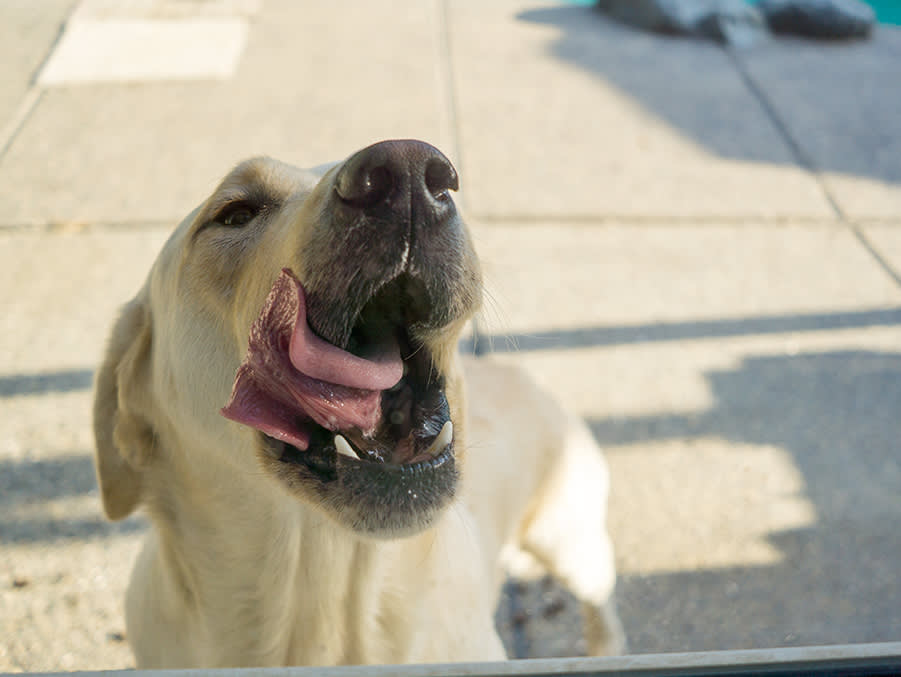
Walk down the supplement aisle and you would think poop-eating was a solved problem. There are chews, powders, and sprays all promising to make your dog’s stool taste so foul they will finally leave it alone. Here is the uncomfortable thing the biggest study on the subject found: almost none of it works.
That is the honest starting point for this whole frustrating topic, and it is our thesis. Coprophagia, the technical name for eating feces, is common, usually not a medical problem, and stubbornly resistant to the products marketed to stop it. Once you accept that, you stop wasting money on the wrong tools and start using the one approach that actually moves the needle: controlling access.
Start with the research most people never see
In 2018, a UC Davis team led by Dr. Benjamin Hart ran two large surveys, more than 1,500 usable dog-owner responses, specifically to figure out what poop-eating is and what stops it. The findings reset a lot of assumptions.
About 24 percent of dogs had been caught eating stool at least once, and roughly 16 percent were serious about it, defined as being caught in the act five or more times. The behavior was overwhelmingly aimed at fresh stool, no more than a day or two old. And crucially, when researchers looked at the reported success of commercial deterrents and behavior-modification approaches, the numbers were close to zero. The single most “successful” intervention was teaching a “leave it” cue, and even that landed in the low single digits.
In other words, the market is full of confident solutions to a problem that, statistically, they do not fix.
First, rule out the medical stuff
Before you file it under “gross but normal,” spend one honest paragraph ruling out the exceptions, because a small share of cases are medical.
Certain conditions can drive a dog to eat things that are not food, a broader pattern called pica. Gastrointestinal disease, nutritional gaps, anemia, and some neurological issues can all play a role. So can anything that cranks up appetite to a ravenous baseline, including diabetes, Cushing’s disease, and high doses of steroids.
If poop-eating shows up suddenly in a dog who never did it before, or comes with weight loss, a bottomless appetite, or GI upset, I want to see that dog. That is a different animal than the young, healthy, food-obsessed dog who has simply always found other dogs’ business delicious. The first needs a workup. The second mostly needs management.
A basic vet visit, often a stool test and bloodwork, sorts the two apart. If something treatable turns up, addressing it usually resolves the urge.
For most dogs, it’s just old programming
Assuming your dog checks out medically, what you are looking at is behavior, and it makes more sense than it seems.
The Hart survey found coprophagic dogs were far more likely to be described as greedy, indiscriminate eaters, and far more likely to live in multi-dog homes. The pattern scaled with the crowd: in single-dog households about 20 percent had the habit, but in three-dog households it climbed to roughly a third. The strong preference for fresh stool is the tell. Hart’s team connected it to an ancestral, den-keeping instinct: wolves that promptly consumed fresh feces near the den would remove it before parasite eggs in it had time to become infective. A poop-eating dog may just be running very old software written to keep the living space clean.
That framing matters because it takes the shame out of it. Your dog is not broken and you are not a bad owner. You are dealing with an inherited quirk that housetraining, which relies on most dogs’ aversion to their own mess, does not happen to override in every animal.
What actually reduces it
If deterrents barely work and the instinct is baked in, what is left? Access. Take away the opportunity and the behavior has nothing to act on. This is unglamorous and it is the part that works.
Pick up immediately. In your own yard, scoop stool the moment it lands so there is nothing to circle back for. On walks, stay ahead of your dog and clean up on the spot. Hart’s research showed the behavior fades in many dogs when they simply lose access for long enough, and younger dogs often outgrow the impulse entirely.
Keep them on leash for a while. If your dog is fast or sneaky, drop off-leash yard time temporarily so you are always close enough to intervene and redirect before they reach the target.
Build a real “leave it.” It is not a magic fix on its own, but it is the best cue you have, and it transfers to socks, chicken bones, and everything else you need your dog to walk past. Reward generously so it stays reliable under temptation.
Try target training. Teach your dog to touch a target on cue, then cue it right after they poop so leaving the spot becomes the trained habit. It buys you the seconds you need to clean up.
Consider a basket muzzle for the committed offender. Introduced slowly and paired with treats and walks so your dog likes wearing it, a basket muzzle lets your dog pant, drink, and sniff while physically blocking the behavior on high-risk outings. It is a management tool, not a punishment.
Deterrent additives are not harmful, and a few owners do report a short-term break in the cycle, so they are not forbidden, just oversold. If you try one, clear it with your vet first and treat it as a minor supplement to access control, never the main plan.
Why bother, if it’s mostly harmless?
Because “mostly” is doing some work in that sentence. A dog’s own fresh stool is relatively low-risk, but the neighborhood’s is not. Other dogs’ and cats’ feces can carry intestinal parasites and bacteria that your dog can pick up, which is the real reason to keep discouraging it and to stay current on deworming and parasite prevention. The aesthetics are your problem. The parasites are your dog’s.
What newer research adds
The 2018 UC Davis work remains the most useful thing published on the topic, and its central message has aged well: this is common, it is usually normal, and the products sold to stop it are largely ineffective. Nothing since has produced a reliable pill or powder that changes the behavior, which is exactly why access control keeps beating the supplement aisle.
The one genuinely encouraging note is about time. Because so many dogs lose interest as they mature, especially once you consistently deny access during the peak young-adult period, patience plus a clean yard is doing more than most owners realize. If you are managing it well and your dog is otherwise healthy, you are already using the approach the evidence supports. The rest is a scoop and a little vigilance.
References
Common questions
Can training stop a dog from eating poop?
Training helps at the margins. A rock-solid 'leave it' cue is worth building, but in the research even that had a low success rate on its own. Training works best paired with simply denying access to poop.
Is eating poop dangerous for my dog?
Their own fresh stool is usually low-risk, but other animals' feces can carry intestinal parasites and bacteria, which is the real reason to discourage it. Keep your dog current on deworming and parasite prevention.
Not a substitute for your vet. Our guidance is educational. For urgent symptoms, contact a vet or emergency clinic right away. Editorial standards
Dr. Chen is a small-animal veterinarian who leads health and safety coverage at The Pet Times. She writes and reviews the bulk of our illness, condition, and safety content, translating clinical guidance into clear, practical advice owners can act on at home.
Meet our experts ↗Keep reading
 Health & WellnessFloor Licking Is a Stomach Symptom Until Proven OtherwiseDr. Mara Chen · 8 min
 Health & WellnessNo Fleas, Still Scratching? 7 Culprits, Ranked by How Likely They Are.Dr. Mara Chen · 14 min
 Health & WellnessYour Dog's Runny Nose Is Usually Nothing. The Color Tells You When It Isn't.Dr. Ravi Mehta · 9 min
 Health & WellnessYour Monthly Chew Doesn't Kill Every Worm. Here's the Gap.Dr. Ravi Mehta · 9 min
 Health & WellnessYour Dog's Teeth Are Chattering. The Trigger Tells You If It's Nothing or an Emergency.Dr. Mara Chen · 6 min
 Health & WellnessOf All the Pet CBD Claims, Arthritis Is the One With Real ScienceDr. Amara Solis · 7 min