


The 'Cactus' That's Safer for Your Cat Than a Christmas Tree
You worry about a spiky plant near your cat, but the holiday cactus has no thorns, and it's the pine tree in the corner that's the real nibbling hazard.

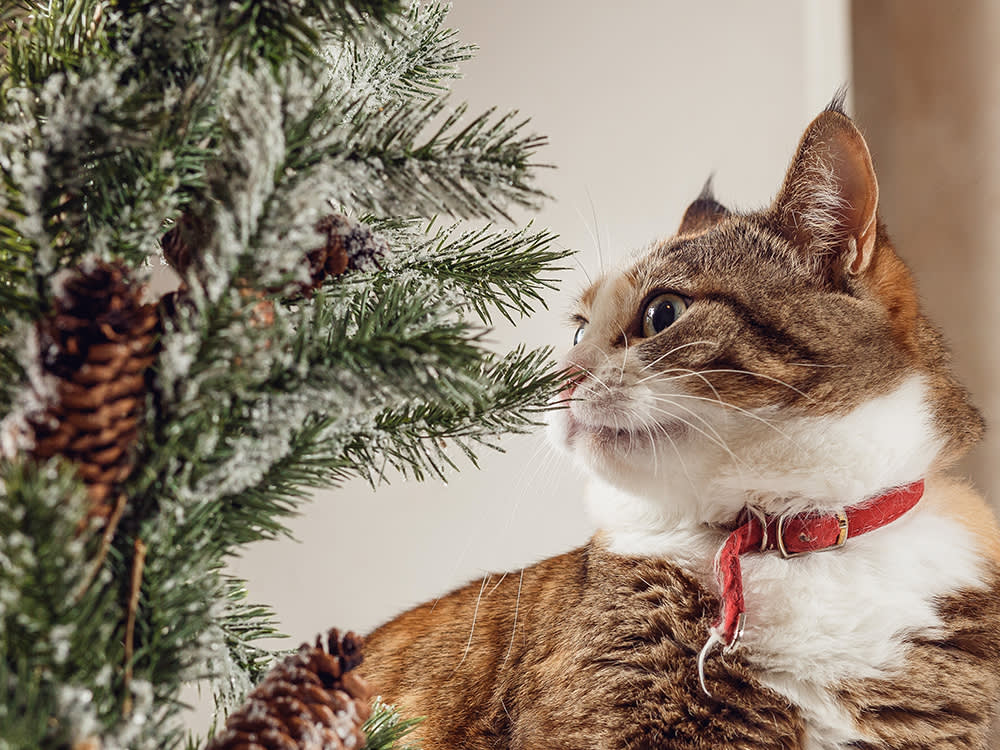
The word “cactus” makes people picture spines, and the instinct near a curious cat is to keep it well out of reach. Here’s the twist that flips the whole worry: a holiday cactus has no thorns at all, and the genuinely bristly, chew-tempting thing in your living room this December is the Christmas tree.
If you share your home with a cat who treats every houseplant as a salad bar, that’s worth sitting with. The plant that sounds dangerous is the safe one, and the traditional centerpiece is the one to watch.
Why the tree is the actual problem
Fir, spruce, and pine trees are technically classified as non-toxic, so a nibble won’t poison your cat. But “non-toxic” is not the same as “harmless.” Pine needles and the oils in them are known to cause oral irritation and stomach upset. For a cat who ignores the tree, that’s a non-issue. For a dedicated chewer, the kind who works through everything from leaves to plastic, a giant new pine plopped in the middle of the room is a standing temptation with a real downside.
Enter the thornless “cactus”
A holiday cactus is a soft-stemmed winter succulent, and depending on when it blooms and the shape of its leaf segments, you’ll see it sold as a Thanksgiving cactus, a Christmas cactus, or an Easter cactus. It’s pet-safe, and it stays conveniently small, which makes it a genuinely good fit for apartment-dwelling cat people who don’t have a spare high shelf to sacrifice.
The Sill makes a lovely version. Its holiday cactus blooms white and arrives in a mid-century-inspired ceramic pot that comes in a range of colors. Prop it on a plant stand or bookshelf, ideally somewhere somewhat out of your cat’s reach, but if a determined paw does get to it, there are no thorns to worry about.
The reflex is to fear the pointy plant and trust the familiar one, and with holiday greenery it’s often backwards. A holiday cactus is soft and safe, while the classic pine is the one I’d keep a chewer away from. If you’re going to fuss over placement, fuss over the tree.
One honest caveat
Pet-safe does not mean your cat can graze on it with zero consequence. The ASPCA lists the Christmas cactus (Schlumbergera) as non-toxic to cats, which is the reassuring headline. But a cat that eats a real mouthful of the fibrous stems can still get a mild, temporary stomachache, sometimes with a little vomiting or diarrhea, simply from the plant material itself rather than any poison. That’s a world away from the organ-threatening emergencies caused by lilies or other truly toxic holiday plants, but it’s worth knowing so you’re not alarmed by a one-time upset tummy.
One more distinction, because the name invites confusion: a holiday cactus is not a true desert cactus. Real cacti bring their own hazards, spines included. If you’re shopping for the pet-friendly option, make sure you’re getting a Schlumbergera, not a spiky lookalike.
References
Dr. Nair is a veterinarian focused on diet and feeding. She covers everyday nutrition, treats, and the many "can they eat this?" questions owners ask, grounding each answer in what is actually safe and sensible for dogs and cats.
Meet our experts ↗Keep reading
 Product PicksThis Brand Tests Cat Furniture in Cat Cafés. One Week There Equals a Year in Your Home.Sasha Ford · 6 min
 Product PicksThe 8 Best Cat Trees for Maine Coons, Sorted by Size and Your CeilingSasha Ford · 11 min
 Product PicksClawed Monet and Frida Catlo: The Artist Behind Every Cat Lover's Favorite GiftSara Lim · 5 min
 Product PicksNo Box Fixes a Litter Box Problem. Here's What Actually Does.Dr. Lena Park · 10 min
 Product PicksMost Cat Gifts Are Bought for the Human. These 6 Actually Get Used.Sasha Ford · 7 min
 Product PicksYour Cat Will Probably Ignore This $13 Gift. Buy It Anyway.Sara Lim · 6 min