


The Best Dog Documentary Ever Made Is Barely About Dogs
We Don't Deserve Dogs went to 11 countries and came back with a film about people. Five years on, it's still the only dog doc that refuses to be cute.

Affiliate disclosure. This article contains affiliate links. We may earn a small commission if you buy through a link, at no extra cost to you. How we handle recommendations.
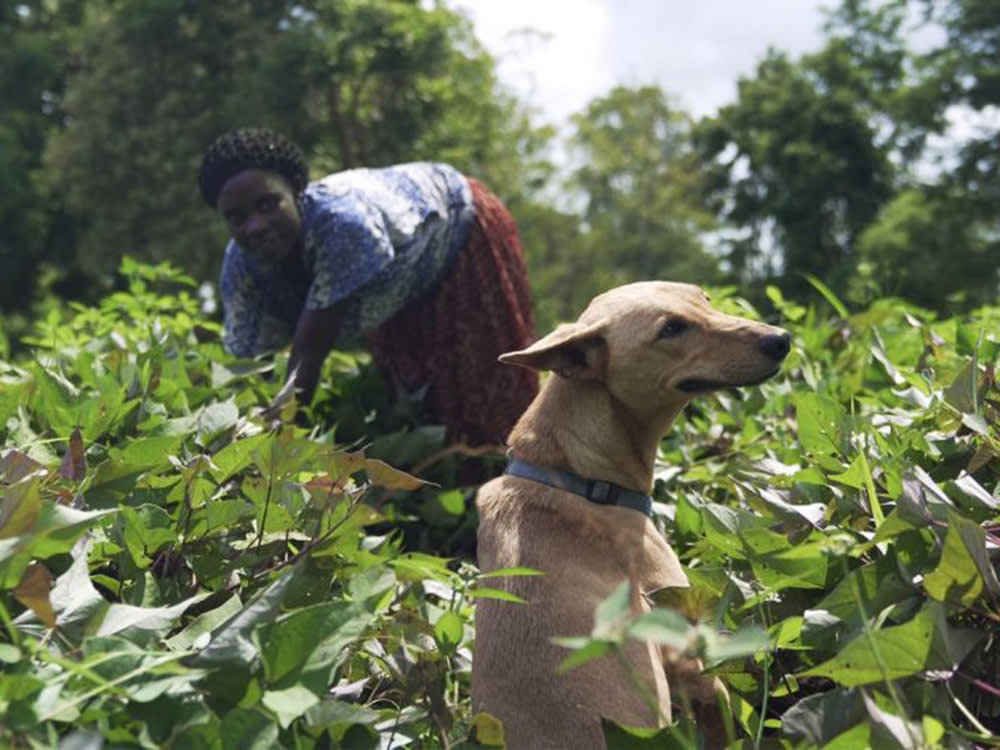
Almost every dog documentary makes the same bargain with you. It promises you will cry, and then it earns the tears cheaply: a shelter montage, a swelling score, a slow-motion reunion. You feel something, it fades by dinner.
We Don’t Deserve Dogs refuses the bargain entirely, and that is why it is still the one worth 84 minutes of your life. Directors Matthew Salleh and Rose Tucker shot across 11 countries, Chile and Uganda and Nepal and Finland and Romania among them, and what they brought back is not really a film about dogs at all. It is about the people standing next to them, and what they are willing to say out loud when a dog is in the room.
The dog is the excuse. The person is the subject.
The structure is patient to the point of stubbornness. There is no narrator telling you what to feel. There is no arc. There are just portraits, and the camera stays a beat longer than is comfortable, and in that extra beat people tell you the truth about their lives.
You notice quickly that the film has quietly demolished the American assumption that we invented loving dogs. A birthday party for a dog in Lima, Peru, makes that point with no commentary at all. So does footage of Nepal’s day of the dogs, an annual event where dogs are showered with flowers, colored powders, and treats, which is roughly a hundred times more devotional than anything happening at your local doggy daycare.
The working dogs are the real argument
The most useful section of the film is the one that shows how far dogs have traveled from the field and the farm.
Finnish children practice reading aloud to assistance dogs. In northern Uganda, dogs sit with former child soldiers carrying PTSD. That second one is not a heartwarming aside. It is the thesis of the entire movie in one image: a species we domesticated to guard livestock is now being asked to hold together people whose lives were destroyed by other people.
The stories are so far off the beaten path that the obvious question becomes distracting, which is: how on earth did the filmmakers find these people? The answer, evidently, is by looking for a very long time in places where film crews do not go.
The five minutes most reviews skip
Around 1:07:06, the film spends roughly five minutes on the dog-meat trade in Vietnam. A purveyor talks about it matter-of-factly, as a tradition.
There are no graphic scenes. The filmmakers take no position. The filmmakers have said they put it in because a film about our relationship with dogs cannot honestly skip the hardest version of that relationship. It lands like a hand on your shoulder. It is also the moment the title stops feeling like a slogan.
Because the title is doing something sly. The obvious reading is the guilty one: dogs are better than us, we don’t deserve them. But watch the actual portraits, the woman in the field, the reading child, the survivors in Uganda, and the irony inverts. The people in this movie plainly do deserve their dogs. The bond they describe is earned, articulate, and hard-won. The title is not an accusation. It is a test, and most of the people in the film pass it.
Why it still works five years on
The filmmakers said they wanted to avoid making another cute dog film. They succeeded so completely that the film has almost no viral moments, which is probably why it never became a streaming phenomenon and exactly why it holds up.
Cute expires. Craft does not. Salleh’s camera work is doing genuine formal work here, holding on faces, letting silence sit, refusing the cut that would tell you how to feel. There is never a shortage of appetite for a good dog story, least of all now. What is scarce is a dog story that assumes you can handle complexity.
What’s new since this was written
We Don’t Deserve Dogs premiered digitally on April 9, 2021, after a long festival run that took it from Warsaw to Cleveland, where it was an audience favorite nearly everywhere it played.
It is no longer a hard film to find. It is now available to rent or buy on Prime Video and on Apple TV, and the official site keeps a current list of rental and purchase options. The runtime is 84 minutes and much of it is subtitled, so this is a sit-down-and-watch film, not a background film. The soundtrack, if it grabs you the way it grabs most people, streams separately.
Watch it with your phone in another room. It is not a movie that survives being half-watched, and the five minutes you would miss are the five minutes that matter.
References
Marcus Webb writes about the gear, gadgets, and everyday choices that make life with a pet easier. His coverage runs from product picks to training and the causes worth paying attention to, always with an eye on what actually earns a place in your home.
Meet our experts ↗Keep reading
 TrainingThat 'Guilty Look' Isn't Guilt. It's a Read on You.Dr. Nina Kohl · 7 min
 LivingSix Dogs Went to the Paralympics. Not One of Them Is a Mascot.Jordan Ellis · 6 min
 LivingThe Best Dog Books, Sorted by What You Actually Want From OneJames Okafor · 6 min
 LivingYour Dog Isn't Why You're Not Dating. It's Just Your Best Excuse.Claire Sutton · 6 min
 Living15 Rescues Turned Her Down. Then Her Olympics Fell Apart and She Got the Dog.Sasha Ford · 6 min
 LivingA Dog Costs More Than a Used Car. Where You Live Swings It by $10,000.Marcus Webb · 7 min