


The Climate Crisis Has a PR Problem. She Learned the Fix in Kardashian World
Stephanie Shepherd spent years running social media at the highest volume in America. Now she runs a climate platform, and a rescue dog named Sir Binxington Jon Bon Jovi Jackson, on the same insight: information nobody shares is information nobody has.
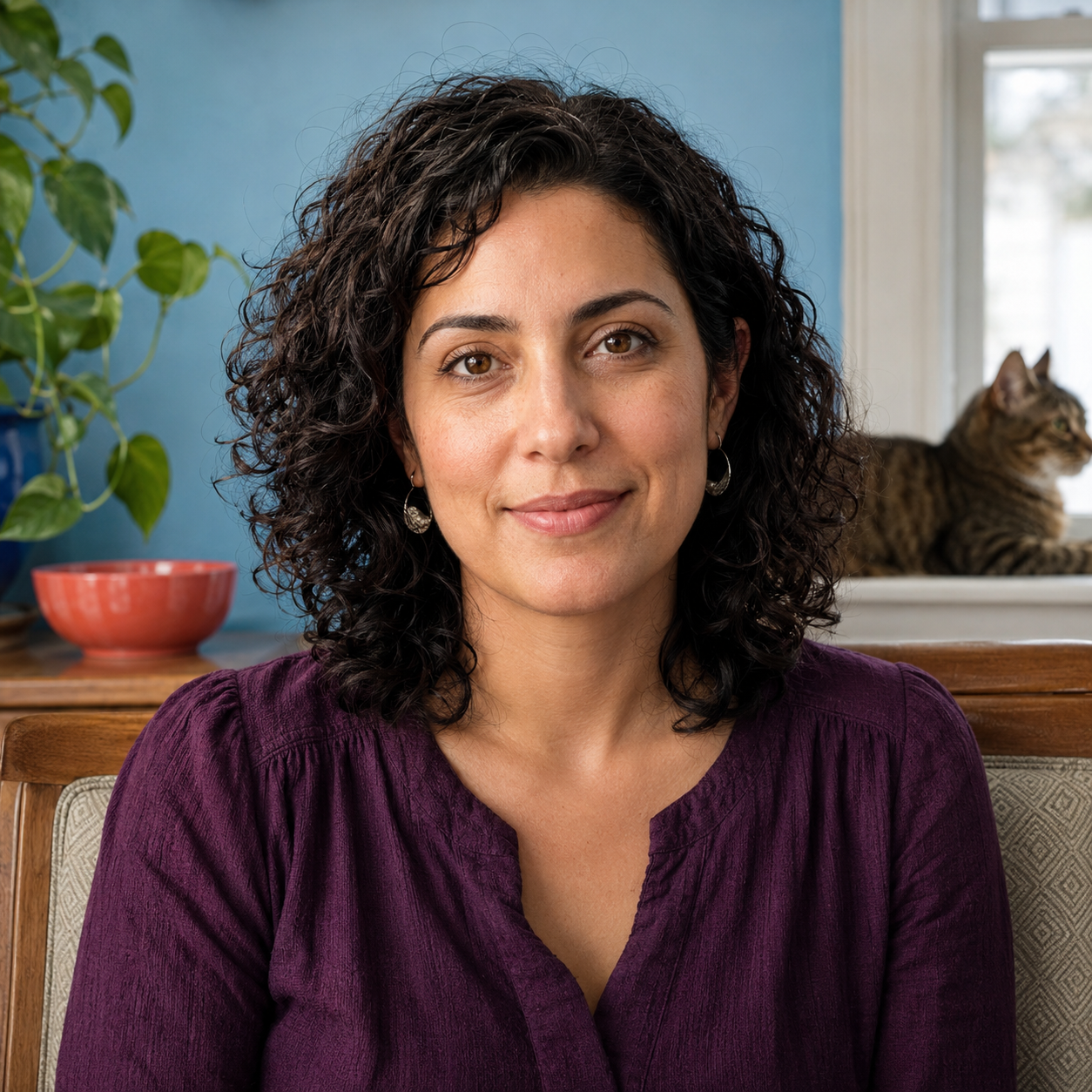
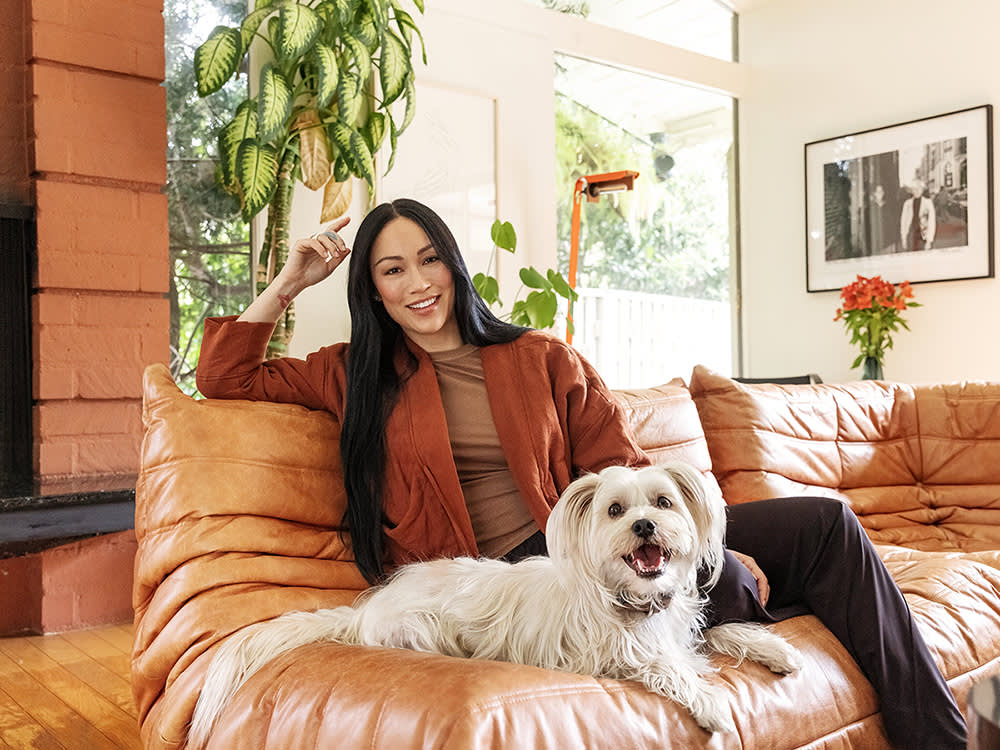
Every weekday morning, a small dog with an absurdly long name leaves a house in Los Angeles to go on a group walk with his friends, and the woman who lets him out the door describes it as watching a kid head off to kindergarten. He comes home wired, delighted, and full of stories he cannot tell.
The dog is Sir Binxington Jon Bon Jovi Jackson. He goes by Binx. The woman is Stephanie Shepherd, who used to run Kim Kardashian’s world and now runs a climate platform, and the distance between those two jobs is shorter than it looks.
The problem she is actually solving
Climate communication has failed for a long time in a very specific way. The information is not missing. It is dense, corporate, and written by scientists for other scientists, and it lands on people who are already exhausted, already guilty, and already convinced there is nothing they can personally do. So they scroll past.
The instinct in that situation is to make the information more urgent. Shepherd’s insight, which she brought with her from a career built on attention, is that the problem was never urgency. It was design. If nobody shares it, it does not exist, and the thing that gets shared is not the most alarming thing. It is the most usable, most human, most obviously passable-along thing.
Future Earth, the platform she co-founded, is what that insight looks like when you build it: climate information in punchy graphics, short interviews, and colorful campaigns, engineered for a feed rather than a journal. It is a climate club, and it is on Instagram on purpose, because that is where the argument is actually happening.
The pipeline into it was not obvious either. Shepherd went through a training weekend with The Climate Reality Project, the organization founded by Al Gore, and came out of it looking for the place where all of this got translated for people like her. There was not one, at least not one she wanted to read. So she made it, and eventually found herself interviewing Gore on the platform she built because his seminar changed her mind.
She has kept collecting the credentials since: a seat on The Climate Reality Project’s board, an ambassadorship with the Environmental Working Group, involvement with the climate coalition World War Zero. But the core skill on display is the one she learned in a very different building, which is how to make a person stop scrolling.
Enter Binx
He was supposed to be a foster.
In the first week of the 2020 lockdown, the week that felt like a decade, shelters across the country were closing their doors and scrambling to move animals out before they had nobody to care for them. Shepherd’s friend Jen Atkin, who works closely with shelters, told their group what was coming. The whole pod fostered. Then the whole pod adopted.
Binx came through the Labelle Foundation. He had been abandoned along with his family in Bakersfield. He was a tiny dark-coated thing with a button face who fit in the palms of two hands, and Shepherd says the arrangement lasted approximately one day before she understood it was permanent.
The name arrived during quarantine, in the middle of a Bridgerton phase, on one of those nights where two people trapped in a house make a decision that will follow them for fifteen years. He is a regal boy. He lives up to it.
What he actually did for her is the thing a lot of people discovered in 2020 and are only now saying out loud. It was the worst year of her life, and there was suddenly a small animal in it who noticed her anxiety before she did, who would push his head into her hand and paw at her when her voice changed. That is not a metaphor for support. That is the support.
The foster-fail wave, and what happened next
Shepherd’s story is a near-perfect specimen of a phenomenon that ran through the whole country that spring: the foster who was never going back.
It also ran straight into a prediction that turned out to be wrong. As lockdowns lifted, the coverage was relentless and grim, and it all said the same thing: the pandemic pets are coming back. People adopted on impulse, offices will reopen, and shelters are about to be buried under returned dogs.
The data did not cooperate. When the ASPCA studied it, roughly 90 percent of dogs and 85 percent of cats acquired by American households during the pandemic were still in those homes. The great abandonment did not happen. What happened instead is that a very large number of people met an animal during the worst year of their lives and decided, correctly, that they were not giving him up.
“The pandemic-puppy panic said something ugly about how we think people make decisions, and it was wrong,” says Leila Torres. “The foster who cannot give the dog back is not being impulsive. Living with an animal for three weeks is the most information anyone has ever had before adopting one, and it is exactly why foster-to-adopt keeps working better than the alternatives.”
Where the two halves meet
The reason Binx belongs in an article about climate communication and not just at the end of it as a cute coda is that he is the same argument in a smaller package.
Shepherd walks him on a recycled rope leash. He has modeled in a Moschino campaign. Neither of those facts is going to change atmospheric carbon, and she is not confused about that. What they do is make the subject approachable, and approachability is the entire bottleneck. A person who will not read a report on emissions will absolutely read about a rescue dog on a recycled leash, and the second thing is a door into the first.
That is the bet Future Earth is making, and it is not a naive one. It is the same bet that every effective communicator has ever made: meet people inside something they already love, and the hard part gets carried in on its back.
The dog, for his part, remains an Aquarius, remains extremely social, and remains prone to stealing the shoes and plates of house guests, an event his friends refer to as getting Binxed.
References
- ASPCA, “New ASPCA Survey Shows Overwhelming Majority of Dogs and Cats Acquired During the Pandemic Are Still in Their Homes” (May 2021)
- The Climate Reality Project, Stephanie Shepherd
- Labelle Foundation, labellefoundation.org
- Environmental Working Group, ewg.org
Nina Vasquez writes about life at home with pets and the relationships at the heart of it. Her work covers day-to-day living, people-and-pet stories, and the products that fit into a real household, with a warm, grounded take on everyday pet ownership.
Meet our experts ↗Keep reading
 LivingYour Empty Kibble Bag Is a Recycling Dead End. Here's the Ladder OutLeila Torres · 5 min
 LivingDon't Vacuum Up That Fur. It Can Soak Up an Oil Spill.Leila Torres · 6 min
 LivingOnly Three Logos Mean 'Cruelty-Free.' Everything Else Is Theater.Leila Torres · 8 min
 LivingIn NYC, Hitting a Dog With Your Car Can Cost Less Than an Illegal U-TurnLeila Torres · 4 min
 LivingThe Vick Jersey Wasn't Really About Kyler MurraySasha Ford · 5 min
 LivingThe Dogs of the NYC Dyke March Were Making a Statement TooLeila Torres · 6 min