


We Assumed Cats Couldn't Be Therapy Animals. We Were Screening for the Wrong Thing.
Therapy work has always belonged to dogs. A 2025 study says the right therapy cats already exist — they just self-select, and the traits that make them good at it aren't the ones we expected.

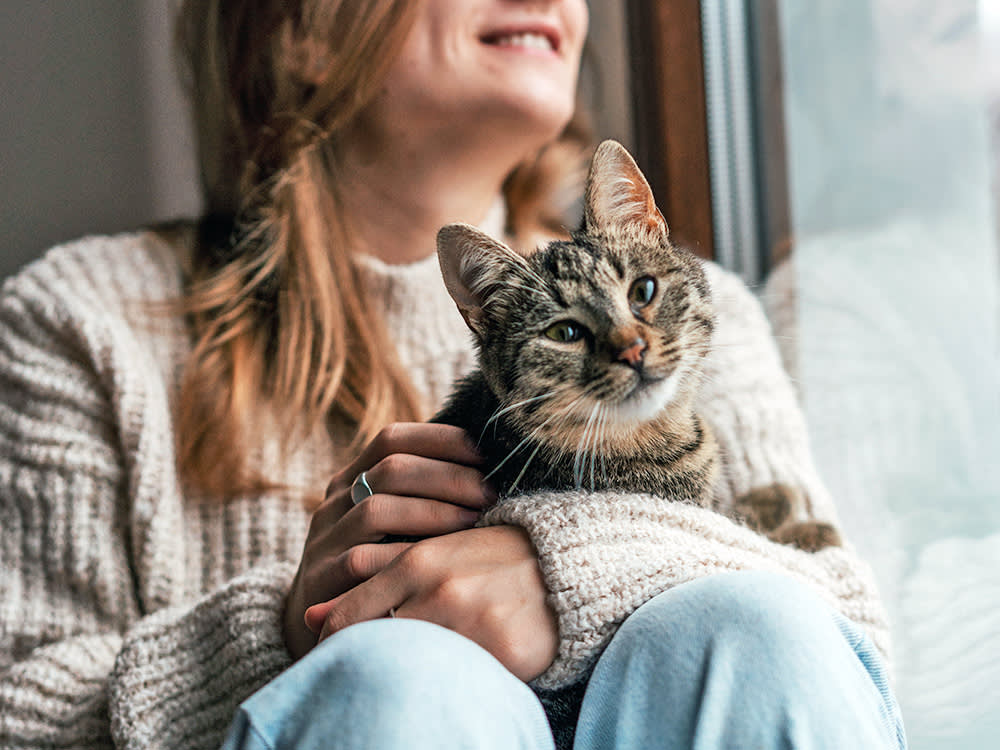
Walk into a hospital, a college during finals week, or a nursing home common room, and the therapy animal you meet will almost certainly be a dog. Animal-assisted services have been dog territory for decades, and the quiet assumption underneath that is that cats simply are not built for the job. A study published in early 2025 pushes back on that assumption in an interesting way. The problem, it suggests, was never that cats can’t do this work. It is that we assumed no cat wanted to, and so we never looked for the ones who do.
The research, published in the journal Animals and co-authored by Washington State University’s Patricia Pendry with collaborators in Belgium, set out to build a behavioral profile of the cats already doing animal-assisted work. The team surveyed the owners of nearly 500 cats, some of whom took part in assisted-services settings and some of whom did not, and compared the two groups.
What separates a therapy cat from an ordinary one
The differences were real and specific. Cats involved in animal-assisted services scored higher on sociability, both with people and with other cats, and higher on attention-seeking. They were, notably, more tolerant of being handled and picked up, which anyone who lives with cats knows is not a universal feline trait. They even scored higher on predatory behavior. And they scored lower on resistance to restraint, meaning they were more comfortable being held and managed than the average cat.
Put those together and you get a portrait of a cat who genuinely seeks out human contact and stays relaxed through the kind of handling a therapy setting requires. Interestingly, the researchers found that the caregiver’s background, along with the cat’s age and sex, did not drive these differences. The traits seem to belong to the cat.
“The useful takeaway here isn’t ‘go turn your cat into a therapist,’” says Dr. Amara Solis. “It’s that the temperament for this work is something a cat either has or doesn’t, and it shows up early in how they seek out people and tolerate handling. The job is identifying the cats who already want it, not training reluctant ones into it.”
Why this is different from how we make therapy dogs
The contrast with dogs is the heart of it. Therapy dogs are typically selected and then trained for the behaviors the role demands. Cats are not trained that way, and this study suggests they may not need to be in the same manner. Instead, certain cats appear to arrive with the right temperament already assembled, a natural inclination toward the sociability and tolerance the work asks for. As the researchers noted, these standout cats share the same core traits we prize in therapy dogs, high sociability and a real willingness to engage with people.
There is an open question the study is careful to leave open: how much of this is innate versus shaped by experience. It is plausible that the demands of assisted-services work, more exposure to people and handling, strengthen these traits over time rather than simply revealing them. The researchers do not claim to have settled which way the arrow points.
What it could mean
None of this is a call to draft the family cat into hospital rounds. The researchers are deliberately modest about it. Their point is narrower: a slice of cats seem to find this sort of contact rewarding rather than stressful, and matched to the right situation, those cats can be a genuine comfort to the people around them. Real questions remain about protecting the welfare of cats who do this work, and about how to identify and support the right candidates.
But the wider implication is genuinely worth sitting with. Animal-assisted services have leaned almost entirely on dogs, which quietly excludes people who would be more comforted by a cat’s calm, low-key presence than by a dog’s enthusiasm. If some cats are naturally suited to the role, widening the door could make this kind of support reach people it has been missing. Some of us, after all, are soothed more by a warm, purring weight settling against us than by a wagging tail, and it turns out a subset of cats may be built to provide exactly that.
References
- Nawroth, C., Pendry, P., et al. “Behavioral Profiles of Cats Engaged in Animal-Assisted Services.” Animals, vol. 15, no. 1, 2025.
- Washington State University. “Feline therapy: Study suggests cats could fill an assistive niche.” WSU Insider, March 2025.
Nina Vasquez writes about life at home with pets and the relationships at the heart of it. Her work covers day-to-day living, people-and-pet stories, and the products that fit into a real household, with a warm, grounded take on everyday pet ownership.
Meet our experts ↗Keep reading
 LivingMy Cat Has Never Once Felt Awkward. I'm Taking Notes.Sasha Ford · 5 min
 LivingHer Cats Kept Sneaking Into the Drawings. Then They Took Over.Leila Torres · 6 min
 LivingYour Cat Notices the Empty Spot. Whether to Call It Grief Is the Hard PartDr. Nina Kohl · 6 min
 LivingHe's Rehomed 40 Kittens. Behind the Cute Videos Is a SystemJames Okafor · 7 min
 LivingPeople Crowned a 'Sexiest Cat Dad,' and the Joke's Actually on Anyone Who Thinks It's a JokeSasha Ford · 3 min
 LivingI Spent $6,064 on My Cat in One Month. Only $94 of It Was Actually Cat Stuff.Nina Vasquez · 7 min