


Service Dog or Emotional Support Animal for Anxiety? The Decision That Changes Everything
Yes, you can have a service dog for anxiety, but the choice between a psychiatric service dog and an ESA decides your access rights, your training burden, and how you fly. Here's how to choose, then how to get there.

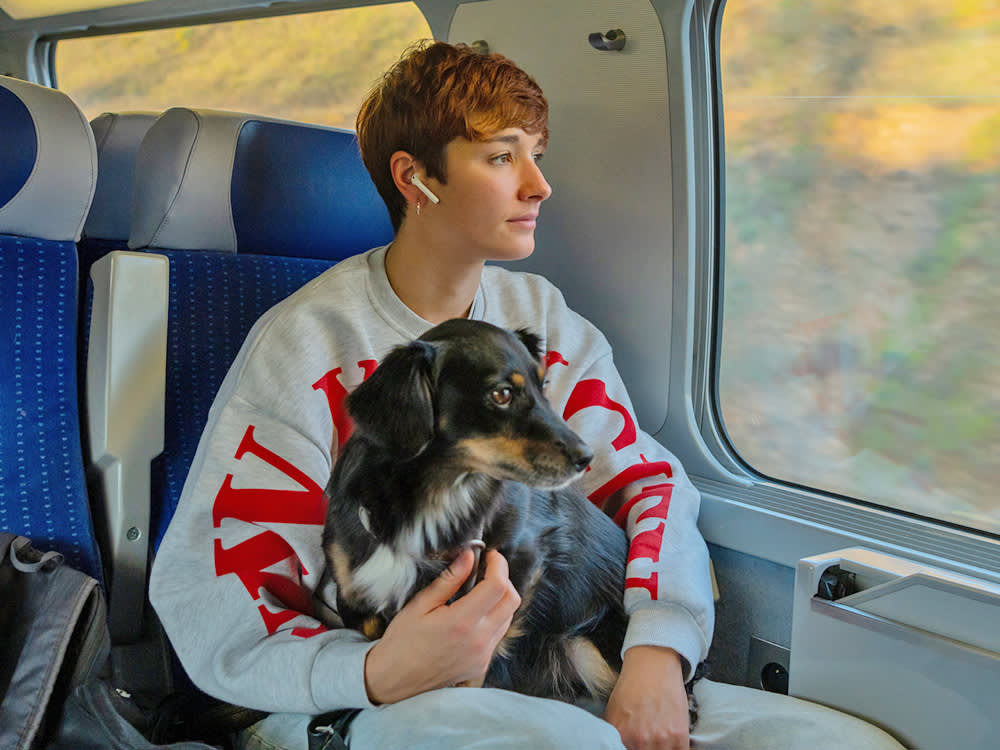
If you live with anxiety and you are wondering whether a dog can help, the answer is yes, and it has been for a long time. But “get a service dog” is not actually one decision. It is really a fork in the road, and most people rush past the fork without noticing it is there. Down one path is a psychiatric service dog, a working animal trained to perform tasks, with broad legal access to public life. Down the other is an emotional support animal, a companion whose value is its presence, with almost none of those access rights. The two get talked about as if they are neighbors on a spectrum. Legally and practically, they are different animals. Choosing between them, honestly and early, determines your rights, your cost, your training commitment, and what happens when you try to board a plane. So this guide starts at the fork, not at “yes you can.”
First, the honest choice: PSD or ESA
Here is the distinction stripped to its core. A psychiatric service dog (PSD) is individually trained to perform specific tasks that mitigate a disability, in this case a mental health condition. An emotional support animal (ESA) provides comfort through companionship and is not trained to do a particular job. That single difference, task-trained versus not, is the hinge everything else swings on.
An emotional support animal helps just by being there, and that is genuinely valuable. But a psychiatric service dog is trained to do something at the moment you need it, like interrupting a spiral or grounding you with pressure, and that task training is exactly what the law recognizes.
The consequences of that difference are concrete, not abstract:
- Public access. A PSD is trained to accompany you into restaurants, stores, and transportation. An ESA has no public access right and is meant primarily for comfort at home. This is the gap people most often misjudge.
- Training burden. A PSD requires real, sustained task training. An ESA needs to be well-behaved but has no task requirement, which makes it far easier to have, and far more limited.
- Documentation. Neither requires formal government certification. But if you fly with a PSD, you will need to complete airline paperwork attesting to the dog’s training (more on that below). An ESA no longer gets that consideration on most flights.
Before you fall in love with the idea of a service dog, sit with this fork. If what you need is comfort and steadiness at home, an ESA is a lighter, faster, entirely legitimate answer. If you need a dog that works with you out in the world, you are looking at a PSD, and a real training commitment. A licensed mental health professional can help you decide which actually fits your condition, rather than which sounds more official.
What a psychiatric service dog actually does
Choosing the PSD path means you are signing up for a working animal, so it helps to know what “work” looks like. Psychiatric service dogs are trained to help people manage conditions including anxiety, depression, and PTSD, through concrete tasks rather than vibes. Common ones for anxiety include alert (nudging or pawing when they detect rising signs of an attack), brace (providing physical support or grounding), deep-pressure therapy (lying across the handler to interrupt a panic response), and retrieve (bringing medication or a phone). It is the trained task, performed on cue or on trigger, that separates a service dog from a beloved pet who happens to be soothing.
How to get one, in the right order
If the decision points you toward a service dog, the sequence matters. Skipping steps is how people end up spending money on the wrong thing.
- Start with a recommendation. Get documentation from a licensed mental health professional establishing the need for a service dog to manage your anxiety-related condition. This comes first because it defines everything after it.
- Choose a path: provider or self-train. With that recommendation, you can work with a reputable service dog organization or train your own dog under professional guidance. Both are legal. Thorough training and socialization are what make the difference, not the route.
- Get sensible gear. A vest or collar is not legally required, but it signals that your dog is working, which cuts down on interruptions and on being pressured to crate a dog you are entitled to keep at your side.
- Learn your rights before you need them. Know the rules that apply to you, including the fact that others may legally ask only two specific questions: whether the dog is a service animal required because of a disability, and what task it has been trained to perform. They may not ask about your condition or demand a demonstration.
One firm warning, because it is where money gets wasted: there is no official U.S. government registry or certification for service dogs. Any website selling “registration” or “certification” for a fee is selling you nothing with legal weight. A legitimate service dog is defined by its training and tasks, full stop.
Training reality, whichever path you pick
Even if you go with a professional organization, it helps to understand what the training is really teaching, because it is not obedience.
Training a dog for anxiety work isn’t just teaching commands. You are teaching the dog to read and respond to emotional cues. That moves well past basic obedience into something closer to emotional sensitivity.
The load-bearing pieces are building a deep bond through daily care so the dog tunes into your state, sensitivity training so the dog learns to recognize signs like shallow breathing or restlessness, desensitization across many environments so the dog stays focused amid distraction, the specific task work itself, and ongoing socialization so the dog stays reliable in public. Self-training is possible, but it demands consistency and a real grasp of the tasks; guidance from experienced trainers sharpens the outcome considerably.
Flying: the rule that quietly changed
This is the update that catches people off guard, and it is exactly where the PSD-versus-ESA fork bites hardest. Under the U.S. Department of Transportation’s Air Carrier Access Act rules, airlines are no longer required to accept emotional support animals and may treat them as ordinary pets, subject to fees and carrier restrictions. Trained psychiatric service dogs, by contrast, remain federally protected: they fly in the cabin with their handler at no charge, even large breeds. The catch is paperwork. Every U.S. airline now requires you to submit the DOT Service Animal Air Transportation Form, attesting to your dog’s training, health, and behavior, generally at least 48 hours before departure. If air travel is part of why you want a service dog, this rule is a major reason the PSD path and the ESA path diverge, and a reason to build that form into your prep.
The upside, and a reality check
Beyond being wonderful companions, service dogs deliver specific benefits for people with anxiety: a sense of security, relief from loneliness, and help managing panic attacks and other symptoms.
The presence of a service dog tends to lift overall mental health, too. It encourages social interaction and builds a daily routine, and routine itself can be steadying for someone managing anxiety.
Just keep the decision grounded. A service dog is a years-long commitment to an animal that also depends on you, in the middle of managing your own health. For some people that is exactly the structure that helps. For others, an ESA, therapy, medication, or some combination is the better fit. A mental health professional is the right person to help you weigh it honestly.
Frequently asked questions
What if I don’t qualify for a service dog?
There are still good options. An ESA suits people who don’t meet the service-dog criteria but benefit from an animal’s companionship and comfort, and it comes with far less training burden.
What breeds make the best service dogs?
The strongest candidates are intelligent, trainable, calm, and eager to please, but breed is not destiny. Individual temperament and aptitude for training matter more than the label on the pedigree.
Can you be denied entry with a service dog?
Rarely, and almost always because of the dog’s behavior rather than its status. A service dog that is aggressive or poses a direct threat to others’ safety can be asked to leave.
Does my service dog need a vest?
No. A vest isn’t legally required, but it helps identify the dog as working, reduces unwanted interactions, and often carries pockets for ID or supplies. It’s a convenience, not a credential.
References
- U.S. Department of Transportation: Service Animals (Including Emotional Support Animals)
- ADA National Network: Service Animals and the ADA
- Can Dog-Assisted Intervention Decrease Anxiety Level and Autonomic Agitation in Patients With Anxiety Disorders?
Leila Torres leads our Living coverage, from home life and travel to the products and rescue stories that come with sharing a life with animals. She edits and writes across the section, with a soft spot for pieces about the bond between people and their pets.
Meet our experts ↗Keep reading
 LivingGrowing Up With a Dog May Guard Your Gut, Researchers FoundDr. Ravi Mehta · 4 min
 LivingA 'Luxury' Dog Boarding Chain Just Paid $150K to Settle Neglect ClaimsNina Vasquez · 4 min
 LivingService Dog or Therapy Dog? Almost Everyone Gets This Backwards.Dr. Mara Chen · 7 min
 LivingA Disabled Girl's Service Dog Got Her Family Kicked Off a Flight. The Culprit Was One Checkbox.James Okafor · 4 min
 LivingA Dog Costs More Than a Used Car. Where You Live Swings It by $10,000.Marcus Webb · 7 min
 LivingYour Dog Probably Has a Better Social Life Than You. Science Says That's Great for Them.Nina Vasquez · 5 min