


Growing Up With a Dog May Guard Your Gut, Researchers Found
A study of more than 4,000 people at high risk for Crohn's disease found that those who lived with a dog as kids were less likely to develop the condition, and had more diverse gut bacteria. Here's what that does and doesn't mean.

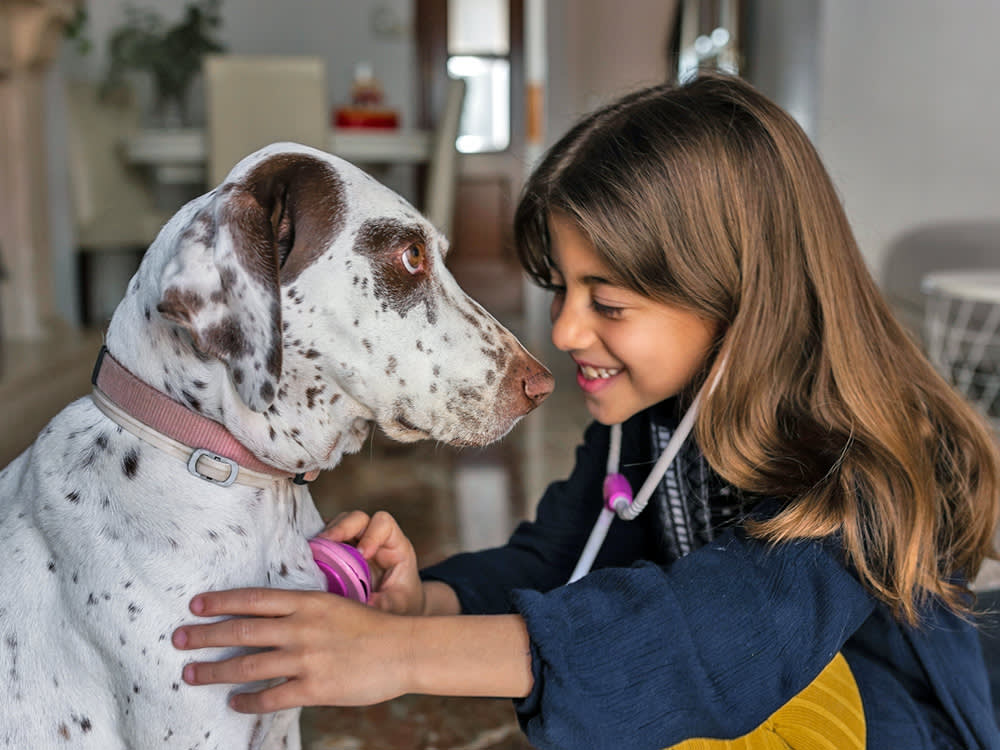
We already knew dogs were good for us in the broad-strokes way: people who live with them tend to move more, carry lower blood pressure, handle stress better, and even have fewer allergies and chronic conditions. Now researchers have added a much stranger, more specific benefit to that list. In a study of people at elevated risk for Crohn’s disease, those who grew up around a dog turned out to be less likely to develop it.
What the researchers found
The work came out of Sinai Health, where scientists tracked 4,289 close relatives of Crohn’s patients, a group already carrying elevated genetic risk. The standout finding: having a dog in the home during childhood, roughly ages 5 through 15, was tied to a lower chance of developing the disease. People raised around pets also showed greater diversity in their gut bacteria, which is generally considered a marker of a healthier microbiome.
The researchers were careful about what they could and couldn’t claim. As Dr. Kenneth Croitoru, a gastroenterologist involved in the study, put it in plain terms, the data clearly shows the association, but nobody yet knows the mechanism behind it. His team has been mapping links between environmental factors and Crohn’s, and is now working to understand how those factors might actually trigger the disease in the first place.
Why it matters
Crohn’s disease is an inflammatory bowel disease that inflames the digestive tract and drives a range of chronic, draining symptoms, pain, malnutrition, and fatigue among them. It can also spin off serious complications like kidney stones, anemia, and inflammation of the liver. Somewhere between 6 and 8 million people live with it worldwide, the numbers are climbing globally, and there’s currently no cure.
Scientists know Crohn’s has a strong genetic component, but genes aren’t the whole story, environment clearly plays a role, and that’s the part this research is chasing. The hope is prediction: if you can pin down what’s different about the people who go on to develop the disease, you can start to identify who’s at risk before it appears. Sinai Health’s research VP, Dr. Anne-Claude Gingras, framed the larger ambition as weaving together genetic, environmental, and microbial data to move toward personalized strategies that could meaningfully cut how often Crohn’s develops.
What to make of it (and what not to)
Two honest caveats keep this in perspective. First, this is an association, not proof of cause. Growing up with a dog was linked to lower risk; it wasn’t shown to be the thing that lowered it. Plenty of factors travel together in childhood, and researchers are still untangling which ones matter and why. Second, and this is the part worth saying plainly, none of this is a reason to acquire a dog as a medical intervention.
“Whenever a study like this makes the rounds, I get asked whether someone should get a dog to protect their kids’ health, and my answer is always the same,” says Dr. Lena Park. “Get a dog because you can give it a good life. The microbiome benefits scientists are seeing are real and fascinating, but they’re a bonus of living alongside an animal you actually wanted, not a prescription. A dog brought home for the wrong reasons rarely ends well for the dog.”
The bigger picture this fits into is the long-running idea that early exposure to a rich mix of microbes, the kind a muddy, shedding, outdoor-tracking dog brings into a home, may help train a developing immune system. It’s a promising thread, and studies like this one are a step toward understanding it, not the final word.
References
- Turpin, W., Croitoru, K., et al. “Environmental Factors Associated With Risk of Crohn’s Disease Development in the Crohn’s and Colitis Canada Genetic, Environmental, Microbial (CCC-GEM) Project.” Gastroenterology, 2024.
- Cleveland Clinic. “Crohn’s Disease.”
- Mayo Clinic. “Crohn’s disease.”
Dr. Mehta is a board-certified veterinary nutritionist who evaluates pet food formulations, ingredient quality, and the science behind dietary trends. He writes and reviews all nutrition content at The Pet Times, including our food rankings and feeding guides.
Meet our experts ↗Keep reading
 LivingA Dog Costs More Than a Used Car. Where You Live Swings It by $10,000.Marcus Webb · 7 min
 LivingThe Best Thing You Can Do for Your Health Might Be Adopting a DogDr. Amara Solis · 8 min
 LivingA 'Luxury' Dog Boarding Chain Just Paid $150K to Settle Neglect ClaimsNina Vasquez · 4 min
 Health & WellnessMoney Doesn't Keep Your Dog Healthy. Company Does.Dr. Mara Chen · 6 min
 LivingShould Your Dog Sleep in Your Bed? What the Research Actually SaysDr. Nina Kohl · 4 min
 LivingService Dog or Therapy Dog? Almost Everyone Gets This Backwards.Dr. Mara Chen · 7 min