


'Too Old to Treat' Is a Guess About a Statistic, Not Your Dog
When a vet says a senior dog isn't worth treating, they're often quoting an average, not diagnosing the animal in front of them. Here's why more owners are getting second opinions, the questions that force a real answer, and how to actually read a senior dog's quality of life.

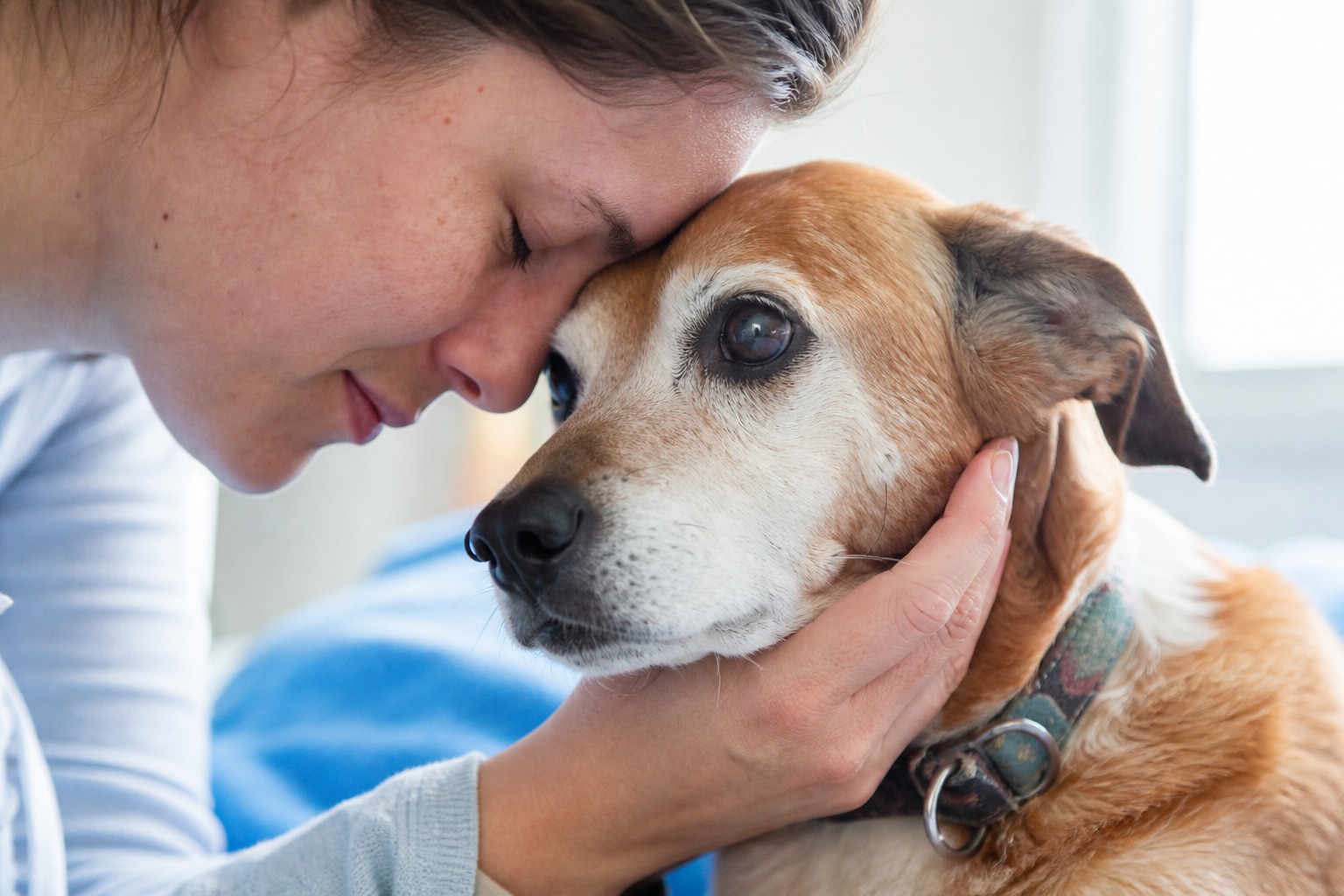
There’s a sentence that lands like a verdict in exam rooms every day: “At her age, there’s not much we can do.” Sometimes it’s true. Often it isn’t, and the tell is in how the sentence is built. “At her age” is a fact about a breed’s average lifespan. “There’s not much we can do” is a conclusion about the specific dog on the table. When the second half gets waved through on the strength of the first, a treatable problem can get mistaken for the end of a life.
That gap, between a statistic and an individual, is why a growing number of owners are walking out of one appointment and into another. And a striking share of the time, the second opinion finds something the first one didn’t bother to look for.
Age is a risk factor, not a diagnosis
Here’s the logical slip at the heart of the problem. A dog’s age raises the odds of serious illness, but it doesn’t diagnose one. An old dog that’s suddenly lethargic and off its food could be dying of something untreatable, or it could be severely dehydrated with an upset gut inflaming every other organ, an acute, very fixable problem that has nothing to do with being old. The two look similar from across the room. Only one of them is actually about age, and you can’t tell which without looking closer.
Advocates who take in surrendered seniors see the consequences of skipping that look. Alaqua Animal Refuge in Florida has taken in senior dogs surrendered to shelters specifically so the shelter would handle euthanasia, dogs whose owners were told, gently or bluntly, that there was nothing left to do. Many of those dogs, once someone actually treated them, went on to live several more good years. The Grey Muzzle Organization, a nonprofit that funds senior-dog care at shelters and rescues nationwide, works from the same premise: that a number on a chart is a poor substitute for an assessment of the animal.
When I catch myself thinking ‘this dog is just old,’ that’s my cue to slow down, not speed up. Age tells me what to screen for. It doesn’t give me permission to stop screening. The dog that was chasing a ball yesterday didn’t become untreatable overnight because of a birthday.
”Senior” doesn’t mean one thing
Part of what makes the age cutoff so unreliable is that “senior” is barely a category. Lifespans vary enormously by size and breed. Some large purebreds are lucky to reach ten, while small dogs routinely stretch past their mid-teens and Chihuahuas can live past twenty. Better nutrition, medication, and everyday care keep pushing those numbers up, so a life expectancy quoted from an old textbook may already be out of date. Telling an owner that fifteen “is the life expectancy” for a breed, while the dog is recovering from a bout it clearly survived, treats an average as a ceiling it was never meant to be.
The population is shifting in a way that makes this matter more, not less. Over the past decade, the share of U.S. households with a dog older than seven climbed from 42 percent to 52 percent. There are simply more senior dogs than there used to be, which means more owners hitting this exact conversation and more need to understand what an older dog can still do with the right care.
Money is real, but it isn’t the whole answer
Sometimes the pessimism isn’t clinical, it’s financial, filtered through the vet on the dog’s behalf. A vet who foresees an expensive workup with an uncertain payoff may steer an owner away from spending, especially when outcomes aren’t guaranteed. That instinct can come from genuine kindness. It can also quietly make the decision for you before you’ve had the information to make it yourself.
The counterweight isn’t to spend recklessly; it’s to insist on knowing what you’re deciding between. That means asking pointed questions instead of accepting a summary. Request a clear explanation of the diagnosis, the actual treatment options, the likely outcomes, and an honest quality-of-life assessment. Ask the “if/then” version out loud: if we run this test and it shows X, what happens next? And don’t be shy about a referral to a specialist, an internal medicine vet, a geriatric-focused practice, or an oncologist, who can give realistic numbers your general vet may not have. You’re also entitled to your dog’s full medical records to take with you; ask for them.
How to actually read quality of life
None of this means the answer is always “keep treating.” Sometimes there truly isn’t more to do, and knowing how to tell is its own kind of advocacy. Rather than leaning on age, look at the dog’s daily life through concrete markers. Can your dog eat and drink? Is it urinating and passing stool normally? Does it still enjoy the things it used to, greeting the family, lying in the sun, mouthing a favorite toy? Are the good days outnumbering the bad ones? Does it respond to your voice? Structured quality-of-life scales used by vets, which score things like hurt, hunger, hydration, hygiene, happiness, and mobility, put exactly these questions into a form you can track over time instead of judging in a single panicked moment.
A useful rule of thumb from hospice-minded vets: the care shouldn’t cost the dog more suffering than the illness it’s meant to fight. If aggressive care would buy a little time at the cost of a lot of suffering, declining it is a loving choice, not a failure. The goal isn’t to fight forever. It’s to make sure the decision is based on the dog in front of you, assessed honestly, rather than on a number that closed the case before anyone examined the patient.
So if you leave an appointment feeling like your dog was written off by its age, trust that instinct enough to get a second look. Older dogs move slower and need more, softer bedding, shorter walks, pain management, easier access to food and water, but “needs more” is a long way from “beyond help.” You know your dog’s ordinary better than anyone, and you’re the one best positioned to notice when it’s genuinely gone, or when it’s just been temporarily buried under something a vet could fix.
What newer thinking adds
Veterinary medicine has been formalizing exactly this shift. Quality-of-life scoring tools and the growth of veterinary hospice and palliative care give owners structured, dog-specific ways to make these calls instead of relying on age as shorthand. The senior-pet population’s steady rise has pushed more clinics toward geriatric screening protocols that treat “old” as a reason to look harder rather than a reason to stop. And the second-opinion norm, long standard in human medicine, is increasingly accepted in veterinary care, with owners encouraged to seek specialist input for a senior dog rather than treated as difficult for asking. The consistent message is that a dog’s age should shape the workup, not replace it.
This piece touches on senior-pet illness and end-of-life decisions, which are hard topics. It’s general information, not medical advice, and it isn’t a substitute for your own vet’s exam. If you’re weighing a senior dog’s care, a trusted vet relationship, and a second opinion when something feels off, will serve you better than any article can.
References
- The Grey Muzzle Organization. https://www.greymuzzle.org/
- Villalobos, A. “Quality of Life Scale (HHHHHMM Scale).” Veterinary Practice News / Journal of the American Animal Hospital Association. https://www.veterinarypracticenews.com/
- “Senior Pet Care (FAQ).” American Veterinary Medical Association. https://www.avma.org/resources-tools/pet-owners/petcare/senior-pet-care
Not a substitute for your vet. Our guidance is educational. For urgent symptoms, contact a vet or emergency clinic right away. Editorial standards
Dr. Mehta is a board-certified veterinary nutritionist who evaluates pet food formulations, ingredient quality, and the science behind dietary trends. He writes and reviews all nutrition content at The Pet Times, including our food rankings and feeding guides.
Meet our experts ↗Keep reading
 Health & WellnessPut Down the Neosporin. Your Dog Is Just Going to Eat It.Dr. Ravi Mehta · 7 min
 Health & WellnessThe Skin-Pinch Test for Dehydration Fails on the Dogs Who Need It MostDr. Amara Solis · 8 min
 Health & WellnessA Warm, Dry Nose Tells You Nothing. Here's How to Actually Know Your Dog Has a Fever.Dr. Priya Nair · 6 min
 Health & WellnessEye Gunk Is Normal. The Color and the Count Tell You When It Isn't.Dr. Ravi Mehta · 9 min
 Health & WellnessBloat in Dogs: The Deadly Emergency You Can Largely Prevent Before It StartsDr. Nina Kohl · 11 min
 Health & WellnessA Dog Who Won't Drink Water Is a Clock, Not a QuirkDr. Lena Park · 7 min