


A Puppy That Won't Eat Isn't Being Picky. It's a Countdown
Adult dogs can skip a meal and shrug it off. Puppies can't. A puppy off its food is often the first sign of something wrong, and the clock runs faster than most new owners realize. Here's what it means and when to move.

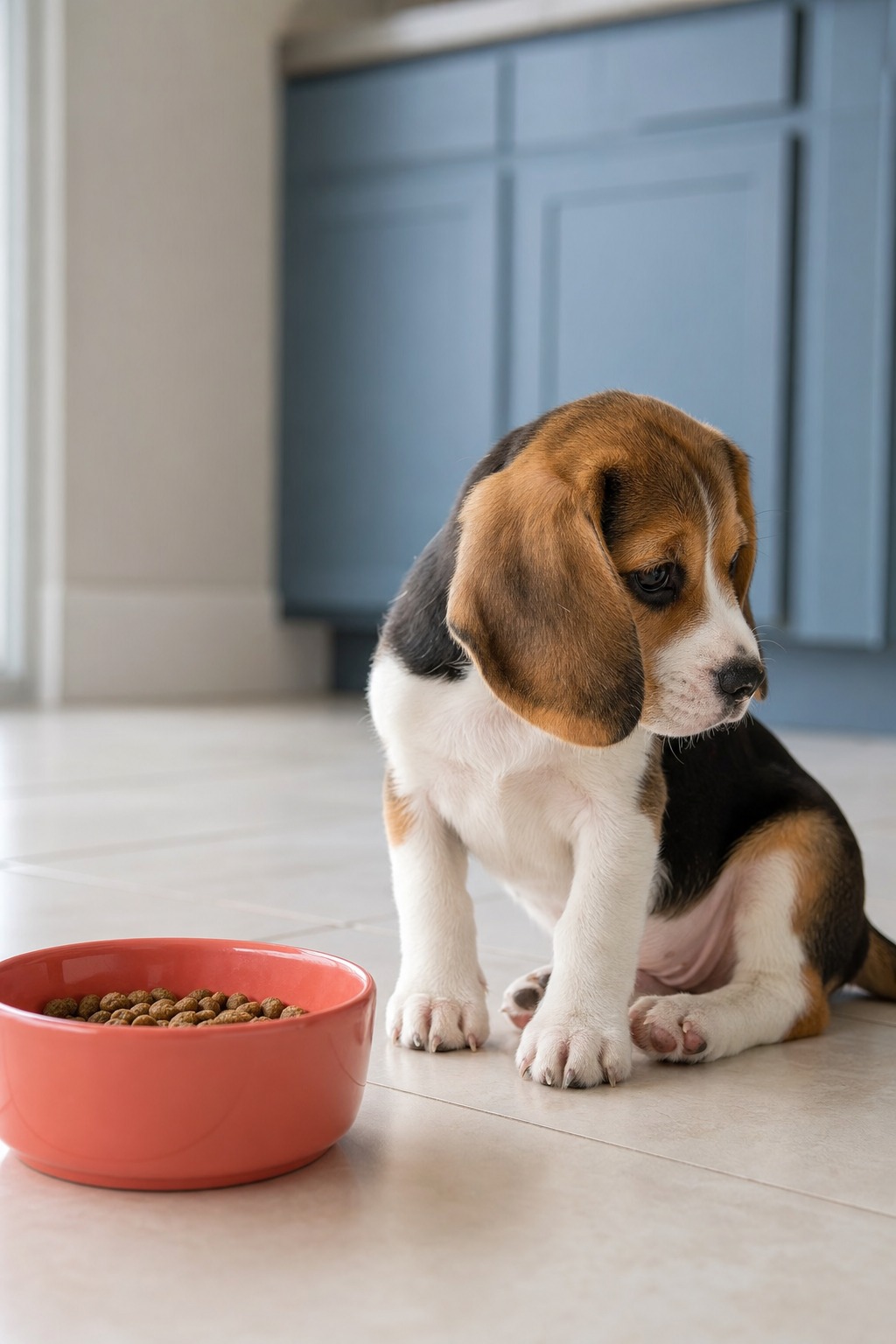
An adult dog that turns up its nose at dinner is usually fine to watch for a day. A puppy that does the same is a different situation entirely, and treating the two the same way is the mistake that lands new owners in an emergency clinic at midnight. Puppies are growing at a furious pace, their bodies burning through calories and nutrients to keep up, and that leaves them almost no reserve to coast on. When a puppy stops eating, it’s frequently the very first sign that something’s wrong, and the window to act is shorter than people expect.
So this isn’t a “give it time” situation. It’s a “figure out why, fast” one. Here’s what a skipped meal can mean and, more importantly, when to stop waiting.
Why “picky” is the wrong first assumption
Puppies love to eat, and for a good reason: they’re growing, and their metabolism is running hot to fuel it. That biological drive is exactly why genuine pickiness is rare in puppies and why a refusal to eat should raise your antennae rather than get a shrug. A puppy that won’t eat is telling you something, and the something is more often medical than fussy.
That framing matters because it changes what you do. Instead of trying to tempt a “picky” eater, you start by taking the loss of appetite seriously as a symptom.
The causes, from routine to serious
There’s a long catalog of explanations for a puppy going off its food, and they span from minor to genuine emergencies.
Illness. This is the big category, and only a vet can pin down which one. Common culprits include gastritis and gastroenteritis (an inflamed stomach or intestines), viral infections like parvovirus, distemper, and canine influenza, bacterial infections, and intestinal parasites, a whole roster of them: roundworms, hookworms, whipworms, tapeworms, giardia, and coccidia. Add foreign-body ingestion (a swallowed object lodged in the digestive tract), pancreatitis (usually from fatty food), and upper-respiratory infections like kennel cough or pneumonia. And in very young or toy-breed puppies, hypoglycemia, low blood sugar, can cause a loss of appetite and is itself an urgent problem.
Digestive issues. A food allergy or intolerance can make a puppy feel unwell enough to refuse food. These are genuinely uncommon in puppies, though not impossible.
Teething and dental pain. Puppies teethe around 12 to 16 weeks, and the discomfort can put them off eating. Your vet may suggest a soft diet to get through it. More seriously, a broken tooth or other mouth injury can also stop a puppy eating.
Spoiled or stale food. Puppies will reject food that’s gone stale, rancid, or off, and that’s a survival instinct doing its job. Keep dry food sealed off from moisture and finish the bag before its printed expiration date. Once it’s opened, dry food generally keeps about six weeks, and opened canned food lasts around five days in the fridge.
Medications and vaccines. Some medications affect appetite (your vet will flag that ahead of time), and it’s common for a puppy to feel a bit off, sleepy or eating less, for a day or two after vaccines. If it drags on beyond that, check in.
Stress. More typical in adult dogs, but puppies can lose their appetite to stress or anxiety too, especially after a recent move, a new home, or another shake-up in their environment.
Overfeeding. Very young puppies eat small, frequent meals, roughly four to six times a day, and those gradually merge into two or three bigger meals as they grow. Around six months, puppies are usually past their most intense growth spurt, so they may naturally be less hungry and need somewhat less food.
Heat. Like us, puppies can lose some appetite in hot weather. Keep them hydrated, run the AC or fans to hold the house cool, and keep activity light when the day is at its hottest.
The part to memorize: don’t wait
Here’s the single most important thing to take from all of this. With a puppy, a loss of appetite can turn into a serious problem far faster than it would in an adult dog. Skip the “wait and see.”
The general rule is to get veterinary attention once a puppy has gone 12 to 24 hours eating little or nothing. But that’s the outer limit, not a target to run down. Some situations mean calling sooner, well before that window closes, if your puppy shows any of the following alongside not eating:
- Vomiting or diarrhea. Young puppies dehydrate quickly when they’re losing fluids, and dehydration compounds fast.
- Lethargy or behavior changes. A puppy that seems unusually tired or has lost all interest and energy for play needs to be seen right away.
- Weight loss. Puppies should be gaining, not losing. Weight moving the wrong way is a serious sign.
Toy-breed and very young puppies deserve extra caution, because low blood sugar can tip them from “not eating” into a genuine crisis in a matter of hours, not days.
With puppies I tell owners to throw out the adult-dog playbook entirely. A grown dog has reserves to skip a meal. A tiny puppy doesn’t, and in a toy breed a few missed feedings can drop their blood sugar into dangerous territory before the day is out. If a puppy won’t eat and is also vomiting, sluggish, or just not itself, I don’t want them watching the clock at home. I want them calling us.
After the vet: getting them eating again
Once your puppy has been seen, diagnosed, and started on treatment, the goal shifts to getting them back to eating normally, which your vet will help you navigate based on the underlying cause. The order of operations is what matters: diagnosis first, appetite tricks second. Trying to coax a sick puppy to eat without knowing why it stopped just delays the care it actually needs.
The bottom line
A puppy off its food isn’t a fussy eater to be tempted. It’s a small, fast-growing animal with almost no margin, sending you an early warning. Take it seriously, watch for the red flags, and when in doubt, call, because with puppies, the cost of moving too early is a wasted phone call, and the cost of moving too late can be a great deal more.
References
- American Veterinary Medical Association. “Canine Parvovirus.” https://www.avma.org/resources-tools/pet-owners/petcare/canine-parvovirus
- American Animal Hospital Association. “2022 AAHA Canine Vaccination Guidelines.” https://www.aaha.org/resources/2022-aaha-canine-vaccination-guidelines/
- Merck Veterinary Manual. “Hypoglycemia in Dogs.” https://www.merckvetmanual.com/
- WSAVA Global Nutrition Committee. “Feeding Puppies.” https://wsava.org/global-guidelines/global-nutrition-guidelines/
Common questions
Why has my puppy suddenly stopped eating?
A puppy going off its food is often an early sign of illness, from an upset stomach or parasites to serious infections like parvovirus. It can also be teething pain, stress, spoiled food, or a reaction to a recent vaccine. Because the list is long and some causes are serious, a vet visit is usually warranted.
Is it normal for a puppy to be a picky eater?
Rarely. The drive to eat and fuel growth is strong in puppies, so genuine pickiness is uncommon. It's safer to assume a puppy that won't eat has a medical reason until a vet rules it out.
What warning signs mean I shouldn't wait at all?
Vomiting or diarrhea, lethargy or no interest in playing, and any weight loss. Puppies dehydrate and destabilize quickly, so any of these alongside not eating means call your vet right away, even before the 12-to-24-hour mark.
Not a substitute for your vet. Our guidance is educational. For urgent symptoms, contact a vet or emergency clinic right away. Editorial standards
Dr. Chen is a small-animal veterinarian who leads health and safety coverage at The Pet Times. She writes and reviews the bulk of our illness, condition, and safety content, translating clinical guidance into clear, practical advice owners can act on at home.
Meet our experts ↗Keep reading
 Health & WellnessMucus in Your Dog's Poop Is Not the Problem. Its Company Is.Dr. Amara Solis · 8 min
 Health & WellnessYour Dizzy Dog Won't Eat. That's the Real Emergency With Vestibular Disease.Dr. Lena Park · 8 min
 Health & WellnessYour Dog's Farts Are Trying to Tell You SomethingDr. Priya Nair · 6 min
 Health & WellnessDon't Fast a Dog With Diarrhea. The Advice Flipped, and Here's What to Feed Instead.Dr. Lena Park · 7 min
 Health & WellnessThe Joint Supplement in Every Pet Aisle May Do Nothing. The Science Is Brutal.Dr. Ravi Mehta · 6 min
 Health & WellnessThere's a Number for 'Drinking Too Much.' Most Dog Owners Don't Know It.Dr. Lena Park · 8 min