


Yes, You Can Potty Train a Senior Dog. Start Here.
An adult dog having accidents isn't a lost cause, but they're also not just a big puppy. A vet-backed plan that rules out medical causes first, then rebuilds the housetraining habit with patience.

Adopting an older dog is a quietly great thing to do. Senior dogs get passed over constantly at shelters simply for not being roly-poly puppies anymore, and the people who take them home almost universally become evangelists for how wonderful they are. But an adult dog also arrives with a whole life you weren’t part of, complete with habits, gaps, and sometimes a total absence of housetraining.
If your grown dog is having accidents, here’s the reassuring headline: you can fix it. The mistake people make is treating an adult dog like an oversized puppy. They’re not. Before you run the same playbook, you have to answer a different first question, and it’s a medical one.
Rule out the body before you blame the training
When an adult dog, especially one who was reliable, starts having accidents, the first move is not a stricter schedule. It’s a vet visit.
Any time a grown dog is having accidents, I want to rule out a medical cause before we call it a training problem. A urinary tract infection, other illnesses, and in older dogs, cognitive decline can all look exactly like a housetraining lapse. Get a full physical first, ideally within a couple of weeks of bringing a new dog home, so you have a baseline and aren’t training against a medical issue that training can’t touch.
There are three big reasons an adult dog struggles, and they shape your approach:
Cognitive changes. Depending on age, some dogs have cognitive difficulties that make learning harder. Very old dogs can develop canine cognitive dysfunction, essentially a form of doggy dementia, which limits their ability to absorb housetraining. A rescue may be able to flag this before adoption, and a vet exam helps you understand what you’re working with.
Ingrained habits. An older dog arrives with years of established routines. A dog who spent years without ever living indoors may have no concept of a house, a bed, a leash, or bathroom “times.” Those aren’t defiance; they’re simply things no one taught them. Habits are hard to break, but positive reinforcement, consistency, and patience break most of them.
Health issues. Accidents can be a symptom. This is exactly why the early vet visit matters, and why a sudden, out-of-nowhere change in a settled dog always warrants a checkup rather than a scolding.
The steps that rebuild the habit
Once your dog has a clean bill of health, the mechanics look a lot like puppy housetraining, adapted for an adult.
Start at the vet, then set up a home base. With health ruled out, give your dog a defined space for the times you can’t give them your full attention, an X-pen or crate works well. Accidents may still happen when you’re not watching, but confinement keeps the mess to one spot, and most dogs won’t soil a small area meant for sleeping. Build a good association with it first: feed meals, treats, and chews there, and after a walk or when your dog is tired, have them settle in the space while you stay nearby. The more comfortable and positive it feels, the better it works.
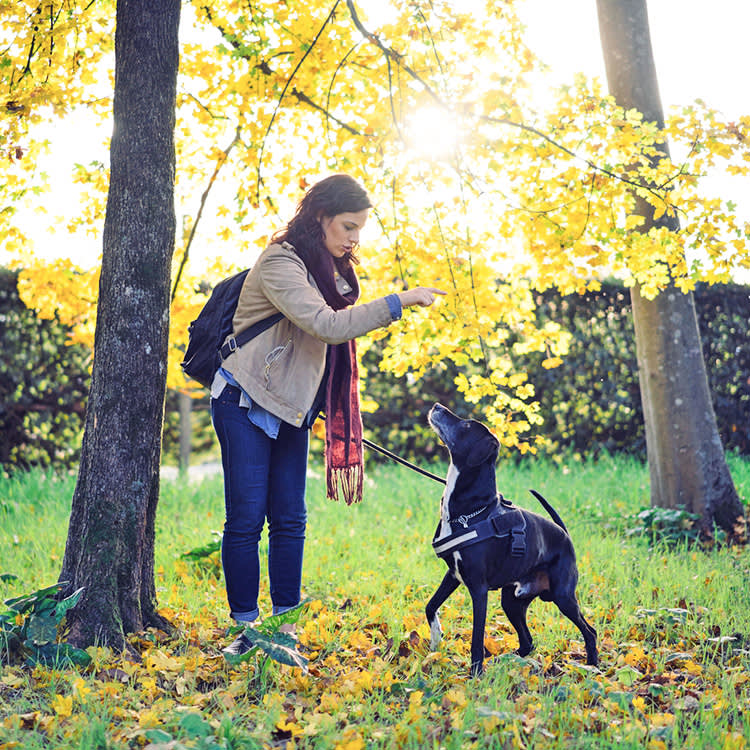
Designate one potty spot. Choose a single bathroom area and make sure everyone who walks the dog knows it. Keep your dog on a six-foot leash and let them circle you rather than roam. A tree nearby can help, especially for a senior who’s fond of marking. If you let your dog sniff every blade of grass and drag you around hunting for the perfect spot, you’ll create a dog who takes forever to go; a designated area teaches them to get the job done and move on.
Keep a consistent schedule and reward immediately. Head outside soon after your dog eats, plays, or wakes. When accidents come often, begin at every 45 minutes and widen the gaps as you learn their signals. The instant they finish, reward heavily with a treat that’s quick and easy to chew, nothing crunchy that drags out the moment. Reserving one special treat, a bit of low-sodium turkey, freeze-dried raw, or liver, just for potty breaks helps cement the connection between going outside and something wonderful.
How long it takes
There’s no magic number, and an adult dog’s past shapes the timeline as much as your consistency does. Plan on four to six months for your dog to really grasp going outside, and know it can take as long as a year to fully lock in. That’s normal, not failure.
Tips that make it stick
A few habits tip the odds in your favor:
- Always use the same door for potty trips. With a consistent exit, your dog may start parking themselves by that door when they need to go.
- Never scold accidents. Yelling only makes a dog afraid of you, so they learn to pee behind the couch or refuse to go in front of you, even outside on leash. That fear stalls housetraining. Clean it up calmly and carry on.
- Make the potty spot the gateway to the walk. Before a walk, have your dog go in the designated area first, then let the walk itself serve as the reward.
- Confine when you’re out. Crating a new dog when you’re away prevents a cascade of problems and eases stress, since most dogs hold it in a small sleeping space. Take them out to their spot the moment you get home, before any free time.
- Skip ammonia-based cleaners. Urine contains ammonia, so an ammonia cleaner smells, to your dog, like an invitation to go there again. Use an ammonia-free, pet-safe enzymatic cleaner on accidents instead.
The old line about old dogs and new tricks is just that, a line. With the body ruled out and a patient, consistent routine in place, a senior dog learns exactly where to go, and usually rewards you many times over for giving them the chance.
Common questions
Can you really potty train an older dog?
Yes. You can housetrain an adult or senior dog using the same core techniques that work for puppies: confinement, a consistent schedule, a designated spot, and generous rewards. It takes patience, and their history plays a role, but it absolutely works.
Why is my adult dog suddenly peeing in the house?
When a previously reliable dog starts having accidents, rule out a medical cause first with a vet visit. Urinary tract infections, other illnesses, and age-related cognitive decline can all be behind it. If your dog checks out healthy, it's likely a training gap, and a housetraining routine is the fix.
How long does it take to potty train an older dog?
There's no fixed timeline. Give it four to six months for the concept to take hold, and understand it can take as much as a year to fully cement, depending on your dog's past and how consistent you are.
Dr. Mehta is a board-certified veterinary nutritionist who evaluates pet food formulations, ingredient quality, and the science behind dietary trends. He writes and reviews all nutrition content at The Pet Times, including our food rankings and feeding guides.
Meet our experts ↗Keep reading
 TrainingStop Punishing Your Puppy. It's Backfiring.Dr. Amara Solis · 9 min
 Training"My Dog Only Listens When I Have a Treat." Here's the Fix You Skipped.Dr. Nina Kohl · 6 min
 TrainingYour Dog Isn't Stubborn. Your House Has Six Sets of Rules.Dr. Priya Nair · 7 min
 TrainingYour 'Dominant' Puppy Is Just a TeenagerDr. Nina Kohl · 5 min
 TrainingYour Dog Isn't Being Stubborn. You're Paying Them to PullDr. Mara Chen · 8 min
 Training'Back Up' Is the Most Useful Trick Your Dog Doesn't KnowDr. Nina Kohl · 6 min