


A Pink Poodle Fell Into an Icy River. The Dye Job Saved Her.
Molly slipped her collar, crossed a highway, and swam into the Passaic. Two boats, eight firefighters, and a thermal camera later, the thing that found her was the color.

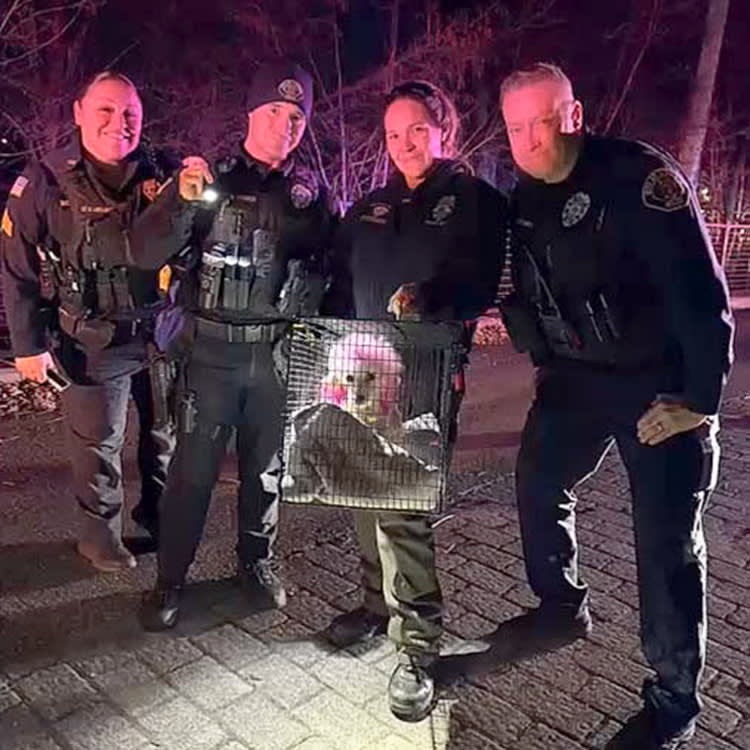
The detail everybody fixated on was the pink. The detail that should worry you is the collar.
What happened
Around 4:15 on a Monday afternoon, the Garfield Police Department in New Jersey got a call: a tiny Toy Poodle named Molly, bright pink from nose to tail, had slipped out of her collar on a walk, bolted across a highway, and was heading for the banks of the Passaic River.
She led them a long, ugly chase. One rescuer told ABC 7 that she ran them up and down the riverbank for a solid hour.
Then she jumped in.
A March river is a bad place for a five-pound dog, and the operation scaled accordingly: eight firefighters, two boats, a thermal camera. Molly, as it turned out, could swim. Officers tracked her from the bank as she struck out for a small island sitting between Garfield and Clifton, off Dundee Lake. A firefighter found her there, cold but unhurt, and put her back in her person’s arms.
Why the color mattered
Molly had been dyed pink, and the police and firefighters searching for her across land and water were looking for something that did not belong in a brown-grey March landscape. She stuck out in a way that an ordinary cream Poodle simply would not have.
One officer’s line to ABC 7 has been quoted everywhere since: “It was like chasing cotton candy.”
Her former owner, Sandra Caltradrone, who had raised Molly before giving her to a friend only days earlier, believed the color may have saved the dog’s life. She also said the dye was safe: a plant-based, vegan pet dye.
She is probably right that it helped. That is not the same as a recommendation.
The honest read on dyeing your dog
Let us not overlearn from one lucky outcome.
Dyeing a dog’s coat is, in every ordinary circumstance, purely cosmetic. It did a job here because of an extraordinary chain of events that will not repeat in your life. If your dog is not planning to lead a multi-agency river pursuit, the color is doing nothing for her.
If you do it anyway, the rules are narrow:
- Use a dye made specifically for dogs. Human hair dye is not an option; it is not formulated for an animal who will lick herself.
- Do not dye the face at home. Anywhere near the eyes, ears, or muzzle belongs to a professional groomer, if anyone.
- Do not force it. A dog who will not sit calmly for the process is telling you something. Stress is not a fair price for a photograph.
- Ask your vet before putting any new product on your dog, dye included.
That is the whole of it. It is allowed. It is not a safety measure.
The thing that actually failed
Here is the part of Molly’s story that is genuinely instructive, and it happened before the river, before the highway, before any of it.
She slipped out of her collar.
That is not a freak event. It is the single most common way a small dog gets loose, and it is a design problem, not a discipline problem. A flat collar sits on the widest part of a dog’s neck and relies on the head being wider than the neck to keep it on. On a Toy Poodle, a Greyhound, a Whippet, a puppy, or any dog who can flatten her ears and reverse hard, that assumption fails. The dog backs up, the collar slides forward over the skull, and she is gone.
The fixes are cheap and they are not optional if you have a small or narrow-headed dog:
- A well-fitted harness. A Y-front harness that clips at the chest and behind the shoulders cannot be reversed out of the way a flat collar can. This is the default for small dogs, and it should be.
- A martingale collar. It tightens to a set limit when the dog pulls back, so it will not slip over the head, and it will not choke. This is why they are standard for sighthounds.
- Check the fit properly. Two fingers under the collar, snugly, is the standard, and most collars in the world are looser than that.
- Clip to two points if she is a proven escape artist. A leash with a second clip to a harness gives you a backup when the primary fails.
- Microchip her, and update the phone number on the registration. A chip registered to a number you cancelled is a chip that does nothing.
Molly’s rescue took two boats and eight firefighters. A ten-dollar harness would have taken none.
“The dog who slips her collar is almost never a bad dog, and the owner is almost never careless,” says Dr. Lena Park. “The equipment was just wrong for her body. That is a five-minute fix, and it is the most consequential five minutes most small-dog owners never spend.”
What newer research adds
The other half of this story is the water, and it deserves a warning.
Molly got extremely lucky. Small dogs lose body heat far faster than large ones, because they carry more surface area relative to their mass, and a Toy Poodle in a March river is losing heat at a brutal rate. Hypothermia in a dog begins below roughly 99°F (37.2°C) of core body temperature, and the early signs are the ones you can actually see: violent shivering, then a strange stillness as the shivering stops, pale gums, lethargy, weakness, and slow shallow breathing. The shivering stopping is not improvement. It is the emergency.
If your dog goes into cold water, get her out, get her dry, wrap her in warm (not hot) towels, and get to a vet. Do not use a hairdryer or a hot water bottle directly on the skin; rapid rewarming of the extremities can push cold blood back to the core and make things worse.
And the last piece, which the whole story rests on: do not chase. A frightened loose dog who is being pursued runs further, faster, and further from home. Molly ran the riverbank for an hour with people behind her and then went into the water. The professional playbook for a loose, panicked dog is the opposite of instinct: stop, crouch, turn away, use food, get low, and let her come to you. If she will not, set up a food and water station at the last known spot and call a trapper.
The pink helped them see her. It did not stop her running.
References
- ABC 7 New York, “Pink poodle rescued from frigid Passaic River in NJ after daring swim in Garfield.” https://abc7ny.com/post/pink-poodle-rescued-frigid-passaic-river-nj-daring-swim-garfield/15976629/
- Garfield Police Department, Instagram post on the rescue. https://www.instagram.com/p/DGxm9m_RVzj/
- Merck Veterinary Manual, “Hypothermia in Animals.” https://www.merckvetmanual.com/emergency-medicine-and-critical-care/cold-related-injuries/hypothermia-in-animals
- American Veterinary Medical Association, “Cold Weather Animal Safety.” https://www.avma.org/resources-tools/pet-owners/petcare/cold-weather-animal-safety
- ASPCA, “Microchipping Your Pet.” https://www.aspca.org/pet-care/general-pet-care/microchipping-your-pet
Marcus Webb writes about the gear, gadgets, and everyday choices that make life with a pet easier. His coverage runs from product picks to training and the causes worth paying attention to, always with an eye on what actually earns a place in your home.
Meet our experts ↗Keep reading
 Health & WellnessYour Dog's Cracked Paws Are Trying to Tell You SomethingDr. Lena Park · 8 min
 Health & WellnessStop Shaving Your Dog for Summer. Here's What It Actually Does.Dr. Nina Kohl · 5 min
 Health & WellnessSkip the Tomato Juice. The Real Skunk Fix Is Chemistry.Dr. Ravi Mehta · 6 min
 Health & WellnessMud Won't Hurt Your Dog. What's Living In It Might.Dr. Priya Nair · 6 min
 Health & WellnessYes, You Can Dye Your Dog for Halloween. No, Not Like That.Sasha Ford · 7 min
 Health & WellnessThe Hardest Part of Dog Grooming Isn't the Clippers. It's Vetting the Groomer.Dr. Ravi Mehta · 8 min