


'Love at 30,000 Feet': The Pilot Who Adopted the Hurricane Kitten He Flew to Safety
A viral rescue-flight moment in October 2024 got the headlines: a Southwest captain fell for a kitten mid-air and took her home. Underneath the feel-good clip is a serious airlift operation that has moved thousands of shelter animals out of disaster zones.
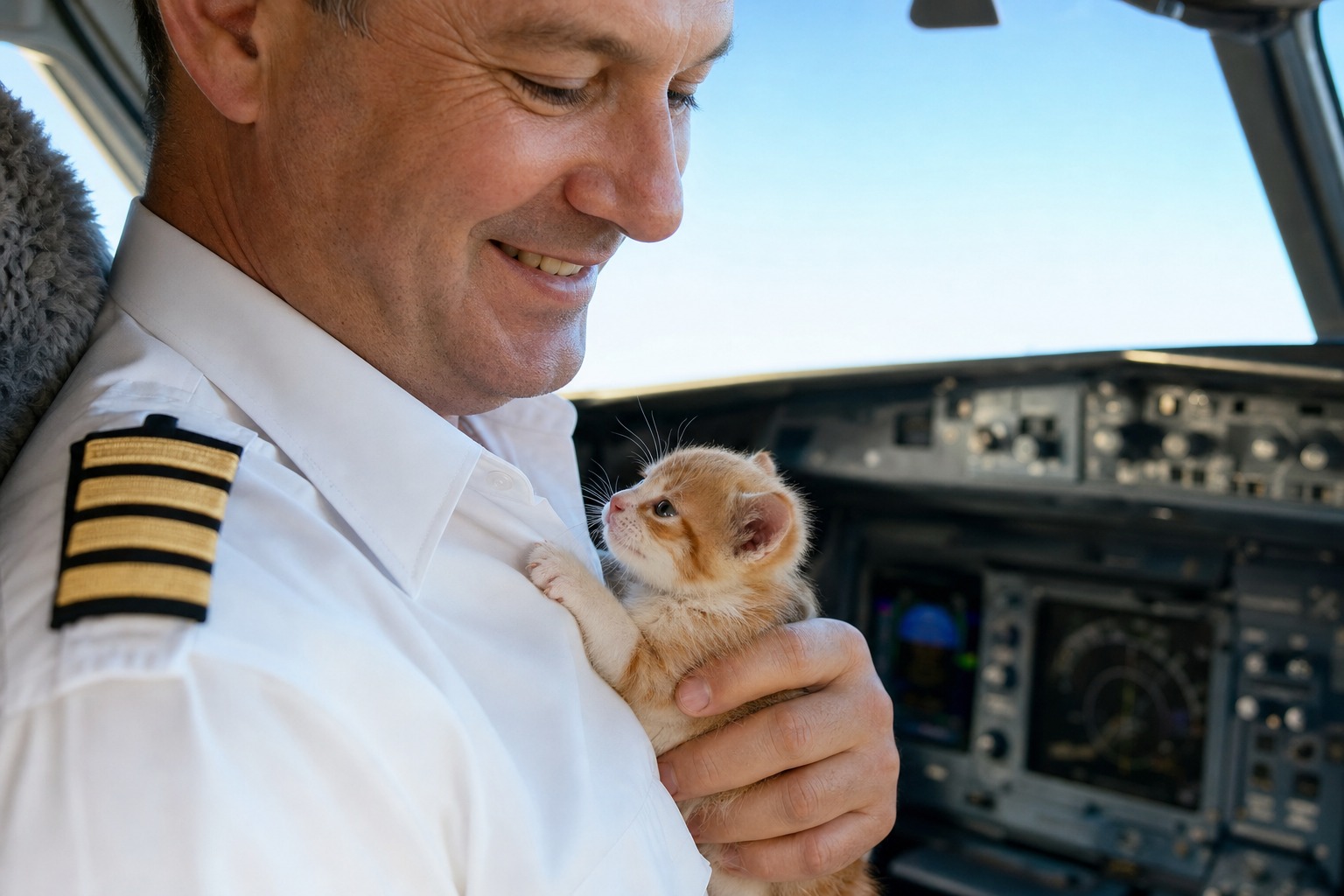
Every so often a rescue story is so purely charming it travels the internet in a day. This was one of them. In October 2024, as two hurricanes battered the Southeast, a cargo hold full of shelter animals flew north to safety, and by the time the plane landed, one kitten had already found her forever home. She never made it to an adoption listing. The pilot flying her adopted her himself.
The moment everyone shared
The kitten, a tiny gray tabby named Avery, was among 145 animals flown from a rescue campus in South Carolina up to Wisconsin, well clear of the storms. Earlier that month, those same animals had been relocated out of harm’s way from Tennessee and Florida as the weather turned.
Somewhere over the country, the flight’s captain, who introduced himself in a video only as “Captain Matt,” connected with Avery. In footage taken after the flight, he cradles the kitten against his chest and, later, lets her settle onto his lap in the cockpit. The head of Lucky Dog Animal Rescue described it to PEOPLE as love at 30,000 feet, and said no one on the flight had expected the captain to walk off having adopted a hurricane evacuee. Some things, she noted, are just meant to be.
It’s a genuinely lovely story. It’s also the visible tip of a much larger, much less glamorous machine.
The airlift underneath the headline
That flight wasn’t a one-off act of kindness. It was a coordinated disaster response run by Greater Good Charities in partnership with Southwest Airlines and Lucky Dog Animal Rescue. Alongside the animals, the same effort delivered more than 6,000 pounds of humanitarian aid to communities hit hardest by the storms. The leaders involved framed the animal airlift and the supply drop as two halves of one relief mission: get help to devastated areas, and clear crowded Southeastern shelters so local rescues could absorb the flood of displaced pets.
The scale is bigger than a single plane. The animal transport runs under Greater Good’s Good Flights program, which since 2021 has moved more than 16,000 shelter pets, including airlifts after Hurricane Milton and the Maui wildfires. The program deliberately targets the hardest cases: heartworm-positive dogs, homeless cats, large dogs that struggle to get adopted, and pets caught in disaster zones. During this same stretch of the 2024 hurricane season, another Southwest flight carried more than 150 additional shelter pets from Myrtle Beach to Milwaukee.
That’s the part the viral clip doesn’t show. For Avery to become a cockpit passenger, dozens of people had to evacuate her ahead of the storm, stage her at a rescue campus, load a donated aircraft, and fly her across the country. The cute ending rests on a lot of unglamorous logistics.
Where the other animals landed
Avery got the fairy-tale version, but the rest of that flight’s passengers had a plan too. The remaining animals were distributed among eight Wisconsin shelters and humane societies to await adoption, spreading the load so no single organization was overwhelmed. That distribution model is the quiet engine of disaster rescue: pull animals out of a saturated region, fly them somewhere with open kennels and eager adopters, and free up space back home for the pets still being pulled from floodwaters.
How to help the next flight
The reason a program like this can scramble a plane on short notice is that people fund it and volunteer for it before the storm hits. Greater Good Charities and Lucky Dog Animal Rescue both take donations that pay for exactly these airlifts. And transport itself runs on volunteers: domestic and international transport drivers and flight escorts are in constant demand, and it’s one of the more direct ways an ordinary person can put a rescue animal on the road to a new home.
Avery’s story is the kind that makes you smile and scroll on. The better tribute is remembering that the smile was manufactured by a whole lot of people doing hard, boring, life-saving work, and that they could use a hand before the next storm.
References
Marcus Webb writes about the gear, gadgets, and everyday choices that make life with a pet easier. His coverage runs from product picks to training and the causes worth paying attention to, always with an eye on what actually earns a place in your home.
Meet our experts ↗Keep reading
 LivingThe 'Sexy Cat Dad' Thing Isn't About Cats. It's About Consent.Leila Torres · 6 min
 LivingOne Ohio Shelter Turned Your Worst Ex Into Its Best FundraiserSasha Ford · 3 min
 LivingHe Fostered Six Kittens. Two Died in His Hands. He Kept Fostering.Dr. Amara Solis · 8 min
 LivingBefore You Foster a Cat, Solve the Two Things Everyone UnderestimatesLeila Torres · 6 min
 LivingWho Cares for Your Cat If You Die First? Inside the Homes Built to AnswerLeila Torres · 7 min
 Health & Wellness7 Ways to Help the Stray Cats on Your Street Survive WinterDr. Priya Nair · 7 min