


Petunias Are Safe for Dogs. The Things Growing Around Them Often Aren't
Good news first: petunias are non-toxic to dogs, so a taste-test won't poison your pup. The catch is that 'non-toxic plant' and 'safe flowerbed' are two different things, and the gap is where dogs actually get hurt.

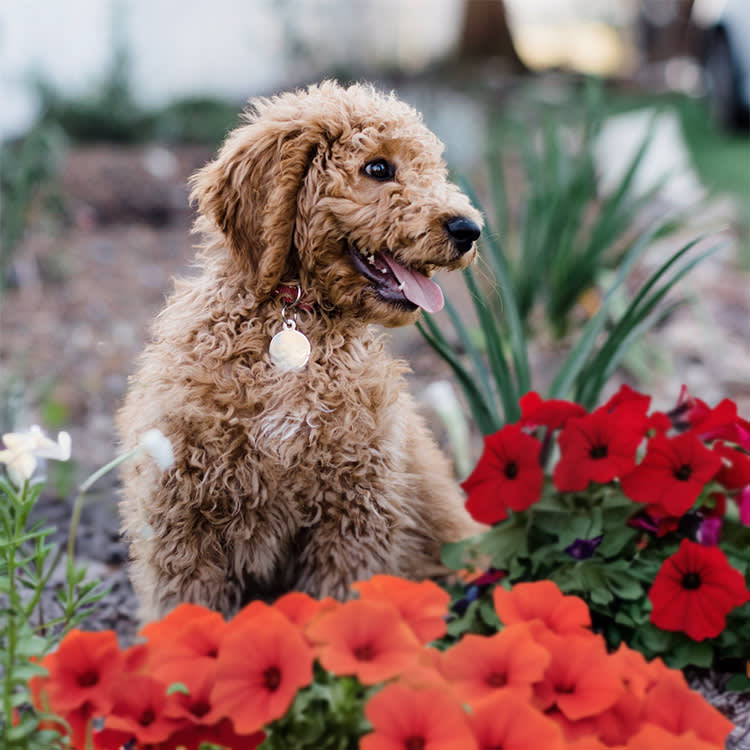
Most plant-and-pet articles exist to talk you down from a scare. This one starts with a green light: petunias are not toxic to dogs. If your pup just bit the head off a window-box bloom, you can exhale. There is no poison in a petunia, no special compound waiting to make your dog sick, and no reason to panic over a taste.
So if the headline answer is “they’re fine,” what is left to say? Quite a lot, and it is more useful than another paragraph of reassurance. Because “this flower is non-toxic” is a much narrower statement than “this flowerbed is safe for my dog,” and the difference between those two ideas is exactly where dogs actually get into trouble in the garden. The petunia is rarely the problem. What is on it, around it, and underneath it can be. This article spends its energy where the real risk lives.
Why petunias get the green light
Petunias are a favorite of expert and beginner gardeners alike because they are colorful, cheap, forgiving, and happy in pots, beds, or hanging baskets. The most common type is the garden petunia, Petunia x atkinsiana (you will also see it written as P. hybrida), and across the popular ornamental varieties there is no toxic principle that harms dogs. The ASPCA does not list petunias among plants poisonous to dogs.
That makes them a deliberately good choice for a dog household, not merely a tolerable one. Unlike a sago palm or a lily, a petunia does not punish a curious mouth. If your dog takes a lick or a bite, the worst case is nothing at all.
One honest caveat keeps this accurate rather than glib: “petunia” covers a wide and ever-expanding world of hybrids, and the safety data is best established for the common ornamental kinds. An unusual specialty cultivar is unlikely to be a problem, but the blanket reassurance is strongest for the petunias you will actually find at a garden center.
The catch that matters: dose and bulk
Non-toxic does not mean infinitely edible. This is the distinction that trips people up, so it is worth stating plainly.
Every plant, petunia included, is built largely from cellulose and lignin, fibrous material a dog’s gut cannot digest. Eat a little and it passes uneventfully. Eat a lot, and the sheer volume of indigestible fiber can cause vomiting, diarrhea, or gas, not because the plant is poisonous but because the stomach is mechanically overwhelmed. It is the same reason a dog that gorges on lawn grass throws up: the issue is quantity, not chemistry.
In the act of devouring a flowerbed, a dog also tends to swallow other things, soil, mulch, small stones, the occasional plastic plant tag, which carry their own irritation and, in the case of soil, possible parasites. So a dog genuinely going to town on your petunias still deserves a redirect, even though the flower itself is harmless.
“I tell owners to separate two questions that sound identical but aren’t,” says Dr. Priya Nair, a veterinarian who writes for Pet Times. “‘Is this plant poisonous’ and ‘is it fine for my dog to eat a pile of it’ have different answers. Petunias clear the first question easily. The second one is just about volume, and a dog cleaning out a planter can get a sour stomach from any plant on earth.”
Where the real danger hides: the bed, not the bloom
Here is the part the standard “are petunias toxic” article almost never covers, and it is the reason to read past the one-word answer. The hazards in a petunia bed are usually things humans added, not the petunia itself.
Systemic pesticides on the leaves. Petunias are prone to aphids, budworms, and fungal issues, so they are often treated. Systemic insecticides move into the plant tissue itself, and fungicides coat the foliage. A dog grazing treated petunias may ingest the chemical even though the flower is safe. Always know what, if anything, you have sprayed, and keep dogs off recently treated plants.
Snail and slug bait. This is the big one. Petunias and slugs go together, and metaldehyde-based slug bait is one of the more acutely dangerous things a dog can find in a garden, capable of causing tremors and seizures quickly. If you bait for slugs near your petunias, you have introduced a real toxin into an otherwise safe bed. Choose pet-safer iron-phosphate baits and store all of it locked away.
Cocoa-shell mulch and fertilizers. Cocoa mulch contains the same theobromine that makes chocolate toxic to dogs, and many bagged fertilizers contain blood meal or bone meal that dogs find delicious and will dig up and gorge on, sometimes causing serious pancreatitis or obstruction. The petunias are innocent; the dressing around them may not be.
Physical debris. Plastic plant markers, broken terracotta, and landscaping staples are all swallowable, and a determined digger finds them.
The takeaway is a small mental shift with a big payoff: when you ask whether your dog is safe around the petunias, do not stop at the flower. Look at what you have sprayed on it, what you have spread around it, and what is buried in the soil with it.
What to do if your dog overdoes it
If your dog ate a small amount of petunia, do nothing but feel reassured; this is a non-toxic plant. Still, confirm the identification, because look-alikes exist and being sure of what your dog ate lets you respond correctly.
If your dog ate a large amount, or ate from a bed that was recently treated or baited:
- Remove your dog from the area and clear what you can.
- Identify the chemical exposure first. If pesticide, slug bait, cocoa mulch, or fertilizer is in play, that, not the petunia, is the priority. Find the product label.
- Watch for the signs that move beyond simple bulk upset: repeated vomiting, blood in vomit or stool, drooling, tremors, weakness, difficulty breathing, or any sign of real pain. Tremors and breathing trouble in particular point toward a chemical exposure and need a vet immediately.
- Call your veterinarian or a pet poison hotline if a large amount was eaten, if chemicals were involved, or if your dog seems genuinely unwell. For mild bulk-related upset, supportive care, hydration and an easy diet, is usually all that is needed.
Remember too that the timing of a dog eating a plant and the timing of a dog feeling sick can simply coincide. A non-toxic petunia is unlikely to be the cause, so do not let “I saw him eat a flower” stop you from getting an unexplained illness properly checked.
Building a flowerbed that’s safe to share
The smartest move is to design the bed so the question rarely comes up. Petunias are a strong anchor; surround them with other dog-safe color and keep the genuinely toxic plants out entirely.
Dog-safe planting partners:
- Snapdragons (Antirrhinum majus) for vertical color, non-toxic and cool-season hardy.
- Zinnias (Zinnia elegans) for bold blooms that also draw pollinators.
- Marigolds / pot marigold (Calendula) for easy, dog-safe edging.
- Sunflowers (Helianthus) for height and cheer.
- Rosemary and basil for a fragrant, dog-safe herb border you can also cook with.
Keep these out of any bed a dog uses: sago palm (severe liver toxicity), lilies (a catastrophic risk especially to cats but best avoided around dogs too), foxglove (cardiac toxicity), azalea and rhododendron, and autumn crocus. And remember foxtail grasses, not a poison but a mechanical menace whose barbed seeds burrow into skin, ears, and paws.
For management, a low decorative border or raised planter keeps casual grazers out, petunias in spots you can fence or close off solve the indoor-plant version, and a practiced “leave it” plus enough enrichment handles the dog who eats out of boredom. For a dog that compulsively eats plants on walks, where you cannot control the landscaping, on-leash control and a basket muzzle are the tools that protect them from the toxic plants your safe yard doesn’t have.
The bottom line
Petunias are safe for dogs. A taste, a bite, even a determined sampling will not poison your pup, which earns them a permanent place on the short list of dog-friendly bedding flowers. The risk worth your attention is not the flower but its context: the pesticides on it, the slug bait and cocoa mulch and fertilizer around it, and the simple fact that any plant eaten by the bucketful can upset a stomach. Plant petunias freely, keep the chemicals and the truly toxic plants out of your dog’s reach, and you have a garden that is genuinely safe to share rather than merely non-toxic on paper.
References
- “Petunia.” ASPCA Animal Poison Control Center, Toxic and Non-Toxic Plants. https://www.aspca.org/pet-care/animal-poison-control/toxic-and-non-toxic-plants/petunia
- “Metaldehyde (Slug and Snail Bait) Poisoning.” Pet Poison Helpline. https://www.petpoisonhelpline.com/poison/metaldehyde/
- “Cocoa Mulch and Dogs.” ASPCA Animal Poison Control. https://www.aspca.org/pet-care/animal-poison-control
- “Petunia.” Encyclopaedia Britannica. https://www.britannica.com/plant/petunia
Common questions
Can a dog get sick from eating petunias?
Not from poisoning, but yes from sheer volume. Any plant, toxic or not, is mostly indigestible fiber, so a dog that eats a large quantity of petunias can get vomiting, diarrhea, or gas simply from the bulk, the same way too much grass upsets a stomach. A nibble is nothing; a full flowerbed binge can cause temporary mechanical upset.
What's actually dangerous in a petunia bed if the flower is safe?
The hazards are usually around the plant rather than in it: systemic insecticides and fungicides on the foliage, snail and slug bait nearby (some of which is highly toxic to dogs), cocoa-shell mulch, fertilizer, swallowed soil that may carry parasites, and plastic plant markers or pot fragments. A safe flower in a treated or cluttered bed is not automatically a safe place for a dog to graze.
How do I stop my dog from eating my petunias?
For the plant's sake more than the dog's, use a low barrier or raised planter, keep petunias in spots you can fence or close off, and redirect a determined grazer with a 'leave it' cue and more enrichment. If your dog compulsively eats plants on walks, a basket muzzle and on-leash control protect them from the genuinely toxic plants they'll meet outside your safe yard.
What other flowers are safe to plant where my dog plays?
Alongside petunias, dog-safe color includes snapdragons, zinnias, marigolds (calendula), sunflowers, and asters, plus herbs like rosemary and basil. Pair these with avoiding the dangerous common ones, sago palm, lilies, foxglove, and azalea, and you can build a bed that's both beautiful and genuinely safe for a dog to share.
Not a substitute for your vet. Our guidance is educational. For urgent symptoms, contact a vet or emergency clinic right away. Editorial standards
Dr. Chen is a small-animal veterinarian who leads health and safety coverage at The Pet Times. She writes and reviews the bulk of our illness, condition, and safety content, translating clinical guidance into clear, practical advice owners can act on at home.
Meet our experts ↗Keep reading
 Health & WellnessLeaving Your Dog Out in the Cold Isn't Just Cruel. In These States, It's a Felony.Dr. Priya Nair · 5 min
 Health & WellnessTwo Ounces of Gorilla Glue Can Put Your Dog in SurgeryDr. Ravi Mehta · 5 min
 Health & WellnessThe Hardest Part of Dog Grooming Isn't the Clippers. It's Vetting the Groomer.Dr. Ravi Mehta · 8 min
 Health & WellnessThe Sweetener That Kills Dogs Often Isn't Labeled "Xylitol"Dr. Ravi Mehta · 8 min
 Health & WellnessA Dog Diaper Is a Last Resort, Not a Shortcut. Here's How to Use One Right.Dr. Priya Nair · 9 min
 Health & WellnessPothos Isn't a Strong Poison. It's a Mild One You've Hung at Snout HeightDr. Lena Park · 6 min