


When Your Kid Leaves for College, the Pet Falls Apart Too
The empty-nest ache is not just yours. Here is what separation anxiety actually looks like in cats and dogs when their favorite person moves out, and how to steady them before the goodbye.

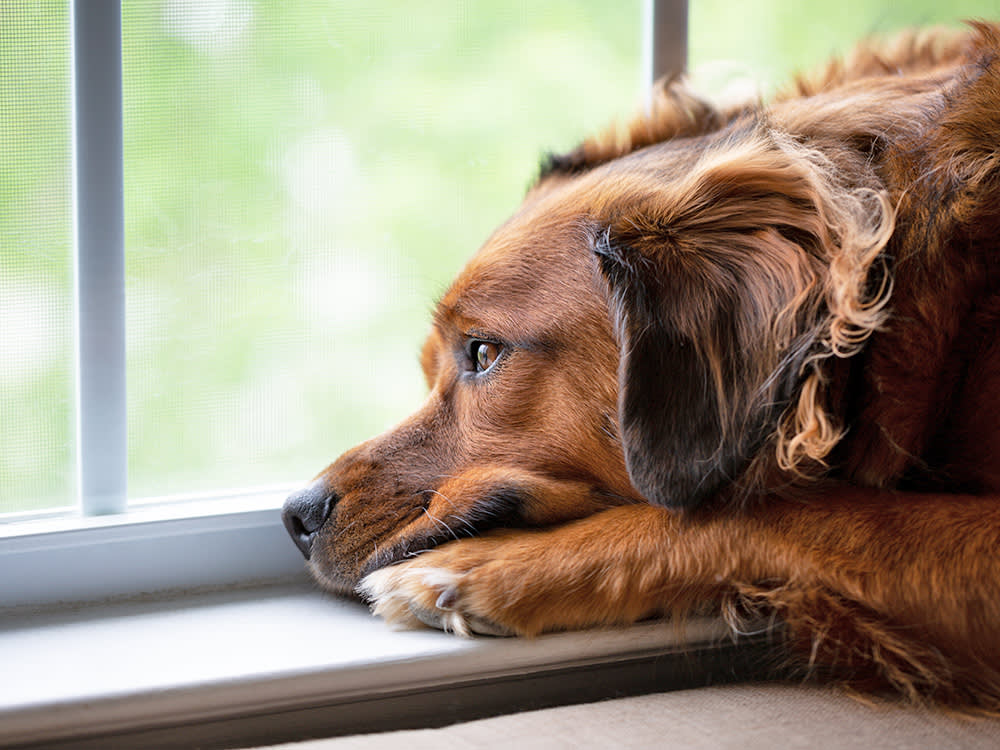
You spend the summer bracing yourself for the quiet house. What catches most families off guard is the other one left behind: the cat who stops coming out from under the bed, the dog who starts howling the moment the car pulls away. When a kid leaves for college, the pet who slept on their bed every night is grieving a disappearance it cannot understand, and nobody warned you to plan for it.
That is the real subject here. “Empty-nest syndrome” is a human phrase, but the mechanism underneath it is plain animal separation anxiety, and it does not only strike when someone moves across the country. A younger child heading back to school, a partner starting a job with long hours, any sharp change to who is home and when, can set it off. The good news is that this is one of the more predictable disruptions in a pet’s life, which means it is one of the most preventable. You usually know the goodbye is coming. That head start is your best tool.
What the distress actually looks like
Cats and dogs wear the same feeling differently, and knowing your species helps you catch it early.
In cats, separation anxiety tends to look like withdrawal turned inward. A cat may slink low to the floor, turn its back to you, hide, or grow uncharacteristically aggressive toward a pet sitter. Some cats overgroom to the point of chewing themselves or pulling out fur. House-soiling outside the litter box is common, and stressed cats are also more prone to bouts of the bladder inflammation called feline interstitial cystitis, where the urge to pee is constant even though there is no infection. That last one is a medical problem, not a behavior one, so it is worth a vet’s eyes.
Cats are wired to react this way. As an animal that is both predator and prey in the wild, the cat stays cautious by nature and clings to routine for a sense of safety. Cats born outdoors, or to a feral mother, often carry an extra baseline of wariness.
In dogs, the distress is louder and more physical. A dog left on their own may bark, howl, or whine without stopping, claw at doors or gnaw a doorframe, drool and pant, and pace in circles, and some will have indoor accidents that never happen when a person is home. That last detail, the accidents that only ever occur in an empty house, is what separates true separation anxiety from an ordinary house-training slip.
The mistake I see is families reading a pet’s distress as spite, like the dog is ‘punishing’ them for the change. It isn’t spite. It’s a broken routine the animal can’t make sense of. When you treat it as anxiety instead of misbehavior, everything you do next, from the crate to the schedule, suddenly points in the right direction.
How common this really is
This is not a rare edge case. One veteran cat behaviorist puts the share of cats affected at roughly one in five, with the rate climbing in older animals. In dogs the numbers are similar: a large owner survey of thousands of dogs found roughly 17 percent showed separation anxiety, and researchers noted it rarely travels alone, often overlapping with fearfulness and noise sensitivity. In other words, a good share of ordinary pets carry some version of this, and a major household change is exactly the kind of trigger that brings it to the surface.
Prepare before the goodbye, not after
Because you can usually see the departure coming, most of the work happens in the weeks before, not the scramble after.
Keep the routine boringly consistent. Cats in particular loathe change; feral colonies run on tight daily schedules, so a predictable rhythm of meals and play quietly reassures your pet that the world is still safe. Lock in mealtimes, play, and sleep patterns, and protect them through the transition.
Leave the departing person’s scent behind. If your college student’s room can stay a pet-accessible space that still smells like them, that is a comfort anchor. Do not strip and wash all the bedding the day they leave. Tucking away a worn, unwashed T-shirt to bring out later can help too. When a pet’s best friend vanishes, familiar smell is one of the few things that says “they were real, and this is still home.”
Build a second bond in advance. Have another family member or friend start a real relationship with the pet now, sharing feeding and play. For cats especially, it helps if the new person mimics the departing person’s cues, using the same phrases and the same sing-song inflections, particularly around meals. It will not fool the cat, but it smooths the handoff.
Make the “safe space” genuinely safe. If you plan to confine a dog to a room or crate while everyone is out, put in the training weeks ahead so that space reads as calm and comfortable rather than like a punishment. That conditioning can take a few weeks, which is another reason to start early.
Meet the body so you can settle the mind. Both cats and dogs cope far better when their physical and mental needs are genuinely met. Regular exercise and play take the edge off. Serving part of a dog’s dinner through a lick mat, a snuffle mat, or a food puzzle gives the natural urges to chew, sniff, and forage somewhere to go, and a tired, mentally satisfied animal has less bandwidth for panic. Many “behavior problems” are really just unmet needs wearing a costume.
When the student does come home for a break, coach them to come in calm and warm, talk sweetly, and hand out treats, and to bring home-worn clothes so they smell like the house again. A cat that hisses on the first visit is often reacting to unfamiliar dorm-and-city smells more than to the person. “It’s not you,” as one behaviorist puts it, “it’s those new smells you’re introducing.”
If any of the calming aids on the market come up, from silvervine and other soothers to prescription options, run them past your vet first rather than guessing. The right support depends on the animal, and some over-the-counter picks do more for the owner’s peace of mind than the pet’s.
What newer research adds
The old picture treated separation anxiety as a standalone quirk. Newer work reframes it as part of a bundle. A large study of pet dogs found that anxieties tend to cluster: dogs who are generally fearful score higher for both noise sensitivity and separation anxiety, and the overlap is strong enough that researchers suspect shared genetics under the hood.
The practical takeaway for a family facing a big change is useful. If your dog already startles at thunder or fireworks, treat the coming goodbye as a higher-risk moment, not a coin flip, and front-load the prep above. Anxiety rarely shows up in just one room of a pet’s life, so steadying the whole routine helps more than chasing a single symptom.
If the distress is severe, keeps getting worse, or tips into self-injury or relentless house-soiling, loop in your veterinarian or a qualified behavior professional. This is a common, treatable problem, and no pet, or person, should have to white-knuckle through it alone.
Separation anxiety and pet loss can be heavy topics. If a change at home is weighing on you as much as on your pet, that is worth taking seriously too, and talking it through with someone you trust can help.
References
- Salonen, Milla, et al. “Prevalence, Comorbidity, and Behavioral Variation in Canine Anxiety.” Scientific Reports, vol. 10, 2020, article 2962. https://www.nature.com/articles/s41598-020-59837-z
- Sargisson, Rebecca J. “Canine Separation Anxiety: Strategies for Treatment and Management.” Veterinary Medicine: Research and Reports, vol. 5, 2014, pp. 143–151. https://www.ncbi.nlm.nih.gov/pmc/articles/PMC6070017/
- American Society for the Prevention of Cruelty to Animals. “Separation Anxiety.” https://www.aspca.org/pet-care/dog-care/common-dog-behavior-issues/separation-anxiety
Common questions
Can pets really get 'empty nest syndrome'?
Not as a formal diagnosis, but the underlying thing is real. When a household member a pet is bonded to suddenly disappears from the daily routine, many cats and dogs show genuine separation anxiety. They do not understand where their person went, only that the pattern broke.
How common is separation anxiety in pets?
One cat behaviorist estimates roughly 20 percent of cats show separation anxiety, with higher rates in older cats. In dogs, a large owner survey put separation anxiety at about 17 percent, and it frequently overlaps with other anxieties like noise sensitivity.
Will my pet get over it on their own?
Often the acute distress eases over weeks as a new routine settles in, especially if you prepare the pet ahead of time and keep their days predictable. But severe or worsening signs, especially self-injury or house-soiling, are worth a vet visit rather than a wait-and-see.
Dr. Chen is a small-animal veterinarian who leads health and safety coverage at The Pet Times. She writes and reviews the bulk of our illness, condition, and safety content, translating clinical guidance into clear, practical advice owners can act on at home.
Meet our experts ↗Keep reading
 TrainingYour Pet Wears Their Stress on Their Face. Most Owners Miss It.Dr. Nina Kohl · 9 min
 TrainingHow to Say Sorry to Your Dog (Put the Tearful Hug Away)Dr. Amara Solis · 6 min
 TrainingYour Dog Isn't Being Difficult. They're Begging for a Schedule.Dr. Lena Park · 8 min
 TrainingThat Playful Puff of Air in Your Dog's Face? They Read It as a Threat.Dr. Nina Kohl · 6 min
 TrainingThat Hug You Love? Your Dog Is Probably Just Enduring It.Dr. Nina Kohl · 5 min
 TrainingYou Don't Win Over a Scared Dog. You Become Safe and Boring.Dr. Lena Park · 9 min