


There's No 911 for Pets. Here's What Actually Gets Your Dog to the ER.
When a pet collapses, most people don't know how they'll physically get the animal to help. Pet ambulances exist but are rare and patchy. Here's how emergency transport really works, and how to have a plan before you need one.

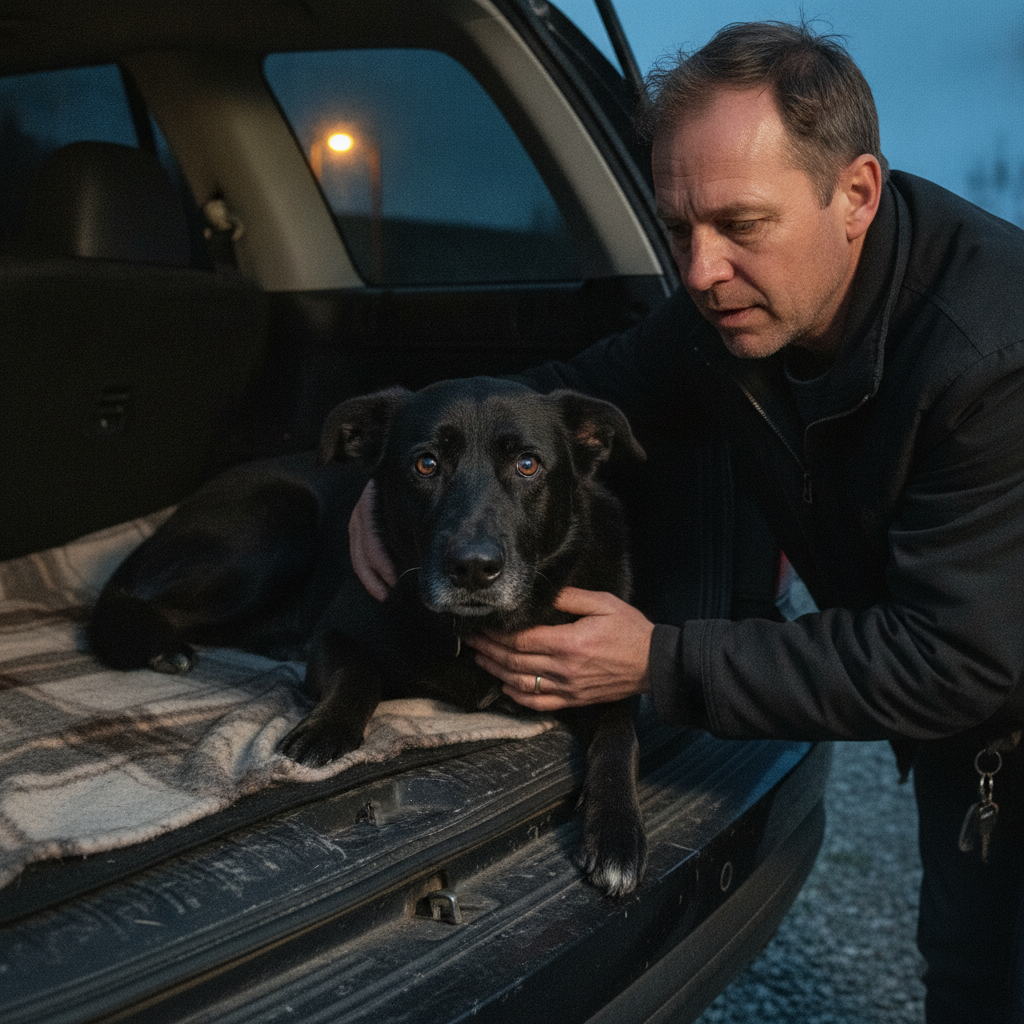
Picture the worst version of a normal evening. Your dog stops being able to stand, or your cat is struggling to breathe, and the nearest emergency vet is 30 minutes away. Now ask yourself the question almost nobody plans for until they’re living it: how are you actually going to get your animal there? For people, the answer is three numbers. For pets, there is no equivalent. No dispatcher, no siren, no crew coming to your door. Getting a sick or injured animal to care is, in the vast majority of cases, entirely on you.
That gap is worth understanding before an emergency, because the plan you make on a calm Tuesday is the plan that works when your hands are shaking.
Pet ambulances exist, but don’t count on one
There is a small, scrappy world of private pet-ambulance and emergency animal-transport services, usually one person with a specially outfitted van, oxygen, a gurney, and monitoring gear, who will pick up an animal and drive it to a hospital any time of day or night. When one operates in your area, it can be a genuine lifeline, especially if you can’t lift a large dog, don’t have a car, or are too rattled to drive safely.
But these services are the exception, not the infrastructure. They tend to be tiny operations that cover a limited radius, book up fast, and come and go as their founders’ finances allow. One well-known example, a Southern California vet tech who ran a one-man veterinary ambulance out of Orange County starting in 2021, built the service after watching pets go without reliable, affordable transport, sometimes charging on a sliding scale and even arranging free treatment for owners who couldn’t pay. It’s a moving model, and also a fragile one: the same small services that fill the gap can also fold. So a pet ambulance is a wonderful thing to find in your area, and a terrible thing to assume will be available at 2 a.m.
Your real transport plan, made now
Because you can’t rely on someone coming to you, the goal is to make you the reliable option. A few things done in advance turn a panic into a procedure.
Know exactly where the nearest 24-hour emergency vet is, and program its number into your phone today. Emergencies rarely happen during your regular vet’s office hours, and the middle of a crisis is a terrible time to be searching. Note a backup, too, because emergency hospitals do sometimes hit capacity and turn animals away.
Keep a hard-sided carrier or a way to safely move your pet accessible, not buried in a closet you have to dig through. For a cat or small dog, a sturdy carrier is both transport and containment; a frightened, hurting animal can bolt or bite. For a large dog who can’t walk, know your plan in advance, whether that’s a friend on call to help you lift, a blanket you can use as an improvised stretcher, or the layout of your car with the seats already down.
Call ahead while you’re on the way, if someone can. A good practice, and one professional transporters use, is to phone the emergency hospital before you arrive so they know an animal is coming and can tell you if they’re able to take you or whether you should reroute. It costs nothing and can save the minutes that matter.
The single most valuable thing you can do is decide, tonight, where you’d go and how you’d get there. In an emergency, people lose ten or fifteen minutes just figuring out logistics they could have settled in advance. That’s time an animal in trouble doesn’t have to spare.
Handle a hurt animal like it might bite, because it might
Even the gentlest pet can snap or scratch when it’s in pain or terrified, and that’s true of the animals who love you most. Move slowly, support the body evenly, and use a towel or blanket to lift and steady a small animal. Don’t wrap an animal’s face so tightly it can’t breathe, and don’t attempt anything heroic you’re not trained for; your job is safe, quick transport, not roadside treatment. If your pet is bleeding heavily, gentle pressure with a clean cloth while you drive is reasonable; leave the rest to the hospital.
Plan for the “you’re not there” version, too
Some emergencies happen while your pet is with a sitter, a boarding facility, or family. Make sure whoever cares for your animal in your absence knows which hospital to use, has permission and a way to authorize treatment, and can reach you. A caretaker standing in a lobby with a crashing pet and no authority to say “yes” is one of the most heartbreaking, and most preventable, situations in emergency medicine.
None of this makes an emergency less frightening. What it does is strip out the part you can control, the logistics, so that if the worst evening arrives, the only thing left to focus on is your animal. Build the plan while everyone’s healthy. It’s the kind of preparation you hope to never use and will be endlessly grateful for if you do.
Not a substitute for your vet. Our guidance is educational. For urgent symptoms, contact a vet or emergency clinic right away. Editorial standards
Dr. Solis is a board-certified veterinary dermatologist with over twelve years of clinical experience. She advises on skin conditions, allergies, and grooming practices that affect coat and skin health. All dermatology and allergy content at The Pet Times is reviewed by her team before publication.
Meet our experts ↗Keep reading
 Health & Wellness'You'll Just Know' Is the Cruelest Advice in Pet Care. Ask These 12 Questions Instead.Dr. Lena Park · 10 min
 Health & WellnessWhen a Hurricane Comes, the Deadly Mistake Is Having Nowhere to Put Your PetDr. Ravi Mehta · 6 min
 Health & WellnessThe Holiday Decorations Most Likely to Land Your Pet in the ERDr. Mara Chen · 8 min
 Health & WellnessThe Flea Product That Sends Cats to the ER: Advantage vs. AdvantixDr. Lena Park · 7 min
 Health & Wellness'Nothing More Can Be Done' Isn't True. There's a Third Option.Dr. Amara Solis · 7 min
 Health & WellnessWhen the Vet Says It's Serious: How to Make a Choice You Can Live WithDr. Lena Park · 7 min