


Reaching for Pedialyte? Your Dog Almost Always Needs Water Instead
Pedialyte looks like a smart fix for a dehydrated dog, but it's built for human bodies. Here's when plain water is the safer call, when to skip both and go to the vet, and the one situation where a vet might actually okay it.

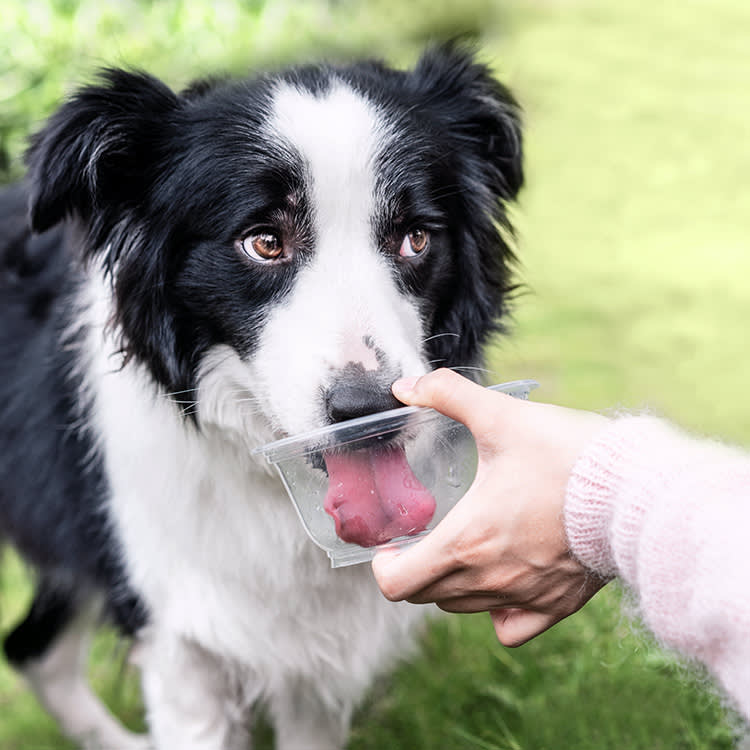
Your dog turns down her water bowl after a hot afternoon, or she’s had a rough night with an upset stomach, and the bottle of Pedialyte in your cupboard suddenly looks like the obvious answer. It rehydrated your kid after a stomach bug, so why not the dog?
Here’s the short version, because you probably want it fast: for the vast majority of dehydrated dogs, plain fresh water is the safer and more effective choice, and Pedialyte is a solution to a problem most dogs don’t have. There’s exactly one common exception, and it comes with a vet attached. The rest of this explains why, and, more usefully, how to tell whether your dog needs a bowl of water or a trip to the clinic, because getting that call right matters far more than what liquid you reach for.
Why “made for humans” is the whole problem
Pedialyte is an oral rehydration solution. It replaces fluid and the electrolytes, minerals like sodium, potassium, chloride, calcium, and magnesium, that the body loses through vomiting, diarrhea, or heavy sweating. Those minerals do real work: they keep the heart’s electrical rhythm steady, help nerves fire and muscles contract, move fluid between the blood and tissues, and hold the body’s pH in the narrow range enzymes need.
The catch is in the ratios. Pedialyte’s electrolyte balance is calibrated for a human body, and dogs simply need different amounts, most notably less sodium than a human formula delivers. Electrolytes are a Goldilocks system. Too little causes problems, but so does too much, and pushing a dog’s levels the wrong way can throw off nerve function, muscle contraction, and fluid balance rather than fixing anything. There’s also no solid research showing Pedialyte is safe or helpful for dogs in the first place, so you’d be dosing your dog with something formulated for a different species, based on a hunch about a mineral balance you can’t measure at home.
The instinct to reach for Pedialyte makes complete sense, because we’re pattern-matching from our own bodies. But a dog isn’t a small person. If I don’t know why a dog is dry, giving them a human electrolyte drink is a shot in the dark, and a bowl of clean water is almost always the smarter, safer first move.
A few other reasons vets tend to wave it off: undiluted, it can trigger diarrhea and leave your dog worse off than before; flavored versions may contain sucralose, an artificial sweetener dogs shouldn’t be eating; dogs with heart conditions or allergies can react badly; the added sugars can spike blood glucose in a diabetic dog; and the sodium load can nudge blood pressure up. None of that is worth it to replace what a clean water bowl does better.
First, make sure your dog is actually dehydrated
Before you treat anything, confirm there’s a problem. Dehydration has a handful of reliable tells:
- Skin that’s slow to return to place. Gently lift the skin between the shoulder blades and let go. In a well-hydrated dog it snaps back; in a dehydrated one it settles slowly.
- Tacky, dry, or sticky gums instead of slick, moist ones.
- Sunken-looking eyes.
- A dry nose.
- Less urine than usual, or dark yellow urine.
- Panting and noticeably low energy.
The common causes are what you’d expect: illness, hard exercise, hot weather, vomiting, diarrhea, plain not drinking enough, or excessive urination. Context matters here. A dog who ran hard at the park, looks a little dry, and perks right back up after a drink is almost certainly fine. A dog who is dehydrated because she can’t stop vomiting is a different situation entirely.
The decision that actually matters: water, or the vet
For a mildly dehydrated dog who’s otherwise acting normal, fresh water is the answer, full stop. Offer it in small, frequent amounts rather than letting her gulp a whole bowl, which can bring the water right back up. If she’s not interested in drinking, you can add moisture through canned food, and ice cubes are a nice trick because they slow the intake down naturally.
Skip the water-and-go-slow approach and head to the vet if any of these are true:
- Your dog is vomiting hard, or can’t keep down even a small amount of water.
- She vomits food every time she eats or drinks.
- The vomiting comes with diarrhea, which drains fluid roughly twice as fast.
- She’s an older dog with a chronic illness who seems dehydrated.
- The signs point to severe dehydration, not mild.
Dehydration can escalate, and the underlying cause, not the fluid loss itself, is often the real emergency. A vet can also run a simple blood test to measure your dog’s actual serum electrolyte levels, which is the only way to know whether an imbalance exists and which direction it runs. That’s precisely the information you’re missing when you pour a cup of Pedialyte at home.
The one time a vet might say yes
There is a real exception, and it’s worth knowing because it’s where the “Pedialyte for dogs” idea comes from. Some shelters and rescues that can’t keep sick puppies overnight, often puppies recovering from parvovirus, will send caretakers home with instructions to offer small amounts of Pedialyte. The key detail: a vet has already examined those puppies and approved them for outpatient care. In that supervised situation, small sips, given slowly so the puppy doesn’t gulp too much at once and vomit, can help. Ice cubes do a similar job of trickling in fluid without overwhelming a queasy stomach.
That’s the pattern to notice. Pedialyte for a dog isn’t a home judgment call; it’s a tool a vet reaches for in a specific case, after examining the animal. On your own, without that exam, the honest answer to “should I give my dog Pedialyte?” is almost always no.
What newer research adds
The instinct to hydrate a working or athletic dog with electrolytes is getting a closer look, and the picture is nuanced. A study of detection dogs working in the heat found that hydration strategy affected the dogs’ fluid balance, but it also underscored that canine hydration needs are their own thing, not a scaled-down version of ours, which is exactly why human formulas are a poor stand-in. Separately, researchers testing the classic “skin tent” and capillary-refill checks in exercising dogs found these bedside signs are useful but imperfect predictors of true dehydration, so a dog can be more or less dehydrated than a quick pinch suggests.
The practical takeaway hasn’t changed, and if anything it’s firmer: for the everyday dehydrated dog at home, clean water offered in small amounts is the reliable move, and anything beyond that, including electrolytes, is a conversation for your vet who can actually measure what’s going on.
This article covers a health topic and is meant to inform, not to replace veterinary care. If your dog seems unwell or you’re unsure how serious their dehydration is, contact your veterinarian.
References
- Goucher, Taylor K., et al. “Evaluation of Skin Turgor and Capillary Refill Time as Predictors of Dehydration in Exercising Dogs.” American Journal of Veterinary Research, vol. 80, no. 2, 2019, pp. 123–128. https://doi.org/10.2460/ajvr.80.2.123
- Otto, Cynthia M., et al. “Evaluation of Three Hydration Strategies in Detection Dogs Working in a Hot Environment.” Frontiers in Veterinary Science, vol. 4, 2017, article 174. https://doi.org/10.3389/fvets.2017.00174
- Maharaj, Nandini. “Pedialyte (Electrolytes) for Dogs: Uses, Side Effects, and Alternatives.” American Kennel Club, 17 Apr. 2024. https://www.akc.org/expert-advice/health/pedialyte-electrolytes-for-dogs/
Common questions
How much water should a dog drink in a day?
A rough rule of thumb is about one ounce of water per pound of body weight per day. Puppies, very active dogs, dogs in hot weather, and dogs eating dry kibble all need more. Big, sudden changes in how much your dog drinks are worth a vet call.
What are the signs my dog is dehydrated?
Watch for skin that's slow to spring back when gently lifted, tacky or dry gums, sunken eyes, a dry nose, less urine or dark yellow urine, panting, and low energy. Severe signs, or dehydration with ongoing vomiting, mean it's time for the vet, not a home remedy.
What can I give a dog for dehydration at home?
For mild cases, offer small, frequent sips of fresh water, add moisture with canned food, or offer ice cubes to slow the drinking down. Avoid adding salt or salt-based solutions, which can worsen dehydration. If your dog can't keep water down or seems severely dehydrated, go to the vet.
Not a substitute for your vet. Our guidance is educational. For urgent symptoms, contact a vet or emergency clinic right away. Editorial standards
Dr. Park is a board-certified emergency and critical care specialist. She reviews our health and safety content for clinical accuracy and contributes guides on recognising urgent conditions. Her focus is helping owners act quickly and correctly when it matters most.
Meet our experts ↗Keep reading
 Health & WellnessWhat Bit My Dog? Read the Map Before You Reach for the CreamDr. Lena Park · 7 min
 Health & WellnessThe Dog-Killing Liver Fluke Just Crossed Into California. The Map Is the Real StoryDr. Ravi Mehta · 5 min
 Health & WellnessMud Won't Hurt Your Dog. What's Living In It Might.Dr. Priya Nair · 6 min
 Health & WellnessLeptospirosis Used to Be a Country-Dog Problem. Now It's Hunting City Dogs.Dr. Ravi Mehta · 8 min
 Health & WellnessWhat's Actually in Your Vet's Pain Toolbox (and Why It Isn't in Your Cabinet)Dr. Ravi Mehta · 10 min
 Health & WellnessOne Mosquito Can Put a Worm in Your Dog's Heart. Here's How to Stop It.Dr. Ravi Mehta · 8 min