


Hermès Gave This Dog Brand an Award. The Leather Is the Real Story.
Pagerie sells harnesses at Louis Vuitton prices out of Harrods and Neiman Marcus. Founder Mandy Madden's argument isn't about status. It's about tanning, hardware, and why vegan leather snaps.


The fastest way to dismiss Pagerie is to look at the price of a harness and stop there. The prices sit comfortably alongside Louis Vuitton’s, the brand is stocked at Harrods, Neiman Marcus, and Ssense, and in 2022 it won an Hermès Creative Award, less than two years after launching. All of that reads as a story about status.
It is not, or at least it is not only. The argument founder Mandy Madden makes for the brand is unexpectedly technical, and it is one that anyone who has had a leash hardware failure at a curb will recognize immediately.
The problem she was actually trying to solve
Madden built Pagerie because of her French Bulldog, Hector, and because of a gap she kept walking into. Working in fashion and beauty, she spent Fashion Weeks in New York and Paris surrounded by people dressed head to toe in designer clothing walking dogs in gear from the pet store. The two worlds simply did not meet. As she has put it, Prada does not pair with Petco.
The luxury houses that had entered the category, Gucci, Louis Vuitton, were doing something narrower than she wanted: a small number of pieces, heavily logoed. What she was after was a harness that functioned as an object in its own right, something durable enough to keep for a decade. Not finding it, she put her savings into building it, and Pagerie launched from Los Angeles as, in her framing, an ultra-luxury fashion house for pets.
The Hermès award came fast enough that she initially assumed it was a joke. It had been submitted, she has said, by her own team without telling her.
The case for the material, which is the case for the brand
This is where the interview stops being about fashion.
The leather is vegetable-tanned and REACH-certified. REACH is the European Union’s chemical regulation framework, and REACH-certified vegetable-tanned leather is the standard the most prestigious handbag makers in the world use. Pagerie sources its materials from Europe specifically because the regulatory floor there on sustainability and chemical use is higher than in the US. Vegetable tanning also means the leather is biodegradable, and it behaves the way good leather behaves: it absorbs oils from a dog’s skin and coat and molds to the animal’s body over time.
The vegan leather question has a technical answer, not an ideological one. Madden’s team looked at the alternatives and rejected them for a specific reason. The most durable vegan leathers on the market are PVC-based, which is neither biodegradable nor especially kind to skin. The plant-based options they examined, mushroom leather, apple-peel leather, were not strong enough for the job. And the job here is not a handbag. It is a leash that a 50-pound dog will pull against, hard, several times a day, for years. Tensile strength is not a nice-to-have in that application; it is the whole product.
The hardware is surgical-grade steel, which is the detail most people would never think to ask about and the one most likely to matter. It is fully recyclable and non-allergenic. Most pet hardware is solid brass, which degrades over time, or zinc, which can cause skin reactions. Madden is unusually focused on this because Hector is a French Bulldog, and Frenchies are famously allergy-prone. A dog with sensitive skin wearing a zinc buckle against their chest every day is a dog with a problem nobody diagnoses.
That is the actual pitch. Not the logo. The tannery, the steel, and the fact that a harness is a load-bearing piece of equipment that happens to be worn.
Hector
He is a French Bulldog, and Madden found him online: a photo of a small bulldog with a bow around his neck, pink ears, and a wet nose. Her husband was hesitant. She was not.
He is an extrovert who thrives on attention, rolls onto his back for belly rubs, and is protective enough to try to pull his people away from other dogs. He does not fly, because flat-faced breeds should not fly, but he loves a long drive and goes to Palm Springs often. He watches television, actually watches it, barking at things on the screen.
He has modeled for a holiday campaign, though he is not currently on the site.
The dogs before him
The dog-first origin story is not a marketing invention here; it goes back to childhood in Romania, where Madden fed stray dogs and built them shelters until her grandmother finally gave her a Pekingese of her own, Mickey. When the family moved to New Zealand, Mickey stayed with her grandmother. Her mother got her Lucky, a Jack Russell and Fox Terrier mix, who was a catastrophe and a best friend in roughly equal measure.
Then came Ringo, a Rottweiler adopted from the SPCA two days before he was due to be euthanized, previously abused and, by her account, an enormously sensitive dog with real emotional damage. With patience, he and Lucky became inseparable, sleeping curled together.
Her read on all of it is that dogs have shown up at every difficult transition in her life, including the move to Los Angeles, where Hector was the thing that made a friendless new city livable.
Should you buy it?
Here is the honest framework, because “is it worth it” is not a question about the brand. It is a question about your dog.
It makes sense if you keep gear for years rather than replacing it annually, your dog has skin sensitivities that make cheap hardware a genuine problem, and you are already spending real money on things you use every day. Vegetable-tanned leather ages instead of degrading, which is the actual argument for the price: cost per year, not cost.
It does not make sense if your dog is a puppy who is still growing, a chewer, or a swimmer. Leather and water are not friends, and a growing dog will outgrow the fit long before the leather has done anything interesting.
Check the fit obsessively either way. A harness’s job is to distribute force across the chest without loading the throat, and no material on earth fixes a badly fitted one. A $30 harness that fits is safer than a $400 harness that does not.
Pagerie’s motto is walk with quality, and Madden describes the brand as a way of living rather than a product line, with plans to expand into new markets she is not yet naming. Her dream collaborator is The Row, or Khaite.
The leather, though, is the thing to judge it on. Everything else is packaging.
References
- Pagerie — brand, product line, and materials
- Understanding REACH — European Commission (the EU chemical regulation behind REACH-certified leather)
- Vegetable Tanned Leather — Consorzio Vera Pelle Italiana Conciata al Vegetale (tanning method and biodegradability)
- Choosing and Fitting a Dog Harness — American Kennel Club
Sara Lim leads our Product Picks coverage, testing and comparing the things pets and their owners actually use. From everyday essentials to home-and-style finds, she focuses on honest, useful recommendations rather than hype.
Meet our experts ↗Keep reading
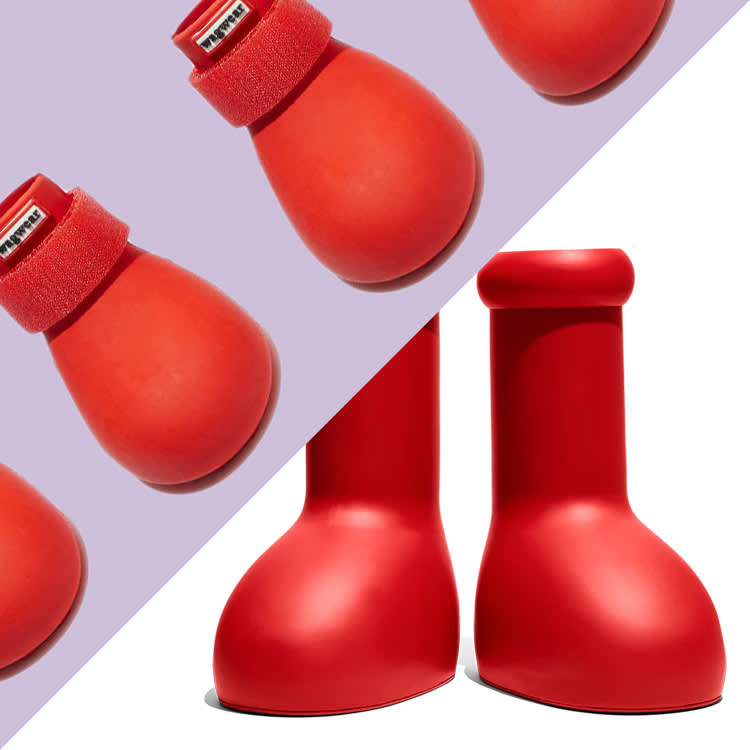 Product PicksThe $350 Viral Boot Sold Out. Your Dog's $49 Version Is Better.Sasha Ford · 4 min
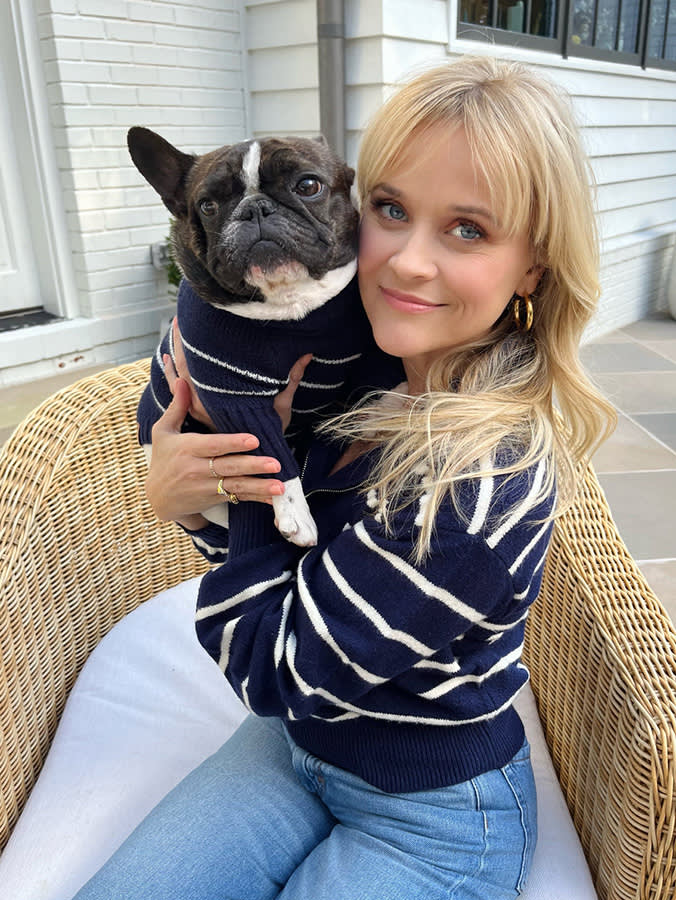 Product PicksThe Matching Dog-and-Owner Set That Doesn't Make You Rebuy Your Whole ClosetJordan Ellis · 3 min
 Product Picks7 Pieces of Dog Gear That Won't Wreck Your Living RoomSara Lim · 6 min
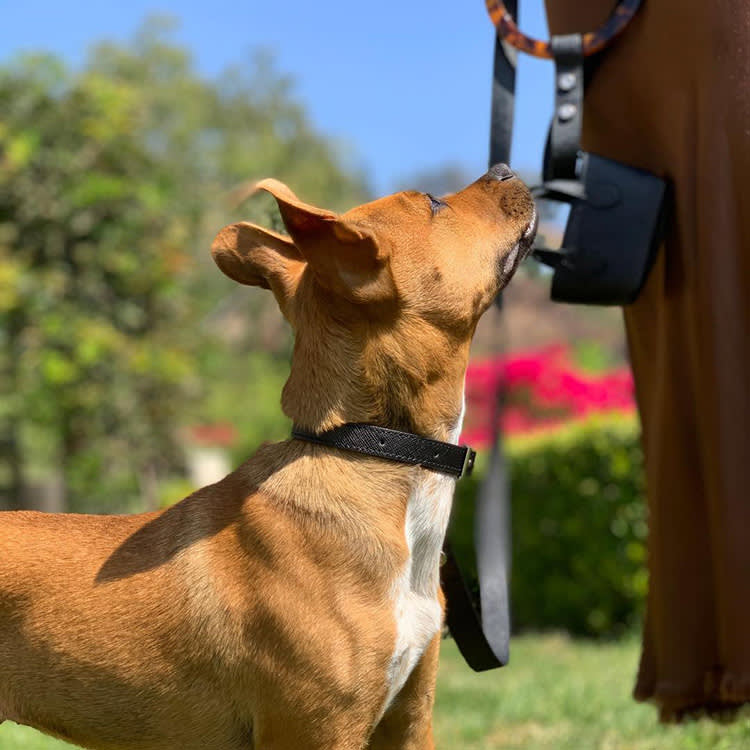 Product PicksThis Vegan Dog Leash Doubles as a BangleLeila Torres · 5 min
 Product PicksOnly One Piece of Dog Car Gear Actually Saves Their LifeMarcus Webb · 8 min
 Product PicksTheir First Dog Backpack Fell Apart in Two Weeks. So They Built One That Doesn't.Sasha Ford · 7 min