


Stop Calling Them 'Kill Shelters.' Then Show Up.
The label scares people away from the exact places that need them most. A look at why open-admission shelters are struggling, why the numbers can't be trusted, and why volunteers are the fix nobody funds.

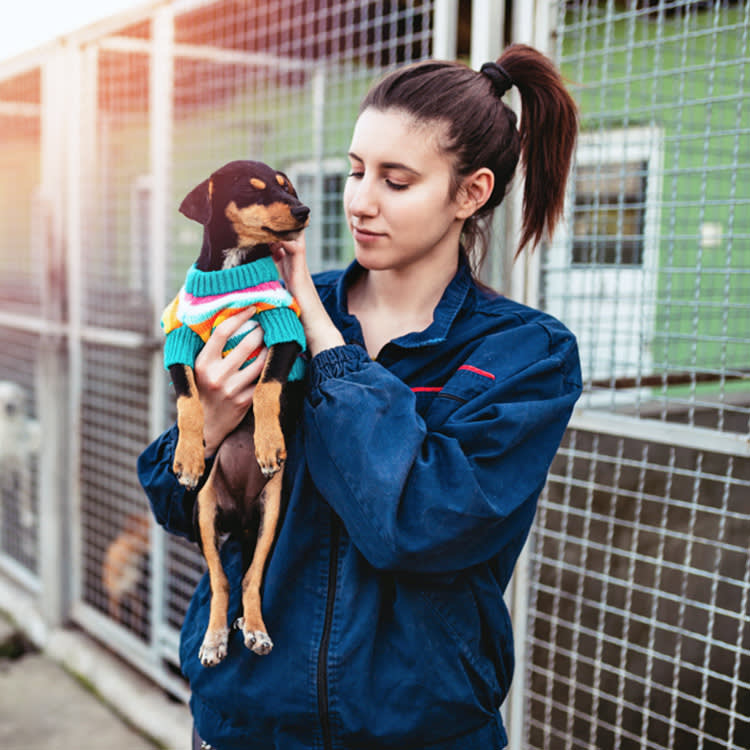
There’s a phrase that has done more harm than good in animal welfare: “kill shelter.” It’s meant as an indictment, but it lands as a warning label, steering compassionate people away from the very facilities that most need their time, their fosters, and their attention. The places that take in every animal, no matter how sick, old, or hard to place, are the ones we’ve taught the public to fear. That fear is part of why they’re drowning.
I understand the instinct, because I had it too. It’s easier to admire the no-kill rescue with the cheerful adoption photos than to sit with what happens at an open-admission shelter that can’t turn anyone away. But looking away doesn’t make the problem smaller. It just leaves the animals, and the people caring for them, more alone. So this is an argument for looking directly at the system, understanding why it’s broken, and then doing the one thing that actually helps.
What “open-admission” really means
An open-admission shelter accepts every animal that comes through its doors and, when there’s no other outcome, practices euthanasia. That’s the trade-off of a true safety net: it can’t cherry-pick the easy cases. A no-kill rescue can decline a dog that’s too sick or too much work. An open-admission shelter can’t. It takes the senior dog with a mouthful of rotten teeth, the litter of parvo puppies, the cat surrendered because a family got evicted.
Walk into one today and you’ll often find hallways lined with crates because there’s literally nowhere else to put the animals. Supplies run short. Staff and volunteers stretch past their limits. It can feel bleak, and pretending otherwise doesn’t help anyone. But bleak is not the same as beyond saving.
The numbers are worse, and less honest, than they look
Here’s an uncomfortable truth that anyone serious about shelter reform has to reckon with: the live-release statistics shelters publish are not always reliable. Kristen Hassen, a longtime shelter director who now consults with some of the largest shelters in the country through her firm Outcomes Consulting, has spent years documenting how those figures get massaged. A facility can advertise a 90-plus percent “save rate” while its true rate is far lower, simply by leaving whole categories out of the tally, say, any animal handed over because it was already ill. Without national data collection, almost anyone can call themselves no-kill.
That statistical fog hides a second injustice. The frontline workers who carry out euthanasia are often working-class people and people of color with few other job options, and then the same public that demanded better outcomes turns around and calls them killers. The people doing the hardest, most painful work in the system absorb the most blame for a failure that isn’t theirs.
Because the deeper failure is structural. Schools, libraries, parks, and community centers all have dedicated streams of public funding. Animal sheltering, by and large, does not. Shelters depend almost entirely on whatever their local government chooses to spend, which means they’re chronically expected to do far more than they’re funded to do. When the washing machine breaks, the shelter may have to ask the public to donate clean linens until it can afford a repair. That’s not mismanagement. That’s a sector running on empty.
Why volunteers and fosters are the actual solution
If the problem is too many animals and not enough capacity, the honest answer isn’t a clever slogan. It’s people. The single thing that reliably relieves an overcrowded shelter is people, lots of them: volunteers, fosters, and neighbors who walk in the door ready to pitch in.
Consider the everyday failure this prevents: a good, adoptable dog sits in a kennel for a year because no one has marketed it, walked it, or gotten it in front of an adopter in months. That’s not a lack of love for the dog; it’s a lack of hands. Volunteers are the hands. They photograph animals, get them out of kennels, foster the ones who fall apart in a shelter environment, and move dogs to rescues before a “euthanasia list” becomes a death sentence. Advocates like Hassen envision a future where foster care, not kennels, becomes the primary housing for most homeless pets, an outcome that’s only possible if enough people volunteer to make it real.
“The most useful thing a person can do isn’t to post outrage online, it’s to walk through the shelter’s front door and ask how to help,” says James Okafor. “Every hour you give is one an overwhelmed staff doesn’t have to find somewhere else.”
There’s a practice among some shelter volunteers that captures what this work can be at its best. When a dog can’t be saved, volunteers make sure it isn’t alone. The dog gets yard time, gets to hang out with people, gets a hamburger or whatever it wants, and is surrounded by humans at the end instead of dying frightened in a cold room. The rule for those volunteers is simple and hard: you don’t cry on the dog. You give it a joyful ending. That’s the standard we could hold for every animal in the system, if enough of us decided to show up.
What you can actually do
You don’t have to adopt to make a difference, though adopting is wonderful. Volunteer to walk, photograph, or socialize animals at your local open-admission shelter. Foster, even short-term, to open up a kennel and give a stressed animal a break. Donate supplies, especially the unglamorous stuff like laundry detergent, cleaning supplies, and bedding. Help transport animals to rescues and new homes. And drop the phrase “kill shelter” from your vocabulary, because the language keeps good people at a distance from the places that need them most. For animals, being seen is the first step to being saved.
What’s new since this was written
The national picture is slowly improving, even as individual shelters struggle. According to Shelter Animals Count, roughly 4.2 million dogs and cats were adopted in 2025, a small increase over the year before, while shelter euthanasia continued its long decline, from about 10 percent of animals in 2019 to around 8 percent in 2025, with roughly 597,000 animals euthanized that year. Community intakes even dipped slightly. But the same data shows the core problem this piece describes: too many animals staying too long, with extended lengths of stay leaving shelters packed and short on staff and veterinary care.
There are bright spots on the funding side, too. In November 2025, New York Governor Kathy Hochul announced $10 million through the state’s Companion Animal Capital Fund to help shelters upgrade their facilities. It’s the first state-funded program of its kind in the nation, and it has directed over $48 million to shelters since launching in 2017. Encouraging as that is, it’s the exception that proves the rule: most shelters, in most states, still have no comparable lifeline, which is exactly why the people who walk through the door matter so much.
References
- Shelter Animals Count. “2025 Annual Data Report.” shelteranimalscount.org
- ASPCA. “U.S. Animal Shelter Statistics.” aspca.org
- Office of Governor Kathy Hochul. “Governor Hochul Announces $10 Million Available to Support Animal Shelter Improvements.” November 2025. governor.ny.gov
- Human Animal Support Services. “Reimagining animal services.” humananimalsupportservices.org
Claire Sutton writes about life with pets, from the first days home to the small daily routines that make a household work. Her reporting spans people-and-pet relationships, training basics, and the practical side of bringing a new animal into the family.
Meet our experts ↗Keep reading
 LivingOne Shelter Took In 800 Animals While LA Burned. Here's How to Repay Them.Nina Vasquez · 5 min
 Living18 Pet Charities That Turn Your Giving Tuesday Dollar Into a Real RescueJordan Ellis · 8 min
 LivingThe 'Street Vet' Was Named CNN's Hero of the Year, Then Gave the Prize AwayMarcus Webb · 4 min
 LivingNew York Is Handing Shelters $10 Million. The Real Story Is the Deadline Next Month.Nina Vasquez · 4 min
 Living10 Free Ways to Help Animal Shelters, Ranked by What They Need MostNina Vasquez · 5 min
 LivingBroadway Barks Rehomed 2,000 Animals by Hijacking Actors' One Daily BreakNina Vasquez · 4 min