


The Myth of the Cactus Cat, and the Prickly Products Worth Buying
Legend says a thorn-covered desert cat once got drunk on cactus sap. The myth is fun, but most cactus-cat products are pure novelty. Here are the ones that actually earn a spot in your house, and the ones to skip.

Affiliate disclosure. This article contains affiliate links. We may earn a small commission if you buy through a link, at no extra cost to you. How we handle recommendations.
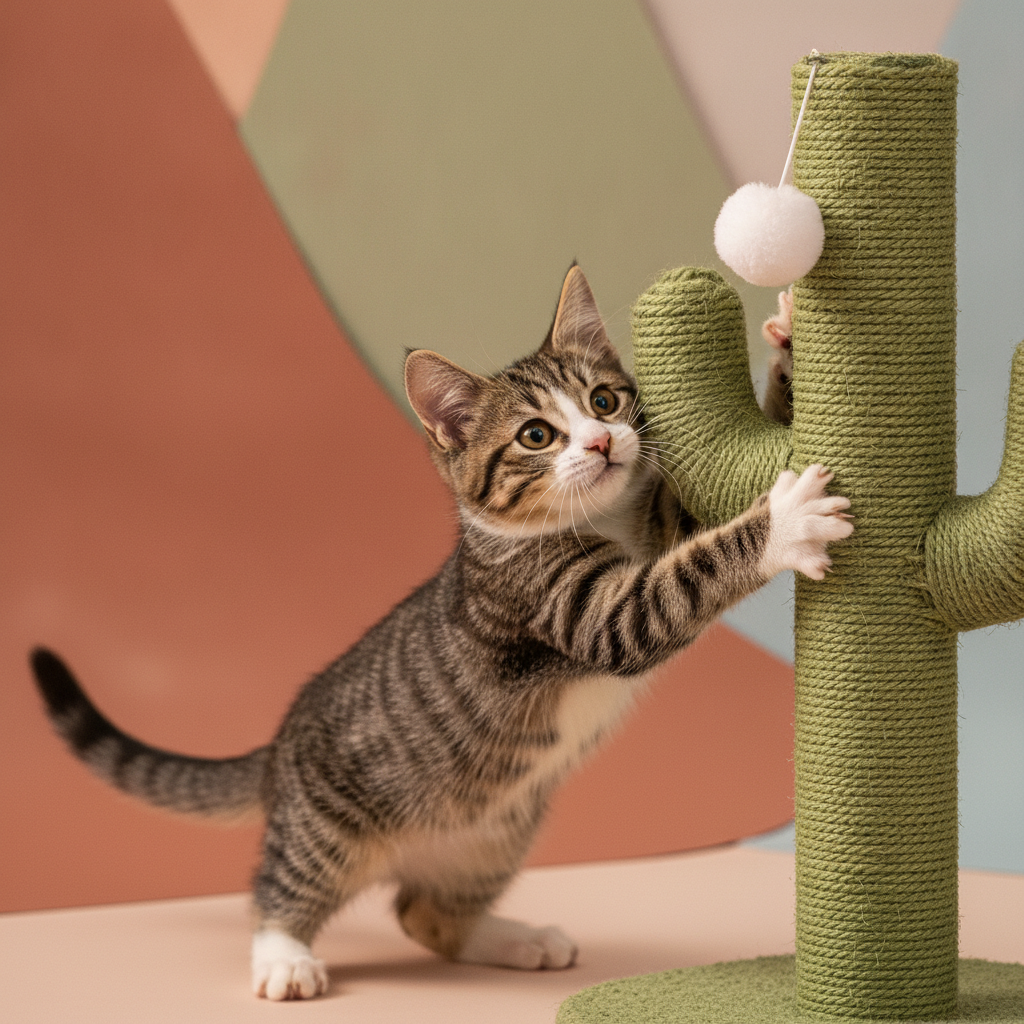
According to internet lore, a creature called the “cactus cat” once roamed the American Southwest. Picture a big cat covered in thorns instead of fur, prowling the desert and slashing open cacti to drink the fermented sap, then turning into a rowdy, yowling party animal for the rest of the night. It is a great story, and like most cryptids it is almost certainly nineteenth-century tall-tale folklore, popularized in a 1910 collection of lumberjack legends, with no actual animal behind it.
The cactus cat is gone, if it was ever here. What survived is stranger: a whole retail genre of cactus-shaped cat products. And here is the honest part most roundups skip. A lot of it is junk dressed up cute, the kind of thing you buy on impulse, your cat ignores, and it ends up in a closet. But a few of these prickly products are genuinely good, not despite the gimmick but because the cactus shape happens to solve a real cat problem. The trick is telling the two apart.
So this is not a list of eleven adorable things. It is a shorter, sorted list: the cactus-cat products that do actual work in a home, with a note on who each one is right for, and a clear line on what to leave on the shelf.
Our editors picked these products. They were in stock when we published, but availability and prices change. If you buy through our links, we may earn a commission.
The ones that earn their keep
A cactus scratching post that saves your couch
This is the cactus product that justifies the entire genre. Cats scratch to shed claw sheaths, stretch their spine, and mark territory, and they will use your sofa arm unless you give them something better placed and more appealing. A tall, sturdy, sisal-wrapped post does that, and the cactus silhouette is a bonus that makes it tolerable in a living room.
The detail that matters is height and stability, not the cuteness. A cat wants to scratch at a full vertical stretch, so a post that is too short or tips over gets abandoned fast. The Amazon Basics cactus scratching post runs about 25 inches with a weighted base and natural sisal, which clears the bar for most adult cats, and the PAWZ Road large cactus scratcher goes taller at 27 inches with three poles for a serious scratcher. Right for: anyone whose cat is working over the furniture. Wrong for: a senior cat who no longer stretches up and would do better with a flat pad (below).
A flat cactus scratch pad for the cat who won’t stand up
Not every cat scratches vertically. Plenty prefer to dig in horizontally, and a tall post does nothing for them. A flat or angled sisal pad in a cactus shape gives that cat a target at floor level. The Made4Pets cactus scratcher pairs a shorter post with a base wide enough to lounge on, which suits kittens and older cats who want ground-level scratching. Right for: horizontal scratchers, kittens, seniors. Wrong for: the cat already happily using a tall post, who does not need a second one.
A cactus fountain that gets a reluctant drinker to drink
Cats are descended from desert animals and carry a famously weak thirst drive, which is part of why feline kidney and urinary issues are so common. Many cats drink more from moving water than from a still bowl, and a fountain is one of the simplest ways to nudge a cat’s daily intake up. A cactus-shaped fountain does the same job as a plain one while looking less like an appliance on your counter.
The function is what counts here, so look for a model that is easy to disassemble and clean, because a fountain you dread scrubbing is a fountain that grows biofilm. Right for: cats prone to urinary trouble, or any cat you rarely see at the water bowl. Wrong for: a multi-cat home where a larger-capacity plain fountain would mean fewer refills. One caveat worth stating plainly: a fountain encourages drinking, it does not treat a medical problem, so a cat who suddenly starts drinking much more or much less needs a vet, not a gadget.
A grinning cactus plush for the cat who actually plays
A lightweight felted or plush cactus toy is the rare novelty item that survives contact with a real cat, as long as it is light enough to bat and bite without being a choking risk. Look for sturdy stitching and no small glued-on parts that can be chewed off. Right for: active young cats and kittens who chase and wrestle toys. Wrong for: the cat who has ignored every toy you have ever bought, who is telling you something honest.
The ones to skip (or at least not kid yourself about)
The rest of the cactus-cat aisle is for you, not your cat, and that is fine as long as you know it. Cactus-cat cross-stitch kits, vinyl sticker sheets, enamel pins, and wall art are charming and risk-free, because there is no spine and no cat involved, but they do nothing for the animal. A cactus-themed cat bed is a coin flip: cats choose beds by warmth, texture, and location far more than by shape, so a cute cactus bed in a drafty corner will lose every time to a plain one in a sunbeam. And anything marketed as a “cactus catnip toy” lives or dies on the catnip inside it, not the cactus outside it, so check that it actually contains potent catnip or silvervine and is refillable, because roughly a third of cats do not respond to catnip at all.
The throughline is simple. The cactus cat was a story people told for fun, and the cactus-cat products that last are the ones that quietly do a real job, scratching, hydration, play, with the desert costume as a pleasant extra. Buy those on purpose. Buy the rest knowing they are for your shelf, not your cat’s life, and you will never end up with a closet full of prickly regret.
References
- Cox, William T. Fearsome Creatures of the Lumberwoods, With a Few Desert and Mountain Beasts. Judd & Detweiler, 1910. https://www.gutenberg.org/ebooks/56739. Accessed June 2026.
- Cornell University College of Veterinary Medicine, Cornell Feline Health Center. “Feline Behavior Problems: Destructive Behavior.” https://www.vet.cornell.edu/departments-centers-and-institutes/cornell-feline-health-center/health-information/feline-health-topics/feline-behavior-problems-destructive-behavior. Accessed June 2026.
- Cornell Feline Health Center. “Feline Lower Urinary Tract Disease.” https://www.vet.cornell.edu/departments-centers-and-institutes/cornell-feline-health-center/health-information/feline-health-topics/feline-lower-urinary-tract-disease. Accessed June 2026.
- Bol, Sebastiaan, et al. “Responsiveness of Cats to Silver Vine, Tatarian Honeysuckle, Valerian, and Catnip.” BMC Veterinary Research, vol. 13, no. 70, 2017. https://bmcvetres.biomedcentral.com/articles/10.1186/s12917-017-0987-6. Accessed June 2026.
Sasha Ford is a certified cat behaviour consultant who has worked with shelters, catteries, and private clients across the country. They review all feline behaviour content at The Pet Times, with expertise in multi-cat households, indoor enrichment, and stress-related disorders.
Meet our experts ↗Keep reading
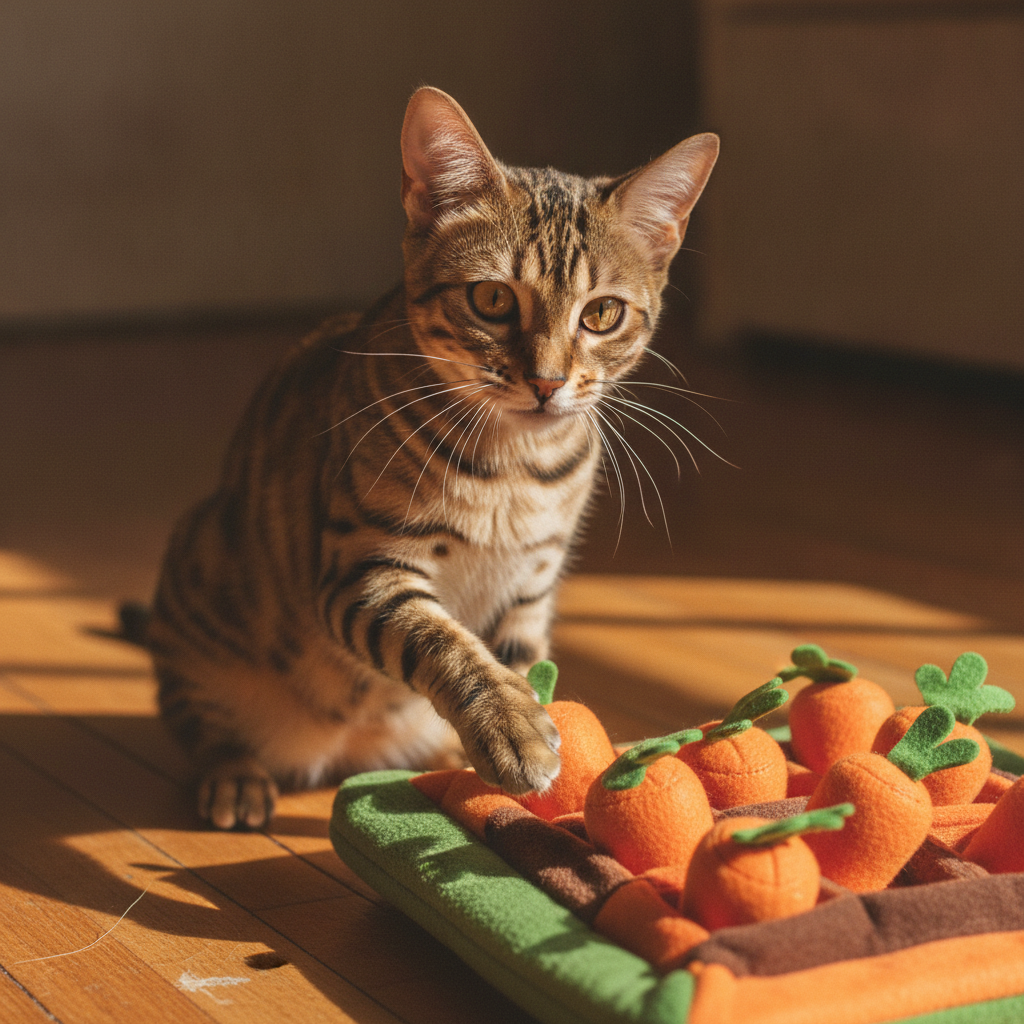 Product PicksThe Case for Making Your Food-Obsessed Cat Work for DinnerSara Lim · 4 min
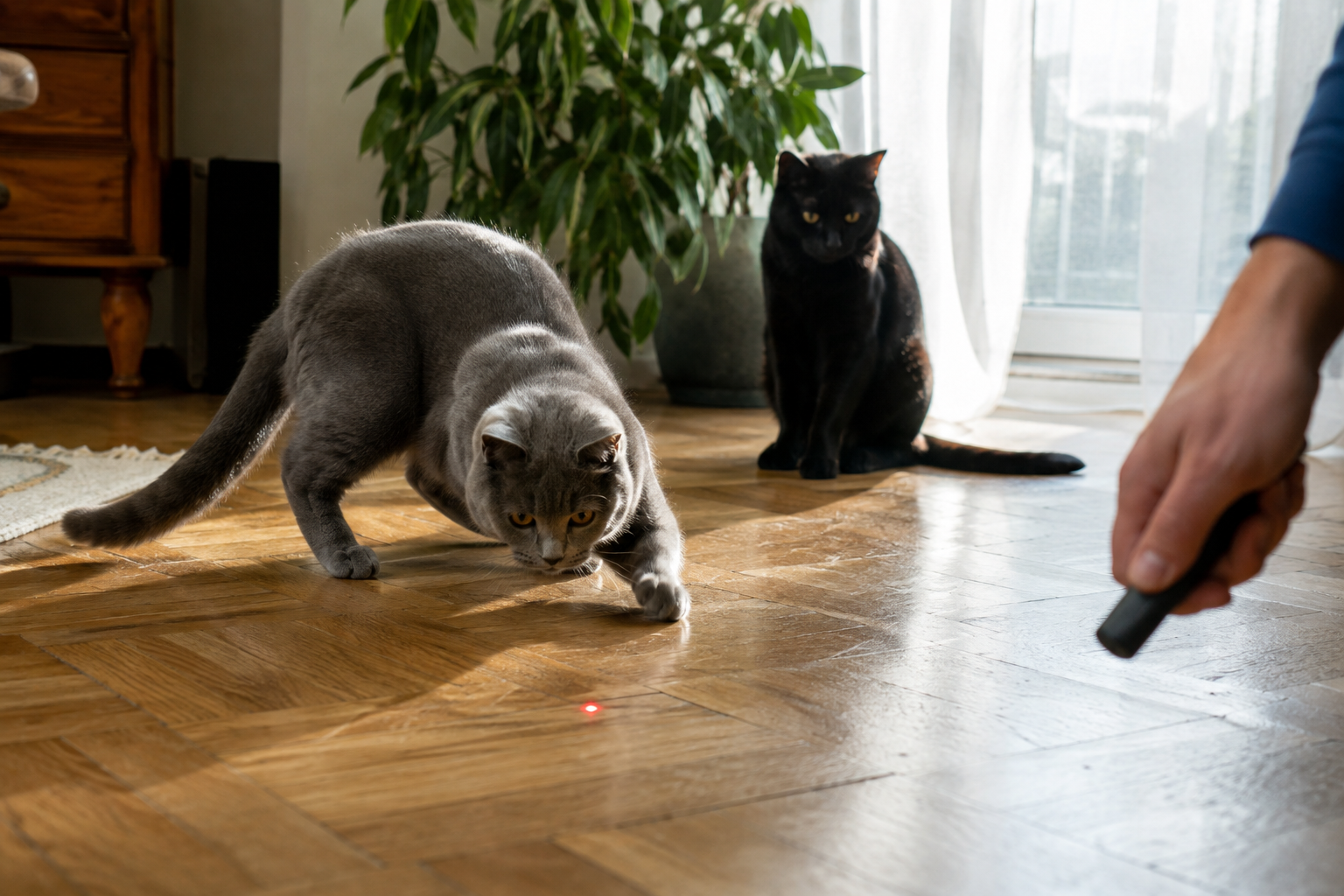 Product PicksA Laser Is a Hunt With No Kill. How to Use One Without Frustrating Your Cat (7 Picks)Nina Vasquez · 12 min
 Product PicksMost Cat Gifts Are Bought for the Human. These 6 Actually Get Used.Sasha Ford · 7 min
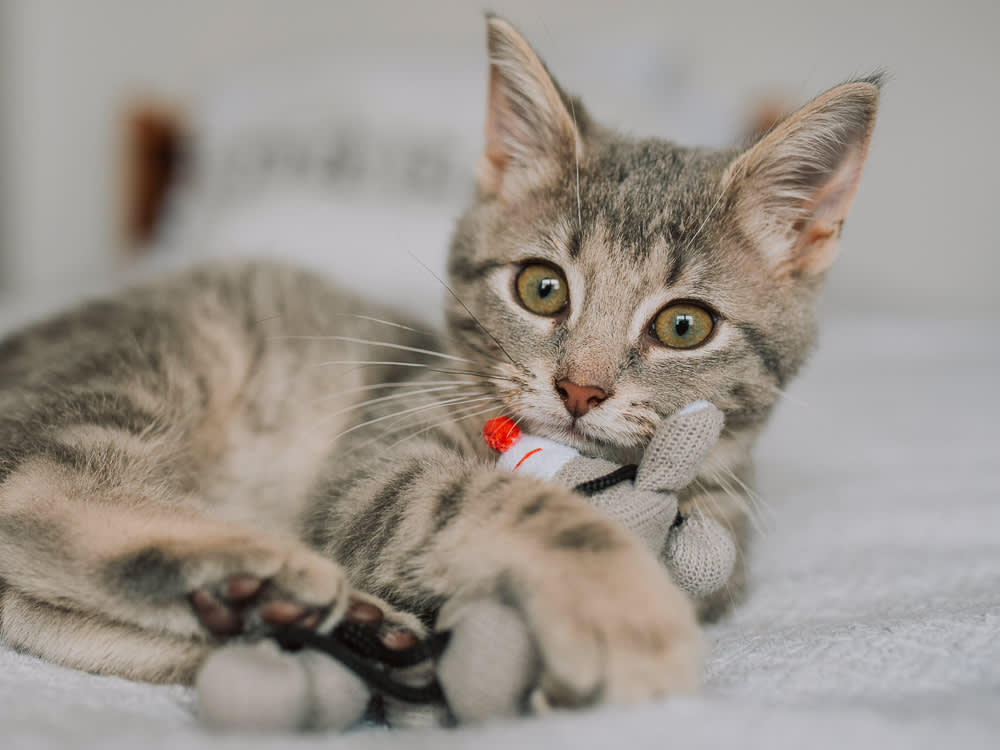 Product PicksStop Buying Random Catnip Toys. The 8 That Work, Matched to Your Cat's HighLeila Torres · 6 min
 Product PicksYour Cat Doesn't Want a Present. She Wants Territory.Sara Lim · 6 min
 TrainingYou've Been Buying Cat Toys in the Wrong ColorDr. Mara Chen · 7 min