


Your Cat Doesn't Want a Present. She Wants Territory.
Most cat gifts fail for the same reason: they're objects. The ones that get used are real estate. Five picks, ranked by how much territory they actually hand over, and one that's honestly for you.

Affiliate disclosure. This article contains affiliate links. We may earn a small commission if you buy through a link, at no extra cost to you. How we handle recommendations.

Watch what a cat does with a new thing. She does not play with it. She gets on top of it, then inside it, then behind it, and then she decides whether it belongs to her. Cats do not experience your apartment as a room. They experience it as a map with good positions and bad ones, and a good position is somewhere high, somewhere enclosed, or somewhere with a view of the door.
Which means the gifts that get used are not toys. They are property.
That is the sorting rule for everything below, and it also explains the pile of ignored feather wands in your closet. Ranked here by how much territory each one actually hands over, and yes, one of these is for you and not for her. I have put it last, and I have said so.
Rabbitgoo Cat Tree Tower
What it buys her: vertical territory, which is the single most valuable thing you can give an indoor cat and the hardest to fake.
Height is not a luxury for cats, it is a coping mechanism. A cat who can get above the traffic in a room does not need to avoid the room. This is why a tall tree in a busy space often calms a household more than a whole shelf of enrichment toys ever will, and why multi-cat homes with vertical routes fight less: two cats can occupy the same square footage without occupying the same level.
Buying notes the box will not tell you:
Right for: almost every indoor cat, and especially anxious ones, multi-cat homes, and cats who have started guarding doorways.
- Stability beats height. A tall tower that wobbles when a 12-pound cat lands on the top perch will be abandoned after the second wobble. Push on it in the room where it will live. If it rocks, wall-anchor it.
- Put it where the people are. A cat tree in the spare bedroom is furniture. A cat tree next to the window in the room you actually sit in is a throne.
- Sisal, not carpet, for the scratching posts, and at least one post tall enough for a full stretch. A post your cat has to hunch to use is a post she will skip in favor of your couch.
K&H Kitty Crinkle Sack Cat Bed
What it buys her: the second-best kind of territory, which is a box she cannot be seen in.
Hiding is not fear, exactly. A covered, enclosed space is where a cat goes to shut off the part of her brain that monitors the room. Vets and behaviorists treat “a safe place” as a baseline welfare need, not an amenity, and a soft enclosed sack does it for a fifth of the price of a designer cave bed.
The crinkle layer is the part that earns the money: it turns a nap spot into a sound-and-texture toy, so it works for the cat who ignores beds and only likes bags.
Buying notes:
Right for: bag-obsessed cats, shy cats, and anyone whose cat sleeps in the laundry basket.
- Do not wash the crinkle out of it. Cold, gentle, air dry. Hot cycles kill the sound and the appeal goes with it.
- Place it against a wall, not in the middle of the floor. A cave with its back exposed is not a cave.
- If she ignores it for a week, move it, don’t return it. Location failure looks exactly like product failure.
Tempcore Pet Cat Tunnel Tube
What it buys her: a corridor, which sounds trivial and is not.
Cats ambush. A tunnel gives a cat a place to stage from, and it converts a boring stretch of hallway into terrain. At twelve dollars it is the cheapest thing in this guide and it outperforms most toys three times its price, because it does not require you to be holding it.
Buying notes:
Right for: kittens, bored solo cats, and anyone whose cat only plays when nobody is watching.
- The tunnel is a location, not an activity. It comes alive when you drag a wand toy past the opening. On its own, it is a nap tube, which is also fine.
- Collapsible means it stores flat, so you can rotate it in and out of the room every few weeks and get the novelty back for free. Toy rotation is the most underrated trick in cat enrichment.
- Check the crinkle liner and any dangling toy on a string. Anything that can be chewed loose and swallowed comes off before it goes on the floor. This is a general rule with string toys, not a knock on this one.
BEIKOTT Cat Backpack
What it buys her: a portable safe place, if you are willing to do the work. If you are not, it buys you a photo.
Be honest about what this is. A bubble-window backpack does not make a cat an adventure cat. What it can do, and this is a real and underrated use, is turn the vet trip into something other than a wrestling match, because a cat who already sleeps in the backpack at home is not being stuffed into a strange box on the worst morning of her month.
Buying and using notes:
Right for: confident, socialized cats, and any cat who hates the vet carrier.
- Ventilation over aesthetics. Bubble windows look great and can trap heat. Never leave a cat in one in a warm car or in direct sun, and prioritize mesh panels for actual airflow.
- Introduce it as furniture first. Backpack open on the floor for two weeks, treats inside, zero pressure. Then closed for a minute. Then a lap around the apartment. If you skip this and go straight outside, you have taught her that the backpack means terror.
- Not every cat is a candidate. A cat who panics in a carrier is not going to enjoy a moving one, and that is not a training failure, it is information.
VincentDeep Unisex Kangaroo Pouch Hoodie
What it buys her: nothing. This one is for you, and I am not going to pretend otherwise.
A hoodie with a front pouch is a delightful object and a genuinely fun gift for the person who has a shoulder cat. The problem is the shoulder cat. Most cats are not one. A cat carried against a torso has no exit, and a cat with no exit is a cat doing arithmetic about how to leave.
If your cat already climbs into your hoodie unprompted, buy this immediately, it is twenty dollars and it will make you both happy. If your cat tolerates being held for about eight seconds, buy her the cat tree instead and buy yourself the hoodie anyway, empty. There is no shame in the gift that is for you, only in the gift that is for you and pretends otherwise.
Right for: confirmed lap cats and clingy kittens. Nobody else.
What newer research adds
The idea underneath this whole list is not a shopping opinion, it is the standard veterinary framework. The environmental needs guidelines published jointly by the American Association of Feline Practitioners and the International Society of Feline Medicine describe a cat’s core needs in terms of resources: a safe place to retreat to, multiple separated key resources like food, water, litter, and resting spots, an outlet for play and predatory behavior, and predictable human contact.
Read that list again and notice how little of it is a toy. A hiding spot, a high spot, and a place to ambush from cover three of those four. That is the whole reason the ninety-dollar tree beats the twelve-dollar wand, even though the wand is more fun to give.
One practical note: prices on all of these move constantly, and the numbers above are what they ran at when we picked them. Check before you buy, and if the cat tree is out of your range, buy height some other way. A cleared bookshelf top, anchored, with a folded blanket on it, is free and does most of the same job.
References
- AAFP and ISFM Feline Environmental Needs Guidelines — Journal of Feline Medicine and Surgery
- Cat Friendly Homes: environmental enrichment and carrier training resources — American Association of Feline Practitioners
Sara Lim leads our Product Picks coverage, testing and comparing the things pets and their owners actually use. From everyday essentials to home-and-style finds, she focuses on honest, useful recommendations rather than hype.
Meet our experts ↗Keep reading
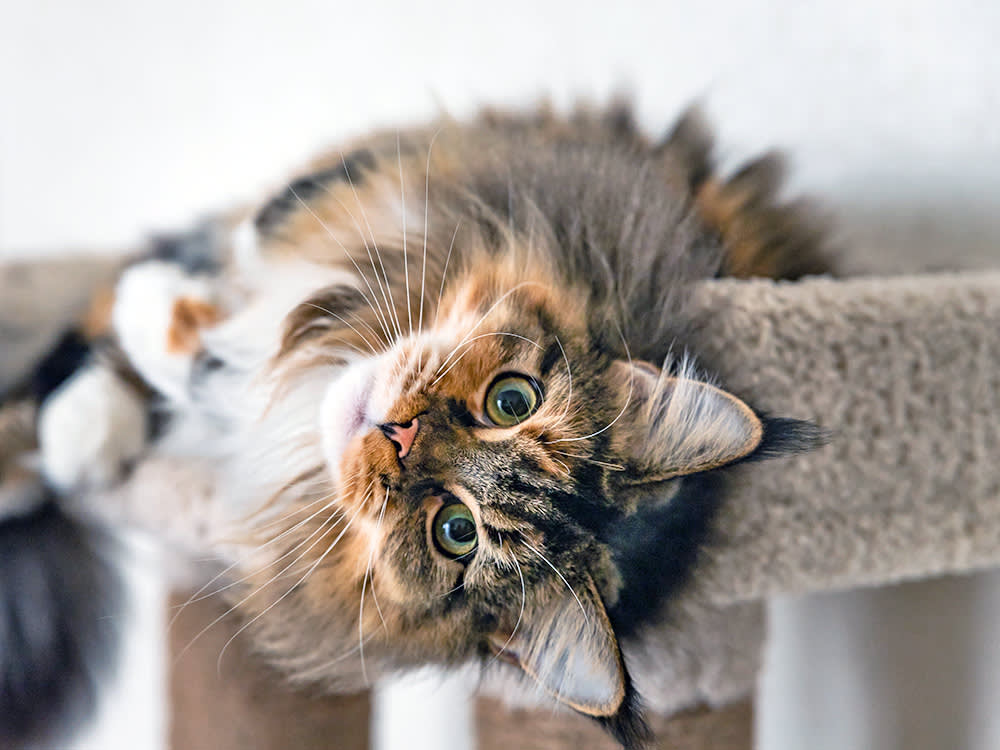 Product PicksThe 8 Best Cat Trees for Maine Coons, Sorted by Size and Your CeilingSasha Ford · 11 min
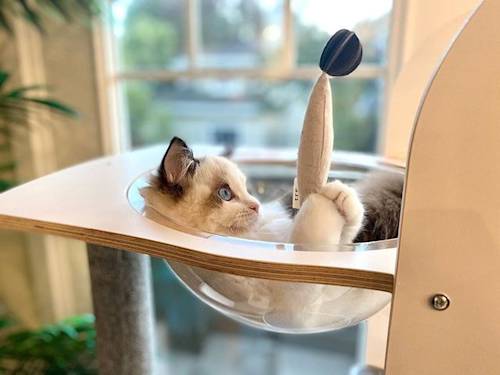 Product PicksThis Brand Tests Cat Furniture in Cat Cafés. One Week There Equals a Year in Your Home.Sasha Ford · 6 min
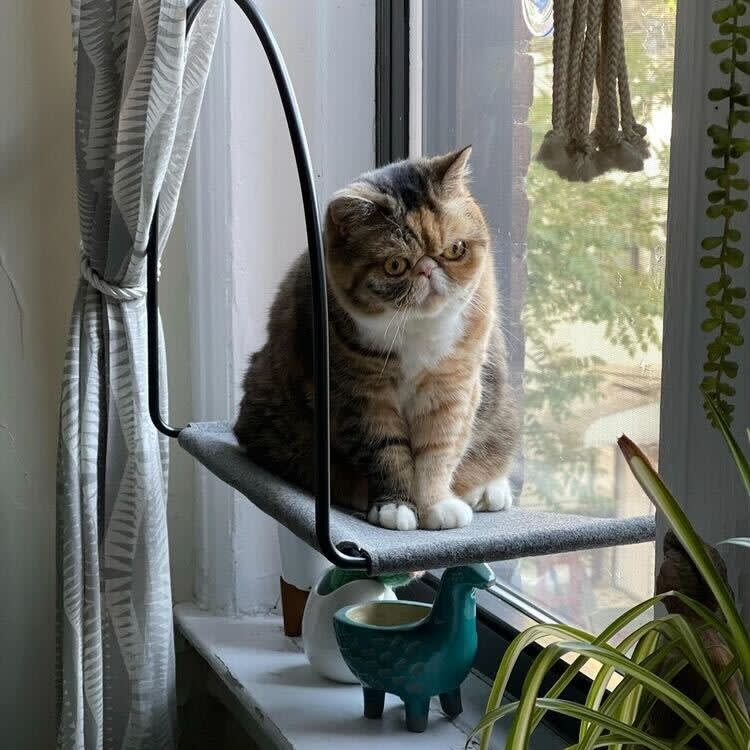 Product PicksThe Window Hammock That Ends the Cat-Versus-Houseplant WarSara Lim · 3 min
 Product PicksA Wellness Influencer's Cat-Parent Gift Guide That Skips the JunkSara Lim · 4 min
 Product PicksYour Cat Wants the Box. These 7 Come With Toys Inside It, Too.Sara Lim · 6 min
 Product PicksYour Cat Will Probably Ignore This $13 Gift. Buy It Anyway.Sara Lim · 6 min