


13 Pieces of Cat Furniture That Pass the Vet Test and the Decor Test
Most stylish cat furniture is designed for your living room first and your cat second. Flip that order. Here's how to buy for what cats actually need, with 13 pieces that satisfy feline biology and still look good.

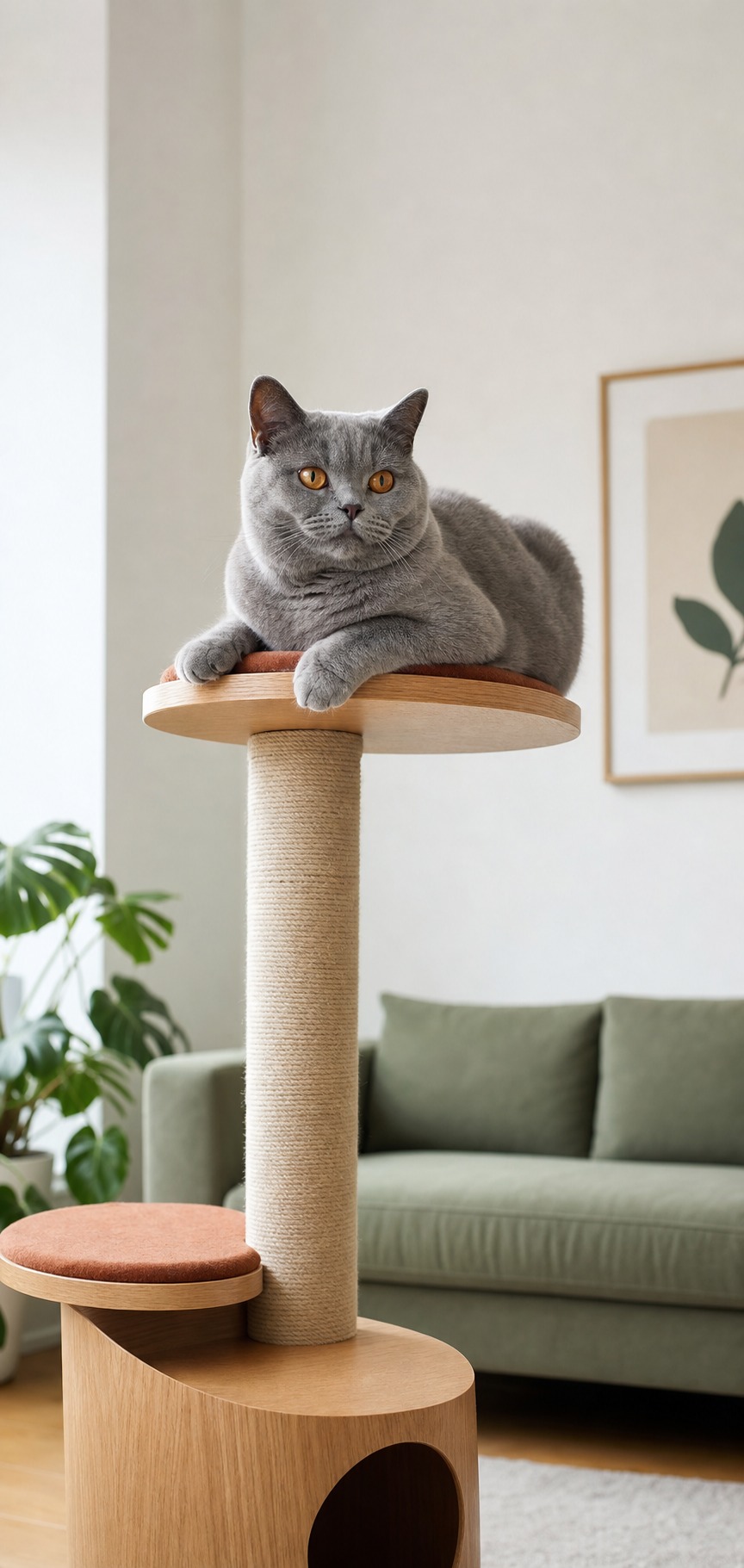
Most roundups of good-looking cat furniture make the same quiet mistake: they shop for your living room first and your cat second. The piece has to disappear into the decor, and whether the cat will actually use it is treated as a happy accident. That gets the priority backwards. A gorgeous cat tower your cat ignores is just an expensive sculpture, and a beautiful scratcher your cat walks past is a guarantee your sofa keeps getting shredded.
So here is the reframe this list is built on. Buy for feline biology first, then filter what survives that test through your aesthetic. The good news, and the reason this is even possible now, is that a wave of design-minded makers has finally built pieces that pass both tests at once. Below is the biology, then 13 pieces that clear it, sorted by the job they do.
What cats actually need from their furniture
Cat behavior researchers and the American Association of Feline Practitioners describe a healthy indoor environment in terms of “pillars,” and three of them are pure furniture problems. Cats need places to climb and perch up high, places to hide, and appropriate places to scratch. These are not preferences you can design around. They are wired-in survival behaviors, left over from an animal that was both a hunter and prey and needed high vantage points to feel safe.
That gives you a real buying checklist:
Vertical height. Perching up high is how a cat surveys its territory and de-stresses, and in multi-cat homes, vertical layers are how cats avoid conflict by giving each cat its own elevation. A piece that only works at floor level is missing the point.
A scratchable surface cats actually choose. Owner-survey research is unusually clear here: cats favor scratching surfaces that are tall enough to stretch the full body, sturdy enough not to wobble, and oriented upright, and most cats prefer sisal rope or bare wood, with corrugated cardboard a strong runner-up. A scratcher shorter than about three feet, or one that tips when leaned on, gets abandoned, and the cat goes back to the couch arm.
A hide. An enclosed nook a cat can retreat into lowers stress, which is why the cave-style beds below earn their spot beyond just looking cozy.
Keep those three in mind and most “stylish” cat furniture sorts itself into the pieces worth buying and the ones that photograph well and get ignored.
Towers and perches that get the height right
A slatted mid-century tower. The sweet spot of this category: your cat lounges inside the structure and watches the room through vertical slats, or sprawls on a faux-shearling top level well above floor traffic. It delivers the height cats crave on a frame that reads as furniture, not carpeted gym.
A wall-mounted climbing system. For a committed climber, a set of wall-mounted steps and shelves is the most space-efficient way to add serious vertical territory, and it keeps the claws on the system instead of your furniture. Buy sturdier mounts than you think you need; a shelf that flexes underfoot is a shelf a cat stops trusting.
A freestanding sculptural tower. For anyone tired of cat-ear-shaped wall shelves that clash with everything, a clean freestanding tower gives cats their altitude without surrendering a wall to the Pinterest-cat aesthetic. Confirm it is weighted or anchored at the base so a hard landing does not tip it.
Scratchers your cat will actually use
A tall sisal-rope post. The workhorse. A heavy, sisal-wrapped post tall enough for a full-body stretch is the single most effective piece on this list for saving your furniture, precisely because it hits every preference the research flags: sisal, upright, and tall. Ideal for multi-cat households because it holds firm against even an enthusiastic chonk.
A curved cardboard lounger. A sculptural corrugated-cardboard piece does double duty for cats who want to scratch and then nap in the same spot, and cardboard is the second-favorite substrate for a reason. It is the affordable, replaceable option, so keep a spare on hand.
A statement scratcher with personality. Function does not have to be boring. A bright, oversized tangerine-shaped scratcher, or a cardboard piece shaped like a sardine tin your cat can poke its head out of, delivers the sisal-or-cardboard surface cats want while being genuinely fun to have in a room. Just confirm the scratchable surface is large and sturdy, not a token strip glued to a gimmick.
Beds and hides disguised as furniture
This is where modern cat furniture really shows off, and where the “hide” pillar gets quietly satisfied.
An elevated wood bed frame. A contemporary raised frame with a cushion splits the difference between your design sensibilities and your cat’s refusal to sleep anywhere reasonable, and the elevation itself is part of the appeal to the cat.
A minimalist sculptural bed. A spare, sculptural cat bed reads as actual art on the floor and gives your cat an open resting spot. Pair it with a proper hide elsewhere, since this one is a lounge, not a retreat.
A plywood side-table nook. A plywood side table with a built-in cat house underneath is the platonic ideal of dual-purpose: real furniture for you, an enclosed den for the cat.
A glass-and-iron coffee table with a cubby. A tempered-glass and iron coffee table with a built-in nook underneath keeps your surfaces smudge-free while giving your cat a shaded spot to post up in the middle of the action.
A wicker canopy bed. Nothing beats a classic. A wicker canopy is a chicer take on the enclosed cat cave, and the enclosure is exactly what makes it a real hide, not just a bed.
The unglamorous necessity, handled
A litter-box enclosure that passes as furniture. Even litter boxes get the design treatment now. A well-built cabinet-style enclosure, one that reads as a nightstand or side table with your books stacked on top, hides the box entirely while giving the cat the privacy that keeps it using the box in the first place. Two rules before you buy: make sure the interior is roomy enough that a full-grown cat can turn around and dig without hitting walls, and that the whole thing wipes clean easily. A too-cramped enclosure is the fastest way to teach a cat to stop using the box.
The one test before you check out
Before any of these earns its place, run it past the biology, not just the mood board. Is it tall or high enough to matter? Is the scratchable surface something cats actually prefer, and is it sturdy? Does the cat have somewhere to hide? A piece that clears those and looks good is a genuine win. A piece that only looks good is decor you will resent when the sofa arm goes first. Looks are the bonus here, not the substitute.
References
- American Association of Feline Practitioners and International Society of Feline Medicine. “AAFP and ISFM Feline Environmental Needs Guidelines.” https://catvets.com/resource/aafp-isfm-environmental-needs-guidelines/
- Wilson C, Bain M, DePorter T, et al. “Owner observations regarding cat scratching behavior: an internet-based survey.” Journal of Feline Medicine and Surgery. https://pmc.ncbi.nlm.nih.gov/articles/PMC11112215/
- VCA Animal Hospitals. “Feline Environmental Needs Guidelines.” https://vcahospitals.com/pediatric/kitten/health-wellness/feline-environmental-needs-guidelines
Sasha Ford is a certified cat behaviour consultant who has worked with shelters, catteries, and private clients across the country. They review all feline behaviour content at The Pet Times, with expertise in multi-cat households, indoor enrichment, and stress-related disorders.
Meet our experts ↗Keep reading
 Product PicksThis Brand Tests Cat Furniture in Cat Cafés. One Week There Equals a Year in Your Home.Sasha Ford · 6 min
 Product PicksYour Cat Shreds the Couch Because Every Scratching Post Is an EyesoreSasha Ford · 4 min
 Product PicksYour Enzyme Cleaner Isn't Failing. It Was Never Built for This Smell.Sara Lim · 4 min
 Product PicksYour Dog's ID Tag Is Ugly. There's a Fine-Jewelry Fix.Nina Vasquez · 4 min
 Product PicksPet Clothes That Earn Their Keep: A Buyer's Guide to Coats, Rain Gear, and FunSara Lim · 6 min
 Product PicksThe Best Cat Toy Is the One You Don't Hide in a BasketSasha Ford · 7 min