


A 160-Pound Ranch Dog Found a Lost Toddler. His Breed Was Built for Exactly This.
When Buford led a missing two-year-old out of the Arizona wilderness after 16 hours, it looked like a miracle. It was closer to a job description. Here's what livestock guardian dogs are actually wired to do.

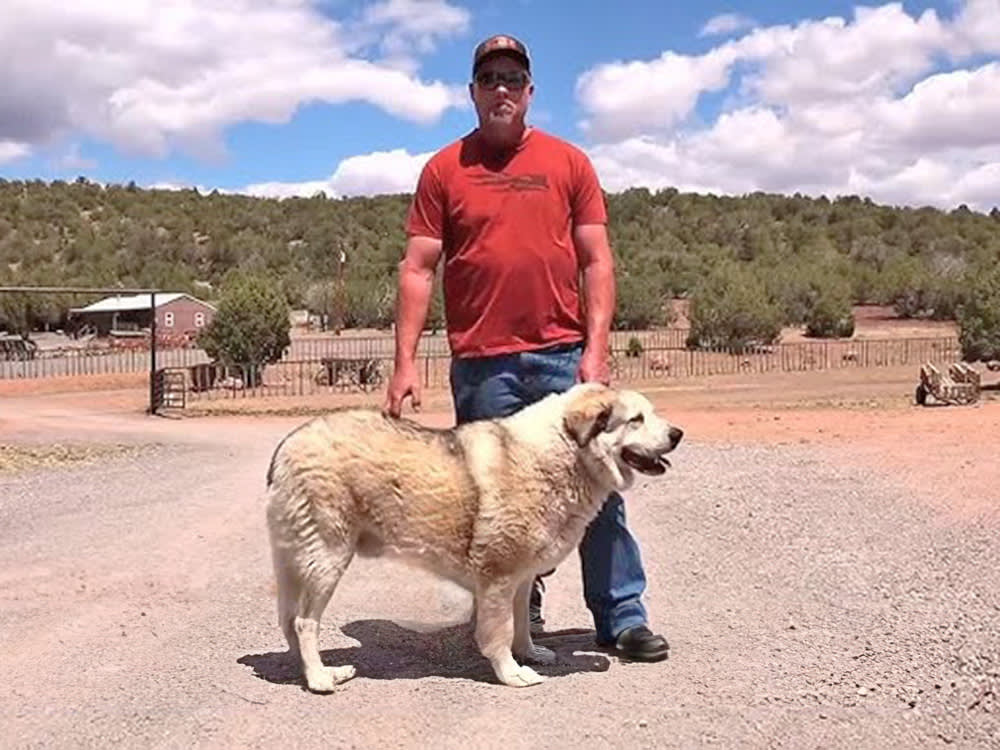
The headline wrote itself: a dog finds a lost child in the desert and walks him home. It is the kind of story you want to be true. But if you stop at “miracle,” you miss the more interesting part, which is that the dog in question was doing something his breeds have been shaped to do for thousands of years. Buford didn’t stumble into heroics. He worked.
What happened near Seligman
In April 2025, a two-year-old named Boden Allen wandered away from his home near Seligman, Arizona, roughly 100 miles south of Grand Canyon National Park. He went missing late on a Monday afternoon, dressed only for the house, and disappeared into high desert that holds mountain lions and coyotes. More than 40 people searched through the night across canyons, boulder fields, and open range that is punishing for an adult, let alone a toddler.
Boden covered about seven miles on his own. He later told his rescuers, in the plain way two-year-olds report the impossible, that he had bedded down under a tree. Roughly 16 hours after he vanished, rancher Scotty Dunton spotted his own dog walking the fence line with a small blond child at his side. Dunton had heard about the search that morning and knew instantly who the boy was. Boden was dehydrated and scratched up but essentially fine. Buford, per his owner, was promised a steak.
Buford is not a family pet who happened to be outside. He is a working ranch dog, about 160 pounds, a Great Pyrenees and Anatolian Shepherd cross, two of the oldest livestock guardian breeds on Earth. And that pedigree is the whole story.
Guardian, not herder: the instinct that matters here
People lump farm dogs together, but guarding and herding are nearly opposite jobs. A herding dog (a Border Collie, a heeler) uses a modified predatory sequence, the eye, the stalk, the chase, to move animals around. A livestock guardian dog does the reverse. Breeds like the Pyrenees, the Anatolian, the Maremma, and the Kangal were selected over centuries to live inside a flock, bond to whatever they’re raised with, stay calm, and put their body between their charges and danger. The prey drive that makes a herder chase is deliberately dialed down in a guardian. What’s dialed up is attachment and protectiveness.
Two traits from that job description explain Buford’s night precisely.
The first is a pull toward the vulnerable. Guardian dogs are bred to attach to and watch over the smallest, weakest members of their group, lambs, kids, poultry. A lost, frightened toddler reads to that wiring as exactly the sort of creature to stay with. Dunton’s read on his dog was simple: Buford loves kids, and once he found the boy, he was never going to leave him.
The second is patience. Guardians are largely nocturnal workers who patrol, settle, and hold position rather than run. A herding dog might have circled and pressured the child; a guardian is far more likely to have parked beside him under that tree through the cold hours and then, at first light, moved with him back toward home ground. That is not obedience training. It is temperament doing what it was designed to do.
This wasn’t luck, and it wasn’t a trick anyone taught him. Guardian breeds are built to bond with the vulnerable and stay put through the night, so a scared toddler triggered the exact instinct these dogs have carried for centuries.
Not the first dog to answer the call
Buford joins a small, remarkable club of dogs whose instincts overrode everything else in a crisis.
In 2020, in the São Paulo region of Brazil, a dog named Typhoon put himself between a 12-year-old girl and a jararaca, one of the most dangerous venomous snakes in South America. The family had four dogs, and the others followed the commotion, but only Typhoon faced the snake. He took several bites protecting the girl and was reported to be recovering afterward.
In 2021, at Port Noarlunga in South Australia, a Staffordshire Terrier and Bulldog mix named Max swam out to a boy being pulled by an incoming tide toward deep water and rocks. His owner, Rob Osborn, was about to jump in himself when Max beat him to it; the boy was coached to call the dog and grab the life jacket Max was wearing until they reached shore. Osborn’s line about his dog stuck with a lot of people: Max was a hero who didn’t know it, just doing what he was asked.
Different breeds, different dangers, same throughline. In each case a dog defaulted to protection under pressure, and a child came home.
The honest caveat
None of this means you should count on a dog to find a lost child, or that every guardian breed is a furry babysitter. Livestock guardian dogs are large, independent, strongly territorial animals bred to make their own decisions at 3 a.m. without a human, traits that make them extraordinary on a ranch and a genuine handful in a suburban backyard. Buford’s night is a window into what these breeds are, not a promise of what any given dog will do. The instinct is real. So is the responsibility of owning the kind of dog that has it.
References
- NPR: Dog finds and rescues toddler who spent night lost and alone in Arizona desert
- CBS News: Rancher’s dog rescues toddler in the Arizona desert
- NBC News: Buford, dog who rescued 2-year-old boy lost in Arizona wilderness, is showered with gifts
- American Kennel Club: What Is a Livestock Guardian Dog?
Dr. Kohl is a board-certified veterinary dentist with a particular interest in preventive oral care. She reviews all dental health content at The Pet Times and contributes practical guides on home dental routines, professional cleaning, and oral disease prevention.
Meet our experts ↗Keep reading
 TrainingYour Dog Isn't Reading Your Face. They're Reading Your Hand on the Leash.Dr. Lena Park · 8 min
 TrainingYour Dog Isn't Ignoring You. You're Talking Too Fast.Tom Hadley · 5 min
 TrainingLoving People Doesn't Make a Therapy Dog. The Real Bar Is Higher, and KinderDr. Nina Kohl · 11 min
 TrainingYour Tears Stress Your Dog Out. A Pet Pig Wouldn't Care.Dr. Nina Kohl · 5 min
 LivingYou Can't Make Your Partner's Dog Like You. So Ignore It.Dr. Ravi Mehta · 5 min
 TrainingYour Husky Isn't Arguing With You. It's Doing the Job It Was Bred For.Dr. Ravi Mehta · 6 min