


Your Dog Doesn't Hate Your New Partner. They Hate That Their Life Got Worse
Dog 'jealousy' is really your dog noticing that a new person means shorter walks and less couch time. Fix the downgrade, not the feeling, with seven moves that turn your partner into the best thing that ever happened to them.

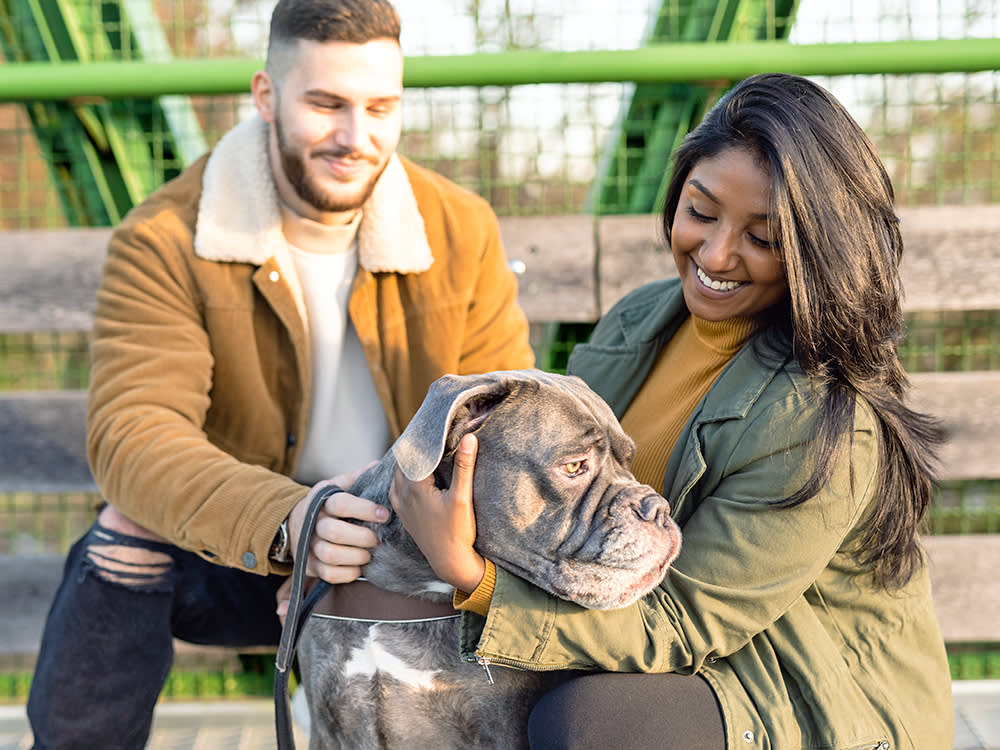
You’ve met someone. Your heart made room without any trouble; there’s plenty of love to go around. Your dog is not so sure. This is the ride-or-die who sat with you through every breakup, and now there’s a new human on their couch, in their spot, cutting into their walk time, and nobody asked for their opinion. Cue the sulking, the wedging between you two, the pointed sighs.
It’s easy to call this jealousy and leave it there, but that framing sets you up to fail, because you can’t argue a dog out of a feeling. Here’s the more useful read: your dog isn’t offended that you’re happy. They’ve simply noticed that their day-to-day life got worse the moment this person showed up, and they’re connecting the dots. Which is great news, because a downgrade is something you can fix. Manage the change well and you don’t just prevent jealousy, you turn your partner into your dog’s favorite new perk. Seven ways to do exactly that.
1. Don’t let your dog’s life get worse
New relationship, new routines, and guess who clocks every one of them first. If walks suddenly get shorter, dinner runs late, and couch snuggles evaporate, your dog does the math: ever since that person appeared, my life took a hit. That’s the actual engine of “jealousy.” So guard the routine. Keep walks, meals, and downtime as steady as you can, and for changes that genuinely have to happen, phase them in gradually instead of flipping your dog’s whole world overnight. The less their life visibly degrades, the less reason they have to resent the newcomer.
2. Don’t evict them from their spots
If your dog loses their place on the couch, in the bed, or in the car the week your partner arrives, they will feel replaced, fast. They were there first, and being physically nudged aside is about as clear a message of demotion as a dog can get. The answer isn’t to pick between them; it’s to make room for both. Nobody has to lose their spot for someone else to have one.
3. Introduce the smell before the person
Dogs live in a world of scent, so let their nose meet your partner before their eyes do. Borrow a worn T-shirt from your partner, offer it to your dog to investigate, and follow each sniff with a really good treat. Repeat several times daily across a week or so. You’re teaching a simple, powerful association: this smell means great things happen. By the time they meet in person, your partner won’t register as a stranger; they’ll register as the good-smell human.
4. Make your partner the bringer of good times
First impressions count, so stack the deck. Send your partner in loaded with high-value treats, a favorite toy, maybe a stuffed peanut-butter Kong. If your dog’s into play, let your partner be the one who starts a game of tug or fetch. The goal is to flip your dog’s internal verdict from “another dud interrupting my life” to “wait, this person brought snacks and fun?” It helps enormously if your partner knows the house rules in advance, how your dog prefers to be greeted, the spots they love scratched, which toys win them over, so the whole encounter goes their way.
The mistake I see is people forcing closeness, hovering, pushing the dog and the partner together. Let the dog opt in. Every good thing that happens near the new person is a deposit, and dogs are excellent accountants. Enough deposits and they decide this human is worth having around.
5. Hold the first meeting on a walk
Skip the high-pressure living-room ambush, which, from your dog’s point of view, is a stranger invading their territory. Go for a group walk instead. Neutral ground, everyone moving in the same direction, no cornering, no hugging (of each other or the dog). A shared walk lets everybody relax and lets your dog reach their own conclusion: this new person shows up and I feel fine, maybe even good. That’s the association you want doing the heavy lifting.
6. Keep that first visit brief
There’s no need to go from “hello” to a twelve-hour togetherness marathon. Keep that first visit brief and easy. If your dog takes to your partner right away, wonderful, and ending early leaves them wanting more. If your dog is still on the fence, a short visit keeps them from getting overwhelmed and souring on the whole thing. Either way, brevity protects the good first impression you worked to build.
7. Protect one-on-one time, and let your dog set the pace
Not every hangout needs to include your new person. Schedule solo dates with your dog: walks, a training session, a hike, or just petting them through an episode of something. They need time that’s theirs, with no third wheel and no attention to share. And then read your dog honestly. If they’re instantly smitten with your partner, lean into it and keep the good times rolling. If they’re hesitant, don’t push; let them warm up on their own timeline. You picked this person, and with steady, low-pressure exposure, most dogs eventually decide you picked well.
The whole thing in one breath
Keep your dog’s life as normal as possible and keep showering them with attention. Include them instead of shutting them out. Make every early encounter slow, relaxed, and full of treats and toys. And let your dog decide, in their own time, that the person you picked is worthy of their love too. Do that, and the two loves of your life have every chance of becoming genuine friends, which, honestly, is the dream.
References
Common questions
Do dogs actually get jealous of a new partner?
Dogs do show jealous-looking behavior, but it's usually a reaction to change rather than pettiness. When a new person means less attention, shorter walks, or losing a favorite spot, your dog notices, and that's what the 'jealousy' really is.
What's the best way to introduce my dog to someone I'm dating?
Start with scent before the meeting, then hold the first introduction on a neutral walk rather than in your living room. Have your partner bring great treats, keep it short, and let your dog set the pace.
How long does it take for a dog to warm up to a new partner?
It varies. Some dogs bond instantly; others need weeks of low-pressure, positive encounters. Don't force it. Consistent good experiences do the work, and rushing tends to backfire.
Dr. Park is a board-certified emergency and critical care specialist. She reviews our health and safety content for clinical accuracy and contributes guides on recognising urgent conditions. Her focus is helping owners act quickly and correctly when it matters most.
Meet our experts ↗Keep reading
 TrainingYou Can't Force a Dog Friendship. But 6 Things Stack the DeckDr. Ravi Mehta · 5 min
 TrainingTug-of-War Won't Make Your Dog Aggressive. Playing It Wrong Might.Dr. Nina Kohl · 9 min
 TrainingYour Dog Has a Favorite Person. Here's How to Make Sure It's You.Dr. Mara Chen · 8 min
 TrainingNo, Your Cat Didn't Secretly Raise Your Dog. But Something Real Is Going On.Dr. Nina Kohl · 5 min
 TrainingYou Don't Win Over a Scared Dog. You Become Safe and Boring.Dr. Lena Park · 9 min
 Living'Will My Dog Ever Love Me?' Is the Wrong Question. Watch What They Choose.Dr. Priya Nair · 9 min